Signs of termites in North Carolina include mud tubes, hollow wood, discarded wings, and frass. Here’s what to look for before damage spreads.
Key Takeaways
- Subterranean termites are the dominant species in North Carolina and Virginia Beach, traveling through mud tubes from soil to wood.
- Early warning signs include mud tubes on foundation walls, hollow-sounding wood, discarded wings near window sills, and termite droppings (frass).
- Termite swarmers appear in spring and are often the first visible sign of an active colony nearby.
- North Carolina’s warm and humid climate makes homes here significantly more vulnerable than homes in drier northern states.
- Professional termite inspections catch activity that visual checks miss. If you spot any warning signs, call before the damage grows.
What Termite Warning Signs Look Like in NC
Most signs of a termite infestation are easy to miss because termites work inside walls, not on surfaces you can see. That is what makes them so destructive. Subterranean termites cause the vast majority of termite damage in North Carolina, and a review published in Insects by F. Oi (2022) documents the global economic impact of termites at $40 billion annually, with subterranean species responsible for roughly 80% of that figure. Knowing what to look for is the first step toward catching the problem early.
The most recognizable sign is mud tubes. Subterranean termites build these pencil-width tunnels along foundation walls, crawl spaces, and concrete piers to protect themselves as they travel from soil to wood. Run your finger along the base of your foundation. If you find a dried, dirt-colored tube, that is a warning sign worth taking seriously.
Hollow-sounding wood is another early indicator. Tap on baseboards, door frames, and wood paneling with a knuckle. Wood that sounds hollow where it should sound solid suggests termites have consumed the interior. Floor joists in crawl spaces are especially vulnerable in North Carolina homes because of the moisture that accumulates there.
Early Signs of Termites North Carolina Homeowners Spot First
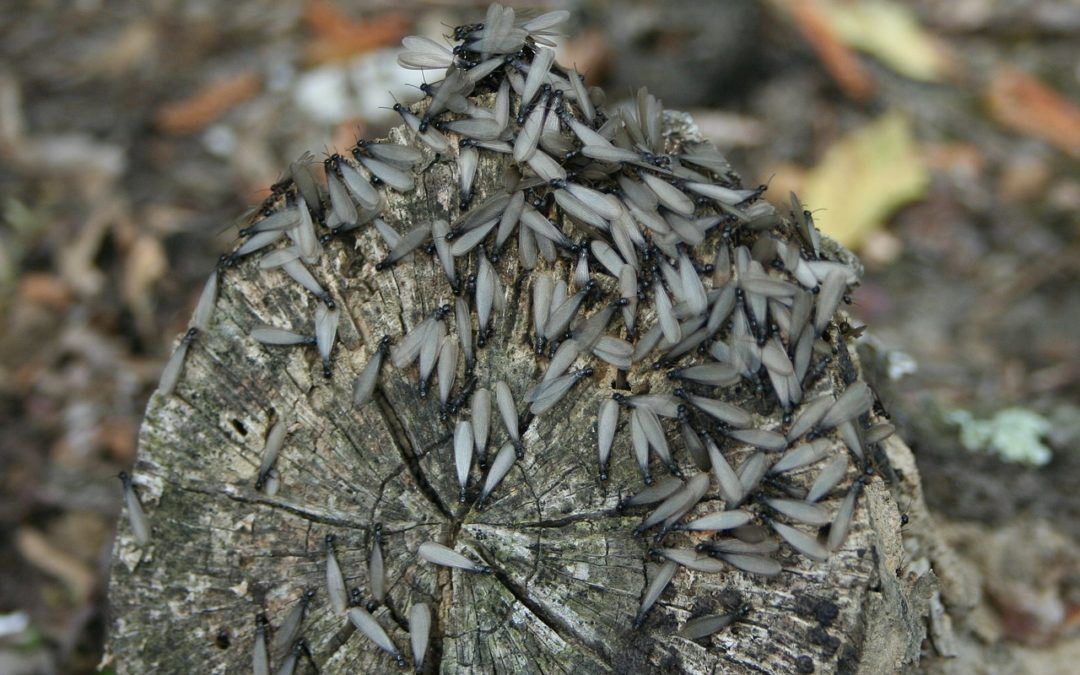
Termite swarmers are often the earliest visible sign of a termite problem, and most homeowners mistake them for flying ants. Termite swarmers, also called reproductive termites, are winged termites that leave the colony in spring to start a new colony. They are only about 3/8 of an inch long, black or orange, with long white wings that stack flat on top of each other. Finding flying termites inside your home means a colony is already active nearby.
Discarded wings are just as telling. Swarmers shed their wings almost immediately after landing. Finding a cluster of identical wings on window sills, along baseboards, or near countertops means swarmers were recently active in that area. These wings look like tiny translucent scales and are often mistaken for insect debris.
Termite droppings, called frass, are the calling card of drywood termites. Frass looks like tiny pellets of sawdust or dirt and often accumulates in small piles below tiny kick-out holes in hardwood. If you find something that looks like coarse sand in an odd location, drywood termite activity could be the cause.
Damaged Wood and Structural Clues in North Carolina Homes
Termite damage to structural wood often looks like water damage before it looks like anything else. Paint that bubbles or peels, drywall that sounds hollow, or walls that look like they’ve been warped by moisture are all potential signs of termite activity below the surface. Subterranean termites consume wood from the inside out, leaving a honeycomb pattern of tunnels while the outer surface looks intact.
Stuck windows and doors are another structural clue. As termites damage wooden structures around frames, the wood warps and swells. If windows and doors that once opened smoothly now stick or bind, a professional inspection is worth scheduling. This symptom is easy to attribute to humidity, which makes it one of the most overlooked early signs.
Check baseboards for a honeycomb texture. Press gently with a finger. If the wood collapses or feels spongy, termite damage has likely compromised the structural integrity. Splintering wood beams in crawl spaces and attics tell the same story. A 2024 review of termite detection techniques published in International Biodeterioration & Biodegradation by Babar Hassan et al. confirms that visual inspection of these accessible structural areas remains one of the most reliable detection methods available.
Why North Carolina Homes Face Higher Termite Risk Than Most
North Carolina’s warm and humid climate is exactly what subterranean termites need to thrive year-round. The state’s mix of clay-heavy soil, coastal moisture, and high summer temperatures creates conditions that support large, active colonies. Homes with crawl spaces, especially those with poor ventilation or plumbing leaks, give termites direct contact with moist wood close to the soil line.
The eastern subterranean termite (Reticulitermes flavipes) dominates across North Carolina and Virginia Beach. Research published in PeerJ by Chaz Hyseni et al. (2018) documents the niche distribution of eastern subterranean termite species across the Southern Appalachian region, confirming that these species thrive across the mid-Atlantic and southeastern habitat zones that include our service areas.
Tree stumps, wood mulch piled against the foundation, and cardboard boxes stored in crawl spaces all attract termites toward your home’s foundation. These are conducive conditions that give an active colony an easy bridge from the soil to your structure. Removing them reduces termite risk considerably.
What Makes Crawl Spaces in NC a Termite Target
Crawl spaces concentrate every condition termites prefer: moisture, darkness, and direct soil contact with wood. In North Carolina homes, crawl spaces often have exposed wood framing sitting inches above damp soil. Poor ventilation traps humidity and keeps the wood moist. If there are also plumbing leaks dripping onto the subfloor, the environment becomes ideal for an active colony to establish and expand.
Homeowners rarely inspect crawl spaces on their own. That lack of visibility is exactly why termite infestations in crawl spaces often go undetected for months or years. During a professional inspection, the technician checks floor joists, sill plates, and pier blocks for mud tubes, damaged wood, and direct soil-to-wood contact. These areas account for most of the significant damage found in North Carolina homes.
Foundation Walls in North Carolina: Where Mud Tubes Appear
Mud tubes along foundation walls are the most reliable sign of subterranean termite activity. These tubes serve as protected highways, shielding termites from predators and open air as they travel between the colony underground and the wooden structures above. They appear on concrete, brick, and block foundation surfaces, and are often found in corners or where the foundation meets the soil.
Breaking open a mud tube can tell you whether the colony is still active. Active tubes will have live termites inside. If the tube is empty but the mud is still soft, the colony may have moved to a different section of the structure. Either way, a broken tube that rebuilds itself within a day or two confirms an active termite infestation that needs professional intervention.
When to Call Pest Control for Termites in North Carolina
Call a professional the moment you find a single mud tube, a pile of discarded wings, or wood that sounds hollow where it should not. Termites are silent destroyers. By the time you see obvious structural damage, the colony has likely been active for a year or more. Early detection is the only way to limit costly repairs. A thorough inspection takes the guesswork out of it.
DIY termite products rarely address the full colony. As NC State Extension Entomology and professional termite guidance both confirm, treatment needs to reach the colony, not just the termites you can see. Products applied to surfaces without reaching the active colony provide temporary relief at best while the infestation continues growing in the walls and soil below.
Sage Pest Control’s termite inspection begins at the foundation and works through the crawl space, attic, baseboards, door and window frames, and any exposed wood. If activity or conducive conditions are found, the technician recommends a treatment plan tailored to the structure. Two primary methods are used: the Trelona Advanced Termite Bait System and termiticide foundation trenching.
How Sage Treats Termites Found in NC Homes
The Trelona Advanced Termite Bait System, manufactured by BASF, uses the active ingredient Novaluron to prevent termites from molting. Bait stations are installed every 10 to 20 linear feet in the soil surrounding your home. Worker termites consume the bait and carry it back to the colony through natural grooming and fluid transfer. Colonies can be impacted in as quickly as 15 to 45 days. Stations are inspected annually and remain effective for 2 to 4 years under typical conditions.
Termiticide foundation trenching works differently. Trenches are dug around the home’s foundation and a liquid treatment barrier is applied, creating a long-lasting vertical barrier. Subterranean termites that contact or consume it spread it to other colony members through a transfer effect that works through the colony over time. Each application lasts approximately five years. Both methods include ongoing monitoring so that new termite activity is caught before it causes additional structural damage.
Bottom Line on Signs of Termites in North Carolina
Termites are among the most destructive pests North Carolina homeowners face, and they rarely announce themselves until the damage is already significant. The warning signs are there if you know where to look: mud tubes on foundation walls, hollow-sounding wood, discarded wings near window sills, frass near kick-out holes, stuck windows and doors, and flying termites inside your home. North Carolina’s humid climate and crawl-space construction put homes here at elevated risk year-round.
If you spot any of these signs, do not wait to see if they get worse. A professional termite inspection is the only way to confirm whether an active colony is present and how far it has spread. Sage Pest Control serves Charlotte, Raleigh, Greensboro, and Virginia Beach. Text us and you will hear back in under a minute. Schedule a free inspection before termite damage turns into a structural repair bill.
Frequently Asked Questions
What is the first sign of termites in a North Carolina home?
For subterranean termites, which are the dominant termite species in North Carolina, the first sign is usually mud tubes along foundation walls or concrete surfaces near the soil line. You may also notice termite swarmers (flying termites) inside the home in spring, or find discarded wings on window sills and baseboards shortly after a swarm. These are early warning signs that an active colony is nearby.
How fast can termites cause structural damage in NC?
A mature subterranean termite colony can include hundreds of thousands of workers consuming wood continuously. Under North Carolina’s warm and humid conditions, a large colony can cause significant structural damage within one to three years of becoming established in a home. Because the damage happens inside walls and below floors, most homeowners do not detect it until it is already extensive. Early detection through professional termite inspections is the most effective way to limit repair costs.
Do termite bait stations work for subterranean termites in NC?
Yes. Bait stations like the Trelona Advanced Termite Bait System are specifically designed to target subterranean termites, which are the primary termite species in North Carolina and Virginia Beach. Stations installed every 10 to 20 linear feet in the soil around your home intercept termites as they travel between the colony and your structure. Worker termites carry the active ingredient back to the colony, and the bait remains effective for 2 to 4 years under normal conditions. Annual inspections ensure ongoing monitoring.
Can I spot termite damage myself or do I need a professional inspection?
You can spot surface-level warning signs yourself: mud tubes, discarded wings, frass, hollow wood, and stuck doors. Most activity happens in crawl spaces, inside walls, and under floors where homeowners cannot easily inspect. Schedule a professional inspection rather than relying on surface assessment alone.
What attracts termites to North Carolina homes specifically?
North Carolina’s warm and humid climate, combined with common construction features like crawl spaces and wood-frame foundations, creates ideal conditions for subterranean termites. Specific attractants include wood mulch piled against the foundation, poor crawl space ventilation that traps moisture, plumbing leaks that keep wood damp, tree stumps or decaying wood near the structure, and any direct soil-to-wood contact around the home’s foundation. Addressing these conducive conditions reduces termite risk and supports long-term termite protection.
Our methodology: how we research pest control topics
Every Sage Pest Control article follows the same standard we hold our service to — fast, accurate, and grounded in what actually works on a real home. Homeowners in North Carolina and Virginia trust us to be there the same day with the right answers, and we treat the writing the same way: useful, specific, and honest about what does and does not work.
We build our content from a combination of government guidance, peer-reviewed research, and the patterns our technicians see across thousands of homes in Charlotte, Raleigh, Greensboro, and Virginia Beach. Here is how we approach each article:
Studying pest behavior
We start with how each pest actually lives — where it nests, how it spreads, and what triggers it. The cockroach behind your dishwasher and the carpenter ant in your siding behave differently. Treatment that works on one will not touch the other. The science of how a pest behaves is what tells us where to look and how to treat.
Reviewing health and home risks
Some pests are a nuisance. Others can damage your home, trigger allergies, or carry bacteria that affect your family. We look at the actual research — public health data, allergen studies, structural damage reports — so when we tell you something matters, you can see why.
Using Integrated Pest Management
Our recommendations follow the Integrated Pest Management (IPM) framework supported by the USDA and the EPA. IPM combines monitoring, sanitation, exclusion, and targeted treatment so pests do not just come back next month. It is also why our service runs tri-annually with rotated products — because the goal is lasting protection, not constant retreatment.
Prioritizing prevention and lasting protection
A pest problem rarely ends with one visit. We focus on the conditions that let infestations start in the first place — moisture, food sources, gaps around the home, clutter — because addressing those is what keeps pests gone for months, not weeks.
Citing peer-reviewed and government sources
Whenever possible, we back our recommendations with peer-reviewed studies, university extension research, and guidance from agencies like the EPA, CDC, and USDA. Each source we cite is listed at the end of the article.
Why trust us
Sage Pest Control was built around a simple idea: when you see a pest, you want it handled today, by a team that actually knows what they are doing. We serve homeowners across Charlotte, Raleigh, Greensboro, and Virginia Beach with same-day service 90 to 95 percent of the time, response times under a minute by text, and a team that picks up the phone in under twenty seconds.
That is the same standard we bring to our content. The information you read here reflects what our technicians see in the field, what current research supports, and what we have learned from servicing thousands of homes across North Carolina and Virginia. We are GreenPro certified, our products meet EPA standards, and we rotate our treatments so pests cannot build resistance.
We do not write content to fill a quota. We write to give homeowners the answers we wish every pest control company would give — clear, specific, and useful enough to act on.
Our credentials
- Service across Charlotte, Raleigh, Greensboro, and Virginia Beach
- GreenPro certified, with treatments that meet EPA standards
- 2,500+ five-star reviews from homeowners across North Carolina and Virginia
- Trained technicians supported by the Sage Technician Training Program
- Tri-annual service cycles with product rotation to prevent resistance
- Family-owned, locally operated, with 10,000+ hours of community service contributed
- Continuous review of pest research, regulations, and industry standards
Sources and standards we reference
To keep our content accurate and up to date, we rely on established research and authority sources, including:
Environmental Protection Agency (EPA):
Guidelines on product use, labeling, and approved applications.
Centers for Disease Control and Prevention (CDC):
Public-health guidance on pests that affect human health, including mosquitoes, ticks, rodents, and cockroaches.
United States Department of Agriculture (USDA):
Integrated Pest Management standards and pest biology research.
National Pest Management Association (NPMA):
Industry standards, pest behavior research, and seasonal trend reporting.
University extension programs:
Peer-reviewed, region-specific research on pest biology and control methods, especially relevant to the Carolinas and Virginia.
Peer-reviewed journals:
Research published in entomology, public health, and environmental science journals to support specific claims about pest behavior, health risks, and treatment efficacy.
Article sources
The following sources were specifically referenced in the research and development of this article:
- A Review of the Evolution of Termite Control: A Continuum of Alternatives to Termiticides in the United States (F. Oi (2022), Insects)
- Detection and monitoring techniques of termites in buildings: A review (Babar Hassan (2024), International Biodeterioration & Biodegradation)
- Ecological Drivers of Species Distributions and Niche Overlap for three Eastern Subterranean Termite Species in the Southern Appalachian Mountains (Chaz Hyseni (2018), PeerJ)
All information is accurate at the time of publication and is reviewed regularly to reflect current research and pest control standards.