
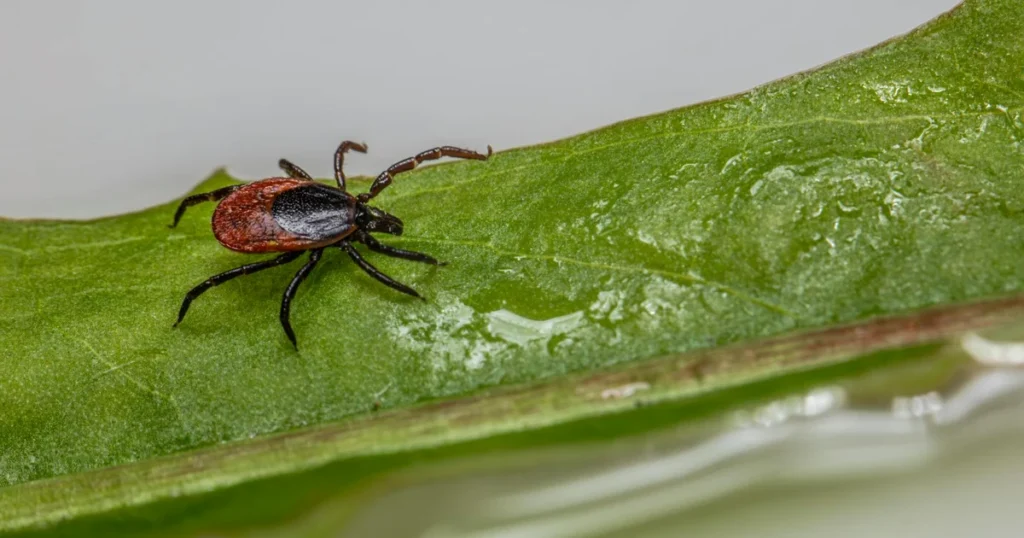
Ticks do not die off in winter. Most species shelter under leaf litter and snow, surviving temperatures well below freezing, and adult blacklegged ticks remain actively seeking hosts on mild days throughout the cold season. If you live in North Carolina or Virginia Beach, your tick risk does not stop when summer ends.
Key Takeaways
- Most ticks survive winter by sheltering in leaf litter, soil, and ground cover, not by dying off.
- Adult blacklegged ticks (deer ticks) stay active in the winter whenever temperatures rise above freezing.
- Snow cover actually insulates ticks, improving their overwinter survival.
- Mild winters in NC and VA mean tick populations stay strong through spring and into peak season.
- Professional outdoor tick treatments through a program like Sage Select or Pro-Yard reduce tick populations before they peak.
How Ticks Survive Cold Weather in the Winter
Ticks do not freeze and die when temperatures drop. Most species enter a state called diapause, a form of dormancy that slows their metabolism and allows them to wait out cold conditions. They burrow beneath leaf litter, into soil pores, and under brush piles, where ground temperatures stay well above the air temperature above the surface.
Research published in the journal Ticks and Tick-Borne Diseases found that snowpack and leaf litter insulate blacklegged tick nymphs through winter, allowing high overwinter survival even in northern states. In NC and VA, winters are mild enough that survival rates are even higher.
American dog tick larvae show similar cold tolerance. A study on American dog tick cold hardiness found that larvae can survive at -5 °C with high survival rates, with significant mortality only occurring near -16 °C and lethal conditions around -20 °C. Temperatures in Charlotte, Raleigh, Greensboro, and Virginia Beach rarely approach those extremes.
Do Freezing Temperatures Kill Ticks in the Winter?
Extreme cold can kill ticks, but the temperatures needed to do real damage rarely occur in the Mid-Atlantic and Southeast. Ticks spend winter beneath the snow and leaf layer, where ground temperatures are buffered. Even during cold snaps, ticks sheltering in wooded areas and dense landscaping are largely protected from the worst of the cold.
Snow cover actually works against you here. Rather than killing the ticks underneath, a heavy snow acts as insulation, keeping the ground warmer than exposed air. Tick populations in areas with consistent snow cover can exit winter in better shape than populations exposed to repeated freeze-thaw cycles with no ground cover at all.
The short answer: a harsh winter is not going to reset your tick risk. Ticks survive, and they resume questing as soon as conditions warm in early spring.
Which Ticks Stay Active in NC and VA in the Winter
Blacklegged ticks, also called deer ticks (Ixodes scapularis), are the most important species to know about in winter. Adult blacklegged ticks do not enter full dormancy. They remain active and actively seeking hosts whenever temperatures are above freezing, around 35-40 °F. In NC and VA, those conditions occur regularly throughout winter.
A 2024 study in the Journal of Thermal Biology found that warmer winter conditions directly increase off-host winter activity in Ixodes scapularis. In practical terms, a warm January afternoon in Greensboro or Virginia Beach is enough to put adult blacklegged ticks back in questing mode, climbing low vegetation and waiting to attach to a passing host.
This matters for Lyme disease risk. Adult blacklegged ticks are the primary vector for Lyme disease transmission in this region. Research in Insect Science showed that Borrelia burgdorferi-infected female ticks actually have higher overwinter survival than uninfected ones, meaning Lyme-carrying tick populations persist through winter in strong numbers.
Other species, including the American dog tick, spend winter in dormancy but survive well and emerge in late spring and early summer ready to feed.
The Winter Tick Species Behavior in NC and VA
- Blacklegged tick (deer tick): Adults stay active in the winter above freezing. Primary Lyme disease vector in this region. Found in wooded areas and tall grass throughout NC and VA.
- American dog tick: Enters dormancy in winter but survives cold temperatures. Resumes activity in spring. Found in grassy and brushy residential areas.
- Lone star tick: Generally dormant in the coldest months but can become active during warm winter spells. Common in NC and VA from spring through fall.
Where Do Ticks Spend the Winter Around Your Home
Ticks spend winter in the same places they hide in warmer months, just lower and deeper. Leaf litter, dense ground cover, brush piles, tall grass along fence lines, wooded edges, and shaded landscaping areas all provide the insulation and humidity ticks need to survive the cold season.
In residential areas like Charlotte, Raleigh, and Virginia Beach neighborhoods, the highest-risk zones are the edges where your yard meets a wooded buffer, along fence lines with accumulated leaves, around shrubs and mulch beds, and under decks or low-clearance structures where leaf litter collects.
Your pets are a year-round vector. Dogs and cats moving through these zones in winter can pick up blacklegged ticks on mild days and carry them inside. Perform tick checks on pets and yourself any time you or your animals spend time in wooded areas or dense landscaping, even in December and January.
The Winter Season’s Tick Activity and Lyme Disease Risk in NC and VA
Tick-borne disease transmission does not stop in the cold months. Adult blacklegged ticks bite throughout winter in the Mid-Atlantic and Southeast, and a single bite from an infected tick is enough to transmit Lyme disease regardless of the season.
NC and VA sit in a region where blacklegged tick populations are well established and expanding. Mild winter weather in cities like Virginia Beach, Charlotte, and Raleigh keeps adult tick populations active longer than in northern states. Climate patterns in recent years have extended the period when temperatures are above freezing in fall and winter, which directly extends tick activity windows.
The risk is not hypothetical. Winter hikes, yard work on warm days, and time spent in wooded areas all carry tick encounter risk during the cold season. Wearing protective clothing on warm winter days and performing tick checks after outdoor time are practical steps that reduce your exposure.
The Winter’s End: What Happens to Tick Populations in Spring
Ticks that survive winter do not ease back into activity gradually. They resume questing quickly as temperatures rise. Blacklegged tick nymphs, which are responsible for most Lyme disease transmission, begin emerging in late spring and reach peak activity in early summer. Adult ticks that fed on hosts in late fall and overwinter as engorged females lay eggs in spring, seeding the next generation.
A mild winter with good snow cover is not a tick population reset. It is a tick incubator. Tick populations that survive winter in large numbers translate directly to higher tick density in the spring and early summer peak season.
This is why fall and late winter are strategic times to treat your yard. Reducing tick populations before the spring peak is more effective than responding after nymphs are already active.
How Outdoor Tick Treatments in the Winter Protect Your Spring
Sage’s outdoor pest control programs, including Sage Select and Pro-Yard, cover tick control as part of a broader approach to pests that live in lawns, landscaping, and shaded outdoor areas. Because ticks shelter in the same grassy, brushy zones where they quest in warmer months, treating those areas in fall and late winter targets the tick population before it enters the active spring season.
Tri-annual treatment scheduling means your yard gets covered in the right windows, not just when ticks are already biting. The program uses product rotation to prevent resistance, and Sage’s service guarantee covers re-treatments between scheduled visits if tick activity continues.
How to Reduce Tick Risk Around Your Home in the Winter
A few targeted steps around your yard cut tick habitat significantly, even during the cold season. These steps reduce the sheltered zones where ticks overwinter and lower the population that emerges in spring.
- Clear leaf litter from lawn edges, flower beds, and fence lines. Leaf litter is the primary overwintering habitat for blacklegged ticks. Removing it cuts their shelter.
- Keep brush piles away from the house. Brush piles provide the same insulating conditions as leaf litter and concentrate tick populations close to your home.
- Mow the lawn short before winter. Tall grass extends into spring as tick questing habitat. A short-cut lawn in fall reduces the transition zone where ticks seek hosts.
- Create a barrier between lawn and wooded edges. A gravel or wood chip buffer at least three feet wide between your yard and any wooded area reduces tick migration into residential zones.
- Check pets after every outdoor trip. Dogs that spend time in wooded areas or along landscaping edges can carry ticks inside even on cold days.
- Wear protective clothing on warm winter days. Light-colored long pants tucked into socks during outdoor work make ticks visible and reduce attachment sites.
Frequently Asked Questions
Are ticks still active in NC and VA in the winter?
Yes. Adult blacklegged ticks remain active whenever temperatures are above freezing, which happens regularly throughout winter in North Carolina and Virginia Beach. Other tick species enter dormancy but survive cold conditions and emerge in early spring. Winter is not a tick-free season in this region.
Do cold winters kill ticks or just slow them down?
Cold winters slow most tick species down, but they do not kill them in meaningful numbers in NC or VA. Ticks shelter beneath leaf litter and snow, where ground temperatures stay well above lethal thresholds. Research shows snow cover actually improves overwinter survival by insulating the ground. Temperatures would need to reach well below -15 °C consistently to cause significant tick mortality, which does not occur in this region.
Can I get Lyme disease from a tick bite in the winter?
Yes. Adult blacklegged ticks are the primary Lyme disease vector in NC and VA, and they stay active in the winter on mild days. Infected female ticks actually show higher overwinter survival than uninfected ones, so the Lyme-carrying portion of the tick population persists through the cold season. Any bite from a blacklegged tick carries transmission risk regardless of the time of year.
When should I schedule outdoor tick control treatments?
Fall and late winter treatments are the most strategic timing because they target ticks before the spring nymph emergence and population peak. Sage’s outdoor service programs cover tick control through Sage Select and Pro-Yard, with tri-annual scheduling designed to hit the right treatment windows. Contact Sage for same-day service in Charlotte, Raleigh, Greensboro, and Virginia Beach.
Does snow cover protect ticks through the winter?
Snow cover insulates the ground beneath it, keeping soil temperatures warmer than exposed air above. For ticks sheltering in leaf litter under snow, this means better survival through cold snaps. A heavy snowpack is not a tick-killing event. It is closer to a protective blanket that helps ticks emerge healthy when spring temperatures rise.
