North Carolina is home to more than eight wasp and hornet species that regularly nest on or near residential properties. Paper wasps, yellow jackets, bald-faced hornets, mud daubers, European hornets, and cicada killers are the most common stinging insects you will encounter across Charlotte, Raleigh, Greensboro, and the Virginia Beach area. Some sting once and move on. Others will defend a nest with dozens of workers at once. Knowing which species you are dealing with changes everything about how you respond.
Key Takeaways
- North Carolina has several wasp species with different nesting habits, sting risks, and behaviors — identification is the first step.
- Yellow jackets and bald-faced hornets are the most aggressive species and will sting multiple times when their nest is threatened.
- Paper wasps are covered under Sage’s standard pest control plan; yellow jackets, bald-faced hornets, and honey bees require a specialized treatment program.
- Most wasp activity peaks in late summer when colonies reach maximum size and food competition drives defensive behavior.
- Anyone with a history of allergic reactions to stings should contact a pest control professional rather than attempting nest removal.
Paper Wasps Common in North Carolina Yards and Eaves
What Paper Wasps in North Carolina Look Like
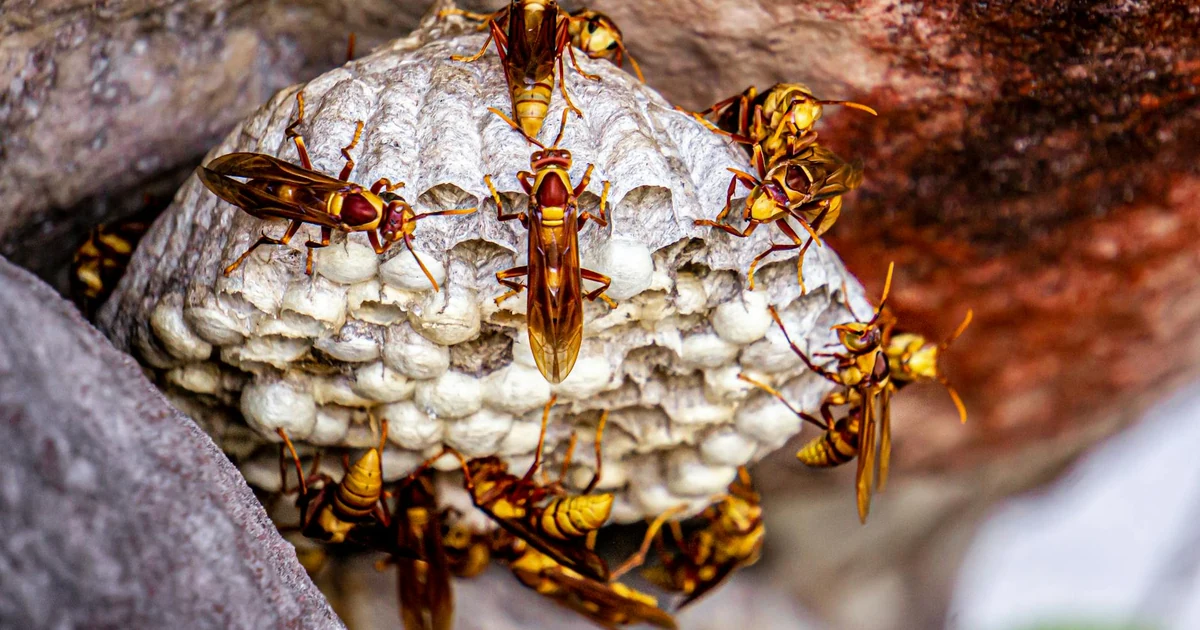
Paper wasps (Polistes spp.) are slender, reddish-brown insects with yellow markings and a distinctive narrow waist. Their legs dangle visibly during flight, which helps separate them from yellow jackets. Two common species appear in North Carolina: the native Polistes exclamans and the invasive European paper wasp (Polistes dominula), which has black markings and brighter yellow banding similar to a yellow jacket. Research published in the Annals of Allergy, Asthma and Immunology found that adults correctly identified paper wasps only about 51% of the time, which means misidentification is the rule, not the exception.
Where Paper Wasps Build Nests in North Carolina
Paper wasps build nests from paper-like material they create by chewing weathered wood fibers mixed with saliva. The result is a gray, umbrella-shaped comb with open hexagonal cells. Nests attach to eaves, porch ceilings, door frames, tree branches, and wooden structures around the home. A single nest usually houses 20–75 workers by late summer. Paper wasps sting when they feel the nest is under threat, but they are far less aggressive than yellow jackets. They can sting multiple times.
Paper Wasp Control for North Carolina Homeowners
Sage’s standard pest control plan covers paper wasps, including de-webbing and nest removal during scheduled service visits. For active nests near doors or high-traffic areas, a targeted spot treatment addresses the nest directly. If you spot a nest forming in early spring while it is still small, that is the best window to act before the colony grows through the summer months.
Yellow Jackets in North Carolina: Aggressive Ground Nesters
Identifying Yellow Jackets Across North Carolina
Yellow jackets (Vespula spp.) are compact, hairless black insects with bright yellow markings and a smooth, banded abdomen. Unlike bees, they have no visible body hair and carry no pollen on their legs. They move with fast, darting flight and are frequently confused with paper wasps, but yellow jackets hold their wings flat against their body rather than letting them trail. They are attracted to sweet food sources, open trash cans, and hummingbird feeders, which is why outdoor dining in summer months draws them reliably.
How Yellow Jackets Build Nests in NC
Yellow jackets build nests in wall voids, underground burrows, wood piles, and protected areas around the foundation. A mature yellow jacket colony can hold 1,000–4,000 workers by late summer. They construct a paper-like material nest from chewed wood pulp, encased in a multi-layered envelope. Accidentally stepping on a ground nest or disturbing a wall void triggers an immediate mass defense response. Yellow jackets can sting multiple times and release alarm signals that recruit more workers to attack. Colonies decline in early winter when only new queens survive to restart the cycle the following spring.
Why Yellow Jackets in NC Require Specialized Treatment
Sage’s standard pest control plan does not cover yellow jackets. Yellow jackets require a specialized treatment program because their nesting locations inside wall voids and underground burrows make access and treatment significantly more complex than above-ground paper wasp nests. If you are dealing with a yellow jacket nest near the home, contact Sage directly for a treatment plan rather than attempting removal yourself. Disturbing a mature colony without proper equipment puts you and anyone nearby at serious risk.
Bald-Faced Hornets in North Carolina: Large Aerial Nests
What Bald-Faced Hornets Look Like in NC
Bald-faced hornets (Dolichovespula maculata) are large, black insects with white markings on the face, thorax, and abdomen tip. Despite the name, they are technically a species of yellow jacket rather than a true hornet. They are among the most aggressive stinging insects in North Carolina. Female workers defend the nest with intense force and can sting multiple times. Their size and black-and-white coloring make them easier to identify than most wasp species.
Where Bald-Faced Hornets Build Nests in North Carolina
Bald-faced hornets build large, football-shaped paper nests suspended in tree branches, shrubs, and on the sides of buildings. Nests are enclosed in a layered paper-like material shell with a single opening at the bottom. By late summer, a colony can contain 400–700 workers. The enclosed structure makes treatment more involved than open-comb paper wasp nests. Like yellow jackets, bald-faced hornets fall outside Sage’s standard plan and require a specialized program.
Mud Daubers in North Carolina: Solitary and Low-Risk
Identifying Mud Daubers in North Carolina Homes
Mud daubers are slender, dark blue or black insects with a long, thread-like waist that sets them apart from every other wasp species in North Carolina. They are solitary wasps, meaning they do not form colonies. Female cicada killers and mud daubers are among the few species that rarely sting humans because they have no colony to defend. Mud daubers primarily feed on spiders, which they paralyze with a sting and seal inside mud cells to feed their larvae.
Where Mud Daubers Build Nests in NC
Mud daubers build tubular mud nests on exterior walls, under eaves, inside garages, and on wooden structures around the home. Each tube cell holds one larva and several paralyzed spiders. Unlike social wasps, mud daubers abandon their nests after the larvae develop. Old mud dauber nests on siding are common finds in spring and summer. Old nests can usually be removed manually with low sting risk, but a pest control technician can address them during routine service visits.
Cicada Killers and European Hornets in North Carolina
Eastern Cicada Killers in North Carolina: Big but Mild
Eastern cicada killers (Sphecius speciosus) are among the largest wasps in North Carolina, reaching up to 1.5 inches long with reddish-brown and yellow markings. Their size makes them alarming to encounter, but eastern cicada killers are solitary insects and pose little sting risk to humans. Female cicada killers hunt cicadas, paralyze them with a sting, and drag a paralyzed cicada into a burrow in well-drained soil to feed larvae. Males cannot sting. Female cicada killers will only sting if handled directly.
Where Cicada Killers Nest in North Carolina Yards
Female cicada killers dig burrows in well-drained soil, bare ground, and sandy areas, including lawns, garden beds, and along sidewalk edges. A single female may dig multiple burrows, creating a mound of loose soil that can make a lawn appear damaged. Multiple females nesting in one area can look like a colony but each operates independently. Adequate fertilizer and dense turf growth reduce the bare soil patches that attract them. Eastern cicada killers are active through summer months and disappear by early fall.
European Hornets in NC: The Only True Hornet
European hornets (Vespa crabro) are the only true hornet species in North Carolina, and they are noticeably larger than yellow jackets or paper wasps. Adults are reddish-brown with yellow markings on the abdomen and a pale face. They are active at night, which surprises many homeowners who see large insects flying around exterior lights after dark. European hornets build paper nests inside hollow trees, wall voids, attics, and protected areas around structures. They are defensive around the nest and can sting multiple times.
How NC Bees Differ from Wasps Visually
Bumble Bees in North Carolina: Fuzzy Pollinators to Know
Bumble bees are large, fuzzy pollinators with black and yellow banding and visibly hairy hind legs used for collecting pollen. Unlike most wasps, bumble bees are robust and round rather than slender. They nest in the ground or in dense grass, under debris, or inside wood piles. Bumble bees rarely sting unless pressed against skin or the nest is disturbed. They are important pollinators and are not targeted under standard pest control programs.
Honey Bees in NC: Managed and Protected
Honey bees (Apis mellifera) are smaller, more uniformly golden-tan insects that form large perennial colonies inside tree cavities, wall voids, and other protected areas. A honey bee colony can hold 20,000–60,000 workers and produces comb filled with honey, which creates a secondary moisture and structural problem if a colony dies inside a wall. Honey bees are not covered under Sage’s standard pest control plan and require specialized removal. If you spot a honey bee swarm on your property, contact a local beekeeper before calling pest control.
Carpenter Bees in North Carolina: Wood-Boring Insects
Carpenter bees (Xylocopa spp.) are large, black insects that resemble bumble bees but have a hairless black abdomen rather than a fuzzy one. They bore circular holes into unpainted wood to lay eggs, targeting eaves, deck boards, fascia, and wooden structures around the exterior. Male carpenter bees hover aggressively and can seem threatening but cannot sting. Female carpenter bees can sting but rarely do unless directly handled. Repeated boring causes immense damage to wood over time. Painting or staining exposed wood and sealing existing holes reduces carpenter bee activity.
Wasp Sting Risks and Allergic Reactions in North Carolina
Understanding Wasp Sting Dangers for NC Residents
Most wasp stings cause localized pain, redness, and swelling that resolve within a few hours. The real danger is allergic reactions. Unlike bees, most wasps can sting multiple times, delivering repeated venom doses. As reviewed in a 2019 study published in Frontiers in Immunology, wasp venom can trigger anaphylaxis in sensitized individuals, a potentially life-threatening response requiring immediate medical attention. Symptoms include throat tightening, hives spreading beyond the sting site, dizziness, and difficulty breathing. Anyone with a known history of allergic reactions to stings should carry an epinephrine auto-injector and contact a medical provider after any sting.
When Wasp Stings in NC Require Immediate Action
Call 911 if a sting is followed by throat tightening, widespread hives, or dizziness. Multiple stings from yellow jackets or bald-faced hornets can cause a toxic reaction even in people without a known venom allergy, because venom dose accumulates with each sting. Avoid inhaling spray products near active nests. If you disturb a ground nest accidentally, move away from the area quickly without swatting, and stand upwind until the colony settles. Do not attempt to treat a large, active nest without professional equipment.
North Carolina Wasp Control: When to Call Sage
What Sage Pest Control Covers for NC Wasps
Sage’s standard tri-annual pest control plan covers paper wasps and includes de-webbing, nest removal, and exterior perimeter treatment. The plan starts at $299 for the initial visit, then $49 per month for homes up to 5,000 sq ft. Free re-services between scheduled visits are included. Yellow jackets, bald-faced hornets, and honey bees fall outside the standard plan because their nesting locations and colony sizes require different treatment approaches. Sage can discuss specialized treatment programs for these species directly.
Pest Control Tips to Reduce Wasp Activity in NC
Reducing attractive conditions around your property cuts down on wasp nesting and foraging activity through summer months. Keep trash cans sealed and move them away from outdoor dining areas. Remove wood piles stored against the structure and seal gaps in fascia, soffits, and siding where wasps enter wall voids. Keep hummingbird feeders away from doorways and seating areas during peak wasp season. In wooded areas, check tree branches and overhangs in early spring before paper wasp queens establish new nests. Addressing small nests in spring prevents large colonies by late summer.
Same-Day Wasp Service Across North Carolina
Sage responds to wasp service requests the same day in most cases, with a text-first response under one minute. If you have an active nest near a door, playground, or outdoor seating area, same-day treatment makes a measurable difference in how quickly you can use that space again. Most professional plans follow the integrated pest management framework recommended by the EPA, targeting the specific pest and nesting location rather than applying broad treatments across the full property. Sage’s GreenPro-certified approach uses EPA-registered products rotated across service visits to reduce resistance buildup over time.
Frequently Asked Questions
What is the most aggressive wasp species in North Carolina?
Yellow jackets and bald-faced hornets are the most aggressive stinging insects in North Carolina. Both species defend their nests with large numbers of workers and can sting multiple times. Yellow jackets are especially reactive when their ground or wall void nests are disturbed accidentally. Bald-faced hornets respond aggressively to vibration and proximity to their aerial paper nests.
Are wasps active year-round in North Carolina?
Most wasp species in North Carolina are active from late spring through early fall. Colonies grow through summer months and reach peak size in late summer, which is when defensive behavior is strongest. Most colonies die off by early winter, leaving only new queens to overwinter and start fresh colonies the following spring. Paper wasp queens begin scouting nest sites as early as March in central and coastal North Carolina.
Can I remove a wasp nest myself in NC?
Small, inactive paper wasp nests in late fall or winter can often be removed manually with minimal risk because the colony has died off. Active nests, especially yellow jacket nests in wall voids or ground burrows and bald-faced hornet nests in trees, carry a serious sting risk and should be handled by a pest control professional. Attempting to treat a large active nest without the right equipment frequently results in multiple stings and an incomplete result.
Why do I have so many wasps near my NC home in August?
Late summer is peak wasp season across North Carolina. Colonies have had the full spring and summer to grow, and food competition increases as natural sugar sources become more abundant. Yellow jackets in particular shift from feeding larvae protein to seeking sugars in late summer, which drives them toward outdoor food, open drinks, and trash cans. Sealing food waste and keeping trash cans away from seating areas reduces wasp pressure significantly during this window.
Does Sage Pest Control cover yellow jackets in North Carolina?
Yellow jackets, bald-faced hornets, and honey bees are not covered under Sage’s standard pest control plan because they require specialized treatment programs. Paper wasps are covered under the standard plan and are addressed during scheduled service visits with de-webbing and targeted nest treatment. Contact Sage directly if you have an active yellow jacket or hornet nest to discuss the right treatment approach for your property.
Our methodology: how we research pest control topics
Every Sage Pest Control article follows the same standard we hold our service to — fast, accurate, and grounded in what actually works on a real home. Homeowners in North Carolina and Virginia trust us to be there the same day with the right answers, and we treat the writing the same way: useful, specific, and honest about what does and does not work.
We build our content from a combination of government guidance, peer-reviewed research, and the patterns our technicians see across thousands of homes in Charlotte, Raleigh, Greensboro, and Virginia Beach. Here is how we approach each article:
Studying pest behavior
We start with how each pest actually lives — where it nests, how it spreads, and what triggers it. The cockroach behind your dishwasher and the carpenter ant in your siding behave differently. Treatment that works on one will not touch the other. The science of how a pest behaves is what tells us where to look and how to treat.
Reviewing health and home risks
Some pests are a nuisance. Others can damage your home, trigger allergies, or carry bacteria that affect your family. We look at the actual research — public health data, allergen studies, structural damage reports — so when we tell you something matters, you can see why.
Using Integrated Pest Management
Our recommendations follow the Integrated Pest Management (IPM) framework supported by the USDA and the EPA. IPM combines monitoring, sanitation, exclusion, and targeted treatment so pests do not just come back next month. It is also why our service runs tri-annually with rotated products — because the goal is lasting protection, not constant retreatment.
Prioritizing prevention and lasting protection
A pest problem rarely ends with one visit. We focus on the conditions that let infestations start in the first place — moisture, food sources, gaps around the home, clutter — because addressing those is what keeps pests gone for months, not weeks.
Citing peer-reviewed and government sources
Whenever possible, we back our recommendations with peer-reviewed studies, university extension research, and guidance from agencies like the EPA, CDC, and USDA. Each source we cite is listed at the end of the article.
Why trust us
Sage Pest Control was built around a simple idea: when you see a pest, you want it handled today, by a team that actually knows what they are doing. We serve homeowners across Charlotte, Raleigh, Greensboro, and Virginia Beach with same-day service 90 to 95 percent of the time, response times under a minute by text, and a team that picks up the phone in under twenty seconds.
That is the same standard we bring to our content. The information you read here reflects what our technicians see in the field, what current research supports, and what we have learned from servicing thousands of homes across North Carolina and Virginia. We are GreenPro certified, our products meet EPA standards, and we rotate our treatments so pests cannot build resistance.
We do not write content to fill a quota. We write to give homeowners the answers we wish every pest control company would give — clear, specific, and useful enough to act on.
Our credentials
- Service across Charlotte, Raleigh, Greensboro, and Virginia Beach
- GreenPro certified, with treatments that meet EPA standards
- 2,500+ five-star reviews from homeowners across North Carolina and Virginia
- Trained technicians supported by the Sage Technician Training Program
- Tri-annual service cycles with product rotation to prevent resistance
- Family-owned, locally operated, with 10,000+ hours of community service contributed
- Continuous review of pest research, regulations, and industry standards
Sources and standards we reference
To keep our content accurate and up to date, we rely on established research and authority sources, including:
Environmental Protection Agency (EPA):
Guidelines on product use, labeling, and approved applications.
Centers for Disease Control and Prevention (CDC):
Public-health guidance on pests that affect human health, including mosquitoes, ticks, rodents, and cockroaches.
United States Department of Agriculture (USDA):
Integrated Pest Management standards and pest biology research.
National Pest Management Association (NPMA):
Industry standards, pest behavior research, and seasonal trend reporting.
University extension programs:
Peer-reviewed, region-specific research on pest biology and control methods, especially relevant to the Carolinas and Virginia.
Peer-reviewed journals:
Research published in entomology, public health, and environmental science journals to support specific claims about pest behavior, health risks, and treatment efficacy.
Article sources
The following sources were specifically referenced in the research and development of this article:
- Hymenoptera Venom Allergy: How Does Venom Immunotherapy Prevent Anaphylaxis From Bee and Wasp Stings? (Sahiner (2019), Frontiers in Immunology)
- The HIT study: Hymenoptera Identification Test — how accurate are people at identifying stinging insects? (Baker (2014), Annals of Allergy, Asthma & Immunology)
All information is accurate at the time of publication and is reviewed regularly to reflect current research and pest control standards.