
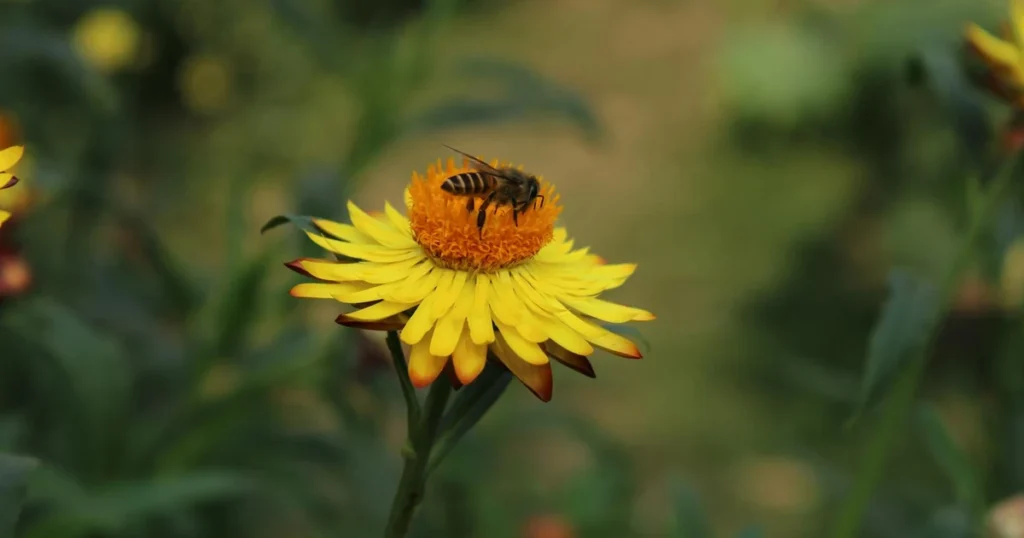
North Carolina is home to more than 500 bee species, from the familiar honey bee to dozens of native solitary bees that most homeowners never notice. Most bees you encounter are beneficial insects that pollinate crops, native plants, and garden flowers. But a few species nest in or near your home in ways that warrant attention. Knowing the difference helps you protect pollinators and protect your property at the same time.
Key Takeaways
- North Carolina hosts 500+ bee species, including honey bees, bumble bees, carpenter bees, leafcutter bees, and many native solitary bees.
- Most native bees are non-aggressive and pose minimal risk to homeowners unless a nest is disturbed.
- Carpenter bees can cause structural wood damage over several years and warrant monitoring or treatment.
- Honey bee hives inside walls require professional removal, not standard pest control spray.
- Research published in The American Journal of Medicine found that roughly 84.7% of bee stings occur at home residences, making yard awareness important.
Common Bee Species Found Across North Carolina
Honey Bees: North Carolina’s Most Recognized Pollinators
Honey bees (Apis mellifera) are not native to North America — they arrived from Europe with early colonists and have been managed by beekeepers in North Carolina for centuries. They live in large colonies of 20,000 to 80,000 individuals, produce wax and honey, and forage several miles from their hive. Wild honey bee colonies frequently establish hives inside wall cavities, tree hollows, and attic spaces, which is when homeowners first discover them. North Carolina beekeepers play a major role in supporting these colonies; the state’s beekeeping industry supports both local honey production and agricultural pollination.
Bumble Bees: Large Native Bees in North Carolina Gardens
Bumble bees are large, fuzzy, and distinctly striped in black and yellow. Unlike honey bees, bumble bees are native pollinators that nest in the ground, under decks, or in dense grassy areas. Colonies are much smaller, typically 50 to 400 individuals, and they die off each winter. Only mated queens survive to start new colonies in spring. Bumble bees are excellent pollinators for native plants and crops because of a behavior called buzz pollination, where they vibrate their flight muscles to release pollen from flowers. They rarely sting unless a nest is directly disturbed.
Carpenter Bees: North Carolina Wood-Nesting Species
Carpenter bees drill perfectly round, half-inch holes into unfinished or weathered wood to create nesting cells for their eggs. They target fascia boards, deck rails, wooden siding, and outdoor furniture. Female carpenter bees excavate tunnels several inches deep, depositing pollen and nectar inside each cell. Males hover aggressively near nests but have no stinger. Over years of repeated use, the same tunnels are widened and extended, which is where structural damage accumulates. Carpenter bees are solitary insects, meaning each female maintains her own nest rather than forming a colony.
Leafcutter Bees: North Carolina’s Solitary Garden Bees
Leafcutter bees are solitary native bees that cut circular sections from leaves to line their nesting cells. You’ll notice their work as clean, semicircular notches on rose, azalea, or other garden plant leaves. They nest in hollow stems, wood cavities, or small gaps in structures. Leafcutter bees are important native pollinators and are entirely non-aggressive. They do not form colonies, and a single female poses no meaningful risk to people or pets near the garden.
Other Native Bees You’ll Encounter in the Piedmont and Beyond
North Carolina’s native bee community extends well beyond bumble bees and leafcutters. Ground-nesting bees are among the most common insects you’ll find in bare or sandy soil, particularly in the Piedmont region. Sweat bees, mason bees, cellophane bees, and spring beauty bees all forage on native plants and flowers across the state. Most people never identify these species because they’re small, solitary, and uninterested in people. The University of North Carolina extension services have documented hundreds of native bee observations across the state, reflecting how rich the pollinator landscape here actually is.
Why Bees in North Carolina Matter to Pollination
Bees are responsible for pollinating roughly one-third of the food Americans eat, and North Carolina’s agriculture depends on them heavily. Blueberries, cucumbers, squash, watermelons, and many other crops grown across the state require bee pollination to set fruit. Beyond agriculture, native bees pollinate hundreds of native plants that form the foundation of local ecosystems. Without native pollinators, the plants that feed birds, insects, and other animals would decline. Butterflies, moths, and other pollinators share this role, but bees are the most efficient and widespread. Supporting bee populations, including leaving native plants in your yard, directly supports this food system.
Understanding Honey Bee Hives Inside NC Homes
When honey bees establish a hive inside a wall, removing them correctly matters more than removing them fast. A mature hive holds thousands of bees, pounds of wax comb, and significant honey stores. Spraying a hive inside a wall without removing the comb leaves the honey to ferment and attract other pests, including ants, beetles, and rodents. The wax can also melt in summer heat and seep through walls. The correct approach involves physically removing the comb and relocating or treating the colony. If you’ve found honey bees establishing inside your home, contact a professional rather than attempting a spray treatment yourself.
Honey bee swarms are a different situation. A swarm is a cluster of bees resting temporarily, usually on a branch or fence post, as scout bees search for a new hive location. Swarms are calm, non-defensive, and typically move on within 24 to 72 hours. Leave them alone if possible. If a swarm has been in place for more than three days or is in a high-traffic area, a beekeeper can often collect it for free. Swarm collection is not pest control; it’s bee relocation.
When Bee Activity in NC Becomes a Home Problem
Carpenter Bee Damage in North Carolina Wood Structures
Carpenter bee damage compounds over multiple seasons. A single female drilling one tunnel causes minimal harm. But carpenter bees return to the same nesting sites year after year, and multiple females may expand the same structure simultaneously. After several years, the tunnels weaken wood from the inside. Woodpeckers sometimes follow carpenter bee activity, drilling into the same wood to reach the larvae, which accelerates visible damage. The best prevention is painting or staining bare wood, which discourages drilling. For active infestations, a pest control technician can treat nesting tunnels directly.
Stinging Risk: What North Carolina Homeowners Should Understand
Most bee stings happen at home, not in the wilderness. According to research on honeybee stings published in The American Journal of Medicine, 84.7% of stings reported to poison control centers occurred at residence locations. For most people, a sting causes localized pain, redness, and swelling that resolves within hours. The more serious concern is anaphylaxis. A 2024 review of honeybee sting envenomation published in Frontiers in Immunology documents the clinical range of reactions, from mild local responses to systemic anaphylaxis requiring emergency care. Anyone who experiences throat swelling, difficulty breathing, or dizziness after a sting should seek immediate medical attention. If you know you’re allergic, keep an epinephrine auto-injector accessible when working outdoors.
Nests Near High-Traffic North Carolina Outdoor Spaces
Nests positioned near doors, play areas, or HVAC equipment create meaningful sting risk, even from non-aggressive species. Bumble bee nests in the ground can be accidentally stepped on. Carpenter bee nests above door frames put people directly in the flight path of hovering males. Honey bee colonies inside soffit voids become defensive if the wall is vibrated by mowing or knocking. None of these situations require panic, but they do require attention. A pest control professional can assess whether a nest is in a location where treatment or relocation is warranted.
How Sage Treats Bee Problems in North Carolina Homes
Sage Pest Control’s standard service plan covers non-honey bees and paper wasps. Carpenter bees and other non-honey bee species are included in the standard General Pest Control package, which covers inspection, targeted treatment, and nest removal where accessible. Honey bees and yellow jackets require specialized treatment programs outside the standard plan, and Sage will advise you on the right approach when those are identified.
Sage serves Charlotte, Raleigh, Greensboro, and Virginia Beach. Same-day service is available 90 to 95% of the time, and you can reach the team by text in under a minute. If you spot carpenter bee activity or a nest near a doorway, there is no reason to wait.
All treatments follow integrated pest management principles recommended by the EPA, targeting active nesting sites and entry points rather than applying broad treatments across the yard. That approach protects beneficial pollinators while controlling the species causing damage or posing risk near your home.
Protecting Native NC Pollinators While Managing Pest Bees
The goal is not to remove every bee from your yard, it’s to address the ones nesting in places that damage your home or put your family at risk. Solitary native bees foraging in your garden are assets. They pollinate your vegetables, flowers, and native plants without forming aggressive colonies or causing structural harm. You can support them by planting native plants, leaving some bare soil in garden beds for ground nesters, and avoiding broad treatments in areas where they forage. The distinction between a carpenter bee drilling into your fascia board and a sweat bee visiting your coneflowers is exactly the distinction that good pest management makes.
Frequently Asked Questions
What types of bees are most common in North Carolina?
North Carolina hosts more than 500 bee species. The most commonly encountered by homeowners are honey bees, bumble bees, carpenter bees, and leafcutter bees. Native solitary bees, including sweat bees, mason bees, and ground-nesting species, are widespread but rarely noticed because they’re small and non-aggressive. Honey bees are the most likely to establish hives inside structures.
Are carpenter bees dangerous to my home in NC?
Carpenter bees cause structural damage over time by drilling nesting tunnels into unfinished wood. A single season of activity is minor, but repeated use of the same tunnels over several years weakens wood from the inside. Woodpecker activity at the same sites compounds the damage. Painting or staining exposed wood discourages drilling, and a pest technician can treat active tunnels directly.
Should I remove a honey bee swarm from my North Carolina yard?
Most swarms disperse on their own within 24 to 72 hours and do not require intervention. If the swarm is in a high-traffic area or has been in place for more than three days, a local beekeeper can often collect it at no charge. Do not spray a swarm yourself; the bees are not defensive and removal is straightforward for a professional.
What should I do if I find a bee nest inside my wall?
Call a pest control professional rather than attempting a spray treatment. A honey bee hive inside a wall contains comb and honey that must be physically removed along with the colony. Leaving comb in place after treatment attracts other pests and can cause honey to seep through your walls during warm months. Sage Pest Control can assess whether the nest is honey bees (requiring a specialized program) or another species covered under a standard plan.
How do I tell bumble bees and carpenter bees apart in NC?
Bumble bees have a fully fuzzy abdomen with dense yellow and black hair. Carpenter bees are similar in size but have a shiny, bare black abdomen. Bumble bees nest in the ground or in dense grass; carpenter bees drill round holes into wood. Both are common across North Carolina, but only carpenter bees cause structural damage to homes.
