
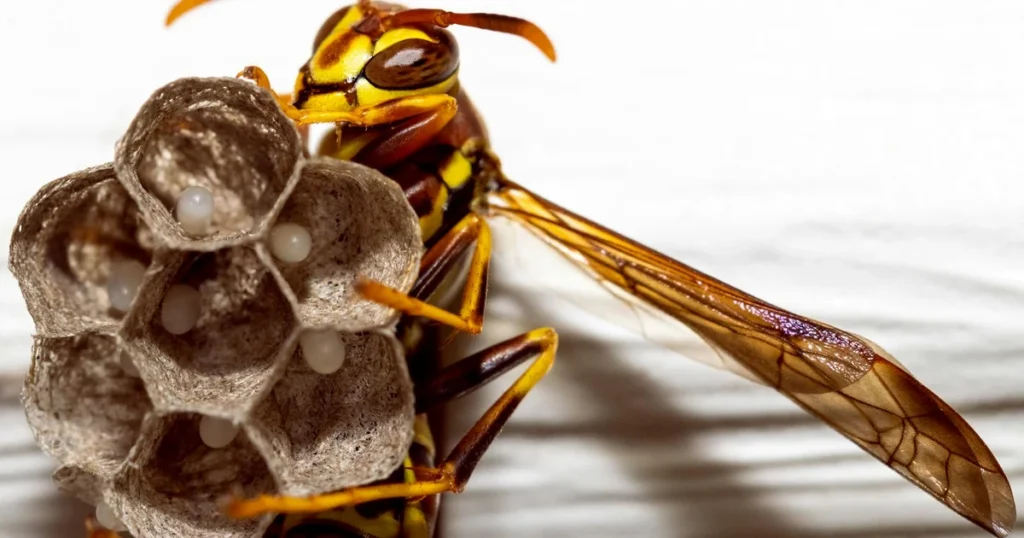
Virginia homeowners deal with at least five wasp species that nest in eaves, wall voids, attics, and ground holes around residential properties. Some are territorial and sting repeatedly when disturbed. Others are beneficial insects that control garden pests and rarely bother you unless you provoke them. Knowing which species you’re dealing with determines whether you need professional pest control or just some distance.
Key Takeaways
- Virginia Beach is home to paper wasps, yellow jackets, bald-faced hornets, European hornets, and mud daubers — each with different nesting habits and aggression levels.
- Yellow jackets and bald-faced hornets are the most dangerous species near your home because they defend nests aggressively and can sting multiple times.
- Paper wasps are included in Sage’s standard pest control plan. Yellow jackets, bald-faced hornets, and honey bees require a specialized treatment program.
- According to EPA integrated pest management guidelines, professional treatment is recommended when nest location, colony size, or sting risk makes DIY removal unsafe.
- Sage Pest Control responds to service requests in under one minute by text and offers same-day service for Virginia Beach homeowners.
Common Wasps Found in Virginia Homes and Yards
Five wasp types account for nearly every nest call we get in Virginia Beach. We’ve lined them up by sting risk. Match what you’ve seen on body shape, color, and nest location, then decide whether it’s a leave-it-alone or call-us situation.
/01
Yellow jacket
Stings
/02
Bald-faced hornet
Stings
/03
European hornet
Stings
/04
Paper wasp
Stings
/05
Mud dauber
Stings
Wasps tucked away in a back corner can usually stay. Wasps near a doorway, deck, or kid traffic should come down before the colony gets big.
Most stinging insect calls in Virginia come from five species: paper wasps, yellow jackets, bald-faced hornets, European hornets, and mud daubers. Each builds nests in different locations and reacts differently when it feels threatened. Misidentification is more common than most homeowners realize. A study published in the Annals of Allergy, Asthma and Immunology found that adults correctly identified paper wasps only 50.9% of the time, which means the pest you think you have may not be the one you’re actually dealing with.
Paper Wasps in Virginia: Slender, Hanging Nests
Paper wasps build open, umbrella-shaped nests that hang from eaves, door frames, deck railings, and window trim. Their nests look like honeycomb and are never enclosed in a paper envelope. The wasps themselves are slender, with long dangling legs visible during flight. They are social wasps but less aggressive than yellow jackets. They will sting if you reach near the nest or handle one directly. Paper wasps are beneficial insects because they prey on caterpillars, flies, and other garden pests that damage landscaping and vegetable gardens. Paper wasps are included in Sage’s standard general pest control plan.
Yellow Jackets in Virginia: Ground Nests and Wall Voids
Yellow jackets are the most commonly misidentified wasps in Virginia. They are stocky, bright yellow and black, and move in fast erratic patterns. They build large colonies in ground nests, wall voids, attics, and hollow trees. A mature yellow jacket colony can hold several thousand workers by late summer. Yellow jackets are aggressive when disturbed and will pursue a perceived threat over a significant distance. They also scavenge for food, which is why they show up at outdoor meals and trash cans. Yellow jackets require a specialized treatment program and are not included in Sage’s standard plan.
Bald-Faced Hornets in Virginia: White and Black, Aerial Nests
Bald-faced hornets build large, enclosed gray paper nests that hang from trees, shrubs, and the sides of structures. They are identified by a white-and-black face pattern, which distinguishes them from yellow jackets and other wasps. Scientifically classified as Dolichovespula maculata (the baldfaced hornet), they are technically a yellowjacket species rather than a true hornet. Their colonies peak in late summer with hundreds of workers that defend the nest aggressively when disturbed. Do not approach an active bald-faced hornet nest. These stinging insects require professional removal.
European Hornets in Virginia: Large, Active at Night
European hornets are the only true hornet species found in Virginia. They are large, reaching up to 1.5 inches, with a yellow-and-brown pattern rather than the sharp black-and-yellow of yellow jackets. European hornets build nests in protected places: hollow trees, attics, wall voids, and abandoned structures. One distinctive trait is their nighttime activity. They are attracted to lights after dark, which surprises homeowners who spot a large stinging insect flying at a porch light. European hornets sting when threatened and require a specialized treatment program.
Mud Daubers in Virginia: Solitary and Low-Risk
Mud daubers are solitary wasps that build small tube-shaped nests from mud on exterior walls, garage doors, and porch ceilings. They are dark brown or black, sometimes with yellow markings, and slender. Mud daubers do not form colonies and are not territorial. Females sting only if physically handled. They are beneficial insects that prey on spiders and other insects to provision their larvae. In most cases, mud dauber nests can be removed manually without professional treatment. The main complaint from homeowners is the mud residue they leave on painted surfaces.
Where Wasps in Virginia Nest Near Your Home
Nest location is the most reliable way to identify which species you have before calling for help. Each species has predictable preferences driven by its biology and colony behavior.
Ground Nests and Wall Voids in Virginia Properties
Ground-nesting yellowjackets choose abandoned rodent burrows, gaps in mulch, and voids beneath decking. The nest entrance is a small hole in the soil, often with visible worker traffic during the day. Wall voids are a second common location, especially in older Virginia Beach homes with exterior wood siding or gaps around utility penetrations. A colony inside a wall void is harder to treat because the nest is inaccessible from the surface. Both ground nests and wall voids require professional treatment to access the colony and apply targeted treatment to the nest site.
Eaves, Attics, and Trees in Virginia Homes
Paper wasps favor eaves, door frames, and deck overhangs because these protected places mimic natural nesting sites under bark and in hollow trees. Bald-faced hornets prefer tree branches and shrubs but will also build aerial nests under roof overhangs. European hornets nest in attics and hollow trees with entry points at small gaps in the roofline or soffit. If you see a large enclosed gray paper nest hanging from a tree branch or roof overhang, treat it as a bald-faced hornet nest until a professional confirms otherwise.
Wasp Stings in Virginia: When Nests Become Dangerous
Not all wasps pose the same risk, but any nest within five feet of a doorway or high-traffic area is a problem worth addressing. Social wasps, including yellow jackets, bald-faced hornets, and paper wasps, defend their colonies as a group. A single disturbance can trigger multiple stings from multiple workers simultaneously. For anyone with a known allergy to Hymenoptera venom, a single sting can trigger anaphylaxis. Research published in Frontiers in Immunology on Hymenoptera venom allergy documents how wasp venom can cause systemic allergic reactions that require immediate medical attention, even in individuals without a prior sting history.
Colony size increases sting risk as the season progresses. Queens start new nests in spring with only a few workers. By August and September, colonies reach peak size. Yellow jackets are most aggressive in late summer and early fall when food sources become scarce and workers forage more broadly around human activity. Cold weather kills off workers in late fall, and nests are not reused the following year. However, the same location often attracts a new colony the next spring if conditions remain favorable.
How Sage Treats Wasps in Virginia Homes
Sage’s standard pest control plan covers paper wasps, including nest removal and perimeter treatment. Yellow jackets, bald-faced hornets, and European hornets require a specialized program because their colonies are larger, nests are less accessible, and treatment methods differ by species and nest location.
Every Sage service starts with an inspection. The technician identifies the species, locates the nest, and assesses conditions that may be drawing wasps to the property, including food sources, standing water, and structural gaps that provide protected nesting sites. Treatment targets active nests directly. Sage also performs de-webbing and nest removal as part of the service, which addresses the physical nest and reduces the chance of new queens selecting the same location the following spring.
For homeowners on Sage’s tri-annual plan, the service visits are timed to the seasons when wasp activity peaks in Virginia. Between scheduled visits, Sage provides free re-services if wasp activity returns. The plan starts at $299 for the initial visit, then $49 per month for homes up to 5,000 square feet. Sage responds to text messages in under one minute and offers same-day service for Virginia Beach homeowners in most cases.
Sage holds GreenPro certification and uses EPA-registered products applied according to label protocols. Treatments target nest sites and colony activity rather than broad broadcast applications across the yard. For complex situations involving ground nests in wall voids or large aerial hornet nests, technicians follow the integrated pest management framework recommended by the EPA, matching treatment method to species biology and nest location.
Preventing Wasps from Nesting in Virginia Yards
The best time to address wasps in Virginia is early spring, before colonies establish. Queens scout for protected places to start new nests as early as February or March and mostly finish by early May. Removing conditions that attract queens reduces the chance of finding an active colony by summer.
- Seal gaps in soffits, eaves, and exterior walls before spring. Even small openings provide access to attics and wall voids.
- Remove abandoned nests from prior seasons. Queens will not reuse old nests, but the same site remains attractive to new queens if it offers shelter.
- Keep outdoor food and beverages covered. Yellow jackets are drawn to proteins and sugars, especially at outdoor meals.
- Secure trash cans with tight-fitting lids. Open trash is a consistent food source that increases yellow jacket foraging near your home.
- Trim dense shrubs and hedges where bald-faced hornets build aerial nests.
- Check door frames, deck rails, and window trim monthly during spring and summer. Paper wasp queens build small starter nests that are easy to knock down before eggs are laid.
Frequently Asked Questions
Are yellow jackets and wasps the same insect in Virginia?
Yellow jackets are a type of wasp, not a separate species. Virginia has several yellowjacket species, including ground-nesting yellowjackets and aerial yellowjackets like the bald-faced hornet. When most homeowners say “wasp,” they usually mean paper wasps or yellow jackets. The key difference is behavior: yellow jackets are more aggressive and build larger colonies than paper wasps.
When do wasps become most active in Virginia?
Wasp colonies build through spring and peak in late summer, typically August through October. Yellow jackets are most aggressive in this window because colony size is at its largest and food sources become scarcer as temperatures drop. Paper wasp nests also reach their largest size by late summer before cold weather kills off workers in late fall.
Do wasps come back to the same nest each year?
No. Workers and males die off each fall, and existing nests are not reused. However, new queens will scout the same protected places the following spring if conditions remain favorable. Removing old nests and sealing gaps in eaves, soffits, and wall voids reduces the chance of a new colony establishing in the same spot.
Which wasps in Virginia sting multiple times?
Unlike honey bees, wasps do not lose their stinger after a sting. Social wasps, including yellow jackets, paper wasps, and bald-faced hornets, can sting repeatedly. Yellow jackets are the most likely to sting multiple times because they respond to disturbance as a group. A nest near a doorway or play area is a direct risk to anyone who accidentally disturbs it.
Does Sage Pest Control treat yellow jackets in Virginia Beach?
Yellow jackets, bald-faced hornets, and European hornets require a specialized treatment program and are not included in Sage’s standard general pest control plan. Paper wasps are covered under the standard plan, including nest removal and perimeter treatment. Contact Sage by text for a same-day assessment of which species you have and which program applies.
