
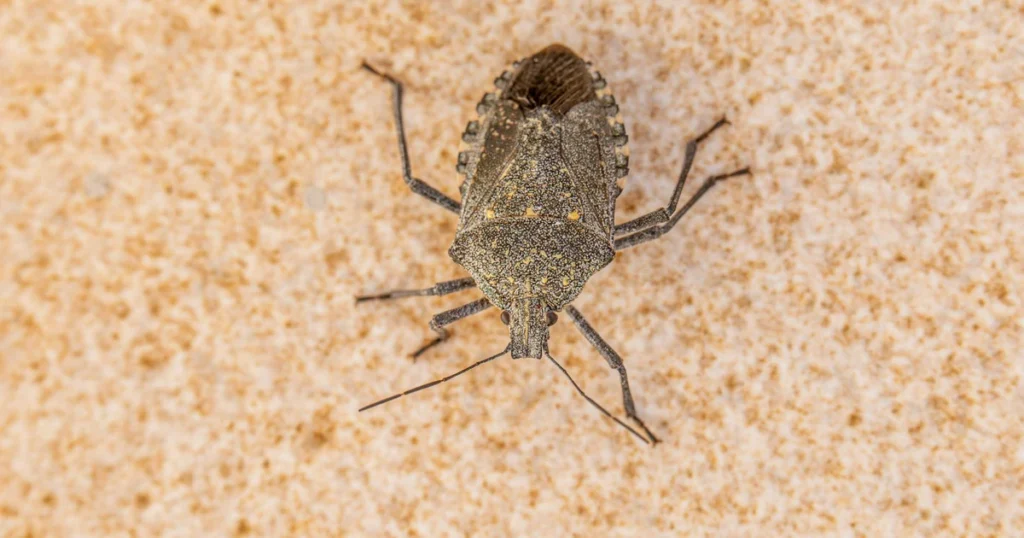
Stink bugs in Virginia arrive by the thousands every fall, squeezing through window gaps, torn screens, and loose weather stripping to overwinter inside your walls. They do not bite, they do not breed indoors, and they do not damage your home’s structure — but crush one by accident and you will understand exactly how they got their name. Here is what you need to know to keep them out.
Key Takeaways
- The brown marmorated stink bug is the dominant species in Virginia, arriving from Asia and first detected in the U.S. in the late 1990s.
- Stink bugs gather in large numbers on south-facing walls starting in late August, then push inside as temperatures drop.
- Sealing entry points — gaps, vents, windows, and doors — is the most effective prevention step you can take before fall.
- Crushing or vacuuming stink bugs releases their odor; drop them in soapy water instead.
- Professional perimeter treatments can help control stink bug pressure before they enter your home.
What Stink Bugs in Virginia Actually Look Like
The brown marmorated stink bug (Halyomorpha halys) is the species most Virginia homeowners encounter, and it is easy to identify once you know what to look for. The insect is shield-shaped, roughly the size of a dime, and mottled brown with lighter banding on its antennae and abdomen edges. It has six legs, a triangular plate on its back called a scutellum, and alternating light and dark bands along the outer edge of its abdomen. According to a comprehensive review published in the Annual Review of Entomology, the brown marmorated stink bug spread rapidly across North America following its accidental introduction, and Virginia sits squarely in the core of its established range.
Virginia is also home to several native stink bug species. The green stink bug is bright green and feeds heavily on fruit and vegetable crops. The southern green stink bug has a similar appearance but is slightly smaller, with a more uniform coloring. The brown stink bug is a duller tan-brown and lacks the marmorated patterning of the invasive species. The spined soldier bug is a native species that actually acts as a predator, feeding on other insects rather than plants — making it a beneficial species worth recognizing before you reach for the spray. All share the same shield-shaped body, but their behavior and seasonal patterns differ.
Types of Stink Bug Species Found in Virginia
Virginia hosts both invasive and native stink bug species, each with distinct habits and host plants. Adult stink bugs of most species measure between 14 and 17 millimeters long. Their antennae are segmented, and their mouthparts are built for piercing plant tissue and feeding on the juices inside. The stink itself comes from glands on their abdomen that release a pungent compound when the insect feels threatened — avoid crushing them at all costs. The odor is their primary defense against predators, and it works on humans just as well.
The spined soldier bug deserves a closer look. Unlike other stink bug species that damage plants, this native species hunts caterpillars and beetle larvae, functioning as a form of natural biological control in Virginia gardens. If the stink bug you find has a pointed spine on each shoulder and feeds on other insects rather than your tomatoes, it is doing your yard a favor. Leave it alone.
When Stink Bugs Arrive in Virginia Homes Each Fall
Stink bug season in Virginia peaks between late August and mid-October, when cooling temperatures trigger the insects’ search for overwintering sites. A Virginia-specific field study tracking seasonal movement — published in the Journal of Economic Entomology by Hadden et al. (2021) — documented the shift of brown marmorated stink bug populations from woodland edges into adjacent structures as summer ends. Once inside a wall void or attic space, they enter a semi-dormant state and wait out winter. They do not feed or reproduce during this period.
Early spring brings the second wave. As temperatures climb back above 70 °F, overwintering stink bugs become active again and begin searching for exits. That is when many homeowners find them crawling across windows and light fixtures, disoriented and slow. Two generations of stink bugs may develop each year in the Mid-Atlantic region, meaning summer populations can be significant even before fall congregation begins. Addressing the problem in early spring — before the summer generation matures — reduces fall pressure on your home.
Why Stink Bugs in Virginia Gather on Homes in Huge Numbers
Stink bugs are drawn to warm, south-facing walls in fall because heat signals a suitable overwintering site. They aggregate in large numbers on sun-warmed exterior surfaces, then follow warmth, light, and air currents into gaps in the structure. Research published in PLoS ONE by Wallner et al. (2014) found that brown marmorated stink bugs spread most aggressively through urban and suburban corridors, making Virginia Beach and the Charlotte-to-Greensboro corridor prime territory for home invasions. Structures near wooded areas or agricultural fields tend to see heavier pressure because both environments provide summer feeding habitat close to your exterior walls.
What attracts stink bugs to your house specifically? Light is a major draw, especially at night. Stink bugs orient toward light sources, which means porch lights, illuminated windows, and even interior lights visible through gaps pull them in. Gaps around doors, windows, vents, and utility penetrations give them the access they need once they arrive at your exterior. A single crack smaller than a quarter of an inch is enough for an adult stink bug to squeeze through.
What Stink Bug Damage Looks Like on Plants in Virginia
Stink bugs cause significant stink bug damage to fruit trees, vegetable crops, and ornamental plants across Virginia. The brown marmorated stink bug feeds on more than 100 plant species, with particularly heavy feeding on apples, peaches, tomatoes, peppers, corn, soybeans, and beans. When feeding, the insect pierces the fruit or vegetable skin and injects saliva to liquefy plant tissue before consuming it. The result is a characteristic dimpling or cat-facing on fruit, with underlying corky tissue beneath the skin. On tomatoes and peppers, feeding leaves white or yellow cloud-like spots on the surface.
Virginia’s fruit and vegetable crops have sustained measurable losses from stink bug feeding, particularly in the Shenandoah Valley apple-growing region. For home gardeners, look for cloud-like feeding spots on fruit surfaces and stippled, discolored foliage as the first sign of stink bug activity in the garden. Row covers and fine mesh netting over fruit trees and vegetable crops reduce feeding pressure during peak summer months before insects begin their fall migration into structures.
How to Get Rid of Stink Bugs in Virginia Homes
The most reliable way to get rid of stink bugs already inside your home is to remove them without crushing. Drop live stink bugs into a container of soapy water — the dish soap breaks the surface tension and the insects sink. This method works for small numbers of overwintering insects that have wandered into living spaces. Do not swat them, do not vacuum them unless your vacuum exhausts outside, and do not crush them against surfaces. The odor from a crushed stink bug also attracts other stink bugs, compounding the problem.
Traps designed for stink bugs use light and aggregation pheromones to draw insects in. Place traps near windows and doors in dark rooms where stink bugs tend to congregate. These traps work best as monitoring tools to confirm activity and concentration points rather than as a stand-alone solution for large populations. For significant indoor infestations, professional perimeter treatment applied to exterior surfaces before fall is the most effective approach to controlling the number of stink bugs that enter.
Sage Pest Control’s tri-annual treatment program includes exterior perimeter service designed to reduce pest pressure on your home’s exterior, which directly targets the congregation behavior stink bugs display in late summer and fall. Treatments follow the EPA’s integrated pest management framework, targeting insects at the structure’s exterior before they find entry points. If activity spikes between scheduled visits, the free re-service guarantee means a technician returns at no additional cost.
How to Prevent Stink Bugs in Virginia Before Fall Arrives
Sealing entry points is the single most effective step you can take to prevent stink bugs from overwintering inside your home. Work through this checklist before late August, when congregation behavior begins:
- Inspect and replace torn screens on windows and doors. Even small tears allow entry.
- Apply weather stripping to exterior doors. Check that door sweeps seal completely with no visible gaps at the threshold.
- Seal gaps around utility penetrations — pipes, conduit, cable lines — with caulk or expanding foam.
- Check vents in soffits, attics, and crawlspaces. Cover open vents with fine-mesh screening.
- Caulk around window frames and door frames where paint or caulk has cracked or pulled away from the structure.
- Fill gaps at the base of siding, around foundation vents, and anywhere two materials meet on the exterior wall.
Exterior lighting management also reduces stink bug pressure. Switch porch and exterior lights to yellow or sodium vapor bulbs, which attract fewer insects than white or UV-emitting bulbs. Draw blinds and curtains at night during peak stink bug season to limit interior light visible from outside. These steps will not stop every stink bug in Virginia from finding your home, but they measurably reduce the number that successfully get inside.
Natural Predators and Biological Control in Virginia
Brown marmorated stink bugs have few effective natural enemies in North America because they arrived without the predators that kept populations in check in their native range. In Asia, a small parasitic wasp — Trissolcus japonicus, sometimes called the samurai wasp — targets stink bug eggs and provides meaningful biological control. The wasp is now present in Virginia, having arrived on its own through natural spread, and researchers at Virginia Tech’s Department of Entomology have been studying its establishment and effectiveness across the Mid-Atlantic states. Early findings are promising, though the wasp’s impact on local stink bug populations is still developing.
Native predators including birds, spiders, and predatory insects do consume stink bugs, but not at rates that control population size effectively. The odor acts as a genuine deterrent to most predators, which is precisely why the brown marmorated stink bug has thrived in its new environment. For now, exclusion and professional exterior treatment remain more reliable than counting on natural enemies to reduce indoor pressure.
When to Call a Pest Control Professional in Virginia
Call a pest control professional when stink bugs are entering your living spaces in large numbers despite DIY exclusion efforts. If you have sealed obvious gaps and are still finding dozens of stink bugs inside each week during fall, the insects are entering through areas that require a trained inspection to locate. Common hidden entry points include gaps inside wall voids where utilities run, deteriorated caulk behind fixtures, and structural gaps in older homes that are not visible from a basic exterior walk-around.
Professional exterior perimeter treatment applied in late summer — before congregation begins — reduces the number of stink bugs that reach your walls and attempt entry. Sage Pest Control serves Virginia Beach homeowners with same-day service availability and a text-first contact process that connects you with a technician in under a minute. If you are heading into your first fall in a home with a history of stink bug pressure, scheduling a perimeter treatment before late August puts you ahead of the problem rather than behind it.
Frequently Asked Questions
Do stink bugs in Virginia bite or sting?
Stink bugs do not bite humans or pets and do not sting. Their mouthparts are designed for piercing plant tissue, not animal skin. They are a nuisance pest because of their odor and the large numbers in which they enter homes, not because of any direct threat to people or animals. The only real risk is the smell from a crushed or disturbed insect.
Why do I keep finding stink bugs inside my home in winter?
Stink bugs that entered your walls in fall become active again whenever indoor temperatures rise enough to warm the wall void or attic where they are hiding. A warm spell as early as February or March and mostly finish by early May or a consistently heated interior can rouse overwintering stink bugs and send them toward light sources inside your living space. They are not a new infestation — they are the same insects that entered in fall, now disoriented by warmth. Sealing entry points before the following fall is the fix.
Will stink bugs damage my home’s structure?
Stink bugs do not damage wood, wiring, insulation, or any structural material inside your home. They do not feed during overwintering and do not breed indoors. The damage they cause is limited to agricultural crops and ornamental plants outdoors. Inside, the concern is purely the odor from crushed insects and the discomfort of finding large numbers in living spaces.
What is the best way to remove stink bugs without the smell?
Drop them into a container of soapy water using a piece of cardboard or a jar — avoid touching them directly. Dish soap mixed with water works well; the insects cannot escape the water’s surface tension. Avoid vacuuming stink bugs unless the vacuum vents to the outside, since the odor will accumulate inside the machine and release back into the room. Never crush them against a hard surface.
Are stink bugs in Virginia getting worse each year?
Brown marmorated stink bug populations in Virginia have fluctuated since the species established itself in the Mid-Atlantic states. Warm summers with abundant crops tend to support larger populations heading into fall. Ongoing research into biological control, particularly the samurai wasp’s establishment in Virginia, may reduce population pressure over time. For now, fall congregation events remain common across the state, particularly in areas near orchards, woodlands, and agricultural fields.
