
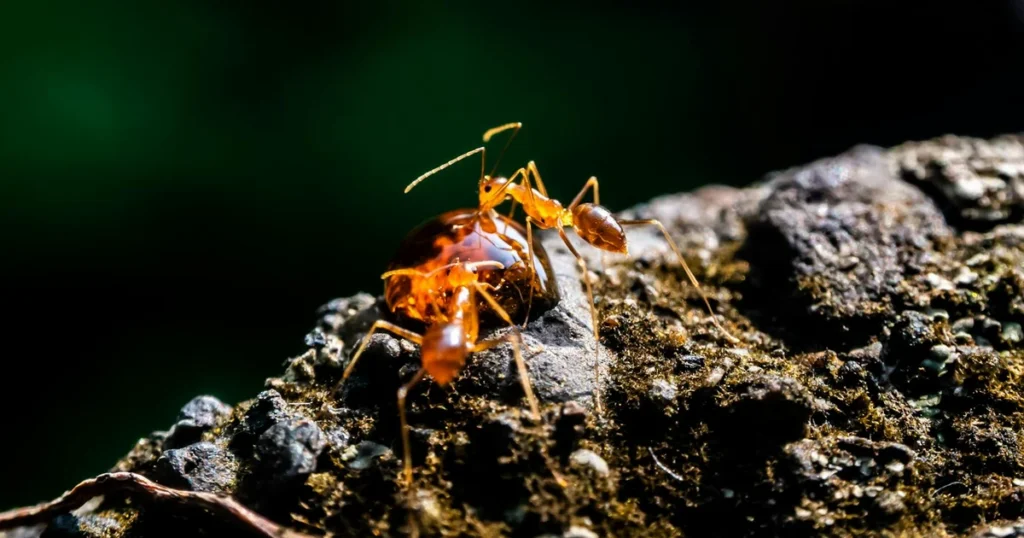
Fire ants in Virginia are no longer a distant southern problem. Red imported fire ants have established colonies across Southeast Virginia, including the Hampton Roads region, Colonial Heights, Prince George, and surrounding counties. They sting aggressively when disturbed, trigger serious allergic reactions in some people, and fall under a state quarantine that restricts how soil and plants can be moved out of infested areas.
Key Takeaways
- Red imported fire ants are an established invasive species in Southeast Virginia, with quarantine zones covering multiple counties.
- Fire ant mounds look like irregular, dome-shaped piles of loose soil with no visible entry hole on top.
- Stings cause intense burning pain and can trigger anaphylactic shock in sensitive individuals.
- Regulated articles including soil, sod, nursery stock, and farm equipment cannot leave quarantine areas without a compliance agreement.
- Professional treatment using targeted baiting or contact products controls active colonies more effectively than DIY methods like boiling water.
Are there fire ants in Virginia?
Yes. Imported fire ants are present in parts of Virginia, with the most established populations in the southeastern Tidewater region and along the North Carolina border. The Virginia Department of Agriculture maintains a quarantine map and tracks new findings each year. Activity is most visible in spring and after heavy rain, when colonies push fresh mounds into lawns, pastures, and disturbed soil.
Where Fire Ants in Virginia Have Spread
Red imported fire ants (Solenopsis invicta) first arrived in the United States from South America and have been expanding northward for decades. In Virginia, they are now established across a broad stretch of the southeast, including Hampton Roads, the Tidewater region, and inland counties such as Prince George and Colonial Heights. South Virginia localities continue to report new colonies, and the quarantine boundary has expanded in recent years to reflect this spread.
Virginia’s warmer coastal climate gives fire ants a foothold that colder inland regions cannot yet support. Research published in PLoS ONE documented how fire ant populations acclimate physiologically to cooler temperatures at higher elevations, suggesting the ants are better equipped for cold tolerance than originally assumed. That adaptability is one reason their northern range expansion has outpaced earlier predictions.
The Virginia Tech Department of Entomology maintains current research and identification guidance on fire ants across the state. If you spot a mound and are unsure of the species, Virginia Tech’s insect identification lab can confirm whether you are dealing with imported fire ants or a native ant species.
Counties and Cities Currently in the Quarantine Area in Virginia
The Virginia Department of Agriculture and Consumer Services (VDACS) manages the state’s fire ant quarantine, which covers multiple jurisdictions in Southeast Virginia. Newly quarantined areas are added as surveys confirm established populations. Cities and counties currently or recently included in the quarantine area include Hampton Roads localities, Colonial Heights, and Prince George. Check directly with VDACS for the current boundary, since the quarantine area expands as fire ant activity spreads to new locations.
Why Fire Ants in Virginia Especially Thrive in the Southeast
Fire ants prefer open, sunny locations with loose, non-compacted soil and access to moisture. Southeast Virginia’s flat terrain, warm summers, and developed landscape provide ideal conditions. Fire ant colonies concentrate in lawns, agricultural fields, roadsides, and disturbed soil. They build mounds in open ground rather than under objects, which makes them visible but also easy to disturb accidentally. When a mound is disturbed, hundreds of ants swarm out and sting aggressively within seconds.
How to Identify Fire Ant Mounds in Virginia Yards
Fire ant mounds are dome-shaped, irregular piles of loose, fluffy soil with no visible entry hole on the surface. Ants enter and exit through underground tunnels. Mounds range from a few inches to over a foot tall and can reach 18 inches or more in diameter in established colonies. After rain, mounds often appear rebuilt and larger, because the ants push fresh soil to the surface to repair damage.
The red imported fire ant is reddish-brown with a two-segmented club on its antennae. Workers vary in size within the same colony, which helps distinguish them from native ant species that tend to be more uniform. Black imported fire ants are also present in some Virginia localities, though the red imported fire ant is far more common. If you see a mound in a sunny location in your yard and the ants are aggressive when you approach, treat it as a fire ant mound until confirmed otherwise.
Signs of a Fire Ant Infestation Beyond the Mound in Virginia
Mounds are the most visible sign, but fire ant infestation can affect more than your lawn. Fire ants nest in soil attached to the root zones of potted plants and nursery stock, which is one reason the quarantine targets these items. They also colonize soil attached to grass sod, ground logs, and straw stored outdoors. Agricultural equipment and farm equipment that sits in infested areas can carry soil with live ants and eggs to new locations, which is how fire ants spread beyond their established range.
The Quarantine on Fire Ants in Virginia: What It Means for Homeowners
Virginia’s fire ant quarantine restricts the movement of regulated articles out of quarantine areas to prevent fire ants from spreading to new counties. Regulated articles include soil, soil attached grass sod, potted plants, nursery stock, soil shipped with any plant material, hay, straw stored outdoors, ground logs, and agricultural equipment. Moving these items out of a quarantine area without a compliance agreement from VDACS is a violation of the federal fire ant quarantine and state regulations.
For most homeowners, the practical impact is straightforward. You cannot legally haul soil, sod, or potted plants from a quarantine area to a non-quarantine county without going through the proper compliance process. If you are doing landscaping work, moving to a new property, or selling nursery stock, contact your local VDACS office to understand what is required. Commercial preparation plants and businesses that regularly move high-risk items out of quarantine areas must hold a compliance agreement.
What Homeowners in Quarantine Areas in Virginia Should Do
Living inside a quarantine area does not mean you cannot landscape, garden, or move plants around your own property. The restriction applies to regulated articles leaving the quarantine zone, not to activity within it. If you buy sod or plants from a nursery inside the quarantine area and use them on the same property, no compliance agreement is needed. The goal of the quarantine is containment, not a ban on normal yard and garden activity inside affected areas.
Health Risks from Fire Ant Stings in Virginia
Fire ant stings cause immediate, intense burning pain followed by a white pustule that forms within 24 hours. A single disturbed mound can produce a mass attack involving hundreds of ants stinging simultaneously. Most people experience localized pain, redness, and swelling that resolves within a few days. For people with allergic sensitivities, however, the reaction can be severe.
A 2024 review of stinging ant anaphylaxis published in The Journal of Allergy and Clinical Immunology: In Practice documents that fire ant stings are a leading cause of anaphylactic shock in the southeastern United States. Symptoms of anaphylaxis include hives spreading beyond the sting site, difficulty breathing, throat swelling, dizziness, and rapid heart rate. Anyone who experiences these symptoms after a sting needs emergency medical attention immediately.
Children, elderly individuals, and people who have had prior reactions are at elevated risk. If someone in your household has a known sting allergy, carry an epinephrine auto-injector and consult an allergist about venom immunotherapy options.
Protecting Children and Pets from Fire Ants in Virginia Yards
Fire ants sting aggressively at the slightest disturbance, which makes them a direct threat to young children and pets who may not recognize a mound before stepping on it. Inspect your yard for mounds before children or pets use the space, especially after rain when new mounds appear. Keep grass mowed short so mounds are visible. Teach children to recognize dome-shaped soil piles and to move away quickly without stomping.
Pets that disturb fire ant mounds during direct contact can receive dozens of stings before their owner realizes what is happening. Watch for sudden frantic behavior, pawing at the face, or excessive licking of the paws, which can signal a sting event. Contact a veterinarian if your pet shows signs of a severe reaction.
Treatment Options for Fire Ants in Virginia Yards
Controlling fire ants in Virginia requires a two-step approach: broadcast bait treatment across the yard, followed by targeted mound treatment for active colonies. Bait products work slowly, taking two to six weeks to reduce fire ant activity, but they spread through the colony as workers carry the bait back underground. Mound treatments using contact products work faster but only address individual colonies, not the broader infestation.
DIY methods like boiling water reduce individual mound activity temporarily but rarely reach the queen deep in the soil. Applying boiling water to a mound damages surrounding lawn as well. Granular broadcast baits are more effective for widespread fire ant activity across lawns and agricultural fields.
When to Call a Professional for Fire Ants in Virginia
Heavy fire ant infestations with multiple mounds across a yard are difficult to control with consumer products alone. Professional pest control technicians use EPA-registered products applied at precise rates, with treatment plans that follow the integrated pest management framework recommended by the EPA. This approach targets fire ants at multiple life stages and helps prevent new colonies from re-establishing.
Fire ants are not included in Sage’s standard general pest control plan. They require a specialized treatment program. Sage offers a fire ant coverage add-on starting at $59 per month for homes up to 5,000 square feet, combined with the tri-annual service plan. That plan includes free re-services between scheduled visits if fire ant activity returns before your next scheduled treatment.
If you are in Virginia Beach or another part of our service area and you are seeing fire ant mounds in your yard, text us. Response time is under one minute, and same-day service is available for most households. You do not have to wait through the weekend with an active fire ant infestation in your backyard.
Preventing New Fire Ant Colonies from Establishing in Virginia
Reducing the conditions that attract fire ants is the first step toward long-term control. Fire ants favor open, sunny locations with moist, loose soil. Inspect new nursery stock, potted plants, and sod before bringing them onto your property. Do not move soil or plant material from infested areas to non-infested areas, and inspect farm equipment and agricultural equipment that has been stored in open fields.
Keep your yard well maintained. Fire ants establish new colonies in disturbed soil and mow-cut areas. Reduce wildlife food sources near the foundation, since fire ants are opportunistic feeders and will move toward areas with consistent food availability. Monitor your property regularly, especially in spring and summer when fire ant activity peaks and new colonies form most rapidly.
Frequently Asked Questions
Are fire ants in Virginia dangerous to my family?
Yes. Fire ants sting aggressively when their mound is disturbed and can deliver dozens of stings in seconds. Most healthy adults experience localized pain and swelling that resolves within days. People with allergic sensitivities can develop anaphylactic shock, which requires emergency medical attention. Children and pets face the highest risk because they may not recognize a mound before making direct contact with it.
How do I know if a mound in my yard belongs to fire ants?
Fire ant mounds are dome-shaped, irregular piles of loose soil with no visible entry hole on top. They often appear or grow larger after rain. The ants are reddish-brown and vary in size within the same colony. When you approach or disturb the mound, fire ants swarm out and sting immediately. If you are unsure, Virginia Tech’s insect identification lab can confirm the species from a sample or photos.
What items are restricted under the Virginia fire ant quarantine?
The quarantine covers regulated articles that can carry live fire ants or eggs: soil, soil attached grass sod, potted plants, nursery stock, hay, straw stored outdoors, ground logs, and agricultural or farm equipment that has been in infested areas. Moving these items out of a quarantine area requires a compliance agreement from VDACS. Normal activity within the quarantine zone, such as gardening on your own property, is not restricted.
Can I treat fire ant mounds myself?
Consumer broadcast baits and mound drench products can reduce fire ant activity, but they rarely control a heavy infestation completely. Boiling water disrupts individual mounds temporarily but damages surrounding turf and rarely reaches the queen. For multiple mounds across a yard, professional treatment using calibrated product rates and a structured treatment plan provides more consistent results and faster colony reduction.
Does Sage Pest Control treat fire ants in Virginia Beach?
Yes. Fire ants require a specialized add-on to Sage’s tri-annual service plan. Fire ant coverage starts at $59 per month for homes up to 5,000 square feet, with free re-services included between scheduled visits. Same-day service is available for most Virginia Beach households. Text Sage for a response in under one minute.
