
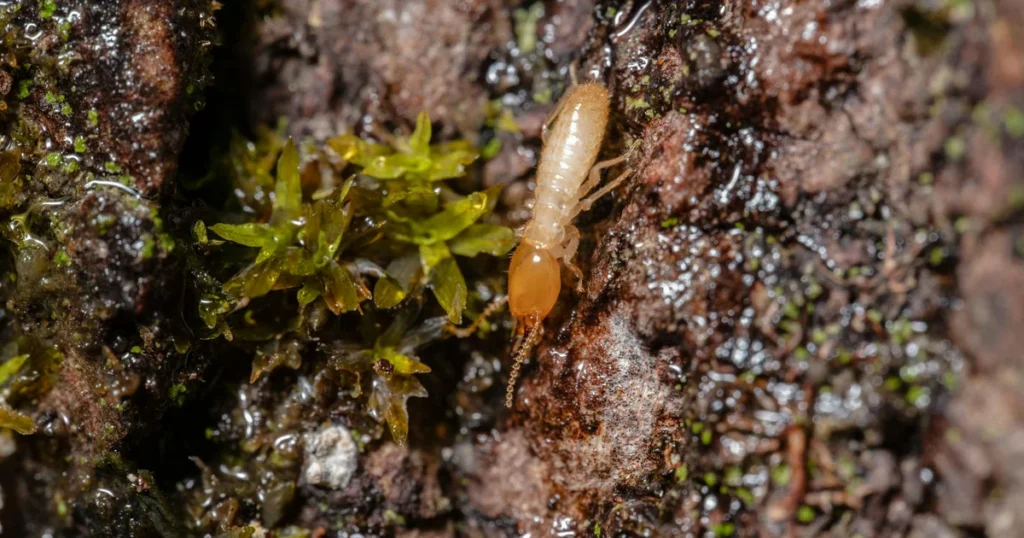
Subterranean termites cause the vast majority of termite damage in Virginia, entering homes through foundation cracks, plumbing penetrations, and anywhere wood contacts soil. Your home sits in prime termite territory year-round.
Key Takeaways
- Eastern subterranean termites are the dominant termite species in Virginia, living in underground colonies and traveling through mud tubes to reach structural wood.
- Termite swarms in Virginia typically occur in spring, when reproductive members leave colonies to start new ones nearby.
- According to a 2022 review published in Insects, termites cause an estimated $40 billion in economic damage globally each year, with subterranean species responsible for roughly 80% of that total.
- Mud tubes, hollow-sounding wood, and discarded wings near windows are the earliest warning signs of a termite infestation.
- Professional treatment options include the Trelona Advanced Termite Bait System and termiticide foundation trenching, both of which target subterranean termite colonies at the source.
Types of Termites Found in Virginia Homes
Two subterranean termite species reach Virginia homes, and one of them is spreading north fast. We’ve lined them up by how destructive the colony gets and how fast wood disappears. Match what you’ve seen on swarmer color, soldier shape, and where the activity is showing up.
/01
Formosan subterranean termite
No sting
/02
Eastern subterranean termite
No sting
If you’re finding mud tubes or piles of discarded wings, get an inspection before deciding on treatment. The two species respond differently to bait and trenching.
Eastern subterranean termites (Reticulitermes flavipes) are the species most Virginia homeowners encounter, and they are also the most destructive. They build underground colonies that can number in the hundreds of thousands, traveling through the soil and into structural wood using mud tubes as their highway. Research published in PeerJ examining subterranean termite species in Mid-Atlantic habitats documents that Reticulitermes flavipes, R. virginicus, and R. malletei all occupy overlapping ranges across the region, making Virginia one of the more termite-active states on the East Coast.
Eastern Subterranean Termites in Virginia: What They Look Like
Worker termites are pale, six-legged insects that resemble ants but lack the pinched waist ants have. Soldiers are larger, with distinctive orange heads and black pincers. Swarmers, the ones most homeowners actually see, are dark-colored with long white wings stacked flat, measuring roughly 3/8 of an inch. Winged insects emerging from soil or walls in spring are reproductive members starting new colonies.
Formosan Termites in Virginia: A Growing Concern
Formosan termites are sometimes called super termites because their colonies can grow significantly larger than native subterranean species, and they consume wood at a faster rate. While less prevalent in Virginia than in the Deep South, their range has expanded northward. Formosan termite colonies live underground like eastern subterranean termites but can also nest above ground in moist wood, making them harder to control once established.
Warning Signs of Termites in Virginia Homes
Most termite infestations go undetected for months because the damage happens inside walls, floor joists, and wooden structures the eye never reaches. Catching an infestation early depends on knowing exactly what to look for. A 2024 review in International Biodeterioration and Biodegradation covering termite detection methods in buildings confirms that visual inspection for mud tubes and damaged wood remains the most reliable detection method available to homeowners.
Signs of Termite Activity in Virginia Homes: Mud Tubes and Discarded Wings
Mud tubes on foundation walls are the clearest early sign of subterranean termite activity in Virginia. Termites build these pencil-width tunnels from soil to wood so they can travel without drying out. Check your foundation, crawl spaces, and basement walls. Alongside mud tubes, look for discarded wings on window sills, baseboards, and countertops. Swarmers shed their wings immediately after landing, so small piles of equal-length wings near light sources signal a recent swarm event.
Additional Signs of Termite Damage in Virginia Structures
Wood that sounds hollow when tapped, baseboards with honeycomb indents, and surfaces that look like water damage are all signs of termite infestation. You may also hear a faint clicking sound inside walls where termite workers are active. Wood beams that splinter under pressure they previously held, tiny kickout holes in hardwood floors, and termite droppings that resemble sawdust or dirt are all warning signs worth taking seriously. Do not wait for visible structural damage before calling for an inspection.
When Termite Swarms Happen in Virginia Each Year
Termite swarms in Virginia peak in Summer, typically through July, when warming soil temperatures trigger reproductive members to leave established colonies. Swarmers do not cause structural damage themselves, but their presence means a mature colony is living nearby. A termite swarm inside your home is a direct sign that termites are already working in the structure. Outdoor swarms near the foundation, wood debris, or tree stumps are a strong indicator that your home is at risk.
Termite Swarmers in Virginia vs. Flying Ants
Termite swarmers and flying ants look similar, but a close look at two features tells them apart. Termite swarmers have straight antennae and equal-length wings that extend well past their body. Flying ants have elbowed antennae and two pairs of wings where the front set is noticeably larger than the rear. Carpenter ants are another common lookalike. When in doubt, collect a sample and have it identified before assuming you have either one.
What Attracts Termites in Virginia to Homes
Moisture is the primary factor that draws termites toward a structure. Subterranean termite colonies need moist soil to survive, so leaking pipes, pooling water from air conditioners, clogged gutters, and poor drainage around the foundation all create conditions that attract termites and support active nests. Wood debris, decaying wood, tree stumps, leaf piles, and wood mulch placed directly against the foundation give termites a food source and direct access to the structure. Soil in direct contact with wood siding, door frames, or structural posts is an open invitation for subterranean termite colonies underground to expand into your home.
Conditions That Help Termites in Virginia Thrive Year-Round
Crawl spaces with poor ventilation trap moisture and create the damp soil conditions subterranean termites prefer. Dense shrubbery and landscaping pressed against exterior walls shade the soil, keeping it cool and moist. Firewood stored against the house is a documented termite magnet. During winter months, termites do not die off. They push deeper into the ground and continue feeding on wood in contact with warm interior spaces, which means termite activity can persist year-round in Virginia’s relatively mild climate.
How to Treat Termites in Virginia: Professional Options
Professional termite treatment in Virginia focuses on targeting subterranean termite colonies where they travel and feed, not just where they surface. The Virginia Tech Department of Entomology and the EPA’s integrated pest management framework both emphasize colony-targeted approaches over surface applications, because worker termites that never contact a treatment will continue feeding. Sage Pest Control uses two primary treatment methods, selected based on inspection findings and home conditions.
Trelona Bait Stations for Subterranean Termites in Virginia
The Trelona Advanced Termite Bait System, manufactured by BASF, targets subterranean termite colonies through a process of social transfer. Stations are installed in the soil around the perimeter of the structure approximately every 10 to 20 linear feet. Each station comes pre-loaded with two bait cartridges containing Novaluron, an active ingredient that prevents termites from molting when consumed. Worker termites feed on the bait and share it with other colony members through normal grooming and feeding behavior, gradually working through the colony. Colony activity can begin to decline in as few as 15 to 45 days. The bait remains effective for two to four years under typical conditions, and Sage technicians inspect stations annually and replace bait as needed.
Termiticide Foundation Trenching for Homes in Virginia
Termiticide foundation trenching creates a long-lasting vertical barrier around the structure that subterranean termites cannot cross without exposure. Technicians dig trenches around the foundation and apply a liquid termiticide barrier directly into the soil. When termite workers contact the treated zone, they carry the product back to other colony members through a transfer effect that spreads through the colony like a virus. Each application lasts approximately five years. After five years, Sage recommends either a fresh application or switching to the Trelona bait system for ongoing protection.
Termite Pre-Treatments for New Construction in Virginia
Pre-treatment is applied directly to the soil surface before concrete is poured for structural foundations. A blue dye is included so building inspectors can verify the treatment was applied correctly. Sage provides pre-treatments for new home construction, additions, remodels, commercial buildings, HOAs, and government structures across the Virginia Beach service area.
How to Prevent Termite Infestations in Virginia Properties
Prevention reduces the conditions that attract termites and cuts off the access points they use to enter a structure. These steps do not replace professional treatment if an infestation is already active, but they significantly reduce long-term risk.
- Create a crushed rock barrier of at least 12 to 18 inches between the foundation and any soil or mulch.
- Fix leaking pipes, leaky fixtures, and air conditioner drainage to prevent water from pooling near the foundation.
- Keep gutters clean so rainwater does not back up into roof and wall assemblies.
- Store firewood away from the house and off the ground.
- Remove tree stumps, decaying wood, and wood debris from the property.
- Keep shrubs trimmed and avoid dense plantings directly against exterior walls.
- Use exhaust fans in bathrooms and kitchens to reduce interior moisture.
- Repair any damage to foundation walls, exterior walls, or the roof that could allow termites to enter.
- Inspect antique wooden furniture for signs of drywood termites before bringing it inside.
Getting a Termite Inspection in Virginia Homes
A professional termite inspection checks every area where subterranean termite activity concentrates: foundation, crawl spaces, attic, baseboards, door and window frames, plumbing penetrations, and any exposed wood. Technicians look for mud tubes, damaged wood, moisture problems, and conditions that could attract future infestations. If the inspection reveals activity or elevated risk, Sage walks you through a treatment plan specific to your home’s layout and construction type. Same-day service is available across the Virginia Beach service area, and Sage typically responds to service requests in under one minute by text.
Bottom Line on Termites in Virginia
Termites in Virginia are an active, year-round threat. Eastern subterranean termites are the most destructive species in the region, and the combination of Virginia’s mild winters and humid summers gives them ideal conditions to build large underground colonies and feed quietly inside your walls for months before any visible damage appears. The warning signs are specific and recognizable: mud tubes on foundation walls, discarded wings near windows, hollow-sounding wood, and the appearance of swarmers in spring. When you see any of them, the next step is a professional inspection, not a wait-and-see approach.
Sage Pest Control serves Virginia Beach and the surrounding area with two proven termite treatment methods, the Trelona Advanced Termite Bait System and termiticide foundation trenching, selected based on your home’s specific conditions. Both approaches target the colony, not just the surface, for protection that lasts years.
Frequently Asked Questions
How do termite bait stations work?
Bait stations are installed in the soil around your home’s perimeter, approximately every 10 to 20 linear feet. Each station is pre-loaded with bait cartridges containing Novaluron, which prevents termites from molting when consumed. Worker termites feed on the bait and share it with the rest of the colony through normal social behavior. Colony activity can begin to decline in as few as 15 to 45 days. Bait remains effective for two to four years, and stations are inspected annually.
What is the difference between termite bait stations and foundation trenching?
Bait stations work by introducing a slow-acting compound into the colony through the termites’ own social feeding behavior. Foundation trenching applies a liquid termiticide barrier directly into the soil around the foundation, which termites contact and spread to other colony members. Bait stations require annual monitoring and bait replacement every two to four years. Trenching applications last approximately five years. Sage recommends the method best suited to your home’s construction and the severity of activity found during inspection.
How do I know if I have termites or carpenter ants?
Both pests damage wood and send out winged reproductives in spring. Termite swarmers have straight antennae and equal-length wings that extend past the body. Carpenter ants have elbowed antennae and front wings that are larger than the rear pair. Termites leave mud tubes on foundation walls; carpenter ants do not. If you find either insect inside your home in spring, contact Sage for an inspection to confirm the species and assess whether structural damage has occurred.
Can I prevent termites without professional treatment?
Prevention steps reduce risk but cannot replace professional treatment once an active colony is present. Removing wood debris, fixing moisture sources, creating a rock barrier between soil and the foundation, and keeping mulch away from the structure all reduce the conditions that attract termites. However, if swarmers appear inside your home or mud tubes appear on your foundation, the colony is already established and requires professional treatment to control.
