
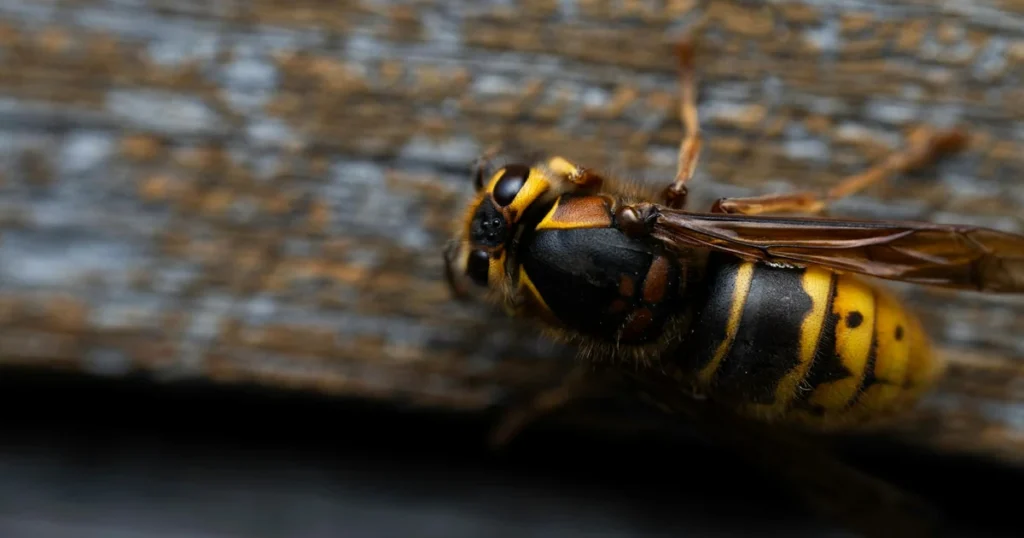
North Carolina has two true hornet species: the European hornet and the bald-faced hornet. Several other stinging insects, including yellow jackets, paper wasps, and cicada killers, are routinely mistaken for hornets. Knowing which species you’re dealing with changes how you respond and when you call a professional.
Key Takeaways
- Only two true hornet species live in North Carolina: the European hornet and the bald-faced hornet.
- The invasive yellow-legged hornet is now confirmed in Georgia and poses a growing threat to North Carolina’s bee populations.
- Bald-faced hornets release alarm pheromones when disturbed, triggering a coordinated mass-sting response from the colony.
- Bald-faced hornets and European hornets require specialized treatment programs; neither is covered under a standard pest control plan.
- Most misidentified “hornets” are yellow jackets, paper wasps, mud daubers, or cicada killers, each with different behavior and risk levels.
Two True Hornet Species Found in North Carolina
Most stinging insects North Carolinians call “hornets” are not actually hornets at all. True hornets belong to the genus Vespa or are closely related vespid wasps. In North Carolina, that narrows the field to two species: the European hornet (Vespa crabro) and the bald-faced hornet (Dolichovespula maculata). Both build paper nests, both sting repeatedly, and both deserve a wide berth when nests are active.
NC State Extension Entomology maintains current guidance on stinging insects across the state, and their identification resources confirm that these two species account for nearly all true hornet activity in the region. Understanding which one you have helps determine the right response.
European Hornet Nests in North Carolina Homes and Trees
The European hornet is the only true hornet species (Vespa crabro) established in the eastern United States. Adults reach 1 to 1.5 inches in length, with a reddish-brown thorax, yellow-and-brown striped abdomen, and a distinctly larger body than yellow jackets. Research published in Entomologica Americana documents Vespa crabro as widely established east of the Mississippi River, including throughout Virginia and the Carolinas.
European hornets nest in wall voids, hollow trees, attics, and other sheltered wooden structures. Colonies peak at 200 to 400 workers by late summer. Unlike most stinging insects, European hornets are active at night and are attracted to exterior lights, which is often how homeowners first notice them. They feed on other insects and will girdle tree bark to collect sap, causing visible damage to shrubs and young trees around your yard.
Bald-Faced Hornet Nests in North Carolina Yards
The bald-faced hornet (Dolichovespula maculata) builds the large, gray, football-shaped aerial nests you see hanging from trees, eaves, and other structures. These nests can reach three feet in length and house 400 to 700 workers at peak season, as documented in a species profile published in the Annals of Allergy, Asthma and Immunology. Despite the name, bald-faced hornets are technically yellowjackets, not true hornets, but their size and aggression place them firmly in the hornet conversation for most homeowners.
Workers are black with white facial markings and white patterning on the thorax and tail. Colonies start fresh each spring when a single overwintering queen builds an early-stage nest from chewed wood fiber. By August, the nest is fully active. What makes bald-faced hornets particularly dangerous is their coordinated defense response. Research on bald-faced hornets identified the alarm pheromone they release when a nest is disturbed, which recruits additional workers to sting in unison. Disturbing the nest, even accidentally, can trigger dozens of stings within seconds.
The Invasive Yellow-Legged Hornet Now Threatening North Carolina
The yellow-legged hornet (Vespa velutina), widely called the murder hornet in early U.S. media coverage, is not yet established in North Carolina, but its spread from Georgia makes it a credible near-term threat. This Asian giant hornet species was first confirmed in Georgia in 2023. It is an aggressive predator of honey bees and bumble bees, and its presence near North Carolina’s border has prompted monitoring by the North Carolina Department of Agriculture and Consumer Services Plant Division.
The invasive yellow-legged hornet is larger than a yellow jacket but smaller than the European hornet. Workers have a distinctive dark abdomen with yellow leg tips, giving the species its name. Nests are large, teardrop-shaped, and typically built high in tree canopies, making early-stage nests difficult to spot from ground level. If you see an insect matching this description or an unfamiliar large hornet species in your yard, photograph it and report it to state agriculture authorities rather than attempting removal yourself.
The confusion between the yellow-legged hornet and the Asian giant hornet (Vespa mandarinia) is worth clarifying. The Asian giant hornet, the original “murder hornet” that appeared in Washington State in 2019, has not been confirmed in North Carolina. The yellow-legged hornet is a different species but poses similar risks to pollinators and now represents the more immediate concern for North Carolinians.
Stinging Insects in North Carolina Often Mistaken for Hornets
Most calls about “hornets” in North Carolina turn out to be yellow jackets, paper wasps, mud daubers, or cicada killers. Each of these species behaves differently and poses a different level of risk. Misidentifying them leads to either unnecessary alarm or inadequate precautions.
Yellow Jackets in North Carolina: Ground Nests and Trash Cans
Yellow jackets are the most commonly misidentified stinging insects in North Carolina. They are black with bright yellow markings, roughly half an inch to three-quarters of an inch long, and far more aggressive than most people expect. Yellow jackets nest in the ground, in wall voids, and occasionally in other structures. Colonies can hold thousands of workers by late summer. They are attracted to food, sugary drinks, and trash cans, which is why picnics and outdoor meals draw them in.
Yellow jackets sting repeatedly and release alarm pheromones when the nest is threatened. Accidentally stepping on a ground nest or bumping one hidden in a shrub can provoke hundreds of stings. Ground nests are especially common in well-drained soil in sunny areas of the yard. Unlike hornets, yellow jackets do not chew wood for nest material. Their nests are built underground or in existing cavities.
Paper Wasps in North Carolina: Open Combs Under Eaves
Paper wasps build the small, open-comb nests you typically find under eaves, deck rails, and fence posts. They are slender, with long legs that dangle during flight, and range from reddish brown to yellow-and-black depending on the species. Paper wasps are less aggressive than yellow jackets or bald-faced hornets and will generally not sting unless the nest is directly disturbed. That said, a nest above a doorway or near a play area still warrants removal. Early-stage nests, before the colony grows, are the easiest to address.
Mud Daubers in North Carolina: Solitary and Low Risk
Mud daubers are solitary wasps that construct small, tube-shaped nests from mud on walls, under eaves, and inside garages. They are long, slender, and often dark blue or black. Mud daubers feed on spiders, which they paralyze and store in nest chambers to feed their larvae. They rarely sting humans. If you find a small cluster of mud tubes on your home’s exterior, mud daubers are the likely culprit. The nests are easily knocked down and present minimal risk during removal.
Cicada Killers in North Carolina: Large but Low-Threat
Cicada killers are among the largest stinging insects in North Carolina, and they cause significant alarm despite posing little risk to most people. Eastern cicada killers are solitary wasps that dig burrows in well-drained soil, typically in sunny areas of lawns and garden beds. Males are territorial and will dive-bomb humans near their burrows, but males cannot sting. Females can sting if handled directly but are not aggressive.
The cicada killer life cycle is tied to annual cicada populations. Females hunt cicadas, sting them to paralyze them, and drag them into burrows to feed larvae. A yard with multiple burrows can make the lawn feel uninhabitable during peak season, but the insects themselves are not targeting you. The biggest practical concern is the burrowing damage to lawn areas and garden beds. Large numbers of cicada killers in the same area benefit from professional assessment, though the risk level is very different from a bald-faced hornet nest.
Carpenter Bees, Bumble Bees, and Honey Bees in North Carolina
Carpenter bees, bumble bees, and honey bees are pollinators, not hornets, but homeowners frequently call about all three. Bumble bees are fuzzy pollinators that nest in the ground or in dense grass. They are important for collecting pollen from native plants and are generally non-aggressive unless the nest is disturbed directly. Honey bees (Apis mellifera) are the familiar colonial bees that build wax combs in tree cavities and wall voids. Carpenter bees resemble bumble bees but have a hairless black abdomen and bore perfectly round holes into wooden structures, where females lay eggs and provision larvae.
None of these are hornets. All three are beneficial insects that support local ecosystems. Honey bee swarms and established hives in structures should be handled by a licensed beekeeper, not a pest control company. Carpenter bees cause immense damage to unpainted or weathered wood over time, making them a recurring concern for homeowners with wood siding, deck railings, or wooden fascia boards.
When to Call Pest Control for Hornets in North Carolina
Active bald-faced hornet and European hornet nests should never be approached without professional equipment. Both species require specialized treatment programs. Sage’s standard General Pest Control plan covers paper wasps and non-honey bees, but bald-faced hornets, yellow jackets, and honey bees require a separate service. If you see a large paper nest in a tree, on your home’s exterior, or in a wall void, do not attempt to knock it down or spray it with a store-bought product. Disturbing the nest without fully treating the colony first will provoke an immediate and coordinated defensive response.
The right time to address a hornet or wasp nest is as early in the season as possible. Early-stage nests hold fewer workers, making treatment more effective and the risk to the technician lower. By August, a bald-faced hornet colony can hold hundreds of workers, and a European hornet colony in a wall void can go undetected until significant activity is visible. If you notice hornets entering and exiting a gap in your siding, roofline, or a tree cavity, that is the sign to call.
Sage offers same-day service across Charlotte, Raleigh, Greensboro, and Virginia Beach. Text-first contact gets a response in under a minute. For stinging insect questions, that speed matters: the sooner a technician identifies the species, the sooner you know what you’re dealing with and what the treatment plan looks like.
Bottom Line on Types of Hornets in North Carolina
North Carolina homeowners encounter two true hornet species, European hornets and bald-faced hornets, along with a wide range of stinging insects that are routinely misidentified. Yellow jackets, paper wasps, mud daubers, and cicada killers each behave differently and carry different risk levels. The invasive yellow-legged hornet has not reached North Carolina yet, but its confirmed presence in Georgia makes it worth knowing on sight.
For any active nest on your property, identification comes first. Most stinging insect problems have a clear professional solution. The worst outcomes happen when homeowners disturb a nest before knowing what species they’re dealing with. When in doubt, step back and call.
Frequently Asked Questions
What is the difference between a hornet and a yellow jacket?
True hornets, like the European hornet, are larger, typically over an inch long, and often nest in tree cavities or wall voids. Yellow jackets are smaller, more aggressive around food sources, and commonly nest underground or in existing cavities. Both sting repeatedly and both belong to the same wasp family, but their behavior, nesting habits, and appearance differ enough to warrant separate identification before treatment.
Are bald-faced hornets dangerous in North Carolina?
Yes. Bald-faced hornets defend their nests aggressively and release alarm pheromones that recruit additional workers to sting when the colony is threatened. A nest disturbed without proper treatment can result in dozens of stings within seconds. Anyone with a known allergy to wasp stings faces serious risk. Leave active nests alone and contact a pest control professional for assessment and treatment.
Has the yellow-legged hornet been found in North Carolina?
As of current reporting, the yellow-legged hornet has not been confirmed in North Carolina, but it has been detected in Georgia. The North Carolina Department of Agriculture and Consumer Services is monitoring for the species. If you spot a large, unfamiliar hornet with yellow-tipped legs, photograph it and report it to state agriculture authorities rather than attempting removal.
Does Sage Pest Control treat hornet nests?
Sage’s standard General Pest Control plan covers paper wasps and non-honey bees. Bald-faced hornets, yellow jackets, and honey bees require specialized treatment programs outside the standard plan. Contact Sage to identify your specific stinging insect and get the right service recommended for your situation. Same-day service is available across Sage’s North Carolina and Virginia Beach service areas.
When do hornet colonies die off in North Carolina?
Hornet colonies reach peak size in late summer and begin declining in early fall as temperatures drop. By early winter, most workers die off and the nest is abandoned. Only mated queens overwinter, emerging in spring to start new colonies. An abandoned nest from a prior season poses no active threat, but hornets do not reuse old nests, so a new nest nearby the following spring means a new colony has established.
