
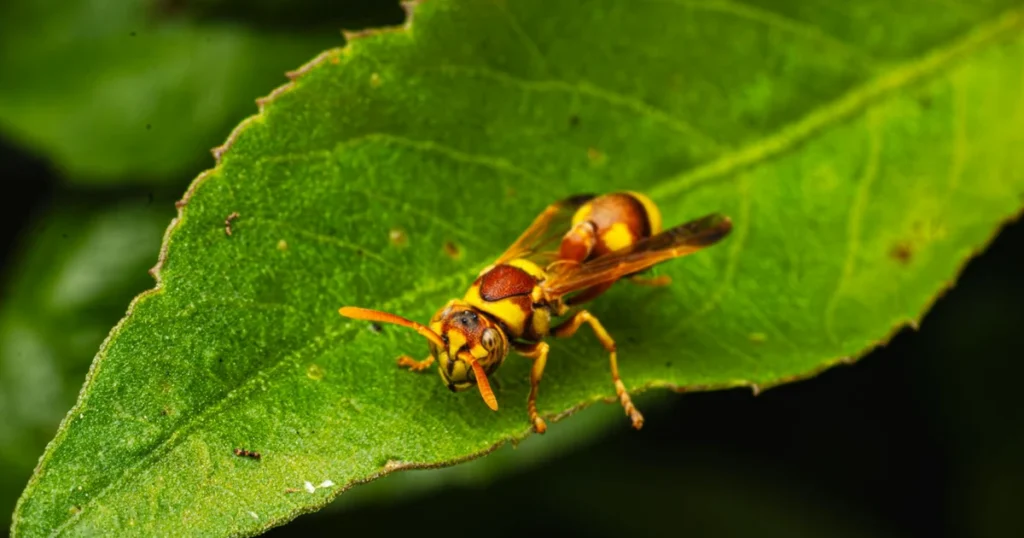
Virginia is home to at least a dozen wasp species, but five show up most often near homes in the Virginia Beach area and across the state. Knowing which species you’re dealing with changes how you respond, because their nesting habits, behavior, and sting risk are all different.
Key Takeaways
- The most common wasps in Virginia are paper wasps, yellowjackets, bald-faced hornets, European hornets, and mud daubers.
- Yellowjackets and bald-faced hornets are the most aggressive species and will sting repeatedly when their nest is disturbed.
- Paper wasps and mud daubers are far less aggressive and rarely sting unless directly handled.
- Southern yellowjacket colonies in Virginia can persist through mild winters and grow dramatically larger than typical annual nests.
- Most wasp nests near homes should be handled by a pest control professional, especially yellowjacket and hornet nests.
Most Common Social Wasp Species in Virginia Homes
Social wasps are the ones that defend their nest in groups, which is why they’re the species most likely to send someone running. In Virginia, the social wasp species you’ll encounter most are paper wasps, yellowjackets, and hornets. Each builds a distinct nest and behaves differently when disturbed.
Paper Wasps Found Nesting in Virginia Eaves and Door Frames
Paper wasps are the slender, long-legged wasps hanging around your porch, eaves, and door frames from late spring through early fall. They build small, open-celled nests that look like upside-down umbrellas, usually attached to sheltered horizontal surfaces. Common species in Virginia include the northern paper wasp (Polistes fuscatus) and the European paper wasp (Polistes dominula).
Paper wasps are a social wasp species, but their colonies are small, typically 20 to 75 insects. They’re not quick to sting. A paper wasp near your garden is usually hunting caterpillars and other insects to feed its larvae, which makes them genuinely beneficial insects for pest pressure. The problem starts when their nest is directly above a door or in a spot where people brush against it regularly. Disturbed colonies do sting, and they can sting multiple times.
Yellowjackets Nesting Underground and in Wall Voids in Virginia
Yellowjackets are the aggressive, black-and-yellow wasps that ruin late-summer cookouts, and they’re among the most commonly misidentified insects in Virginia. Homeowners often call them bees, but yellowjackets are wasps with a smooth, narrow waist and no body hair. Two species dominate here: the eastern yellowjacket (Vespula maculifrons) and the southern yellowjacket (Vespula squamosa).
Yellowjackets build large paper-comb nests in ground cavities, abandoned rodent burrows, hollow trees, and wall voids inside structures. A colony that started in spring with a single queen can reach 5,000 workers or more by late summer. Research published in Ecology and Evolution documents that southern yellowjacket colonies in the southeastern United States can persist for multiple years in areas with mild winters, producing perennial nests far larger than a typical annual colony. Virginia Beach’s climate puts it squarely in that zone. A yellowjacket nest entrance is easy to miss in the ground, which is why homeowners often step on or disturb one before they realize it’s there. These insects sting aggressively and repeatedly when they feel threatened.
Yellowjackets are not included in Sage’s standard pest control plan and require a specialized treatment program. If you find a yellowjacket nest, do not disturb it. Contact a pest control professional for inspection and treatment.
Bald-Faced Hornets Building Large Nests in Virginia Trees
The bald-faced hornet (Dolichovespula maculata) is the only species in Virginia with a black body and white facial markings, which makes it the easiest to identify. Despite the name “hornet,” the baldfaced hornet is actually a yellowjacket relative. It belongs to the same family as other social wasp species in the region.
Bald-faced hornets build the large, gray, football-shaped nests you see hanging from tree branches, eaves, and utility structures in late summer. Nests can reach the size of a basketball by August and house several hundred workers. According to a species profile in the Annals of Allergy, Asthma & Immunology, bald-faced hornets are highly defensive and will aggressively sting any animal or human that approaches the nest. Unlike honeybees, they sting multiple times with no barb loss. Bald-faced hornet nests near homes should always be handled by pest control professionals.
European Hornets and Other Wasps in Virginia to Know
European hornets (Vespa crabro) are the only true hornet species established in Virginia, and they’re noticeably larger than yellowjackets at around one inch long. They have a brown-and-yellow pattern rather than the bright black-and-yellow of a yellowjacket, with a reddish-brown head. European hornets are the only social wasp species in North America that is actually a “true hornet” in the taxonomic sense.
These insects nest in protected locations: hollow trees, wall voids, attics, and occasionally in the ground. Colonies grow through the summer and peak in late summer and early fall. European hornets are more active at night than other wasp species, which often startles homeowners who see large insects flying around porch lights after dark. That said, a nest inside a wall void or near a doorway is a sting risk, and the colony will defend it when disturbed.
Solitary Wasps You May See in Virginia That Rarely Sting
Not every wasp in Virginia builds a colony or poses a serious sting risk. Solitary wasps are non-colonial insects that live and nest independently. They’re generally low-threat to humans. Knowing the difference keeps you from treating a low-risk insect as an emergency.
Mud Daubers in Virginia: Solitary, Tube-Building Insects
Mud daubers are the thin-waisted, metallic-colored wasps building cylindrical mud tubes on your garage walls and porch ceilings. Common species in Virginia include the black-and-yellow mud dauber and the blue mud dauber, both solitary wasps that construct individual cells from mud. Each cell is provisioned with paralyzed spiders as food for the larva inside, then sealed. The adult moves on. There is no colony to defend.
Mud daubers are beneficial because they prey on spiders. They’re not aggressive, and you can remove old mud tubes with a scraper. Consistent mud dauber activity often signals a healthy spider population nearby, which itself may warrant a closer look.
Cicada Killers and Other Solitary Wasps in Virginia Ground Nests
Cicada killers are large solitary wasps that nest underground and alarm homeowners with their size, but they’re among the least aggressive stinging insects you’ll encounter. Females dig individual burrows in bare soil, paralyze cicadas, and provision each burrow as a food source for larvae. Males cannot sting at all. Females rarely sting humans unless handled. Despite their dramatic appearance, they’re low-priority pests for most Virginia homeowners.
Most solitary wasps don’t require pest control treatment unless they’re nesting in high-traffic areas in large numbers.
When Wasps in Virginia Become a Pest Control Problem
The line between “interesting insect” and “pest problem” is usually about nest location and colony size. A paper wasp nest on the back fence is a different situation than a yellowjacket nest inside a wall void six feet from your front door. Use species and nest placement together to decide whether to act.
Signs That Wasp Activity in Virginia Needs Professional Treatment
Call a pest control professional when you find a nest inside a structure, underground in a high-traffic area, or within arm’s reach of a doorway. Yellowjacket nests in wall voids are particularly difficult because the entry point is small and the colony is hidden. Attempting to treat these nests with store-bought products typically agitates the colony without resolving the infestation, and the insects often relocate deeper into the wall.
Bald-faced hornet and European hornet nests near the roofline or in eaves also warrant professional treatment because of the nest size and the defensive behavior of both species when disturbed. The Virginia Tech Department of Entomology maintains guidance on stinging insect management for Virginia residents, and their resources confirm that most hornet and yellowjacket control is best left to licensed pest control professionals with the right protective gear and targeted treatments.
Paper wasp nests in low-activity spots, mud dauber tubes in the garage, and solitary wasps nesting in garden beds are lower priority. Many of these insects control other pests and don’t pose meaningful sting risk unless you disturb the nest directly. If they’re in high-traffic locations or near children’s play areas, that changes the calculation.
Seasonal Timing: When Wasps in Virginia Are Most Active
Wasp activity in Virginia peaks between July and October. Queens emerge in spring and begin building nests and laying eggs. Colony size grows steadily through summer. By late summer, worker populations peak and food sources shift. Colonies begin sending out reproductive males and new queens in preparation for cold weather. Workers become more aggressive during this period, especially yellowjackets, which turn from protein-focused hunting to scavenging sugars near outdoor food and drinks.
Most colonies die off with the first sustained cold weather. Only newly mated queens survive to overwinter in protected locations. However, southern yellowjacket colonies in the Virginia Beach area may persist through mild winters, as documented in peer-reviewed research on Vespula squamosa colony behavior in the southeastern United States. Those perennial nests can house tens of thousands of insects and are significantly more dangerous than a standard annual colony.
Bottom Line on Types of Wasps in Virginia
Virginia’s wasp species range from low-threat solitary insects to highly aggressive colonial hornets. Paper wasps, yellowjackets, bald-faced hornets, European hornets, and mud daubers are the species Virginia Beach and broader Virginia homeowners encounter most. Yellowjackets and bald-faced hornets carry the most risk because of their colony size, nest defensiveness, and ability to sting multiple times without losing the stinger.
If you find a nest inside your home’s structure or in a yard where kids play, don’t treat it yourself. Sage Pest Control handles stinging insect inspections across Virginia Beach.
Frequently Asked Questions
What is the most aggressive wasp in Virginia?
Yellowjackets and bald-faced hornets are the most aggressive wasp species in Virginia. Both defend their nests in large numbers and sting repeatedly without losing their stinger. Yellowjackets are especially dangerous in late summer when colonies peak and workers become territorial around food sources.
How do I tell a wasp apart from a bee in Virginia?
Wasps have a narrow, pinched waist and a smooth, shiny body with little to no hair. Bees are rounder and fuzzier. Honeybees and bumblebees carry pollen in visible sacs on their legs. Yellowjackets are the species most commonly mistaken for bees because of their black-and-yellow coloring, but their smooth body and narrow waist distinguish them clearly.
Are mud daubers dangerous to Virginia homeowners?
Mud daubers are solitary wasps and rarely sting. They build individual mud tube nests provisioned with paralyzed spiders, not colonies, so there’s no group defense behavior. They’re considered beneficial insects because they prey on spiders. You can remove mud tubes from your home’s exterior without significant risk, though any wasp can sting if directly handled.
Do wasp nests go away on their own in late fall?
Most wasp colonies in Virginia die off with cold weather in late fall. Workers and males die when temperatures drop, and only newly mated queens survive to start new colonies the following spring. However, southern yellowjacket colonies in Virginia Beach’s milder climate can persist across winters and grow into very large perennial nests that do not resolve on their own.
What should I do if I find a wasp nest in my wall?
Do not attempt to treat a wasp nest inside a wall yourself. Store-bought products typically agitate the colony without resolving it, and insects may relocate deeper into the wall or find new exit points into your living space. Contact a pest control professional for inspection. Yellowjacket wall void nests in particular require targeted treatment by someone equipped with the right protective gear and access to professional-grade treatments.
