
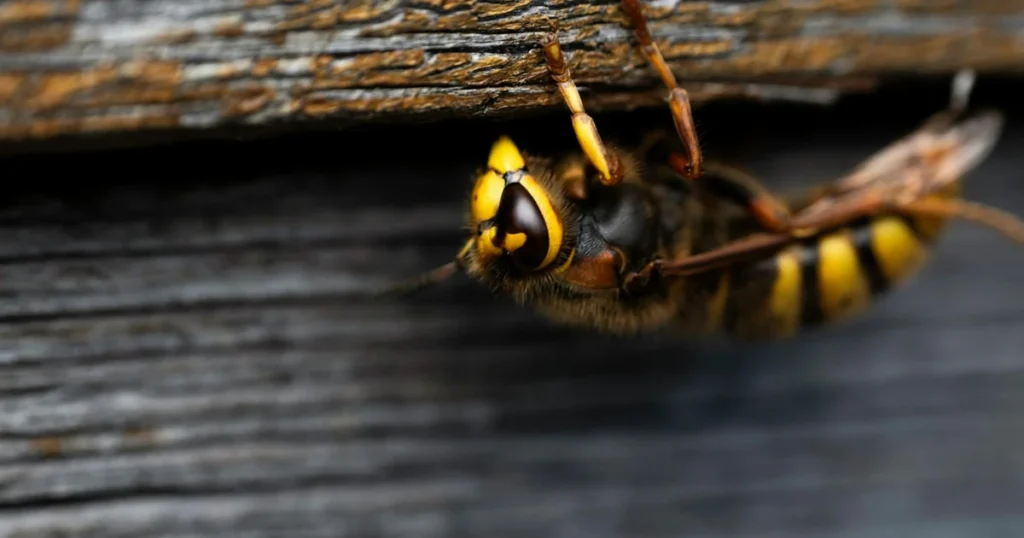
Virginia has two true hornets that homeowners regularly encounter: the European hornet and the bald-faced hornet. Several other stinging insects, including yellow jackets and paper wasps, are commonly mistaken for hornets. Knowing which species you’re dealing with changes how you respond and whether you can handle the nest yourself.
Key Takeaways
- Only two insects in Virginia qualify as true hornets: the European hornet and the bald-faced hornet.
- Yellow jackets and paper wasps are wasps, not hornets, but they’re frequently misidentified.
- Bald-faced hornets release alarm pheromones when disturbed, triggering coordinated mass stinging.
- European hornets are the only hornets in Virginia that are active at night.
- Bald-faced hornets, yellow jackets, and other aggressive stinging insects require professional removal.
True Hornets Found in Virginia Yards
Only two true hornets live in Virginia, but several other stinging insects get called hornets every summer. We’ve lined them up by sting risk and how the colony responds when disturbed. Match what you’ve seen on size, color, and nest shape before you get any closer.
/01
European hornet
Stings
/02
Cicada killer
Stings
/03
Bald-faced hornet
Stings
/04
Paper wasp
Stings
/05
Yellow jacket
Stings
If the nest is enclosed in a gray paper shell or hidden inside a wall void, leave it alone and call a professional. Bald-faced hornets and European hornets coordinate stings in numbers.
The word “hornet” gets applied loosely to many stinging insects, but only a handful qualify as true hornets. According to the Virginia Tech Department of Entomology, the European hornet is the primary true hornet established across Virginia, and it has been present in the eastern United States for well over a century. The bald-faced hornet is also widely called a hornet, though technically it belongs to the yellow jacket genus. Both species build large paper nests and deliver painful stings, so the distinction matters more for identification than for risk.
European Hornet Identification in Virginia
The European hornet is the largest true hornet you’ll find in Virginia, measuring up to 1.4 inches long. Workers display a yellow-and-brown banded abdomen with a reddish-brown head and thorax. The coloring differs from yellow jackets, which have bright yellow-and-black banding with no brown. Research published in Entomologica Americana confirms that Vespa crabro, the European hornet, is widely established east of the Mississippi River, including throughout Virginia.
European hornets nest in hollow trees, wall voids, attics, and abandoned structures. Their paper nests are covered with a brown papery envelope, making them look similar to a football tucked inside a cavity. Colony size typically reaches 200 to 400 workers by late summer. One distinctive behavior sets this species apart: European hornets fly at night and are attracted to porch lights and lit windows, which is how many Virginia homeowners first encounter them.
Bald-Faced Hornet Identification in Virginia
The bald-faced hornet is black and white, not yellow and black, which makes it one of the easier stinging insects to identify in Virginia. The white face, white markings on the thorax, and white-tipped abdomen distinguish it from every other common species. Workers grow to about 0.75 inches, smaller than the European hornet but larger than a typical paper wasp.
Bald-faced hornets build large aerial nests enclosed in a gray, layered paper shell. Nests hang from tree branches, eaves, utility poles, and shrubs. A species profile published in the Annals of Allergy, Asthma and Immunology documents colony sizes ranging from 400 to 700 workers, with nests growing up to three feet tall by fall. Queens overwinter alone; workers do not survive the cold season. New queens emerge in spring and begin construction from scratch.
Disturbing a bald-faced hornet nest triggers a coordinated defense response. Research on bald-faced hornets documented that they release alarm pheromones when the nest is threatened, recruiting additional workers to sting the perceived threat. This behavior makes active nest removal without professional help a significant risk.
Wasps Mistaken for Hornets in Virginia
Most stinging insects Virginia homeowners encounter are wasps, not hornets. The confusion is understandable: many wasps build similar nests, behave aggressively when disturbed, and overlap in size with the smaller hornet species. Identifying the difference helps you assess risk and choose the right response.
Yellow Jackets in Virginia: Aggressive Ground Nesters
Yellow jackets are the stinging insects most commonly mistaken for hornets in Virginia. They are wasps with bright yellow-and-black markings and a slender, pinched waist. Workers measure about 0.5 inches, significantly smaller than European hornets. Despite the size difference, yellow jackets pose a high sting risk because they nest underground, in wall voids, and in attics, often placing their colony directly in areas of foot traffic.
Yellow jacket colonies peak in late summer and early fall, when populations can exceed 5,000 workers. A disturbed ground nest can produce hundreds of stings within seconds. These insects are also scavengers, drawn to outdoor food, sugary drinks, and garbage. Their behavior around food is one of the clearest identification clues: hornets focus on prey and tree sap, while yellow jackets investigate your cookout. Yellow jackets are not included in Sage’s standard pest control plan and require a specialized treatment program.
Paper Wasps in Virginia: Recognizing the Open Nest
Paper wasps build the small, open-celled nests you see hanging under eaves, deck rails, and porch ceilings. The nest has no outer covering, exposing the hexagonal cells directly. Workers are slender with a narrow waist, brownish or reddish coloring, and yellow markings. They measure about 0.75 to 1 inch, which sometimes causes confusion with European hornets. Paper wasps are less aggressive than bald-faced hornets or yellow jackets and typically sting only when the nest is directly disturbed. Paper wasps are covered under Sage’s standard general pest control plan.
Cicada Killer Wasps in Virginia: Large but Low Sting Risk
Cicada killers are the largest wasps in Virginia, reaching up to 2 inches long. Their size frequently causes alarm, but their behavior differs from hornets significantly. Females burrow into soil to lay eggs and provision the burrow with cicadas as food for larvae. Males, which cannot sting, patrol territories and may hover near people. Cicada killers are solitary insects with no colony to defend, which means their sting risk is much lower than social hornets or yellow jackets.
How Hornets in Virginia Build and Use Their Nests
Nest location and construction material differ by species, and those differences help with identification before you get close enough to see the insects directly. All species in Virginia build nests from wood pulp chewed into a papery material, but the shape, location, and color vary.
Hornet Nest Locations in Virginia Homes and Properties
European hornets favor enclosed cavities: hollow trees, attic spaces, wall voids, and old barns. Their nests are rarely visible from the outside because the colony builds inside an existing structure. Homeowners often discover them by sound (a loud buzzing from inside a wall) or by noticing night-flying insects near lights.
Bald-faced hornets build in the open, hanging large gray nests from trees, eaves, and shrubs. These nests are visible and can grow to the size of a basketball or larger by late summer. Paper wasps attach smaller, open-celled nests to overhangs and horizontal surfaces around the home exterior. Yellow jackets nest underground or inside wall voids, often with no visible nest structure at the entry point.
Seasonal Nest Growth in Virginia
All hornet and wasp colonies in Virginia follow the same seasonal cycle. Queens emerge from overwintering sites as early as February or March and mostly finish by early May and begin building nests alone. Workers hatch in late spring and take over nest construction and foraging. Colony populations peak between August and October, when nest size and aggression reach their highest point. The first hard frost collapses most colonies; only fertilized queens survive to overwinter and restart the cycle in spring.
This cycle has a practical consequence for homeowners: a nest discovered as early as February or March and mostly finish by early May is small and manageable. The same nest in September may contain thousands of workers and requires professional attention.
When to Call Pest Control for Hornets in Virginia
Any active nest within 10 feet of a door, window, or high-traffic area warrants a professional call. Bald-faced hornet nests, yellow jacket colonies, and European hornet nests inside wall voids are all situations where DIY removal creates significant sting risk. The alarm pheromone behavior documented in bald-faced hornets means a single swat at the nest can mobilize hundreds of workers instantly.
Hornet Sting Risk Factors in Virginia Homes
Multiple stings from any hornet or wasp species can trigger serious reactions even in people without known allergies. The risk increases with colony size, which is why fall removal is more dangerous than spring removal. Children, elderly family members, and anyone with a known Hymenoptera venom allergy face the highest risk. If anyone in your household has experienced a severe reaction to insect stings, do not attempt nest removal. Contact a pest control professional before getting within 20 feet of an active colony.
The EPA’s integrated pest management framework recommends targeted treatment at the nest site rather than broad area spraying. A licensed technician identifies the species, selects the appropriate treatment, and applies it directly to the colony, reducing exposure for everyone on the property.
Identifying When a Nest Is Active in Virginia
A nest is active if you observe workers entering and exiting. Paper nests from the previous year are gray, brittle, and empty by spring. New nests are lighter in color and flexible. If you’re uncertain whether a nest is active, watch it from a distance for two to three minutes. Any traffic at the nest entrance means the colony is present and defensive. Do not prod, spray water at, or attempt to knock down an active nest without professional support.
Bottom Line on Types of Hornets in Virginia
Virginia has two true hornets: the European hornet, a large brown-and-yellow species active day and night, and the bald-faced hornet, a black-and-white species that builds large aerial nests and defends them aggressively. Yellow jackets and paper wasps are the other stinging insects most Virginia homeowners encounter, and while they are technically wasps rather than hornets, they carry their own risks. Identification matters because it changes how you respond. Paper wasp nests under a single eave are a different situation than a bald-faced hornet nest the size of a basketball in a backyard tree.
If you spot an active nest near your Virginia Beach home and aren’t sure what you’re dealing with, Sage Pest Control can identify the species and handle removal the same day. Text us and you’ll hear back in under a minute.
Frequently Asked Questions
Are there murder hornets in Virginia?
No. The northern giant hornet, sometimes called the murder hornet, has not been confirmed in Virginia. It has only been detected in the Pacific Northwest. The large hornets Virginia homeowners typically encounter are European hornets, which are established and common east of the Mississippi but distinct from the northern giant hornet species.
What is the difference between a hornet and a yellow jacket?
True hornets belong to the genus Vespa or, in the case of the bald-faced hornet, Dolichovespula. Yellow jackets belong to the same family but are smaller, have brighter yellow-and-black coloring with no brown, and commonly nest underground. Hornets tend to be larger and nest in aerial or enclosed cavities. Both are aggressive when their nests are disturbed.
Do bald-faced hornets sting multiple times?
Yes. Unlike honey bees, bald-faced hornets have smooth stingers and can sting repeatedly. A disturbed colony will dispatch multiple workers, each capable of delivering several stings. The alarm pheromone they release when threatened signals other workers to join the defense, which is why a single accidental contact with the nest can result in many stings quickly.
When do hornets become most aggressive in Virginia?
Late summer and early fall, from August through October, represent peak aggression for hornets and yellow jackets in Virginia. Colony populations reach their maximum size during this period, and workers become more defensive as the colony prepares for winter. Nests encountered during this window are significantly more dangerous than the same nests in spring.
Does Sage Pest Control treat hornet nests in Virginia Beach?
Sage’s standard plan covers paper wasps, but bald-faced hornets and yellow jackets require a specialized treatment program. Sage serves Virginia Beach and can assess your property and the specific species present before recommending the right approach. Same-day service is available for active nests near the home.
