
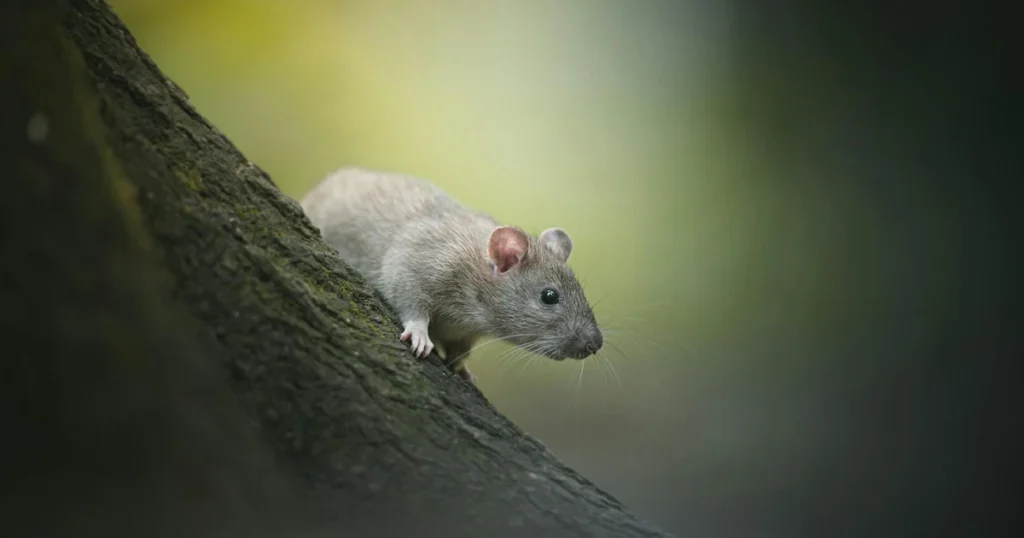
Two rat species invade NC homes: Norway rats and roof rats. Learn the signs, risks, and pest control options for rat infestations in North Carolina.
Key Takeaways
- Norway rats burrow underground and nest in crawlspaces and basements; roof rats climb and nest in attics and along rooflines.
- Droppings, gnaw marks, grease trails, and scratching sounds at night are the most reliable early signs of a rat infestation.
- Research published in Science documents rats as hosts for hundreds of zoonotic pathogens, including the bacteria that cause leptospirosis and rat bite fever.
- Snap traps and tamper-resistant bait stations outperform live traps for active infestations; sealing entry points smaller than a quarter is the single most effective prevention step.
- Sage’s rodent service starts at $499 for an initial treatment, with tri-annual monitoring and prevention visits included in recurring plans.
What Rats in North Carolina Actually Look Like
Two non-native rat species dominate North Carolina: the Norway rat (Rattus norvegicus, also called the brown rat) and the roof rat (Rattus rattus). Both species arrived with European colonizers and now occupy every urban area in the state. Telling them apart matters because the right treatment depends on which species you have.
Norway Rats in North Carolina: Burrowers Below Ground
Norway rats are the larger of the two species, typically reaching 7–10 inches in body length with a blunt snout, small ears, and a scaly tail shorter than their body. Their fur runs brown to gray on top with a pale underside. According to a review of urban rat ecology published in Urban Ecosystems, Norway rats are ground-dwellers that dig underground burrows along foundations, beneath concrete slabs, and in crawlspaces. In NC homes, they favor basements, lower walls, and any area near food sources or garbage.
Roof Rats in North Carolina: Climbers Above Your Ceiling
Roof rats are sleeker and smaller than Norway rats, with a pointed snout, large ears, and a tail longer than their body. Their fur tends toward black or dark brown. As climbers, they travel along utility lines, tree branches, and fence tops to reach rooflines and attics. In North Carolina, roof rats are common around fruit trees, dense shrubs, and structures with gaps at the roofline. They nest in attics and walls.
How to Spot Signs of Rat Infestations in North Carolina Homes
Rats are nocturnal and rarely appear during the day, so the physical evidence they leave behind is your primary alert system. Catching an infestation early dramatically reduces the damage and the cost of control. NC State Extension recommends inspecting for these signs along baseboards, in crawlspaces, and around utility entry points.
Droppings, Urine, and Grease Trails in NC Homes
Fresh rat droppings are dark, moist, and roughly the size of a raisin for Norway rats or slightly smaller for roof rats. Older droppings dry to gray-brown. Rats follow the same routes repeatedly, leaving grease rub marks along walls. Concentrated droppings in a cabinet corner or along a wall mark an active travel route.
Gnaw Marks, Chewed Wires, and Structural Damage in NC
Rats have powerful jaws capable of chewing through wood, plastic pipes, and electrical wires. Gnaw marks on food packaging, wooden beams, or wiring insulation are a reliable sign of active rodents. Chewed electrical wires are a fire hazard. The National Fire Protection Association links rodent damage to a meaningful share of residential fires with unknown ignition sources. Check behind appliances and inside wall voids for frayed wires or chewed wood.
Nests, Sounds, and Tracks in North Carolina Structures
Scratching, scurrying, or squeaking sounds from walls or ceilings at night often mean rats are active inside the structure. Norway rats build nests in secluded areas at ground level using shredded insulation, paper, and fabric. Roof rats build nests in attics and along the roof line. In dusty areas, rats leave footprints and tail drag marks. Spotting a nest confirms an established infestation, not just a wandering animal.
Health Risks Rats Pose to North Carolina Residents
Rats in NC homes carry diseases that spread through direct contact, droppings, urine, and the parasites they host. A 2024 paper in Science by Keesing et al. documents rodents as reservoirs for hundreds of zoonotic pathogens. Exposure does not require touching a rat. Feces and urine contaminate food, countertops, and surfaces that humans touch daily.
Leptospirosis spreads through rat urine contaminating water or soil. Research published in Zoonoses and Public Health by Murray et al. confirms Leptospira bacteria prevalence in urban rat populations across diverse neighborhoods. Rat bite fever, salmonellosis, and hantavirus are additional disease risks associated with rodent infestations. Rats also bring fleas into homes, adding a secondary pest problem that can spread to pets and family members.
Common Types of Property Damage Rats Cause in NC
A rat infestation causes property damage across multiple systems of a home simultaneously. Rodents gnaw to keep their continuously growing teeth worn down, which means they chew on anything available: wooden beams, insulation, plastic plumbing pipes, and electrical wires. That constant chewing creates structural weaknesses and real fire risk. A rodent infestation left unaddressed for a full season can require thousands of dollars in repairs.
- Electrical fires: Chewed wires in walls and attics can arc and ignite surrounding insulation.
- Plumbing damage: Rats chew through plastic pipes, causing slow leaks inside walls.
- Insulation loss: Nesting rodents shred insulation in attics, reducing a home’s thermal performance.
- Food contamination: Rats chew through cardboard and thin plastic to access pantry items, contaminating food with droppings and urine.
- Structural weakening: Norway rats dig burrows under concrete slabs and foundations, creating voids that shift over time.
How to Get Rid of Rats in North Carolina: Traps and Baits
Snap traps remain the most reliable mechanical method for controlling active rat infestations inside structures. Place them perpendicular to walls with the trigger end touching the baseboard, since rats travel along walls rather than crossing open space. Peanut butter, nesting material, and chocolate are effective baits. Check and reset traps daily. Gloves prevent transferring human scent to traps, which can reduce catch rates.
Snap Traps vs. Live Traps for Rats in North Carolina
Snap traps outperform live traps for active infestations because they require no release location and do not risk spreading rats to a neighbor’s property. Live traps capture rodents without killing them, but releasing rats within close proximity to the capture site typically results in re-entry. Relocating rats more than a mile away is the minimum to reduce that risk. For homeowners dealing with a confirmed infestation, snap traps placed along active travel routes deliver faster results.
Exterior Bait Stations for Ongoing Rat Control in NC
Tamper-resistant bait stations installed around the exterior of a home intercept rats before they enter the structure. These stations protect the bait from weather and accidental contact by pets and birds. Sage’s General Pest Control service uses tamper-resistant bait stations outside and snap traps inside when active rodent infestations are present. This two-layer approach targets rats at both the entry point and inside the structure, reducing the infestation faster than either method alone.
Sealing Potential Entry Points for Rats in NC Homes
Exclusion work is the only permanent fix for recurring rat infestations, because traps and baits do not stop new rats from entering. Norway rats squeeze through gaps as small as a half-inch. Roof rats need even less space. Every gap, crack, or utility penetration on your home’s exterior is a potential entry point. Sage technicians perform minor exclusion work, sealing openings smaller than 2 inches by 2 inches with steel wool, hardware cloth, or expanding foam combined with sealant.
Where Rats Gain Access to North Carolina Homes
The most common entry points for rats in NC structures include gaps around utility pipes, dryer vents, weep holes in brick, and openings under garage doors. Roof rats also enter through damaged soffits, gaps at the roof line, and openings where utility lines penetrate the exterior. Norway rats burrow under slabs and enter through foundation cracks or plumbing access points. Walk the perimeter of your home and press a pencil into any gap you find. If it fits, a rat can too.
Reducing Food Sources and Habitat Around NC Buildings
Removing food sources and shelter from around your home cuts the attractiveness of your property to rats before an infestation begins. Store pet food in airtight containers. Move garbage bins away from the house and use lids that lock. Clear debris piles, wood stacks, and dense vegetation within three feet of the foundation, since Norway rats build nests inside these materials. Bird feeders attract rats because they scatter seed on the ground. Trim tree branches that overhang the roof to cut roof rat access.
When to Call Pest Control for Rat Infestations in NC
If you find droppings in more than one room, hear scratching from inside walls, or set traps that keep catching rats night after night, you have an established infestation that DIY methods alone are unlikely to resolve. Coordinated professional treatment produces significantly better outcomes than isolated homeowner efforts, as documented by research on systematic rodent management programs. Sage’s rodent-only service starts at $499 for initial treatment, with tri-annual monitoring visits included in recurring pest control plans starting at $49 per month. The General Pest Control package covers interior mice and rat protection as a standard component.
Sage technicians inspect the full exterior for potential entry points, install tamper-resistant bait stations outside, and place snap traps inside where activity is confirmed. Minor exclusion work up to 2 inches by 2 inches is included. Larger structural gaps require a contractor, but the technician will identify them during the inspection so you know exactly what needs to be addressed. Same-day service is available for most NC service areas, and a free re-service is included between scheduled visits if activity returns.
Bottom Line on Rats in North Carolina Homes
Norway rats and roof rats are both established in North Carolina, and both species will move into a home the moment conditions allow it. Droppings, gnaw marks, and nighttime scratching are the signs to act on immediately. The longer an infestation runs, the more damage accumulates in walls, attics, and electrical systems. Snap traps and tamper-resistant bait stations control active rodents, but sealing entry points is what prevents the next infestation. Professional treatment works because it addresses the problem at every layer at once.
Sage Pest Control covers rat infestations across Charlotte, Raleigh, Greensboro, and Virginia Beach. Reach out by text for a response in under a minute, and we’ll get a technician to you the same day in most cases. Stay Sage.
Frequently Asked Questions
How do I know if I have rats or mice in my NC home?
Rat droppings are roughly the size of a raisin, while mouse droppings are smaller, about the size of a grain of rice. Rats also produce larger gnaw marks and audible scratching sounds from inside walls. If the damage is in an attic or roofline area, suspect roof rats. If it is at ground level or in a crawlspace, Norway rats are more likely. A pest control inspection can confirm the species and locate the nesting area.
What attracts rats to a North Carolina home?
Rats move toward food, water, and shelter. Unsecured garbage, pet food left outside, bird feeders, and compost piles all attract rodents. Dense landscaping and wood piles near the foundation give Norway rats nesting material. Roof rats follow tree branches and utility lines to rooftops. Addressing these conditions before an infestation takes hold is the most effective prevention step available to homeowners.
Are rat infestations in NC homes a health risk to pets?
Rats carry fleas, which spread to household pets and can transmit tapeworms and other parasites. Rats also carry leptospirosis, which dogs can contract through contact with contaminated water or urine. Pets that catch or contact rats directly risk rat bite fever and secondary infections. If you confirm a rodent infestation, have pets checked by a veterinarian and have your home treated promptly to reduce continued exposure.
Can I handle a rat infestation with traps alone?
Traps control rats already inside the structure but do nothing to stop new rats from entering. If the entry points remain open, the infestation will rebuild even after every trap catches a rat. Effective control requires trapping active rodents, sealing gaps and entry points, and removing outdoor food sources that draw rats toward the structure. A professional inspection identifies all three components at once, which is why coordinated treatment outperforms traps-only approaches.
How much does professional rat control cost in North Carolina?
Sage’s rodent-only standalone service starts at $499 for initial treatment. Ongoing monitoring and prevention visits are included in recurring General Pest Control plans, which start at $299 initial and $49 per month for homes up to 5,000 square feet. Interior rodent protection is included in that standard plan. A free re-service is included between scheduled visits if rat activity returns between treatments.
