
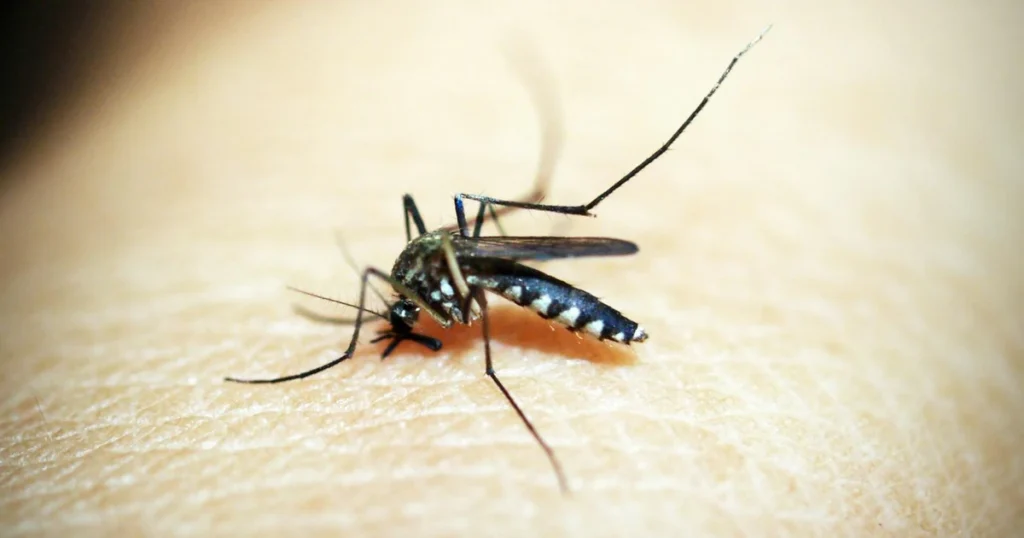
Mosquitoes in Virginia are active July through November, with the Asian tiger mosquito dominating yards. Here’s what works to control them.
Key Takeaways
- Virginia’s mosquito season runs early July through early November, peaking in summer heat and humidity.
- The Asian tiger mosquito (Aedes albopictus) is the most commonly encountered species in Virginia, found in every county across the region.
- Mosquitoes breed in as little as a bottle cap of standing water, so removing water sources cuts populations at the source.
- West Nile virus, La Crosse encephalitis, and eastern equine encephalitis are the primary mosquito-borne diseases of concern in this region.
- Professional mosquito treatments target foliage where mosquitoes rest, not just open spaces, and work best on a recurring seasonal schedule.
What Mosquitoes in Virginia Do to Your Yard
Virginia’s warm, humid summers create near-ideal breeding conditions for mosquitoes, and the problem isn’t just the bites. A single female lays eggs in a bottle cap’s worth of water, meaning your yard can support thousands of mosquitoes within a few weeks. Dense landscaping, shaded patios, clogged gutters, and low-lying areas that hold water after rain all become active breeding sites. The result is a yard you can’t use from dusk to dawn, and sometimes earlier.
Most homeowners underestimate how fast mosquito populations grow. A female can lay 100 to 200 eggs at a time, and those eggs hatch into larvae within days in warm water. Adult mosquitoes emerge ready to feed within a week to two weeks. Controlling mosquitoes means hitting both adults resting in foliage and the standing water conditions producing the next generation.
How Mosquitoes Breed and Spread in Virginia Yards
Female mosquitoes need a blood meal to produce eggs, and once fed, they seek standing water to lay those eggs. Any container that collects water becomes a potential breeding place: flower pots, bird baths, tree holes, old tires, kiddie pools, and low spots in the lawn. Mosquito larvae live in that water, feeding on organic matter, until they pupate and emerge as adult mosquitoes capable of flying and feeding.
Adult mosquitoes are weak flyers. Most species stay within a few hundred feet of where they hatched, which means your neighbor’s yard or your own property is usually the source of the mosquitoes biting you. They spend the daylight hours resting on the underside of leaves in shaded vegetation, then become active at dusk, though the Asian tiger mosquito also bites aggressively during the day.
Male mosquitoes do not bite at all. Only female mosquitoes seek blood, which they use to fuel egg production. Males feed on nectar and plant fluids, and their role is limited to reproduction. Knowing this matters because it clarifies that most mosquito control focuses on reducing adult female populations and the standing water where eggs are laid.
Mosquito Species Found in Virginia and Northern Virginia
Three mosquito species drive most of the biting pressure across Virginia yards. We’ve lined them up by how often you’ll meet them and which diseases they actually carry. Match what’s biting you on color, time of day, and breeding habitat.
/01
Asian tiger mosquito
Stings
/02
Yellow fever mosquito
Stings
/03
Northern house mosquito
Stings
If you’re getting bitten in daylight, it’s almost certainly an Asian tiger. Dawn and dusk activity points to one of the others. Either way, breeding sites in your yard are what fuels them.
Three species account for most of the mosquito activity Virginia homeowners encounter: the Asian tiger mosquito, the northern house mosquito, and the yellow fever mosquito. Each behaves differently, which affects where they breed, when they bite, and how to control them.
The Asian Tiger Mosquito in Virginia: Aggressive Daytime Biter
The Asian tiger mosquito (Aedes albopictus) is the dominant mosquito species across Virginia and the broader mid-Atlantic region. It’s an invasive species originally from Southeast Asia, now established across the entire state.
A statewide container-mosquito survey found that Ae. albopictus made up 81% of more than 67,000 specimens collected across 18 counties. Earlier work documents that Ae. albopictus has been reported in every county across the region, leaving no area unaffected.
You’ll recognize the Asian tiger mosquito by its black-and-white striped legs and body. Unlike most species, it bites during the day, not just at dusk. It breeds in small containers: flower pots, bird baths, tree holes, and any object that collects water. This makes it especially difficult to control through yard maintenance alone, because breeding sites can be as small as a bottle cap.
The Northern House Mosquito in Virginia: Night Biter and West Nile Vector
The northern house mosquito (Culex pipiens) is the primary carrier of West Nile virus in Virginia. It bites at night and prefers to breed in stagnant water with high organic matter content: clogged gutters, storm drains, ornamental ponds, and neglected bird baths. Unlike the Asian tiger mosquito, Culex pipiens can fly longer distances, sometimes several miles from its breeding site. This makes it harder to trace back to a single source.
The Yellow Fever Mosquito in Virginia: Southern Range Expansion
The yellow fever mosquito (Aedes aegypti) is less commonly encountered in Virginia than the Asian tiger mosquito, but its range has expanded northward with warming temperatures. It looks similar to the Asian tiger mosquito but has a distinctive lyre-shaped silver pattern on its thorax. It bites during the day, breeds in small containers, and is a known vector for dengue, Zika virus, yellow fever, and chikungunya. Virginia Beach’s climate makes it a viable habitat for this species during peak summer months.
Mosquito-Borne Diseases in Virginia: What to Know
Virginia mosquitoes carry several diseases that affect human health, and the risk is real enough that the Virginia Department of Health actively monitors and reports mosquito-borne disease cases each year. The three most significant diseases in this region are West Nile virus, La Crosse encephalitis, and eastern equine encephalitis.
West Nile Virus in Virginia: The Leading Mosquito-Borne Risk
West Nile virus remains the most commonly reported mosquito-borne disease in the United States. Surveillance data published in MMWR documents West Nile virus as the dominant arboviral illness nationally, with cases reported across Virginia every summer. Most people infected never develop symptoms. About 1 in 5 develop fever, headache, body aches, and fatigue. Fewer than 1% develop severe neurological illness, but that small percentage represents hundreds of serious cases per year nationally.
La Crosse Encephalitis and Eastern Equine Encephalitis in Virginia
La Crosse encephalitis and eastern equine encephalitis (EEE) are the two other primary mosquito-borne diseases of concern in this region. An authoritative review documents that La Crosse virus and West Nile virus together account for more than 98% of arboviral disease cases in the region.
La Crosse encephalitis primarily affects children and is transmitted by the treehole mosquito, which breeds in tree holes and artificial containers in wooded areas. EEE is rarer but carries a much higher mortality rate, making it the more dangerous of the two when cases do occur.
Dengue fever, Zika virus, yellow fever, and malaria are additional diseases associated with mosquito species present in Virginia, though domestic transmission of most of these remains uncommon. The broader risk from these species increases as their ranges expand with warming temperatures.
Controlling Mosquitoes in Virginia: What Actually Works
Effective mosquito control in Virginia requires targeting both adult mosquitoes and their breeding sites. Addressing only one without the other leaves populations rebuilding within days. The most reliable approach combines standing water removal around your property with professional foliage treatments targeting resting adult mosquitoes.
Removing Breeding Sites in Virginia Yards
The fastest way to reduce mosquito populations is to cut off their breeding sites. Walk your yard after any rain and look for anything that holds water: flower pots with saucers, bird baths that haven’t been refreshed, clogged gutters, old tires, low spots in the lawn, and containers left near the fence line. Empty or tip over anything that collects water at least once a week, because mosquito larvae can complete their development in less than seven days in warm weather.
For water features you want to keep, like ornamental ponds or bird baths, mosquito dunks containing Bacillus thuringiensis israelensis (Bti) target mosquito larvae without affecting other wildlife. Refresh bird baths every two to three days to disrupt the larval development cycle before adult mosquitoes can emerge.
Preventing Mosquito Bites in Virginia: Personal Protection
When you’re spending time outdoors, EPA-registered mosquito repellents provide the most reliable personal protection against mosquito bites. DEET, picaridin, and oil of lemon eucalyptus are among the options the EPA’s integrated pest management framework recognizes for effectiveness against mosquitoes. Apply repellent to exposed skin before going outside, particularly at dusk when most species are most active. Long sleeves and long pants add another layer of protection during evening hours.
Bug zappers and ultrasonic devices do not provide meaningful mosquito control. Zappers attract and kill insects using UV light, but mosquitoes locate hosts through body heat and carbon dioxide, not light. Studies consistently show zappers kill far more beneficial insects than mosquitoes. Skip them and focus on repellents and habitat reduction instead. Door screens on windows and doors keep mosquitoes out of living spaces when you’re inside.
Professional Mosquito Control in Virginia Beach and Across Virginia
Professional mosquito treatments reach the places where mosquitoes actually spend their time: the underside of leaves, dense shrubs, shaded vegetation, and the areas around patios, decks, and fences. Sage’s process starts with a property inspection identifying resting areas and breeding conditions, then applies EPA-registered products using professional mist blower equipment directly to foliage. Because mosquitoes rest on leaf undersides, treating that vegetation is where the treatment does its work.
Most mosquito treatments take 20 to 30 minutes depending on property size and the amount of landscaping. Treatments are designed to continue reducing mosquito activity even after normal rainfall, though heavy weather can shorten effectiveness. That’s why recurring seasonal service produces better results than a single application. If you see mosquito activity between scheduled visits, Sage returns and re-treats at no additional cost.
Bottom Line on Mosquitoes in Virginia
Mosquitoes in Virginia are active for roughly six months of the year, with the Asian tiger mosquito as the species most commonly encountered in yards across the state. They breed in minimal standing water, bite throughout the day, and carry real disease risks including West Nile virus, La Crosse encephalitis, and eastern equine encephalitis. Controlling them requires both removing breeding sites on your property and treating the foliage where adult mosquitoes rest.
If your yard has become unusable because of mosquitoes, a professional treatment plan built for Virginia’s conditions will do more than anything you can apply yourself. Sage covers Virginia Beach and surrounding areas with same-day service and a re-treatment guarantee. Text us and get a response in under a minute.
Frequently Asked Questions
When is mosquito season in Virginia?
Mosquito season in Virginia typically runs from early July through early November, according to the Virginia Department of Health. Activity peaks during the hot, humid months of May or June and August. Cooler nights in September and October slow mosquito activity, but populations remain active until the first sustained cold snaps drop temperatures consistently below 50 °F.
What is the most common mosquito species in Virginia?
The Asian tiger mosquito (Aedes albopictus) is the most commonly encountered mosquito species across Virginia. It’s an invasive species that breeds in small containers, bites during the day rather than just at dusk, and has been documented across every county in the region. The northern house mosquito (Culex pipiens) is the second most common species and the primary carrier of West Nile virus.
Does standing water really cause mosquito problems?
Yes. Female mosquitoes lay eggs in any standing water, and larvae can develop into adult mosquitoes in less than a week during warm weather. Even a bottle cap of water is enough. Removing or emptying containers that hold water after rain, including bird baths, flower pot saucers, clogged gutters, and old tires, is one of the most effective steps you can take to reduce mosquito populations on your property.
How does professional mosquito treatment work in Virginia?
Professional treatments use mist blower equipment to apply EPA-registered products to trees, shrubs, and shaded foliage where mosquitoes rest during the day. The inspection beforehand identifies resting and breeding areas specific to your yard. Treatments typically take 20 to 30 minutes and are most effective on a recurring schedule throughout mosquito season. If mosquito activity continues between visits, a reputable provider will return and re-treat at no charge.
Do mosquito repellents actually work in Virginia?
Yes, EPA-registered repellents containing DEET, picaridin, or oil of lemon eucalyptus provide reliable protection against mosquito bites when applied correctly to exposed skin. Reapply according to label directions, especially after sweating or swimming. Bug zappers and ultrasonic devices, by contrast, have not shown meaningful effectiveness against mosquitoes and are not a substitute for repellents or habitat reduction.
