
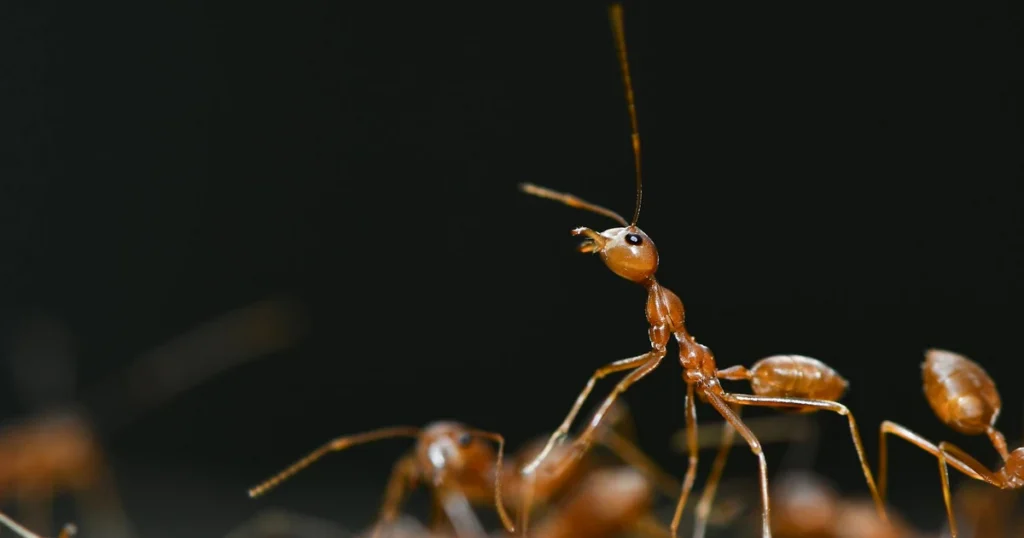
Yes, fire ants are in Virginia. The red imported fire ant has spread into dozens of VA counties, and the state has an active quarantine in place.
Key Takeaways
- Red imported fire ants are established in multiple Virginia counties, concentrated in the central and southeastern parts of the state.
- Virginia maintains an imported fire ant quarantine that restricts how soil, sod, and other regulated articles move out of infested areas.
- Fire ants build mounds in sunny, open soil and are most active in warm weather. They can inflict painful stings that trigger severe allergic reactions in some people.
- Human-assisted movement of soil and plant material accelerates their spread far faster than natural migration.
- Professional fire ant treatment is a separate add-on service, not included in a standard pest control plan.
Yes, Fire Ants Are Established in Virginia Today
The red imported fire ant (Solenopsis invicta) is now confirmed in multiple Virginia counties. Originally from South America, these invasive ants first appeared in the continental United States in the 1930s and have been expanding northward ever since. Virginia is well within their current range, with the heaviest activity concentrated in the central and southeastern portions of the state, including Colonial Heights, Prince George, and surrounding independent cities.
The Virginia Department of Agriculture and Consumer Services (VDACS) tracks the currently known distribution and manages the state’s formal quarantine program through its plant industry services division. If you live in or near an already-infested area, there is a real chance fire ant mounds exist on properties around you.
How Fire Ants Spread Across Virginia in the First Place
Fire ants spread through two distinct pathways: natural migration and human-assisted movement. Natural spread happens slowly as colonies expand along the ground, covering roughly 30–50 miles per year across favorable terrain. Human-assisted movement is far faster and more disruptive. When soil, sod, nursery stock, or agricultural equipment moves from an infested area to a new location, fire ant colonies can travel hundreds of miles in a single day.
This is precisely why Virginia’s imported fire ant quarantine focuses on regulated articles, meaning soil attached to plant material, non-compacted soil, hay, straw stored on the ground, ground logs, and farm equipment that has had direct contact with the ground. Commercial preparation plants and other businesses operating in quarantined areas must meet specific standards before shipping these materials.
The Virginia Cooperative Extension and Virginia Tech’s Department of Entomology have studied how the species adapts as it pushes into cooler climates. A 2020 study published in PLoS ONE documented cold-tolerant acclimation in fire ant populations at higher elevations in the Blue Ridge region, suggesting these ants are more adaptable to Virginia’s winters than early predictions assumed.
How to Identify Fire Ant Mounds in Virginia
Fire ant mounds are dome-shaped, lack a central opening at the top, and appear most often in sunny, open areas. You will find them in landscape beds, lawn edges, sidewalk cracks, and agricultural fields. The soil is typically loose and non-compacted, which fire ants prefer for colony construction. A mature mound can reach 18 inches high and 24 inches wide, though most residential mounds are smaller.
The ants themselves are reddish-brown and range from about 1/8 to 3/8 of an inch long, with workers varying in size within a single colony. They have a two-segmented club on their antennae, which helps distinguish them from other ant species. If you disturb a mound, workers pour out quickly and sting in a mass attack, which is one of the most reliable behavioral identifiers.
A black imported fire ant also exists but is far less common in Virginia. Most fire ant activity in the state involves the red imported fire ant or hybrid colonies that combine traits of both species, as documented by Virginia Cooperative Extension.
Where Fire Ants Nest in Virginia Yards
Fire ants prefer sunny locations with well-drained, non-compacted soil. In residential yards, this means open lawn areas, garden beds, and the edges of driveways or sidewalks. They avoid shaded, dense ground cover. Potted plants left outdoors can harbor new colonies, and nursery stock moved from infested areas can introduce fire ants to previously unaffected properties. Checking plant material before bringing it onto your property is one practical prevention step.
Fire Ant Quarantine Zones in Virginia
Virginia maintains a formal imported fire ant quarantine that restricts the movement of regulated articles out of infested areas. The federal fire ant quarantine, managed in coordination with the Virginia Department of Agriculture and Consumer Services, applies to counties and independent cities where fire ant infestation is confirmed. Within these newly quarantined areas, moving soil, sod attached to grass, or agricultural equipment without proper treatment or certification can carry legal penalties.
The quarantine restricts movement to reduce spread, not to alarm residents. If you are a homeowner in a quarantined area planning landscaping work, ask your contractor whether their materials and equipment have moved through any quarantined area. Soil shipped from outside Virginia can also introduce infestations if it comes from a federally quarantined region in another state.
Fire Ant Stings in Virginia: What to Watch For
Fire ant stings cause an immediate burning sensation followed by itching blisters that develop over 24 to 48 hours. Unlike bee stings, fire ants sting repeatedly. A single disturbed mound can produce a mass attack involving hundreds of workers, all stinging simultaneously. The venom is alkaloid-based, which accounts for the distinctive burning sensation and the small, fluid-filled pustule each sting produces.
For most people, the reaction is painful but localized. For some, the reaction is systemic and life-threatening. A 2024 review published in The Journal of Allergy and Clinical Immunology: In Practice identified fire ant stings as a significant cause of anaphylactic shock in the southeastern United States, with cases increasing as the species expands its range northward. People who experience throat tightening, hives beyond the sting site, dizziness, or difficulty breathing after a fire ant sting need emergency medical attention immediately.
High-Risk Groups for Fire Ant Reactions in Virginia
Children, elderly adults, and people with known insect sting allergies face the highest risk from fire ant encounters. Children are more likely to step on mounds accidentally during outdoor play. Those with prior allergic reactions to bee or wasp stings should consult a physician about carrying an epinephrine auto-injector, particularly if fire ant activity is confirmed near their property. Fire ants also attack small pets and livestock, and their presence near outdoor feeding areas, kennels, or honey bee hives creates added management concerns.
What to Do About Fire Ants in Virginia: DIY vs. Pro
Fire ant treatment requires a targeted approach because standard pest control plans do not cover fire ants. The behavior of fire ant colonies, their ability to relocate when disturbed, and the density of mounds in infested areas make DIY management less effective than professional treatment. Broadcast granular baits applied across the lawn can reduce fire ant activity by targeting colonies as workers carry bait back to the queen, but results depend heavily on correct product selection, timing, and application rate.
Individual mound treatments using contact products work faster but only address visible mounds. Fire ant colonies that sense a threat will often move and re-establish nearby, which is why a two-step approach combining broadcast bait with targeted mound treatment is the method most recommended by Virginia Cooperative Extension and the EPA’s integrated pest management framework.
Fire Ant Treatment as a Professional Add-On in Virginia
Fire ant control is a specialized service that falls outside the standard pest control plan. At Sage Pest Control, fire ant coverage is available as a monthly add-on to any tri-annual service plan. For homes up to 5,000 sq ft, that means $59 per month with the fire ant add-on, compared to $49 per month without it. Homes between 5,001 and 7,000 sq ft run $64 per month, with an additional $5 per each additional 1,000 sq ft above 7,000.
If you have spotted mounds or suspect fire ant activity in your Virginia Beach yard, the fastest way to confirm and get a treatment plan in place is to reach out directly. Sage responds to texts in under a minute and can schedule same-day service. Fire ant colonies do not shrink on their own, and waiting through a season gives them time to expand.
Prevention Steps for Fire Ants in Virginia Yards
Reducing fire ant pressure on your property starts with limiting the conditions that attract new colonies. Keep lawn edges trimmed and avoid leaving non-compacted soil hay, wood debris, or organic material piled on the ground. Inspect any nursery stock, potted plants, or soil moved onto your property from other locations, especially from counties in the quarantined area. Remove wildlife food sources like open pet food bowls or fallen fruit, which can draw fire ant colonies closer to living areas.
Bottom Line on Fire Ants in Virginia
Fire ants are an established pest in Virginia, not a future threat. The red imported fire ant has spread through central and southeastern counties, and the state’s active quarantine reflects how seriously agriculture and consumer services regulators take the fire ant infestation risk. For Virginia Beach homeowners, the question is less “are they here?” and more “are they in my yard?”
Standard pest control plans do not cover fire ants, so if you are seeing dome-shaped mounds in sunny parts of your lawn, call it in separately. Sage Pest Control offers fire ant coverage as an add-on starting at $10 more per month, with free re-services between visits if activity continues. Text Sage today and get a same-day assessment.
Frequently Asked Questions
What counties in Virginia have fire ants?
Fire ant activity is concentrated in central and southeastern Virginia, with confirmed infestations in areas including Colonial Heights, Prince George, and surrounding independent cities. The Virginia Department of Agriculture and Consumer Services maintains the most current list of quarantined areas through its plant industry services program. The list has grown in recent years as colonies expand through both natural spread and human-assisted movement.
How do I know if I have fire ants and not regular ants?
Look for dome-shaped mounds with no central opening at the top, typically in sunny, open soil. Fire ant workers range from reddish-brown to dark and vary in size within the same colony. The clearest sign is behavior: disturbing a fire ant mound triggers a rapid, aggressive mass attack, which is not typical of most other ant species found in Virginia. An insect identification lab can confirm a specimen if you collect one without disturbing the mound.
Are fire ants in Virginia a year-round problem?
Fire ant activity peaks during warm months when colonies expand aggressively and mounds are easiest to spot. During cooler months, colonies move deeper into the soil and become less visible but do not disappear. Virginia winters rarely get cold enough to wipe out established colonies, particularly in the southeastern part of the state. Research on cold-tolerant fire ant populations suggests the species is adapting to survive conditions that would have limited its northern range in earlier decades.
Does Sage Pest Control treat fire ants in Virginia Beach?
Yes. Sage covers fire ants as an add-on to the standard tri-annual plan, starting at an additional $10 per month. Initial service is $299 for all plan sizes, and the fire ant add-on applies per month from there. Free re-services are included between scheduled visits if fire ant activity continues. Contact Sage by text for a same-day assessment of your property.
Can fire ants spread to my property from a neighbor’s yard?
Yes. Fire ant colonies expand through natural spread along the soil, so active mounds on adjacent properties create real risk for neighboring yards. Human-assisted movement through landscaping work, soil deliveries, or plant material can also introduce new colonies. Keeping an eye on lawn edges and open soil near property lines gives you the earliest warning of incoming fire ant activity.
