
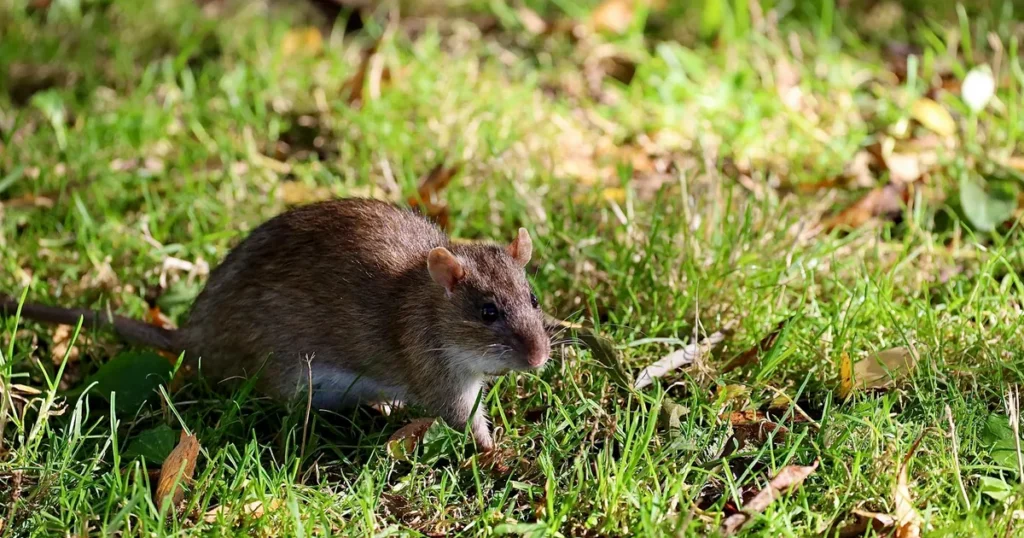
Two rat species invade Virginia homes: Norway rats and roof rats. Learn the signs, risks, and when to call pest control in Virginia Beach.
Key Takeaways
- Virginia hosts two primary rat species: Norway rats (ground-level burrowers) and roof rats (agile climbers that nest in attics and walls).
- Rats carry dozens of zoonotic diseases and can spread pathogens through droppings, urine, and saliva.
- Common signs of a rat infestation include droppings, gnaw marks on wires, grease trails along walls, and scratching sounds at night.
- Professional rodent control combines snap traps, tamper-resistant bait stations, and exclusion work to seal entry points under 2 inches.
- Sage Pest Control’s rodent service starts at $499 for an initial treatment, with tri-annual monitoring available from $39 per service.
Two Rat Species Found in Virginia Homes
Two rat species and one mouse species drive nearly every rodent call in Virginia homes. We’ve lined them up by size and where they nest. Match what you’ve seen on droppings, damage location, and nest material, then plan treatment around the actual species.
/01
Norway rat
No sting
/02
Roof rat
No sting
/03
House mouse
No sting
If you’re finding signs at both floor level and near the ceiling, you may have more than one species. Worth a real inspection before you commit to traps or bait.
Virginia homes deal with two distinct rat species: the Norway rat and the roof rat. Each behaves differently, nests in different areas, and requires a slightly different control approach. Knowing which one you have changes where you look and how you respond.
Norway Rats in Virginia: Ground-Level Burrowers
The Norway rat (Rattus norvegicus), also called the brown rat or sewer rat, is the larger of the two species. Adults typically reach 7 to 10 inches in body length, with a blunt snout, small ears, and a thick tail shorter than their body. Their fur runs brownish-gray on top and paler underneath. A review of urban rat ecology published in Urban Ecosystems identifies Norway rats as dominant burrowers, preferring ground-level nesting in soil near foundations, under concrete slabs, along drainage ditches, and inside crawlspaces.
Norway rats breed quickly. A single female produces 4 to 6 litters per year, with 6 to 12 pups per litter. They feed on nearly anything: garbage, pet food, compost, nuts, and grain. Near Virginia Beach homes, Norway rats gravitate to dense vegetation, overgrown yards, and any structure with gaps in the foundation. They do not climb well, so activity concentrates at ground level in garages, basements, and utility areas.
Roof Rats in Virginia: Agile Climbers in Your Attic
The roof rat (Rattus rattus), also known as the black rat or ship rat, is the sleeker, lighter-bodied species. Adults run 6 to 8 inches, with a pointed snout, large ears, and a tail longer than the body. Fur ranges from black to dark brown. Roof rats are agile climbers. They travel along tree branches, utility wires, and rooflines to reach attics, wall voids, and upper floors of buildings.
In Virginia, roof rats thrive in areas with mature trees and dense shrub cover close to structures. They nest in attics, inside wall voids, and behind insulation. Their diet skews toward fruits, nuts, and vegetation, though they scavenge broadly. Roof rats breed year-round in warmer coastal climates like Virginia Beach, producing 4 to 6 litters annually with 6 to 8 pups each. Activity spikes in fall as outdoor food supplies drop and creatures seek warm shelter indoors.
House Mice in Virginia: A Third Rodent to Watch
House mice are not rats, but they share the same access points and often appear alongside rat activity. Smaller than either rat species, house mice weigh less than an ounce and leave much tinier droppings. They nest in wall voids, behind appliances, and inside stored boxes. A 2021 study published in Animals (MDPI) found that coordinated professional management reduced house mouse infestations by 87% compared to isolated DIY efforts, highlighting why building-wide or whole-home treatment consistently outperforms spot fixes.
Health Risks Rats in Virginia Carry for Homeowners
Rats are not just a nuisance: they are documented carriers of dozens of pathogens that affect humans. Research published in Science by Keesing et al. (2024) identifies rodents as hosts for hundreds of zoonotic diseases, many transmitted through direct contact with droppings, urine, or saliva, and through secondary carriers like fleas and ticks.
Norway rats in urban and suburban settings carry Leptospira bacteria, which can cause serious kidney and liver damage in humans. A 2020 study in Zoonoses and Public Health found Leptospira and E. coli present in significant proportions of urban rat populations, with prevalence tied closely to sanitation conditions and population density. Roof rats historically spread bubonic plague through flea transmission, and both species shed allergens through droppings, urine, and shed fur that worsen asthma and respiratory conditions indoors.
Beyond disease, rats gnaw constantly to keep their teeth trimmed. They chew through electrical wires, PVC pipes, insulation, and structural wood. Damaged electrical wires inside walls are a documented fire risk, and gnawed pipes cause water intrusion that leads to mold growth. These creatures do not stop once inside.
Common Signs of Rats in Virginia Homes
Most homeowners spot the evidence of rats before they see the animals themselves. Rats are nocturnal and cautious, rarely appearing in daylight unless the infestation is large. Knowing what to look for lets you act before a small population becomes a serious one.
Droppings and Urine Trails in Virginia Properties
Rat feces is the most reliable sign of an active infestation. Norway rat droppings measure roughly 3/4 inch, blunt-ended and dark brown. Roof rat droppings are slightly smaller with pointed ends. Fresh droppings are dark and moist. Older droppings dry to a grayish color and crumble. Concentrate your search along walls, behind appliances, in cabinets, and near any food storage. Rat urine leaves a musty odor and fluoresces under UV light, which pest technicians use during inspections.
Gnaw Marks, Grease Trails, and Nesting Sites in Virginia
Active rats leave greasy rub marks along walls and baseboards where their fur contacts surfaces repeatedly. These dark smear trails trace their regular travel routes. Look for gnaw marks on food packaging, wooden beams, and electrical wires. Nesting sites contain shredded paper, fabric, insulation, and plant material packed into a dense mass. Norway rat burrows appear as 2 to 3 inch diameter holes in soil near the foundation, under slabs, or in dense vegetation. Roof rats build nests in attics, inside wall voids, and in tree cavities near the roofline.
Sounds and Behavior That Signal Rats in Virginia
Scratching, scurrying, and gnawing sounds at night are a strong indicator of rats inside the structure. Norway rats make noise closer to ground level, inside crawlspaces and along floor joists. Roof rats scratch and move in attics and upper walls. If you hear rhythmic gnawing sounds or feel movement behind walls after dark, that pattern matches active rodent behavior. Pets often detect rats before homeowners do: dogs and cats fixate on walls or cabinets and show persistent interest in specific spots.
How Rats Get Into Virginia Homes and Buildings
Rats enter structures through gaps far smaller than most homeowners expect. Norway rats squeeze through openings as small as a half-inch in diameter. Roof rats, being more slender, pass through gaps even smaller. Common entry points include gaps around pipes and conduit where they penetrate the foundation or exterior walls, damaged soffit and fascia boards, open garage doors left unattended, deteriorated weatherstripping at door bases, and cracks in the foundation or mortar joints.
Tree branches that overhang the roofline give roof rats a direct bridge to your home. Bird feeders and unsecured trash cans draw rats to the yard first, then to the structure. Dense vegetation planted close to the foundation gives Norway rats covered shelter to dig burrows and probe for entry points without exposure to predators. Businesses and buildings in commercial districts near Virginia Beach see elevated rat pressure during renovation or construction nearby, as displaced rodent populations seek new nesting sites.
DIY vs. Professional Rodent Control in Virginia
Snap traps and store-bought bait blocks reduce visible rat activity, but they rarely address the full population. Rats are neophobic: they avoid new objects in their environment for days or even weeks. Placing traps incorrectly or in low-traffic areas yields almost no results. Without sealing entry points, any rats removed are replaced quickly by neighbors pressing in from outside.
Professional rodent control pairs population reduction with exclusion work. The EPA’s integrated pest management framework recommends combining trapping, baiting, and structural exclusion as a coordinated strategy, not sequential steps. That combination addresses the current population and the conditions sustaining it.
What Sage Pest Control’s Rodent Service Covers in Virginia
Sage’s rodent service uses snap traps inside the home for active infestations and tamper-resistant bait stations outside to prevent rodents from entering the structure. Technicians also perform minor exclusion work, sealing entry points smaller than 2 inches by 2 inches around the exterior. Larger structural gaps require a separate contractor, but most common rat entry points fall within the exclusion scope.
Rodent protection is included within the General Pest Control plan, which covers rats and mice alongside more than 50 other pest types. For standalone rodent service, the initial treatment runs $499, with ongoing monitoring available at $39 per service for homes up to 5,000 square feet, and $44 per service for homes between 5,001 and 7,000 square feet. Sage offers tri-annual monitoring to catch new activity between scheduled visits, and free re-services between appointments if rats return.
When to Call Pest Control for Rats in Virginia Beach
Call a professional when you find droppings in multiple rooms, hear ongoing sounds at night, or discover gnawed wires or pipes. Those signs point to an established population, not a single stray. A single female rat can produce up to 72 offspring in a year under favorable conditions. Waiting extends the infestation and the structural damage. Same-day service is available through Sage for urgent situations, and a technician can respond by text within under a minute to assess the situation and schedule an inspection.
Preventing Rats in Virginia: Protecting Your Home Year-Round
Exclusion and sanitation together form the most effective long-term defense against rats in Virginia. Seal every gap larger than a half-inch around pipes, conduits, and utility lines where they enter the foundation or exterior walls. Replace damaged weatherstripping. Trim tree branches so they do not contact the roofline or overhang within 3 feet of the structure. These steps cut off the access routes roof rats rely on.
Remove food sources that draw rats to the yard before they press toward the house. Store garbage in containers with locking lids. Bring pet food inside after feeding. Move bird feeders at least 10 feet from the foundation. Clear dense vegetation within 18 inches of exterior walls to reduce shelter for burrowing Norway rats. In fall, inspect the foundation and crawlspace vents before the population surge that comes when outdoor conditions cool. The Virginia Tech Department of Entomology maintains regional pest guidance that supports integrated prevention strategies for Virginia homeowners dealing with commensal rodent pressure.
Bottom Line on Rats in Virginia Homes
Norway rats and roof rats both establish themselves in Virginia homes, but they occupy different spaces and call for different inspection points. Norway rats burrow at ground level near the foundation; roof rats nest in attics and walls, using trees and wires to gain access. Both species breed fast, carry disease, and cause structural damage through constant gnawing. Spotting droppings, grease trails, or sounds at night means the population is already established, not just passing through.
Professional pest management addresses both the current infestation and the conditions sustaining it. Sage Pest Control covers rodents under its General Pest Control plan and offers a standalone rodent service starting at $499, with tri-annual monitoring to keep populations from rebuilding. If you see the signs, the fastest next step is a text to Sage. Response takes under a minute.
Frequently Asked Questions
What is the most common rat species in Virginia Beach?
Norway rats are the most widespread species across Virginia, including Virginia Beach. They nest at ground level in soil, near foundations, and inside crawlspaces. Roof rats are also present, particularly in areas with dense tree cover close to structures, and they nest higher up in attics and wall voids. Both species are active year-round in coastal Virginia’s climate.
How do I know if I have rats or mice in my home?
Rat droppings are significantly larger than mouse droppings. Norway rat feces measures roughly 3/4 inch; roof rat droppings are slightly smaller but still noticeably bigger than the tiny, rice-grain-sized droppings house mice leave. Entry holes are also larger for rats. A professional inspection confirms the species and identifies where the population is concentrated, which shapes the treatment approach.
Can rats in Virginia spread disease to humans without direct contact?
Yes. Rats spread pathogens through droppings and urine that dry and become airborne particles, through contaminated surfaces, and indirectly through fleas and ticks that feed on infected rodents and then bite humans. Leptospira bacteria, hantavirus, and salmonella are among the pathogens documented in North American rat populations. Cleaning up droppings without proper protection increases exposure risk.
How long does professional rat control take in Virginia?
Most residential rodent treatments begin showing results within the first one to two weeks as trapping and baiting reduce the active population. Full control of an established infestation typically takes several service visits, especially when exclusion work is needed to close entry points. Sage performs free re-services between scheduled appointments if activity continues after the initial treatment.
What attracts rats to Virginia Beach neighborhoods?
Unsecured garbage, compost, bird feeders, and pet food left outdoors are the primary attractants. Dense vegetation, wood piles, and debris close to the foundation provide shelter for Norway rats to burrow. Roof rats are drawn by mature trees that overhang rooflines and any stored fruit or nuts near the structure. Reducing these conditions cuts the attraction before rats establish a nesting population.
