
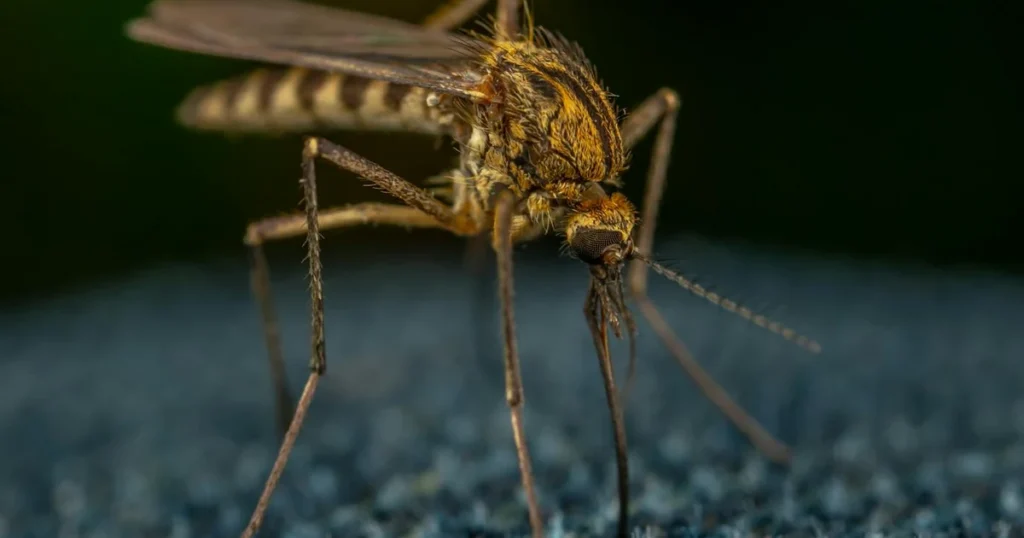
Virginia is home to several mosquito species that bite, breed fast, and spread disease. Here’s what’s flying in your yard and how to stop them.
Key Takeaways
- Virginia hosts at least four common mosquito species, each with distinct breeding habits and bite risks.
- The Asian tiger mosquito is the most aggressive daytime biter and the most widespread species in the region.
- Standing water as shallow as one inch can support a full breeding cycle in under two weeks.
- West Nile virus, La Crosse encephalitis, and Eastern equine encephalitis are all active mosquito-borne diseases in this region.
- Professional recurring treatments target mosquito resting areas and reduce activity far more than one-time sprays.
Mosquito Species You’ll Commonly Find in Virginia
Four species account for almost all the mosquito activity in Virginia Beach yards. We’ve lined them up by how aggressively they bite humans and what diseases they carry. Match what you’ve seen on time of day, breeding spot, and bite pattern.
/01
Asian tiger mosquito
Stings
/02
Northern house mosquito
Stings
/03
Southern house mosquito
Stings
/04
Yellow fever mosquito
Stings
If you’re getting hit at both noon and after dark, you’re dealing with daytime and nighttime species at once. Treating only one window leaves the other half of the day wide open.
Four species account for most of the mosquito activity in Virginia Beach and surrounding coastal areas. Knowing which species you’re dealing with tells you when they bite, where they breed, and what health risks they carry. Not every mosquito in your yard behaves the same way.
Asian Tiger Mosquito in Virginia: The Aggressive Daytime Biter
The Asian tiger mosquito (Aedes albopictus) is the species Virginia Beach homeowners encounter most. It bites during the day, not just at dusk, which catches people off guard. It’s small, black, and marked with bright white stripes on its legs and body.
A statewide survey found Ae. albopictus made up 81% of over 67,000 specimens collected across 18 counties. Earlier work confirmed this species is present in every county across the region.
Asian tiger mosquitoes breed in containers: flower pots, bird baths, clogged gutters, tree holes, and any object that holds water. Larvae develop fast. A small amount of standing water is all they need. Female tiger mosquitoes take a blood meal to produce eggs, then deposit them at the waterline of containers so eggs survive drying and hatch when water returns.
This species can carry dengue fever, Zika virus, and chikungunya, though transmission rates in the U.S. remain low. The main concern in Virginia is the sheer number of bites it delivers. It bites exposed skin repeatedly and tracks moving targets aggressively.
Yellow Fever Mosquito in Virginia: Less Common But Worth Knowing
Aedes aegypti, the yellow fever mosquito, looks similar to the Asian tiger mosquito but prefers to breed indoors or in urban containers. It targets humans almost exclusively and bites multiple times per feeding. Though less widespread in Virginia than its tiger cousin, it has been detected in coastal areas where warm, humid conditions allow it to persist.
Aedes aegypti is the primary vector for yellow fever, dengue fever, and Zika virus globally. In Virginia, confirmed transmission is rare, but the species’ ability to breed in small indoor water sources, like vases or pet water dishes, makes it harder to control through standard yard treatments alone. Addressing containers both inside and outside the home matters for this species.
Northern House Mosquito in Virginia: The Nighttime Pest
Culex pipiens, the northern house mosquito, is the most common mosquito found in Virginia after dark. It becomes active at dusk and continues biting through the night. Adults shelter in dense vegetation, crawlspaces, storm drains, and shaded areas during the day and emerge when temperatures drop in the evening.
Culex pipiens breeds in polluted water and stagnant water: standing puddles, clogged gutters, storm drains, and neglected water features. Larvae cluster in still water with organic matter. Adults can travel up to a mile from their breeding site, so mosquitoes appearing in your yard may originate from a neighbor’s property or a nearby drainage area.
This species is the primary vector for West Nile virus in Virginia. It feeds on birds first, which is where it picks up the virus, and then bites humans. Surveillance data published in MMWR, West Nile virus remains the leading mosquito-borne illness in the United States. Virginia residents face real exposure risk during peak Culex season, which runs from late spring through early fall.
Southern House Mosquito in Virginia: A Warm-Weather Double
Culex quinquefasciatus, the southern house mosquito, is closely related to Culex pipiens and shares many of the same behaviors. It is more common in the southern and coastal portions of Virginia, where temperatures stay warmer longer. Like its northern counterpart, it bites at night, breeds in stagnant water with high organic content, and serves as a vector for West Nile virus and St. Louis encephalitis.
The two Culex species overlap in Virginia Beach, which means homeowners in this region deal with both nighttime biters. Treating resting areas and reducing breeding sites addresses both at once. Bird baths, neglected gutters, and any low-lying area that holds water are prime targets for this species through the warm-weather months.
How Mosquitoes Found in Virginia Breed and Survive
Every mosquito species in Virginia requires standing water to complete its life cycle. Female mosquitoes lay eggs in or near water. Larvae develop underwater, pass through a pupal stage, and emerge as adults in as little as 7 to 10 days under warm conditions. Adult mosquitoes then seek blood meals to produce the next generation.
Containers as shallow as one inch deep can support larvae. Tree holes, flower pots, gutters, and bird baths are the most common breeding places around residential properties. Larger water bodies, storm drains, and puddles that persist for more than a week support Culex populations. Mosquito populations can spike rapidly in summer because multiple generations overlap during warm weather.
During cooler months, mosquito activity drops. Adult Culex mosquitoes overwinter in sheltered spots. Aedes species survive winter as eggs, which hatch in spring when temperatures rise and water returns. Understanding this cycle helps identify when prevention steps matter most: early spring, before populations build, is the best time to act on standing water around the yard.
Diseases Mosquitoes in Virginia Carry and Spread
Mosquito bites in Virginia carry real disease risk, not just irritation. West Nile virus, Eastern equine encephalitis (EEE), and La Crosse encephalitis are all transmitted by mosquito species found in the region. A review published in the North Carolina Medical Journal via NCBI Bookshelf notes that West Nile virus and EEE account for over 98% of reported arboviral disease cases in the region, with La Crosse encephalitis endemic in specific inland and foothill areas.
Most people who contract West Nile virus experience no symptoms. A smaller percentage develop fever, headache, and body aches. Severe neurological disease occurs in less than 1% of cases but is most dangerous for older adults. Eastern equine encephalitis is rarer but significantly more severe, with a high fatality rate among those who develop neurological symptoms.
Dengue fever, chikungunya fever, and Zika virus are theoretically transmissible by Aedes species present in Virginia, though confirmed local transmission remains uncommon. The risk rises when these viruses circulate internationally and travelers return to areas with Aedes albopictus populations. Controlling mosquito populations on your property reduces exposure risk across all these diseases.
When to Call Pest Control for Mosquitoes in Virginia
DIY measures reduce mosquito activity but rarely control established populations around a residential property. Dumping standing water, trimming dense landscaping, and applying bug spray to exposed skin help on the margins. They do not address adult mosquitoes already resting in foliage, nor do they protect the perimeter of the yard during mosquito season.
Professional mosquito treatment targets areas where adult mosquitoes rest during the day: the underside of leaves, dense shrubs, shaded areas under decks, and overgrown borders. Sage’s technicians use professional mist blower equipment to treat trees, shrubs, undergrowth, and shaded vegetation around the home, applying EPA-registered products to harborage zones. Most treatments take 20 to 30 minutes per visit, depending on property size and landscaping density.
Treatments are designed to keep working between visits. Products applied to foliage continue to help reduce mosquito activity even after light rain. Heavy rain or severe weather can affect results, which is why a recurring treatment schedule throughout mosquito season delivers the most consistent protection. If you see activity between visits, Sage will return and re-treat the property at no additional cost.
The right time to start is before peak season, not after mosquitoes become a problem. Populations build fast in spring. Scheduling recurring treatments to begin in late spring, before populations spike, gives you a head start. Waiting until mid-summer means you’re already dealing with multiple overlapping generations of adults.
The EPA’s integrated pest management framework recommends combining source reduction (standing water removal), harborage reduction (foliage treatment), and ongoing monitoring. That approach is exactly what professional recurring service delivers: inspection, targeted treatment, and follow-up on a schedule matched to mosquito season.
Bottom Line on Mosquitoes in Virginia
Virginia Beach homeowners deal with at least four mosquito species that bite, breed prolifically, and carry disease. The Asian tiger mosquito bites during the day. Culex species take over at night. All of them exploit standing water and dense vegetation around your yard. Reducing breeding sites cuts their numbers; professional foliage treatments cut the adults already present.
Recurring treatment is the practical answer. One application helps. A program that runs through mosquito season, with a guarantee that covers re-treatment between visits, is what actually keeps activity down across warm-weather months. If mosquitoes are making your yard unusable, that’s the signal to call.
Frequently Asked Questions
What is the most common mosquito species in Virginia?
The Asian tiger mosquito (Aedes albopictus) is the most common and most frequently encountered species by homeowners in Virginia. It bites aggressively during daylight hours and breeds in small containers around the yard, including flower pots, gutters, and bird baths. Its black-and-white striped body makes it identifiable on sight.
How do mosquitoes survive winter in Virginia?
Aedes species like the Asian tiger mosquito overwinter as eggs, which can survive dry conditions and hatch in spring when water and warmth return. Culex species overwinter as adult females sheltering in protected spots like crawlspaces, storm drains, and dense brush. Activity resumes in spring when temperatures consistently reach the mid-50s.
What attracts mosquitoes to my yard more than my neighbor’s?
Standing water is the primary draw. Any container, low spot, or clogged gutter that holds water for more than a week creates a breeding site. Dense, shaded landscaping provides daytime resting habitat. Yards with more trees, overgrown shrubs, or water features support larger mosquito populations than open, maintained yards with no standing water.
How many mosquito treatments do I need per season?
Effective mosquito control requires recurring treatment throughout mosquito season, typically spring through early fall in Virginia. Single applications wear down between visits. A scheduled program matched to the local mosquito season, with re-treatment available if activity resumes, delivers consistent results that a one-time service cannot replicate.
Do mosquito treatments affect birds or pollinators in my yard?
Sage’s technicians apply EPA-registered products directly to foliage and harborage areas where mosquitoes rest, rather than broadcasting broadly across the yard. Treatment is targeted to reduce contact with non-target insects. Technicians assess property conditions before each visit and select application methods appropriate to the site.
