
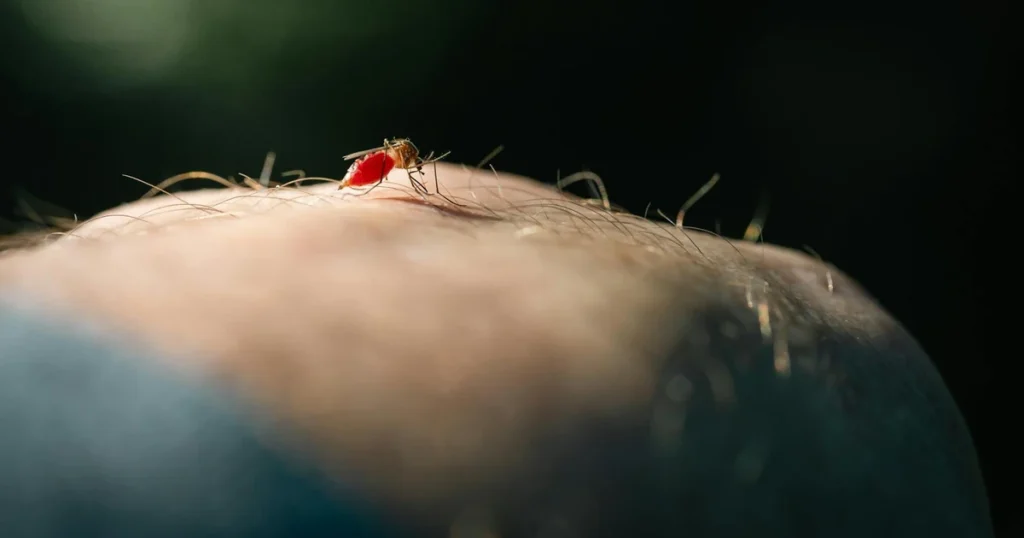
North Carolina hosts several mosquito species that bite, breed fast, and carry diseases. Here’s what’s flying in your yard and how to fight back.
Key Takeaways
- The Asian tiger mosquito (Aedes albopictus) is confirmed in all 100 NC counties and is the species most NC homeowners encounter.
- North Carolina mosquitoes carry West Nile virus, eastern equine encephalitis, La Crosse virus, Zika virus, and dengue fever.
- Mosquito season in NC runs October through May, peaking in the warm, humid summer months.
- Standing water is the single biggest breeding driver. Even a bottle cap holds enough water for eggs to hatch.
- Professional recurring treatments target resting areas on foliage and harborage zones that homeowners miss.
Most Common Mosquito Species Found in North Carolina
More than 60 mosquito species live in North Carolina, but a handful show up in residential yards over and over. We’ve lined them up by how aggressively they bite humans and what diseases they carry. Match what you’ve seen on time of day, breeding spot, and bite pattern.
/01
Asian tiger mosquito
Stings
/02
Northern house mosquito
Stings
/03
Southern house mosquito
Stings
/04
Eastern saltmarsh mosquito
Stings
/05
Yellow fever mosquito
Stings
/06
Anopheles mosquito
Stings
If you’re getting bitten morning, noon, and night, you’re likely dealing with more than one species. Treating both daytime and nighttime resting zones is the only way to get ahead of it.
North Carolina is home to more than 60 mosquito species, but a handful show up in residential yards again and again. A statewide survey published in the Journal of Medical Entomology found that Aedes albopictus, the Asian tiger mosquito, made up 81% of more than 67,000 specimens collected across 18 counties. That one species dominates the landscape. Knowing which mosquitoes share your yard tells you when they bite, where they breed, and which diseases they carry.
Asian Tiger Mosquito in North Carolina Yards
The Asian tiger mosquito is the species most NC homeowners deal with. It bites aggressively during the day, unlike many mosquitoes that wait for dusk. You can identify it by its black body and bold white-striped legs. It is small but relentless, and it breeds in tiny containers: bird baths, buckets, old tires, potted plant saucers, and clogged gutters. Research published in the Journal of the American Mosquito Control Association established that Ae. albopictus is now present in all 100 NC counties. No part of the state is free of this insect.
Northern and Southern House Mosquitoes in North Carolina
House mosquitoes are the primary carriers of West Nile virus in North Carolina. The northern house mosquito (Culex pipiens) and its close relative the southern house mosquito are both widespread across the state. They bite at night, preferring birds as a blood meal but readily feeding on humans and other animals when birds are less available. They breed in standing water with organic matter: ditches, storm drains, ponds, and neglected bird baths. Both species are active from late spring through fall.
Yellow Fever Mosquito in NC: Still a Threat
The yellow fever mosquito (Aedes aegypti) is less common than the Asian tiger but carries serious diseases. It transmits yellow fever, dengue fever, Zika virus, and chikungunya. Like the Asian tiger, it bites during daylight hours and breeds in small containers near homes. It prefers to stay close to human structures, which makes residential yards its prime habitat. Populations are more concentrated in coastal and southeastern NC but can appear across the state during warm months.
Eastern Saltmarsh Mosquitoes Along the NC Coast
Eastern saltmarsh mosquitoes are among the most aggressive biters in coastal North Carolina. These large insects breed in saltmarsh areas and flood-prone zones, producing massive populations after heavy rain or tidal flooding. They can travel several miles from their breeding sites, which means coastal homeowners experience biting pressure even when no standing water sits on their property. They bite primarily at dawn and dusk and target humans, pets, and animals without hesitation.
Woodland Mosquitoes and the Anopheles Mosquito in NC
Woodland mosquitoes and the anopheles mosquito are common in wooded areas and rural properties across North Carolina. The anopheles mosquito is historically associated with malaria, though locally transmitted malaria cases in NC are rare. Woodland species breed in forest pools, slow-moving streams, and shaded depressions in the landscape. They are most active at dawn and dusk. Properties that back up to wooded areas or have dense landscaping see higher pressure from these species throughout mosquito season.
Diseases That North Carolina Mosquitoes Carry
Mosquitoes are the deadliest insects on the planet, and North Carolina’s species carry several diseases that affect humans and animals. West Nile virus remains the leading cause of mosquito-borne illness in the state. NC State Extension Entomology tracks mosquito-borne disease activity across the state and provides updated guidance for residents. Understanding what these insects carry is not meant to cause alarm. It is useful information that explains why control matters beyond the discomfort of itchy bites.
West Nile Virus and Eastern Equine Encephalitis in NC
West Nile virus and eastern equine encephalitis (EEE) are the two most serious mosquito-borne threats in North Carolina. West Nile virus spreads when Culex mosquitoes feed on infected birds and then bite humans or other animals. Most people infected develop mild symptoms.
Eastern equine encephalitis is rarer but far more severe, with a high fatality rate in confirmed human cases. Surveillance data published in MMWR shows West Nile virus accounts for the majority of nationally notifiable arboviral disease cases each year.
La Crosse Virus, Zika, and Dengue Fever in NC
La Crosse encephalitis is endemic to western North Carolina, where wooded terrain and tree-hole breeding sites support the mosquito vectors that carry it. Children are most vulnerable to severe neurological symptoms from La Crosse virus. Zika virus and dengue fever are primarily travel-associated in NC, but the Asian tiger mosquito and yellow fever mosquito are both capable of transmitting these diseases locally if a traveler introduces the virus. These diseases share symptoms including fever, rash, joint pain, and headache.
When Mosquito Season Peaks in North Carolina
Mosquito season in North Carolina runs from October through May, with peak activity as early as February or March and mostly finish by early May, July, and August. Warm temperatures and high humidity create ideal conditions for mosquitoes to breed, develop from eggs to adult mosquitoes in as little as a week, and bite aggressively. Activity slows in September and drops sharply through October as nighttime temperatures fall. Some species remain active on warm fall days well into October, so treating only during peak summer months leaves a gap in protection.
Why NC Summers Produce So Many Mosquitoes
Heat and standing water are the two factors that drive North Carolina’s mosquito population. Female mosquitoes lay eggs in still water. Even a teaspoon of water in a flower pot or a tarp fold is enough. At 80 °F, some species complete their full cycle from eggs to adult in seven to ten days. That speed means a single untreated breeding site can generate hundreds of new mosquitoes each week. The state’s humid summers and frequent afternoon rain events keep breeding sites refreshed across yards, lawns, and landscaping.
How to Protect Your NC Yard from Mosquito Breeding
Reducing standing water is the most direct step you can take to cut mosquito breeding on your property. Walk your yard and remove or empty anything that holds water: old tires, buckets, potted plant saucers, tarps, and clogged gutters. Refresh bird baths weekly so eggs cannot hatch. Trim tall grass and dense shrubs, where adult mosquitoes rest during daylight hours. These steps reduce the conditions that draw mosquitoes in, but they do not replace professional treatment for established populations.
What Professional Mosquito Control in NC Actually Does
Professional mosquito control targets adult resting sites and breeding conditions that homeowners cannot reach on their own. Sage Pest Control starts every service with a detailed inspection of the yard, identifying dense shrubs, shaded foliage, standing water, and clogged gutters where mosquitoes rest or breed. Technicians use professional mist blower equipment to apply EPA-registered products to trees, shrubs, undergrowth, and shaded vegetation. Mosquitoes spend most of their time resting on the underside of leaves, which is why treating foliage directly is the key step that separates professional service from store-bought repellents.
Most treatments take 20 to 30 minutes, depending on property size and the amount of landscaping. Because products are applied directly to harborage areas, they continue reducing mosquito activity even after normal rainfall. Heavy rain or severe weather can reduce effectiveness, which is why recurring scheduled service throughout mosquito season delivers better results than a single one-time treatment.
The Sage Guarantee for Mosquito Control in NC
If you experience mosquito activity between scheduled treatments, Sage returns and re-treats at no additional cost. Mosquito control works best as a recurring program. A single treatment addresses the current population, but new adults emerge continuously from breeding sites on and around your property. Recurring service keeps pressure on the population throughout mosquito season from spring through fall, preventing the rebound that follows a single application.
Bottom Line on Mosquitoes in North Carolina Yards
The types of mosquitoes in North Carolina range from the aggressive, day-biting Asian tiger mosquito found in all 100 counties to the disease-carrying house mosquitoes, eastern saltmarsh species along the coast, and woodland mosquitoes in rural and wooded areas. Every one of these species breeds in standing water and rests in shaded foliage. That biology is also the key to controlling them: remove water, treat harborage areas, and maintain pressure throughout mosquito season.
If mosquitoes are ruining your yard from October through May, Sage Pest Control covers Charlotte, Raleigh, Greensboro, and Virginia Beach with same-day service and a re-treatment guarantee. Text us and we respond in under a minute. Your yard should be yours again.
Frequently Asked Questions
What is the most common mosquito in North Carolina?
The Asian tiger mosquito (Aedes albopictus) is the most prevalent mosquito in North Carolina. A statewide survey found it made up 81% of collected specimens across 18 counties, and it is confirmed in all 100 NC counties. It bites during daylight hours and breeds in small containers like bird baths, buckets, and old tires near your home.
When is mosquito season in North Carolina?
Mosquito season in NC runs October through May. Peak activity occurs July through August when warm temperatures allow mosquitoes to develop from eggs to adults in as little as seven to ten days. Some species remain active on warm fall days through October, so protection should continue past the summer months.
Do North Carolina mosquitoes carry diseases?
Yes. North Carolina mosquitoes carry West Nile virus, eastern equine encephalitis, La Crosse virus, Zika virus, dengue fever, and chikungunya. West Nile virus is the most commonly reported mosquito-borne illness in the state. La Crosse encephalitis is endemic to western NC and primarily affects children. Zika and dengue are travel-associated but can spread locally through species already present in NC.
How do I reduce mosquitoes in my yard?
Remove or empty anything that holds standing water: old tires, buckets, potted plant saucers, tarps, and clogged gutters. Refresh bird baths weekly. Trim tall grass and dense shrubs where mosquitoes rest during the day. For established populations, professional recurring treatments that target foliage and harborage areas provide the most consistent reduction throughout mosquito season.
How does professional mosquito treatment work?
A technician inspects your yard for resting and breeding sites, then applies EPA-registered products to trees, shrubs, undergrowth, and shaded vegetation using professional mist blower equipment. Most treatments take 20 to 30 minutes. Products applied to foliage continue reducing mosquito activity between visits. Recurring scheduled service throughout mosquito season delivers better results than a single one-time application.
