
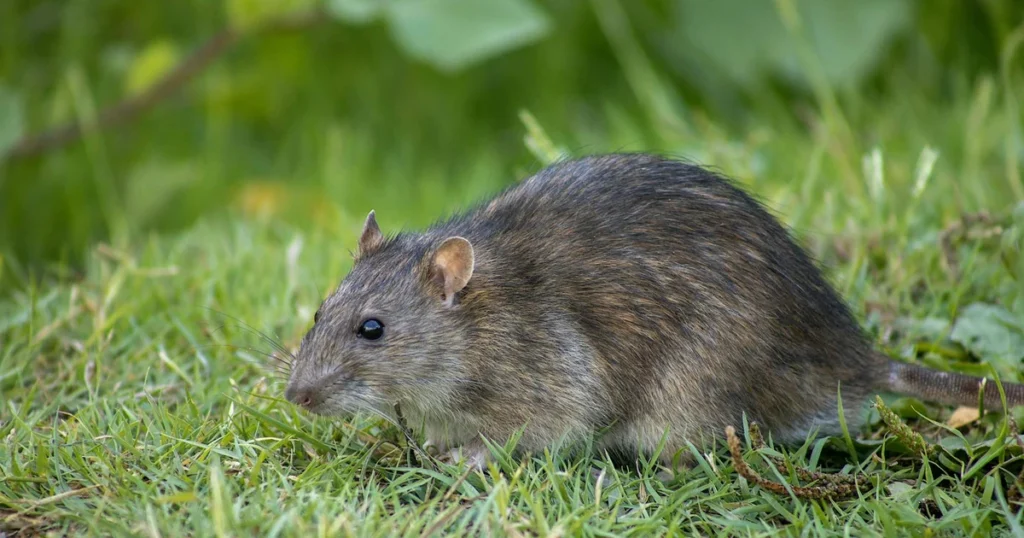
Two types of rats in Virginia cause most infestations: the Norway rat and the roof rat. Here’s how to tell them apart and act fast.
Key Takeaways
- Virginia homes encounter two primary rat species: the Norway rat and the roof rat, each with distinct habits and entry points.
- Norway rats burrow underground and enter through foundations; roof rats are agile climbers that enter through rooflines and trees.
- Both species spread zoonotic diseases, contaminate food supplies, and chew through electrical wires and insulation.
- House mice are a separate, smaller rodent problem in Virginia and require different control methods than rats.
- Professional pest control with snap traps, bait stations, and exclusion work delivers faster, more lasting results than DIY methods alone.
Common Types of Rats Found in Virginia Homes
Virginia homeowners deal with two rat species: the Norway rat (also called the brown rat, sewer rat, or street rat) and the roof rat (also called the black rat or ship rat). These two rodents look different, behave differently, and nest in completely different parts of your home. Knowing which one you have determines where to look, how to treat, and what entry points to seal.
Norway Rat Behavior and Identification in Virginia
Norway rats are the larger of the two species, with thick, heavy bodies covered in coarse brown fur, blunt noses, and small ears relative to their head size. Adults reach 7 to 9 inches in body length, with a tail slightly shorter than the body. Their bodies are built low to the ground, and they move with a lumbering gait rather than quick, darting motions.
Norway rats nest underground. They burrow beneath foundations, concrete slabs, woodpiles, and debris piles around the exterior of buildings. Inside, they stay low, preferring basements, crawlspaces, and the space behind walls at ground level. A review of Norway rat urban ecology published in Urban Ecosystems confirmed that this species consistently dominates ground-level and subterranean environments in residential settings, while roof rats occupy elevated zones.
Norway rats are opportunistic eaters. They consume grains, meat scraps, pet food, garbage, and compost. They need water daily, which draws them to leaky pipes, standing water, and moisture-prone crawlspaces. A single female produces up to 12 young per litter and can deliver five or more litters per year, so a small infestation grows fast.
Roof Rat Behavior and Identification in Virginia
Roof rats are slender, with large ears, pointed noses, and a tail longer than their body. Their fur ranges from dark brown to black on the back, with lighter coloring on the belly. Adults measure 6 to 8 inches in body length, but their long tails add another 7 to 10 inches. They weigh significantly less than Norway rats and move with speed and precision.
Roof rats are agile climbers. They run along tree branches, power lines, and fences to reach rooflines, attics, and upper walls. Once inside, they nest in insulation, drop ceilings, and wall voids above the first floor. If you hear scratching sounds at night near your ceiling or in your attic, roof rats are the more likely culprit. They also nest outdoors in dense vegetation, palm trees, and ivy.
Roof rats prefer fruits, nuts, seeds, and vegetation, but they eat almost anything available. Bird feeders left out overnight draw them in. Pet food stored in open containers near a garage or porch gives them a reliable food source. Like Norway rats, they reproduce quickly, with females producing four to six litters per year of six to eight young each.
How to Tell the Two Species Apart in Virginia
The fastest way to accurately identify which rat you have is location. Droppings near the floor, in basements, or along the foundation suggest Norway rats. Droppings in attics, near rooflines, or along upper cabinets point to roof rats. Norway rat droppings are blunt-ended and about 3/4 inch long. Roof rat droppings are smaller, pointed at both ends, and roughly 1/2 inch long.
You can also distinguish them by gnaw marks and damage patterns. Norway rats chew through lower sections of walls, floor joists, and utility pipes at or below ground level. Roof rats target upper structures, chewing through electrical wires in attics and insulation along roof decking. Both species leave greasy rub marks along walls where their fur contacts surfaces repeatedly.
Why Rats in Virginia Pose Real Health and Property Risks
Rats are not a minor nuisance. Both Norway rats and roof rats carry pathogens that transfer to humans through urine, feces, saliva, and the fleas, ticks, and mites they transport into your home. Research published in Science on emerging patterns in rodent-borne zoonotic diseases documents that rodents host hundreds of zoonotic pathogens, many of which circulate without obvious signs in the rat population.
Disease Risks from Rats in Virginia
Leptospirosis is among the most serious diseases spread by rats in Virginia. Rats shed Leptospira bacteria through urine, which contaminates soil and standing water. Humans contract it through skin contact with contaminated surfaces. A study published in Zoonoses and Public Health found Leptospira prevalence in urban rat populations correlated directly with sanitation conditions, with poorly maintained properties showing significantly higher infection rates.
Rats also spread salmonella through droppings left on food preparation surfaces, storage areas, and pantry shelves. The fleas and ticks they carry bring additional disease risk, including murine typhus and, historically, bubonic plague. Allergic reactions and asthma symptoms can develop from rat urine and feces drying and becoming airborne, particularly in enclosed spaces like basements and attics.
Structural Damage Rats Cause in Virginia Homes
Chewing is constant behavior for rats because their incisors grow continuously and must be worn down. Rats chew through electrical wires, insulation, plastic plumbing pipes, wooden beams, and drywall. Chewed electrical wires inside walls create a fire hazard that is difficult to detect without opening the wall. Gnawed plumbing leads to leaks that cause water damage and mold growth behind walls.
Rats contaminate far more food than they actually eat. A rat that moves through your pantry leaves behind urine, droppings, and fur on surfaces it contacts. Food stored in cardboard boxes or open containers is vulnerable. Hard-sided sealed storage containers in pantries and storage areas are a necessary prevention measure once rats have been identified inside the home.
House Mice in Virginia: A Separate Rodent Problem
House mice (Mus musculus) are not rats, but they share living space with humans across Virginia and require their own recognition and treatment approach. House mice are much smaller than either rat species, with adults measuring 3 to 4 inches in body length, large ears relative to their head size, a pointed nose, and a tail roughly the same length as their body. Their fur is typically gray to light brown.
How House Mice Differ from Rats in Virginia
House mice nest in wall voids, behind appliances, inside insulation, and in stored cardboard boxes. They eat grains, seeds, and almost any human food, but consume far less per feeding than rats. Their droppings are smaller, roughly 1/8 inch long with pointed ends, and are often the first sign of an infestation. Unlike rats, house mice are curious rather than cautious, making bait stations and snap traps placed along walls effective quickly.
Mouse infestations grow faster than rat infestations because female house mice reach reproductive maturity in six weeks and produce litters of six to eight young every three weeks. Research on house mouse control in multi-family dwellings published in Animals (MDPI) found that coordinated, building-wide management reduced infestations by 87 percent, compared to isolated unit-by-unit treatment. The takeaway: mice require systematic treatment across the whole home, not just the rooms where activity is visible.
Common Signs of House Mice in Virginia Homes
Common signs of house mice include small droppings along baseboards and inside cabinets, gnawed corners on food packaging, and small holes in walls or floors near the foundation. You may also notice a musty odor from a nest in an enclosed space. Mice are most active between dusk and dawn, so daytime sightings usually indicate a larger population already established inside the structure.
Rat Prevention for Virginia Homeowners That Actually Works
Prevention focuses on removing the three things rats need: food, shelter, and entry points. Sealing entry points is the single most effective long-term prevention measure. Norway rats can squeeze through a gap the size of a quarter; roof rats need only a gap the size of a nickel. Inspecting and sealing foundation cracks, gaps around pipes, and openings along rooflines removes the access that makes every other prevention measure necessary.
Exterior Prevention Steps for Rats in Virginia
Keep trash in hard-sided containers with tight lids. Move garbage cans away from the house exterior and ensure the garage door seal has no gaps at the base. Store firewood at least 18 inches off the ground and away from the house. Remove compost piles or switch to sealed compost bins. Bird feeders attract rodents after dark, so bring them inside at night or position them far from the structure on poles with baffles.
Trim tree branches that hang within three feet of your roofline. Roof rats use tree branches as bridges to reach soffits, vents, and rooflines. Maintaining a gap between trees and the structure removes the route roof rats rely on. Also cut back dense ground-level vegetation and ivy, which Norway rats use for shelter and nesting.
Interior Prevention Steps for Rats in Virginia
Store all pantry food in hard-sided containers. Transfer grains, cereals, and pet food from bags or boxes into sealed plastic or metal containers. Fix leaking pipes under sinks and in crawlspaces, since Norway rats specifically seek out water sources inside structures. Use exhaust fans in kitchens and bathrooms to reduce moisture that draws rodents toward those rooms.
Seal small openings inside the home around plumbing penetrations, behind cabinets, and along baseboards where pipes enter walls. Steel wool packed into gaps before caulking prevents rats from chewing through the seal. The EPA’s integrated pest management framework recommends combining exclusion, sanitation, and targeted treatment as the most effective and lasting approach to rodent control.
When to Call Pest Control for Rats in Virginia
Call a professional when you find droppings in multiple rooms, hear sounds inside walls or ceilings at night, or see gnaw marks on wires or structural wood. A single rat sighting usually means several more are present but not yet visible. Rats are cautious and avoid open spaces during daylight, so daytime activity is a reliable indicator that the population has grown beyond what isolated trapping will manage.
Sage Pest Control’s standard general pest control plan covers rats and mice as part of the package. When active rodent infestations are confirmed, technicians place snap traps inside the home and install tamper-resistant bait stations outside to prevent rodents from re-entering the structure. Technicians also perform minor exclusion work, sealing entry points smaller than 2 inches by 2 inches around the exterior. For a standalone rodent service, initial treatment starts at $499, with recurring monitoring visits priced at $39 to $44 per service depending on home size.
Between scheduled visits, Sage’s guarantee covers free re-service if rodent activity continues. Reach out by text and expect a response in under a minute. Same-day service is available for most Virginia Beach and North Carolina service area requests.
Bottom Line on Types of Rats in Virginia
Virginia homes face two rat species with opposite habits: Norway rats that burrow underground and enter low, and roof rats that climb trees and enter high. House mice add a third, faster-reproducing rodent threat that runs independent of both rat species. Identifying which rodent you have determines where to focus inspection, treatment, and exclusion work. Waiting extends the infestation and the damage that comes with it.
Professional rodent control combines snap traps, tamper-resistant bait stations, and sealed entry points for lasting results. If you’re seeing signs in Virginia Beach or the surrounding area, Sage Pest Control offers same-day service, free re-treatments between visits, and a rodent plan that fits inside a broader general pest control program.
Frequently Asked Questions
How do I know if I have rats or mice in my Virginia home?
Size and droppings are the fastest indicators. Rat droppings are 1/2 to 3/4 inch long; mouse droppings are about 1/8 inch. Rats leave greasy rub marks along baseboards and walls. Mice tend to be more exploratory and are found in more locations throughout the home. If you can see the animal, rats are noticeably larger, heavier-bodied, and slower-moving than the quick, small house mouse.
Can roof rats in Virginia really enter through the roof?
Yes. Roof rats are agile climbers that run along tree branches, power lines, and fences to reach rooflines. They enter through gaps in soffits, open vents, or spaces where utility lines penetrate the exterior wall near the roofline. Trimming tree branches that overhang your roof by at least three feet removes the most common access route. Sealing vent openings with hardware mesh closes the remaining entry points.
Do Norway rats come inside Virginia homes, or do they stay outside?
Norway rats move freely between outdoor burrows and the interior of structures. They enter through foundation cracks, gaps around plumbing penetrations, and openings at or below grade. Once inside, they nest in basements, crawlspaces, and wall voids near the ground floor. Cold weather and depleted outdoor food sources push them indoors more aggressively in fall and winter, which is when most Virginia homeowners first notice activity.
What diseases do rats in Virginia carry?
Norway and roof rats carry leptospirosis, salmonella, and rat-bite fever, among other illnesses. They also transport fleas and ticks that spread murine typhus and other diseases to humans and pets. Rat urine and droppings dried on surfaces become airborne and can trigger allergic reactions and respiratory symptoms. Avoid direct contact with droppings; use gloves and a mask if cleaning areas where rat activity has been confirmed.
How much does rodent pest control cost in Virginia Beach?
Sage Pest Control’s standalone rodent service starts at $499 for initial treatment, with recurring monitoring visits at $39 per service for homes up to 5,000 square feet. Rodent coverage is also included in Sage’s tri-annual general pest control plan, which starts at a $299 initial fee and $49 per month for homes up to 5,000 square feet. Free re-service between scheduled visits is part of the guarantee if activity continues.
