
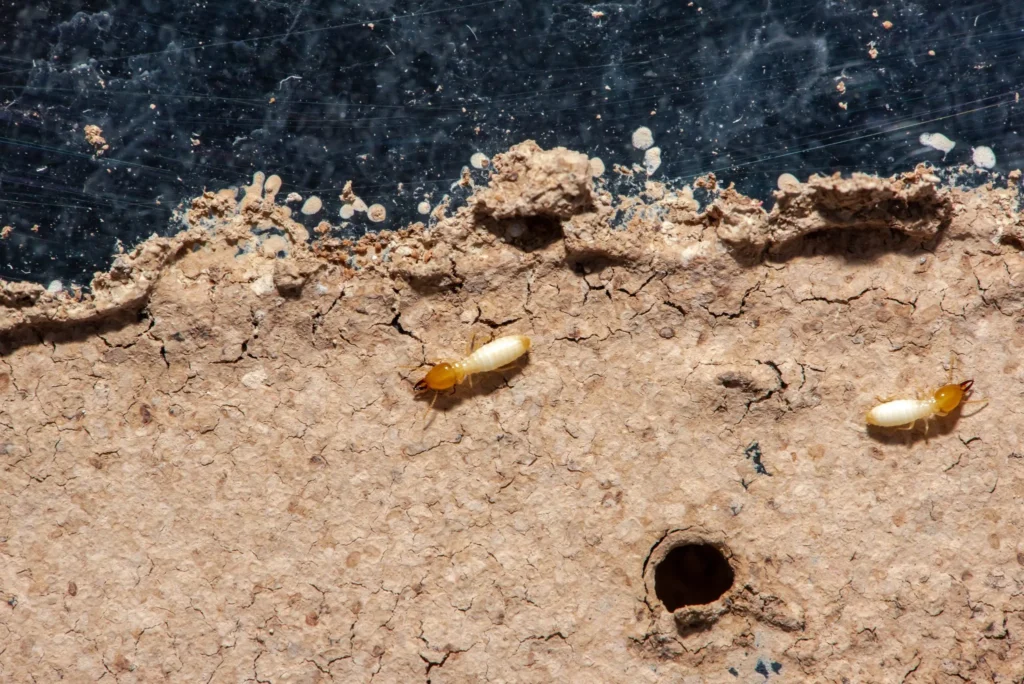
If you have noticed bubbling paint or soft spots on your walls, you might be wondering what’s going on behind the surface. Many Greensboro homeowners are surprised to learn that a termite infestation can affect drywall, even though it isn’t solid wood.
Drywall still contains cellulose in its outer paper layer. This makes it a food source for termites.
When termites feed on drywall paper, they can create hidden damage inside walls. This guide explains how termites affect drywall and what signs to watch for. You’ll also learn when to schedule pest control services before hidden damage gets worse.
Key Takeaways
- Termites can feed on drywall paper, tunnel behind sheetrock, and build mud tubes as they move through a structure.
- Common signs of termite activity include mud tubes, small holes, peeling paint, and hollow walls.
- Drywall damage often looks like water damage and stays hidden behind walls.
- A professional inspection and termite control plan can stop an infestation before it causes significant damage.
How Termites Damage Drywall
Drywall is not solid wood, but termites can still damage it. They feed on certain parts and create tunnels. These can weaken walls over time.
Feeding on Drywall Paper
Termites look for cellulose in building materials. Drywall paper gives them that food source, even though the gypsum inside does not.
As termites eat drywall paper, the surface may feel soft or look uneven. You may see damaged drywall near baseboards or windowsills.
Tunneling Behind Sheetrock
Subterranean termites tunnel behind sheetrock to stay hidden. This helps termite colonies grow without being seen. The wall may look fine at first. But over time, it may sounds hollow when tapped.
Building Mud Tubes Inside Walls
Subterranean termites build mud tubes to move between the soil and their food source. These mud tubes keep them safe and moist. You may find mud tubes in crawl spaces, along baseboards, or behind drywall.
Signs the Damage July Be From Termites
Drywall gets damaged in different ways, but termites leave clear warning signs. Knowing what signs of termite damage to look for helps you catch the problem early.
Small Holes
Small holes can form when termites eat drywall paper. These holes are common signs of termite damage and often show up in groups. You may also notice weak or soft drywall in the same area.
Peeling Paint or Bubbling Surfaces
Peeling paint can come from water damage, but termites can also cause it. As termites weaken the drywall, the surface loses support.
The similarity makes it hard to tell the cause. Look for other signs of termite activity to be sure.
Mud Tubes Along Walls or Baseboards
Mud tubes are one of the most clear signs of termites. Subterranean termites use mud tubes to travel.
You may see mud tubes near baseboards, crawl spaces, or along walls. These often point to an active termite infestation.
Termite Droppings
Some types of termites, like drywood termites, leave frass behind. Frass looks like small pellets.
You may find termite droppings near windowsills or walls. These are clear signs of termite activity inside the home.
Why Termite Damage in Drywall Is Easy to Miss
Termite damage often stays hidden. Many homeowners do not see the problem until it gets worse.
Hidden Behind Finished Surfaces
Drywall covers studs and wall spaces. This gives termites room to move without being seen.
By the time you notice damaged drywall, termite colonies may have spread. This can affect your home’s structural integrity.
Confused With Water Damage
Many signs of termite damage look like water damage. Soft spots and peeling paint are common in both. This can delay pest control and allow the termite problem to grow.
Activity Starting in Crawl Spaces
Subterranean termites often start in crawl spaces and move through entry points in the foundation.
From there, termites tunnel into walls and reach drywall and wooden structures. This can lead to wood damage and even structural damage over time.
When to Schedule a Termite Inspection in Greensboro
Homes in Greensboro often have crawl spaces and wood close to the soil. These conditions make it easier for subterranean termites to enter and form termite colonies. You may also see winged termites, which can mean new colonies are forming.
DIY steps often miss hidden termite colonies. A pest control company can find the source and fix the termite problem. You can request a free termite inspection to get clear answers.
If you are ready to take the next step to protect your Greensboro home, contact us and get a free quote. Sage Pest Control offers termite control services that target termite colonies. Regular inspections and preventative measures can also help lower the risk.
Frequently Asked Questions
Do termites eat drywall?
Yes. Termites eat drywall paper because it contains cellulose. This gives them a steady food source.
What are common signs of termite damage in drywall?
Look for small holes, pinholes, peeling paint, mud tubes, termite droppings, and a hollow sound when tapping walls.
How do you get rid of termites in drywall?
A pest control expert or exterminator will perform a termite inspection, find termite colonies, and use termite treatment like bait stations to stop the infestation.
