
Wolf Spider in Virginia can create costly problems when early signs are missed. Learn what to look for, why it matters, and when to call Sage Pest Control.
Key Takeaways About Virginia Wolf Spider
- Wolf spiders are ground-dwelling hunters that roam in search of prey rather than building webs to catch insects, so you may spot them moving across floors, garages, or landscaped areas around your Virginia home.
- These spiders can deliver a bite if trapped against skin, but they are not aggressive toward people. Knowing how to identify them helps you respond calmly when one turns up indoors.
- Females may look larger than expected because they carry egg sacs and spiderlings on their bodies, which can be startling but is normal behavior.
- Reducing clutter, sealing entry points, and vacuuming any egg sacs you find are practical first steps for keeping wolf spiders out of your living spaces.
How to Identify Virginia Wolf Spider
If you have spotted a fast-moving spider on your floor or along a wall in your Virginia home, there is a good chance it belongs to the wolf spider family (Lycosidae). With roughly 200 species across North America, wolf spiders are one of several ground-dwelling species you may encounter alongside ground spiders, sac spiders, and grass spiders. Knowing what to look for helps you tell them apart quickly.
How to Tell Wolf Spider Types Apart in Virginia
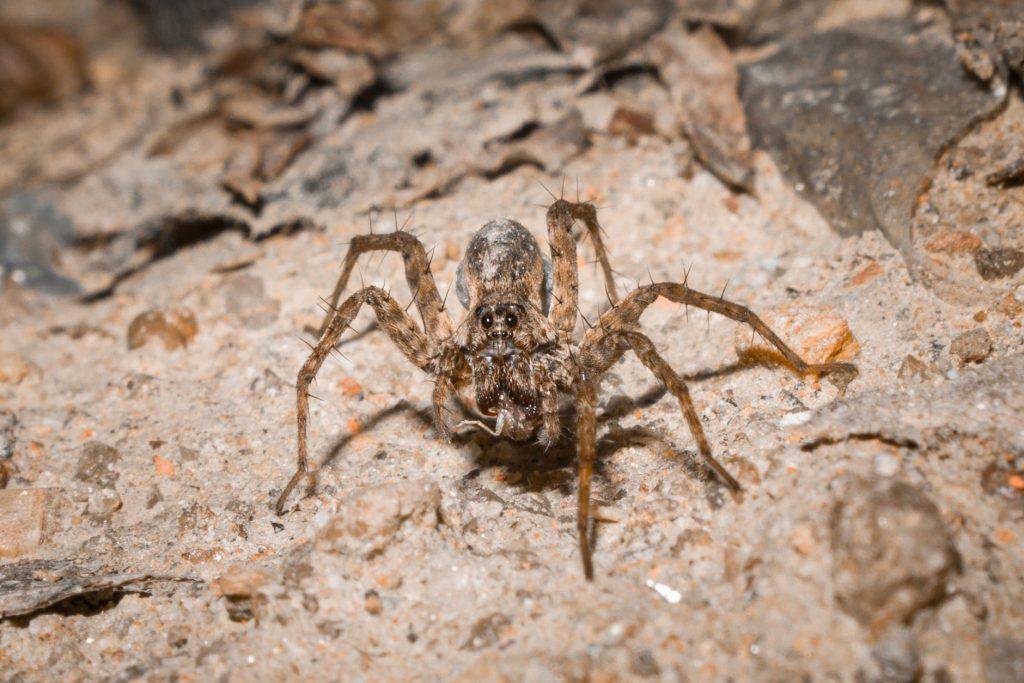
According to Mississippi State University Extension, the most commonly encountered species is tan with dark brown longitudinal stripes on the back. That striped pattern is one of the fastest ways to separate a wolf spider from other species that wander across floors and walls.
Female wolf spiders carry their large, round egg sacs attached to their abdomens. Newly hatched spiderlings then ride on the female’s back. A female carrying spiderlings can appear much larger than she really is, which often startles homeowners who assume they are looking at a much bigger species.
Fully grown male wolf spiders that have reached maturity are often the ones you see indoors, as they move around searching for females. Males tend to look leaner than egg-carrying females.
How to Spot Wolf Spider Activity Inside Your Virginia Home
Wolf spiders are ground-level hunters, so you are most likely to notice them moving across floors rather than hanging from webs. One reliable way to find them at night is to use a flashlight. Their eyes reflect green, making them easy to pick out in a darkened room or along a baseboard.
Another sign of wolf spider activity is the presence of egg sacs. According to Purdue Extension, According to Purdue Extension, egg sacs are usually ball-shaped and frequently contain several hundred eggs, depending on the species.. Some species carry these sacs wherever they go, while others tuck them away in sheltered spots.
Where Wolf Spider Activity Shows Up Around Virginia Homes
Wolf spiders belong to a group of species that stay at ground level rather than building aerial webs. You may notice them along the edges of rooms, in storage areas, or on ground-floor surfaces. Because they hunt on foot, they tend to follow the paths where other small prey species travel.
Exterior Entry Points Wolf Spiders Use Around Virginia Homes
Wolf spiders are part of a broader group of wandering species, including ground spiders (Gnaphosidae), sac spiders, and grass spiders (Agelenidae), that may move indoors from surrounding ground-level areas. Gaps at ground level are the most logical routes for any species that hunts along the surface rather than climbing.
Spotting a single wolf spider does not always mean you have a large population nearby. However, finding a female with spiderlings on her back suggests that egg sacs have already hatched close to your home, and more of this species may follow.
Why Wolf Spider Problems Develop in Virginia
Wolf spiders are hunting spiders, not web builders. They chase down insect prey rather than waiting in a web, which means they roam across yards and sometimes right through your living space. Understanding what draws them closer to Virginia homes can help you stay one step ahead.
Outdoor Nesting Areas for Wolf Spider Around Virginia Homes
Because wolf spiders do not construct extensive webs, they rely on ground-level cover for shelter. Leaf litter, mulch beds, rock piles, and firewood stacks near your foundation give them the low-profile hiding spots they prefer. When webs are built, they remain inconspicuous and serve primarily as nesting sites for egg-laying and retreat rather than for catching food.
Food and Shelter That Attract Wolf Spiders Around Virginia Homes
Wolf spiders hunt insect prey, so any conditions around your home that support other bugs can also support wolf spiders. Outdoor lighting that attracts insects at night is one common draw, since these spiders are mostly nocturnal hunters. The more insects congregating near your doors and windows after dark, the more reason a wolf spider has to patrol that area.
How Wolf Spiders Move Around Virginia Homes
Unlike web-dwelling spiders that stay in one spot, wolf spiders cover ground actively. They do not spin capture webs, so their movement patterns are driven entirely by the hunt for prey. This roaming behavior means a wolf spider can turn up in different rooms on different nights, which often makes homeowners feel like they are dealing with a larger population than may actually be present.
Trails and Entry Points Wolf Spiders Use in Virginia
Wolf spiders typically follow the same paths insects use to get inside. Gaps beneath exterior doors, cracks along the foundation, and openings where utilities enter the home all serve as common entry points. Because these spiders are active at night, you may not notice them slipping in. Sealing gaps and reducing ground-level clutter near exterior walls can limit the pathways available to them.
Risks From Virginia Wolf Spider
If you have spotted a wolf spider in your Virginia home, you are probably wondering whether it poses any real danger. The short answer: wolf spiders are not aggressive, and the health risks they present are low. Still, understanding what a bite can feel like and where these spiders turn up helps you decide how seriously to take an encounter.
Health Risks Linked to Virginia Wolf Spider
Wolf spiders are not aggressive toward people. According to Mississippi State University Extension, they can produce a sharp, pinprick-like bite when trapped against the skin, but they do not seek out confrontation. Most bites happen accidentally, such as when a spider is caught in clothing or bedding.
While many small spiders cannot easily break human skin, wolf spiders—especially larger individuals—can deliver a bite when trapped against the skin. and deliver enough venom to cause a painful reaction. Unlike a black widow bite, a wolf spider bite is not much more toxic to humans than that of other common spiders.
When a bite does occur, the effect is usually no more severe than itching or a reaction comparable to a bee sting. For context, black widow venom is neurotoxic and can cause intense pain and muscle cramping, but according to Mississippi State University Extension, fatalities from widow bites are extremely rare, especially with good medical attention. Wolf spider venom does not carry that same level of concern.
Property Damage From Wolf Spider in Virginia
Wolf spiders are ground-level hunters that do not build the large webs associated with other species, so they do not cause structural or cosmetic damage to your home. There is no risk to wood, drywall, or wiring. The main issue is a nuisance one: egg sacs and occasional webbing can appear on floors, walls, and ceilings, which may feel unsettling even though they do not harm surfaces.
Food Areas and Wolf Spider Activity in Virginia Homes
Wolf spiders follow the insects they prey on, and those insects are often drawn to areas where food is present. Finding a wolf spider near your kitchen or pantry does not mean the spider is after your food. It does suggest that other small pests may be active in the area, which is worth noting as you think about overall pest management in your home.
When to Look Closer at Wolf Spider Activity in Virginia
A single wolf spider sighting is usually not cause for alarm. However, repeated encounters may mean conditions inside or around your home are supporting a broader insect population. Vacuuming spider webs and egg sacs from your floors, walls, and ceilings is a practical first step to reduce their presence.
Pay attention if you are finding wolf spiders regularly in bedding, shoes, or stored clothing, since that is where accidental bites are most likely. Keeping those areas tidy and shaking out items before use lowers the chance of a surprise encounter.
Professional Pest Control for Wolf Spider in Virginia
Wolf spiders are ground-dwelling hunters that wander in search of prey rather than building webs. Because of that roaming habit, they are some of the most common home-invading spiders, according to Mississippi State University Extension. Virginia homeowners who spot one indoors are usually dealing with a spider that walked in while hunting, not one that set up a permanent nest. Understanding what draws them inside is the first step toward keeping them out.
How to Reduce Attractants for Wolf Spider in Virginia
Wolf spiders follow their food. Anything you do to exclude insects from your home will also help reduce spider populations. Sealing gaps around doors, windows, and utility entry points cuts off the insects that wolf spiders are tracking. Keeping outdoor lighting minimal near entry doors can also help, since lights attract the smaller insects these spiders prey on.
Inside, reducing clutter at floor level removes the ground-level cover wolf spiders prefer. These are ground-inhabiting spiders that hunt along surfaces, so open, well-maintained spaces give them fewer places to hide.
Why Wolf Spider Control in Virginia Starts With Inspection
A thorough inspection matters because wolf spiders do not leave obvious webs to signal their presence. They wander across floors, along baseboards, and through garages, so locating activity means checking ground-level areas where prey insects may also be entering.
Sage Pest Control’s service professionals look for the conditions that invite wolf spiders in: insect activity, moisture, and accessible entry points. Identifying and addressing these factors is more productive than chasing individual spiders, because new ones can wander in as long as the food source remains.
What to Expect During Professional Wolf Spider Treatment in Virginia
Treatment targets both the spiders and the prey insects that attract them. As Mississippi State University Extension notes, anything you do to exclude insects will also help reduce spider populations. That principle guides Sage’s approach: address the insect activity first, and the wolf spider pressure drops with it.
Sage Pest Control uses GreenPro-certified, EPA-standard treatments with environmentally friendly, low-impact products. The tri-annual program includes product rotation to help prevent resistance, so treatments stay relevant season after season. Same-day service is available when you need a fast response.
What to Expect From a Virginia Wolf Spider Control Plan
Wolf spiders can measure up to three-quarters of an inch in body length, not counting legs, depending on the species.. Their size alone can be startling, but a structured plan keeps encounters to a minimum. Sage’s recurring tri-annual visits address seasonal shifts in insect activity, which influences how many wolf spiders may wander toward your home.
Between visits, the prevention steps above, sealing entry points and reducing insect attractants, work alongside professional treatments. With 2,500+ five-star reviews and a family-owned approach to service, Sage Pest Control brings both speed and substance to wolf spider management in Virginia.
Bottom Line on Wolf Spider in Virginia
Wolf spiders are ground-dwelling hunters you may encounter around your Virginia home. They can look alarming, especially the larger females, but they are not aggressive and pose minimal concern for most homeowners. Knowing how to identify them, understanding their habits, and keeping your home less inviting to wandering spiders are the best steps you can take. If wolf spiders keep showing up indoors and you want a hand getting ahead of the problem, reach out to Sage Pest Control for same-day service in Virginia Beach.
Frequently Asked Questions About Wolf Spider in Virginia
Are Wolf Spiders Dangerous to People?
Wolf spiders are not aggressive. A bite may occur if one is accidentally pressed against the skin, but these spiders do not seek out people. Most encounters end without incident when the spider is left alone or relocated outdoors.
Why Do I Keep Finding Them Inside My House?
Because wolf spiders hunt on the ground rather than building webs to catch prey, they can wander indoors while searching for food. Gaps around doors, windows, and foundations give them easy entry. Reducing clutter at ground level and sealing those openings can make your home less accessible.
How Can I Tell a Wolf Spider Apart From Other Spiders?
Wolf spiders tend to be stocky, ground-level spiders. Look for distinctive markings along the back and sturdy body shape. Females may appear larger when carrying young. If you are unsure what you are seeing, a pest professional can help with identification.
When Should I Call a Professional?
A single wolf spider indoors is usually not a cause for alarm. However, if you are noticing them regularly or finding egg sacs around your home, a professional assessment can help you understand what is drawing them in and how to reduce future sightings.
