
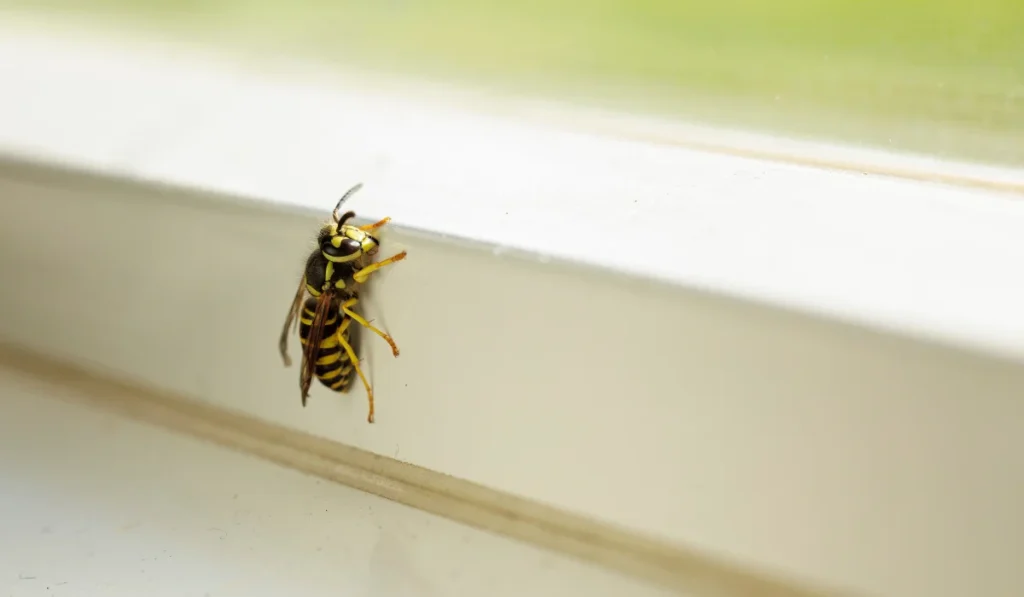
Yellow jacket stings often come in multiples because one insect can sting repeatedly, and nearby workers may join the attack when their colony feels threatened. Unlike a honey bee, a yellow jacket usually pulls its stinger back out of the skin. It can then reposition and sting again.
The risk increases when an encounter happens near a concealed nest. Mowing the lawn, trimming shrubs, moving outdoor materials, or walking close to a ground entrance can trigger a defensive response from several workers. Understanding why this happens can help you leave the area safely, recognize serious symptoms, and avoid disturbing the colony a second time.
Why Yellow Jacket Stings Often Come in Multiples
Multiple yellow jacket stings can come from one wasp, several wasps, or both. A single yellow jacket may sting repeatedly because its stinger does not become lodged in human skin the way a honey bee’s commonly does. When the encounter happens near a nest, other workers may respond to the same disturbance.
This distinction matters because the safest response is not to stop and identify which insect stung you. Your first priority is to move away from the area. Remaining close to the nest gives the original yellow jacket more opportunities to sting and allows more workers to join the defense.
A Single Yellow Jacket Can Sting Repeatedly
A yellow jacket has a comparatively smooth stinger that it can usually withdraw after delivering venom. The sting apparatus remains intact, allowing the insect to sting again during the same encounter. This is why the answer to “Can yellow jackets sting multiple times?” is yes.
There is no useful fixed number for how many times one yellow jacket can sting. The outcome depends on how long the insect remains engaged and whether the person can leave the area. Swatting, swinging clothing, or stopping beside the nest may prolong the encounter.
The University of Minnesota Extension’s guidance on wasps and bees confirms that yellow jackets can sting repeatedly. It also explains that their colonies grow throughout the warm season, which can increase the number of defensive workers near a mature nest.
A Threatened Nest Can Trigger Group Defense
Yellow jackets are social wasps that share a nest with a queen, developing young, and other workers. When one worker detects a threat near the colony, alarm pheromones associated with the sting apparatus and venom sac can increase defensive behavior among nearby nestmates.
That response does not mean every sting brings the entire colony out of the nest. The number of yellow jackets involved depends on the location of the disturbance, the size of the colony, and the intensity of the activity. A mower passing directly over a ground nest creates a much stronger disturbance than a single foraging yellow jacket circling a picnic table.
Why Yellow Jackets Defend Their Nests as a Group
Yellow jackets spend the warm months building and supporting their colony. Workers gather food, maintain the nest, and defend the queen and developing young. When movement or vibration occurs close to the entrance, they may treat it as a direct threat rather than an accidental disturbance.
Ground nests are a common source of surprise encounters because the opening may be hidden by grass, mulch, roots, or low plants. Yellow jackets may also nest in wall voids, attics, and other protected spaces around a structure. In many cases, the most noticeable sign is a steady stream of workers entering and leaving one small opening.
Routine yard work can disturb these nests. A lawn mower sends vibration into the ground, while a string trimmer may pass directly across an entrance. Digging, moving landscape stones, or cutting back shrubs can also place someone within the colony’s defended area.
A yellow jacket seen away from its nest is often searching for food rather than looking for a person to sting. The risk changes when you are close to the colony. That is why a wasp investigating an outdoor drink may remain a single nuisance, while a hidden nest near a walkway or lawn can lead to several yellow jacket stings within seconds.
Yellow Jacket Stings vs. Honey Bee Stings
Yellow jacket and honey bee stings can both cause pain, redness, itching, and swelling. The main difference is what happens to the stinger after contact with human skin.
A honey bee’s barbed stinger commonly becomes lodged in the skin. When the bee pulls away, its sting apparatus is damaged, which usually prevents it from stinging that person again. A yellow jacket generally withdraws its stinger and keeps the apparatus intact.
| Feature | Yellow Jacket | Honey Bee |
|---|---|---|
| Stinger behavior | Usually withdraws after the sting | Commonly remains lodged in skin |
| Can the same insect sting again? | Yes | Usually no after a defensive sting |
| Stinger left behind | Usually not | Often |
| Nest defense | Several workers may respond | Several workers may also defend the colony |
The difference affects what you should do during an attack. Do not stop near the nest to search your skin for a stinger. Leave the area first, protect your face, and enter a closed building or vehicle when one is available.
It is also inaccurate to reduce the comparison to which insect has “stronger” venom. The effect of a sting depends on the number of stings, their location, the total venom dose, and the person’s sensitivity.
What Multiple Yellow Jacket Stings Can Do
Most yellow jacket sting symptoms stay near the sting site. Pain often begins immediately, followed by redness, itching, and localized swelling. Some people develop a larger local reaction that spreads beyond the immediate area and lasts longer than minor swelling.
Receiving many stings creates a separate concern. A larger total dose of yellow jacket venom can make someone ill even when that person does not have a diagnosed insect allergy. Symptoms such as nausea, vomiting, fever, lightheadedness, fainting, or seizures require prompt medical attention.
Signs of a Serious Allergic Reaction
An allergic reaction can affect areas of the body far from the sting site. Widespread hives, swelling of the face, tongue, mouth, or throat, trouble breathing, dizziness, and fainting may indicate anaphylaxis.
The American Academy of Allergy, Asthma & Immunology’s information on stinging insect allergy identifies breathing problems, throat swelling, and other body-wide symptoms as medical emergencies. A person who has been prescribed epinephrine should follow their medical instructions and call 911.
Severe outcomes are uncommon, but they do occur. The CDC reported 788 U.S. deaths from hornet, wasp, and bee stings between 2011 and 2021, averaging 72 deaths per year. That figure combines several types of stinging insects and is not specific to yellow jackets.
What to Do After a Yellow Jacket Attack
If yellow jackets begin stinging, leave the nest area as quickly as you safely can. Protect your eyes, nose, and mouth while moving toward a building or closed vehicle. Do not stop beside the nest to swat at the insects, remove clothing, or inspect each sting.
Once you reach a safe location, wash the affected skin with soap and water. Apply a cold compress to help with pain and swelling. Yellow jackets usually do not leave their stingers behind, but you can check the skin after you are no longer exposed to the colony.
Call 911 for difficulty breathing, swelling of the face or throat, widespread hives, dizziness, or fainting. Seek medical guidance after numerous stings or when symptoms extend beyond expected pain and swelling. A sting inside the mouth or near the airway also deserves immediate attention because swelling may interfere with breathing.
Do not return to the site to locate or disturb the nest. Yellow jackets may remain defensive after mowing, digging, or another activity has affected the colony.
How to Reduce the Risk of Repeat Stings
Watch for repeated yellow jacket traffic around one location. Workers consistently flying into a lawn hole, siding gap, roofline opening, or landscape cavity may indicate an active nest. Keep children and pets away from the area until it can be inspected.
Food management can reduce encounters with foraging yellow jackets. Keep outdoor trash containers closed, clean sugary spills, and cover food during meals. Check cans and opaque cups before drinking because a yellow jacket can enter an open container without being noticed.
Use extra care when mowing or trimming in an area where yellow jackets have been seen. If several insects are entering the same opening, stop working and move away. Do not flood, burn, strike, or dig into a suspected ground nest.
Avoid sealing a structural entrance while workers are still active. Trapping yellow jackets inside a wall or attic may cause them to search for another route. In some situations, that new route can lead into the living space instead of outdoors.
Getting Help With Yellow Jackets Around Your Home
Repeated stinging and coordinated nest defense make active yellow jacket colonies difficult to handle without proper identification and protective equipment. A trained technician can locate the entrance, determine whether the nest is in the ground or a structure, and select a treatment approach based on the site.
Sage Pest Control handles yellow jackets through a specialized service rather than routine general pest coverage. Homeowners in Charlotte, Greensboro, Raleigh, and Virginia Beach can learn more about Sage Pest Control’s local pest services when stinging insects are active around lawns, landscaping, patios, or structural openings.
Yellow jacket stings come in multiples because one insect can sting repeatedly and a threatened colony may respond as a group. Recognizing nest traffic and leaving the area quickly can reduce the chance of further stings. When an active nest is close to your home or a frequently used outdoor space, contact Sage Pest Control to schedule an inspection and discuss the right next step.
