
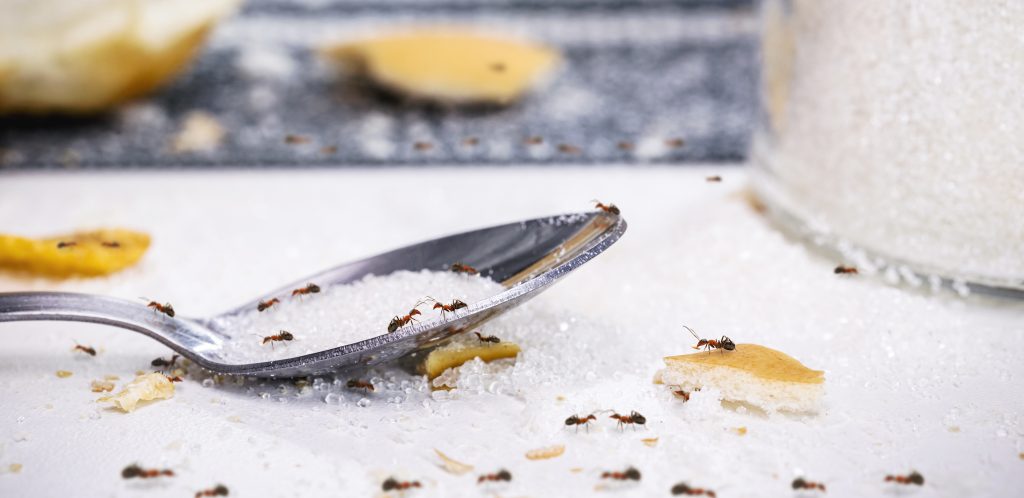
You wipe down the counters, sweep up crumbs, take out the trash, and still spot a line of ants moving along the backsplash or around the sink the next morning. Seeing ants after cleaning kitchen surfaces can be frustrating, especially when it feels like you’ve already removed everything that could attract them. The reality is that a clean kitchen doesn’t always eliminate the conditions ants need to keep coming back.
In Raleigh, ants often enter homes searching for moisture, shelter, or food sources that aren’t always obvious to homeowners. In this article, you’ll learn why ants can remain active even after cleaning, what may be attracting them to your kitchen, and what steps can help keep them from returning.
Key Takeaways
- A spotless kitchen can still attract ants because they follow scent trails left behind and seek out food and water sources you may not notice.
- Identifying where ants are entering your home and what is drawing them in is the first step toward getting the problem under control.
- Ongoing ant control often involves more than surface cleaning. Addressing entry points and underlying attractants helps reduce activity over time.
- When ants keep returning despite your best efforts, a professional assessment can help pinpoint what you are missing and guide the right approach.
How to Identify the Ants in Your Kitchen
You wiped down every counter, swept the floor, and still found a line of ants marching across the kitchen. That is frustrating, but it actually tells you something useful. Ants that persist after cleaning are usually foraging workers following established trails between a nest and a food source. Identifying the ant species and understanding where they nest can help you figure out what you are dealing with.
How to Tell Different Ant Species Apart After Cleaning
Different ant species behave differently, and that matters when deciding how to respond. Some species are drawn to sugary residue, while others prefer grease or protein. According to UC IPM, the response to baits will vary with ant species, bait material, and availability of alternative food. Knowing which species is in your kitchen helps you understand what attracts them and where their nest may be.
Look closely at the ants you are seeing. Note their size, color, and whether they travel in tight lines or scatter across surfaces. These details can help a service professional narrow down the species and recommend the right approach.
How to Spot Ant Activity Inside Your Home
The most obvious sign is a steady trail of foraging ants, even on clean surfaces. Foraging workers collect food and carry it back to the nest, where they transfer it among other workers, larvae, and queens. That sharing behavior is why you may see ants returning along the same path again and again.
Pay attention to where the trails lead. Baits work best when placed along foraging trails and near nest sites. If you can trace the trail to a wall void, crack, or gap behind cabinetry, you have a strong clue about the nest location.
Where Ant Activity Shows Up Around Homes
Ant colonies are often located in cracks between structural timbers. Some species may prefer moist or decaying wood, wood with dry rot, or old termite galleries. That means activity can show up near bathroom walls, under sinks, or anywhere moisture meets wood framing.
In some cases, ants can tunnel into structural wood to form nesting galleries, though this is rare with certain species. If you notice small piles of wood shavings or frass near baseboards, the nest may be closer than you think.
Exterior Entry Points Ants Use to Enter Clean Kitchens
Ants often nest outdoors and send foraging workers inside through small gaps. Cracks in the foundation, spaces around door frames, and openings where utility lines enter the home are all common paths. Even a spotless kitchen will not stop ants that have an established trail from an exterior nest.
Because ants share food with others in the nest, a few visible foragers can represent a much larger colony nearby. Watching where ants enter and exit your home from the outside can help pinpoint the nest and guide the next step in addressing the problem.
Why Ant Problems Develop After Cleaning Your Kitchen
You scrubbed the counters, wiped down the stovetop, and took out the trash, yet a line of ants still winds across the backsplash. The reason is straightforward: a clean kitchen removes crumbs, but it does not remove the invisible trails or the outdoor colony that sent those foragers inside in the first place. Understanding what drives ants indoors helps you see why cleaning alone may not be enough.
Outdoor Nesting Areas That Support Ant Colonies
The nest is almost always outside your home. Most ant species have only one queen per nest, and she lays eggs to maintain or increase the colony size, according to Kansas State University Extension. Because the colony lives outdoors, your kitchen cleanup does not reach the source. Workers simply leave the nest and follow established routes back toward your home looking for food or water.
Food and Shelter Sources That Attract Ants
Ants are attracted to varying food sources throughout the year. What draws them in during spring may differ from what appeals to them in late summer. A spotless counter can still hold traces of sugar or grease too small for you to notice but perfectly detectable to foraging ants. Carpenter ants, for example, have complicated food preferences and may not even respond to common ant-bait food sources.
How Ants Move Around Homes After You Clean
In many species, foragers create a pheromone trail that guides the rest of the colony to a food or water source. Even after you wipe surfaces, those scent trails can persist on floors, walls, and edges you did not clean directly. Soap and water can disrupt the scent trail from a food source back to the nest, as Oregon State University Solve Pest Problems recommends, but a quick countertop wipe may miss the full path.
Without their scent trail, ants lose their way to the food source and are forced either to reestablish the trail or forage elsewhere. That means a partial cleanup can scatter ants into new areas of your kitchen rather than send them away for good.
Trails and Entry Points Ants Use
Ants follow foraging trails through possible entry points around your home. Carpenter ant trails, for instance, often run along consistent paths between the outdoor nest and indoor food sources. Spot treatments work best when applied at those entry points and known foraging trails. Identifying where ants enter, rather than just where you see them, is key to understanding why they keep showing up after you clean.
Risks From Persistent Ant Infestations
A spotless kitchen can still attract ants, and when certain species show up, the risks go beyond a simple nuisance. Understanding what these pests can do to your home helps you decide how quickly to act.
Health Risks Linked to Ant Infestations
Most ant species that trail across clean counters are more annoying than dangerous. However, any ant activity near food-prep surfaces raises hygiene concerns. Ants travel through wall voids, crawl spaces, and other hidden areas before reaching your kitchen, picking up debris along the way.
When sealing cracks and entryways to keep these pests out, maintain adequate ventilation throughout your home for health and airflow reasons. Blocking every opening without accounting for airflow can create its own set of problems.
Property Damage From Persistent Ant Infestations
Carpenter ants are among the pests that pose a real structural concern. According to the Mississippi State University Extension, indoor infestations of carpenter ants often point to some type of moisture problem caused by structural or plumbing leaks. That moisture weakens wood, and carpenter ants tunnel into it to create nesting galleries, compounding the damage over time.
These pests can nest in roofs, underneath shingles, in fascia board or soffit voids, and in floor or wall voids. Colonies may also establish themselves in basements, attics, crawl spaces, and garages. Because carpenter ants are nocturnal, the damage can progress for weeks before you notice visible signs.
How Ants Affect Food Preparation Areas
Even after you wipe down every surface, ants may keep returning to the kitchen and food-storage areas. These pests follow established routes, and a clean counter alone does not always redirect them. Gaps around pipes, baseboards, and exterior walls give carpenter ants and other species easy access to the spaces where you store and prepare food.
Sealing gaps can help prevent carpenter ants from entering your structure, and repairing exterior surfaces removes another common entry point. Addressing these openings around food areas reduces ongoing exposure to trailing pests.
When to Take a Closer Look at Ant Activity
If ants keep appearing in your kitchen after thorough cleaning, it is worth investigating further. Large, dull-black ants measuring up to 5/8 of an inch may be carpenter ants. Their presence indoors often signals a moisture issue somewhere in the structure that deserves attention.
Look for signs of activity near plumbing fixtures, window frames, and any area where water could collect. When these pests nest inside walls or roof voids, the underlying moisture problem and the structural risk tend to grow together. Early inspection helps you understand what you are dealing with before the situation becomes harder to address.
Professional Pest Control for Kitchen Ants
You wiped down every counter, swept the floors, and put away every crumb, yet ants still march across your kitchen. That frustration is valid, and it points to something important: cleaning alone may not address the full picture. Understanding what draws ants in, how a thorough inspection helps, and what a professional treatment plan looks like can help you move past the cycle of cleaning and still seeing ants.
How to Reduce Attractants for Ants in the Kitchen
Even a spotless kitchen can hold attractants you might not think about. According to the University of Minnesota Extension, carpenter ants are attracted to honey and other sweet foods. That means a small drip of honey on a jar lid, a sticky residue inside a cabinet, or a sweetener left near the stove could be enough to keep ants interested.
After your regular cleaning routine, take a closer look at places where sweet residues can hide. Check the rims of syrup bottles, the inside of pantry shelves, and the area around sugar containers. Removing these overlooked sweet sources helps reduce one key reason ants keep returning to a clean kitchen.
Why Ant Control Starts With a Thorough Inspection
When ants persist after cleaning, a professional inspection can uncover what surface tidying misses. A trained service professional looks beyond visible countertops to identify where ants are entering, what they may be following, and which species is involved. Knowing the species matters because different ants respond to different approaches.
Sage Pest Control’s same-day service guarantee means you do not have to wait long for answers. A service professional can assess your kitchen and the surrounding areas to pinpoint the conditions that keep drawing ants back, even after you have done everything right on your end.
What to Expect During Professional Ant Treatment
Sage Pest Control uses GreenPro-certified, EPA-standard treatments with environmentally friendly, low-impact products. During a treatment visit, a service professional targets the specific conditions identified during inspection. Because Sage rotates products as part of its tri-annual program, your home receives ongoing protection designed to prevent resistance over time.
This approach is built around your home’s specific situation rather than a one-size-fits-all application. The goal is to address the ants you are seeing now while accounting for the conditions that brought them in after cleaning.
What to Expect From an Ant Control Plan
A control plan from Sage Pest Control goes beyond a single visit. The seasonal tri-annual program provides recurring service throughout the year, adjusting treatments as conditions change. Product rotation is built into the plan so that the same approach is not repeated visit after visit.
With 2,500+ five-star reviews across Charlotte, Raleigh, Greensboro, and Virginia Beach, Sage has built a track record with homeowners who value lasting, low-impact care for their homes. If ants keep showing up in your clean kitchen, a structured plan can help address what cleaning alone cannot.
Ants After Cleaning Kitchen: Bottom Line
A spotless kitchen is a good first step, but it does not always solve an ant problem on its own. Ants follow scent trails left behind by earlier foragers, which means they can keep showing up even after you have wiped down every surface. Washing those trails away with soap and water, removing food attractants, and addressing any underlying moisture concerns all work together to make your kitchen less appealing. When ants persist despite your best efforts, a professional can help identify the species and target the colony directly.
Sage Pest Control offers same-day service and tri-annual programs with product rotation, so reach out if you need a hand getting things under control.
Frequently Asked Questions
Why do ants keep coming back to a clean kitchen?
Ants rely on pheromone trails to guide other workers toward food and water. Even after you clean, those invisible trails can linger on countertops and floors. Wiping surfaces with soapy water helps disrupt these scent paths and can reduce return visits from foraging ants.
Does cleaning with soap and water actually help?
Yes. Soap and water disrupt the scent trail that connects the colony to a food source. Regularly cleaning the areas where you have seen ants makes it harder for new foragers to follow the same route back into your kitchen.
Should I use baits or just keep cleaning?
Cleaning removes the immediate attractant, but baits can target the colony itself. Bait preferences vary by ant species, so results may differ depending on which ants you are dealing with. A pest professional can help match the right approach to the species in your home.
When should I call a pest professional?
If ants continue to appear after consistent cleaning and sealing entry points, it may be time to bring in help. Persistent indoor activity can sometimes point to a larger issue that surface-level cleaning alone will not resolve. A professional inspection can identify the source and recommend a targeted plan.
