
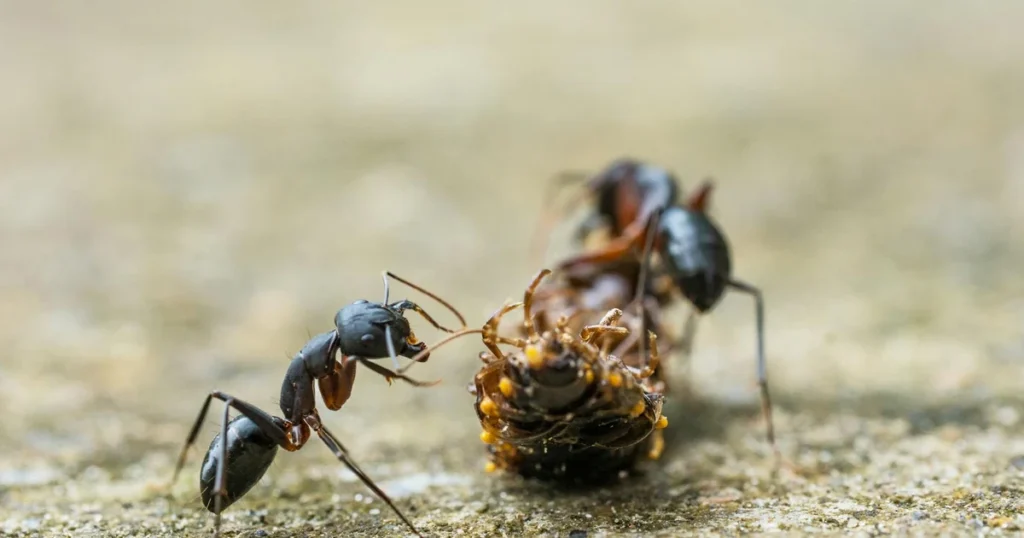
North Carolina hosts more than a dozen ant species that regularly invade homes, from odorous house ants raiding your kitchen to carpenter ants quietly hollowing out structural wood. Knowing which species you’re dealing with changes everything about how you treat it.
Key Takeaways
- The most common ants in North Carolina homes are odorous house ants, carpenter ants, pavement ants, Argentine ants, and fire ants.
- Carpenter ants actively damage wood structures and require a different treatment approach than nuisance ants.
- Fire ants deliver a painful sting and build large mounds in open lawns and yards across the state.
- Sealing food in airtight containers, eliminating food debris, and addressing moisture are the most effective prevention steps.
- Most ant infestations require professional pest control once a colony is established inside the home.
Common Ant Types in North Carolina Homes
Seven ant species show up most often inside North Carolina homes, and they range from nuisance trail-makers to wood-destroying carpenters. We’ve lined them up by how urgent they are. Match what you’ve seen on size, color, and where the trail is going.
/01
Carpenter ant
No sting
/02
Fire ant
Stings
/03
Acrobat ant
Stings
/04
Odorous house ant
No sting
/05
Pavement ant
No sting
/06
Argentine ant
No sting
/07
Pharaoh ant
No sting
If the ant doesn’t match cleanly, you may have two species running at once. A correct ID before treatment keeps a small colony from splitting into a bigger problem.
Most ants that end up inside your home are foraging workers searching for food and water, not permanent residents. Some species, though, nest indoors and become a structural or health concern. NC State Extension Entomology tracks several ant species as established household pests across the state, and the list spans everything from tiny nuisance pests to wood-destroying insects.
Odorous House Ants in North Carolina
Odorous house ants are one of the most commonly found ants inside NC homes. They measure about 1/8 inch long, range from dark brown to black, and release a distinctive rotten-coconut odor when crushed. Workers form visible ant trails along counters, baseboards, and plumbing lines as they forage for sweets and greasy foods. Colonies can contain thousands of workers and multiple queens, which makes treatment tricky. Over-the-counter sprays often split the colony rather than controlling it, pushing workers into new areas of the home.
Carpenter Ant Damage in North Carolina Walls
Carpenter ants are the largest ant species commonly found in North Carolina, reaching up to 5/8 inch long. They are typically black or dark brown and are often mistaken for termites during swarmer season. Unlike termites, carpenter ants do not eat wood. They excavate galleries inside moist or damaged wood to build nests, which causes structural damage over time. Look for coarse sawdust-like frass near baseboards, window frames, or deck posts. A colony inside your walls can expand for years before visible damage appears.
Fire Ant Activity in North Carolina Yards
Fire ants (Solenopsis invicta) build large mounds in open lawns, fields, and disturbed soil across North Carolina. Workers are reddish-brown and range from 1/8 to 1/4 inch long, and colonies can hold hundreds of thousands of insects. Their sting delivers a burning sensation followed by a raised, fluid-filled pustule. Pets and children in the yard face the highest risk. Fire ant coverage requires a specialized add-on treatment because standard pest control plans do not include these insects.
Argentine Ant Spread in North Carolina: An Invasive Species
Argentine ants are a highly invasive ant species that form massive supercolonies spanning multiple yards or even entire city blocks. Workers are light brown and about 1/8 inch long. They are aggressive toward other insects and displace native ant species wherever they spread. Inside homes, they forage relentlessly for sweets, proteins, and pet food. Because their colonies contain multiple queens, baiting must be patient and targeted. Spot treatments rarely deliver lasting results against Argentine ants.
Pavement Ant Colonies in North Carolina
Pavement ants nest under slabs, driveways, and sidewalks throughout North Carolina. They are dark brown to black and measure about 1/8 inch long. Workers push sand and soil up through cracks in concrete, creating small mounds at expansion joints. They forage for nearly any food source, including grease, sweets, and other insects. Pavement ants are nuisance pests primarily, but large colonies under a foundation can become difficult to control without professional treatment.
Acrobat Ant Behavior in North Carolina
Acrobat ants are named for their habit of raising their heart-shaped abdomen over their thorax when disturbed. They are light brown to dark brown and measure about 1/8 inch long. In North Carolina, they commonly nest inside foam insulation, rotting wood, and old termite galleries. They can strip insulation from electrical wiring, creating a secondary hazard. Seeing acrobat ants inside often signals a moisture problem or pre-existing wood damage that needs attention beyond pest control alone.
Pharaoh Ant Infestations in North Carolina Buildings
Pharaoh ants are tiny, yellowish-brown ants that thrive in the warm interiors of homes, apartments, and other buildings. They measure about 1/16 inch long and live in large, distributed colonies with multiple queens. Pharaoh ants scatter aggressively when disturbed by sprays, making colony control extremely difficult without targeted bait programs. They are known to carry pathogens on their bodies as they travel through kitchens, bathrooms, and medical facilities. Pharaoh ants rank among the most difficult ant species to control in North Carolina.
Black Ants and Other Common Ants in North Carolina
Several other ant species turn up regularly in North Carolina homes and yards. Little black ants are tiny, 1/16 inch long, dark insects that form trails along walls and floors in search of food spills and food debris. Field ants build large mounds in lawns and open areas and are often mistaken for fire ants. Crazy ants move in erratic, rapid patterns and are increasingly common in urban areas of the state. Sugar ants is a loose term most people use for any small ant attracted to sweet foods, most often odorous house ants or pavement ants.
Which North Carolina Ants Actually Bite or Sting?
Not every ant species poses a physical risk, but several found in North Carolina can bite or sting. Fire ants deliver the most well-known painful sting, and their venom causes a burning sensation and raised pustules. Carpenter ants bite when threatened and can inject formic acid into the wound, producing a sharp, brief pain. Acrobat ants bite when their colony is disturbed. Pharaoh ants and odorous house ants are not aggressive and rarely cause an insect bite of consequence, though they can contaminate food sources as they forage.
How to Identify an Ant Infestation in North Carolina
A few ants on a counter do not always mean an established colony is nearby, but several warning signs do. Ant trails along walls, under baseboards, or through cabinets indicate active foraging routes. Frass or sawdust near wood structures points to carpenter ant activity. Large mounds in the lawn signal fire ants or field ants. Finding swarmers (winged ants) indoors in spring usually means a colony has been established inside the structure for some time. Many ants visible indoors after dark, when they are most active, suggests a nest close to or inside the home.
How to Get Rid of Ants in North Carolina Homes
The most effective ant control starts with removing what attracts them, then targeting the colony directly. Keep food in airtight containers, wipe down food spills immediately, and store pet food in sealed bins rather than open bags. Fix leaking pipes and fixtures, since moisture draws multiple species indoors. Seal gaps around plumbing penetrations, door frames, and the home’s foundation to cut off common entry points. These steps reduce foraging pressure while treatments work.
Professional pest control takes over where prevention leaves off. The EPA’s integrated pest management framework recommends inspecting for entry points and harborage sites before applying any treatment, then selecting methods based on the specific ant species present. Bait programs work well for odorous house ants, Argentine ants, and pharaoh ants because workers carry the bait back to the queen. Perimeter treatments target pavement ants and fire ants before they reach the structure. Carpenter ant control requires locating and treating the nest directly, often inside a wall or wood member.
Sage Pest Control’s standard plan covers most nuisance ant species with a thorough interior and exterior inspection, exterior perimeter treatment, and spot treatments in accessible interior areas. The tri-annual service for homes up to 5,000 sq ft runs $299 initial and $49 per month, with free re-services between scheduled visits if ant activity returns. Fire ant coverage is available as an add-on for $10 per month. Treatments rotate products seasonally to prevent resistance, which matters for persistent species like Argentine ants and odorous house ants.
Preventing Ants in North Carolina: Keep Your Home Clean
Consistent habits reduce the likelihood that ants treat your home as a food source. Clean up food debris from counters and floors daily. Take out trash regularly and use bins with locking lids. Pull out and clean behind large appliances where food spills accumulate undetected. Store food in airtight containers, including dry goods that often sit in open bags. Keep pet food dishes clean and avoid leaving food out overnight.
Outside, create a crushed-rock barrier between mulch and the home’s foundation to reduce moisture and nesting sites. Keep gutters clear so water does not pool around the foundation. Trim shrubs and trees so branches do not bridge to the roofline, which gives carpenter ants and acrobat ants direct access. The USDA’s integrated pest management guidance emphasizes that structural maintenance and sanitation prevent re-infestation more reliably than treatment alone. Address wood moisture issues promptly since soft or damaged wood is the primary draw for carpenter ants and acrobat ants.
Bottom Line on Ants in North Carolina Homes
North Carolina’s warm, humid climate supports a wide range of ant species, and several of them are persistent household pests. Odorous house ants, carpenter ants, Argentine ants, fire ants, pavement ants, acrobat ants, and pharaoh ants each behave differently and require different control approaches. Identifying the species correctly is the first step toward effective treatment.
If you’re seeing ant trails, swarmers, or signs of wood damage in your home, a professional inspection is the fastest way to confirm the species and put the right treatment in place. Sage Pest Control offers same-day service across Charlotte, Raleigh, and Greensboro, NC, with free re-services between scheduled visits. Text or call to get a technician out the same day.
Frequently Asked Questions
What is the most common ant found inside North Carolina homes?
Odorous house ants are among the most commonly found ants inside NC homes. They are small, dark brown to black, and forage in visible trails along counters, walls, and baseboards. Their colonies contain multiple queens, which makes them difficult to control without targeted bait programs.
Are carpenter ants in North Carolina dangerous?
Carpenter ants do not sting, but they do bite when threatened. The bigger concern is structural. They excavate galleries inside moist or damaged wood, and a well-established colony can cause significant damage to walls, beams, and window frames over several years. Professional treatment that locates and targets the nest is necessary to stop the damage.
Do fire ants live in North Carolina?
Yes. Fire ants (Solenopsis invicta) are established across North Carolina and build large mounds in lawns, fields, and open areas. Their sting is painful and produces a raised pustule. Fire ant treatment is not included in standard pest control plans and requires a specialized add-on service.
How do I keep ants out of my North Carolina home?
Store food in airtight containers, clean up food spills and food debris promptly, and take out trash regularly. Seal gaps around plumbing and the home’s foundation. Fix leaking pipes and address moisture issues, since wet or damaged wood attracts carpenter ants and acrobat ants. A tri-annual professional treatment plan adds a perimeter barrier that reduces foraging pressure between visits.
Why do I suddenly have so many ants in my home?
Ant activity surges in spring and summer when colonies expand and workers forage more aggressively. Rain events push ground-nesting species like pavement ants and fire ants to seek drier shelter indoors. Finding swarmers indoors in spring usually indicates an established colony already inside the structure. A professional inspection can confirm whether the source is inside or outside the home.
