
Are Paper Wasps Aggressive can cause costly problems when early signs are missed. Learn the signs, risks, and when to call Sage Pest Control.
Key Takeaways About Paper Wasp Aggression
- Paper wasps are generally not aggressive on their own, but they may sting if you get too close to a nest, and some species can be more defensive than others.
- These wasps are considered beneficial because they prey on caterpillars and other insects, so removing a nest is worth considering mainly when it sits near areas where your household spends time.
- Paper wasps can sting more than once, which means giving an active nest plenty of space is the simplest way to avoid being stung.
- Nests last only one season, so understanding their yearly cycle helps you decide whether a nest actually needs attention or can be left alone.
How to Identify Paper Wasps
The short answer is that most paper wasp species are relatively unaggressive. They become a concern mainly when they build a nest in a spot where people spend time, such as over a doorway or near fruit trees. Understanding what their nests look like and where they tend to appear helps you decide whether a nest needs attention.
How to Tell Paper Wasp Types Apart
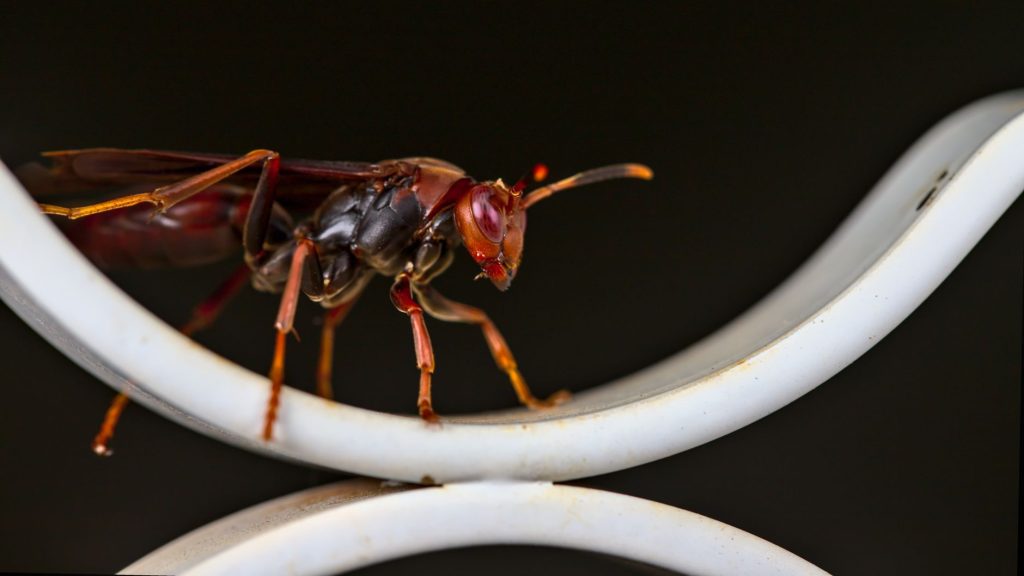
Paper wasps are social wasps, meaning multiple females share a single nest and tend the developing brood together. That sets them apart from solitary wasp species, where each female builds and provisions her own nest. Among paper wasps, different species produce nests that vary in size. According to Mississippi State University Extension, red wasp nests resemble Guinea wasp nests but are larger.
Paper wasp nests are generally small. According to the University of Minnesota Extension, a nest may hold fewer than a dozen individuals, and at most about 100 wasps may be found in a single nest. That relatively modest colony size is one reason most species stay calm unless their nest is disturbed.
How to Spot Paper Wasp Activity Inside Your Home
Paper wasps rarely set up nests deep inside a home, but you may notice one or two wasps indoors near windows or light fixtures. A wasp finding its way inside often means a nest is close to an opening in your home’s exterior. If you see repeated activity in the same room, check nearby eaves, window frames, or vents for a small, open-celled paper nest.
Where Paper Wasp Activity Shows Up Around Homes
Outdoors, paper wasp nests tend to appear in sheltered areas close to human activity. Doorways and fruit trees are common spots where nests can become a problem. A nest tucked under a porch ceiling or along a roofline may go unnoticed until foot traffic picks up. A nest on a seldom-used outbuilding may not need any action at all.
Exterior Entry Points Paper Wasps Use
Paper wasps look for protected overhangs and gaps that offer shelter for nest building. Eave edges, porch ceilings, and areas above doorways give them the cover they prefer. When a nest sits right over a high-traffic area, that proximity is what turns an otherwise unaggressive species into a nuisance. Keeping an eye on these spots throughout the season helps you catch new nests while they are still small.
Why Paper Wasp Problems Develop
Paper wasps are rarely aggressive under normal circumstances. Problems tend to develop when nests grow in high-traffic areas around your home, putting you and the colony on a collision course. Understanding where these wasps nest, what draws them in, and how they move around your property can help you stay a step ahead.
Outdoor Nesting Areas for Paper Wasps
Paper wasps build paper nests with many open cells under eaves. These sheltered spots give the colony protection from rain and wind. In spring, a single female finds a location and builds a nest that starts with only a few cells. The colony expands as female workers add cells to the papery nest. Regardless of species, paper wasp nests last only one season, so new nests appear each year in potentially different spots around your home.
Food and Shelter That Attract Paper Wasps
Worker wasps spend much of the season foraging for food to bring back to developing larvae. A colony consists of an egg-laying queen and many sterile female workers, all focused on expanding the nest and providing food throughout the warm months. Sheltered overhangs, porch ceilings, and the undersides of eaves offer the kind of protected structure they prefer when starting a nest.
How Paper Wasps Move Around Homes
As the colony grows, workers range outward from the nest to gather food. Social wasps sting to defend their colony, and some species may fly several feet to sting someone who happens to be near the nest site, according to Mississippi State University Extension. This defensive behavior is what turns a small nest under an eave into a problem, especially when it sits above a doorway, deck, or walkway you use every day.
Trails and Entry Points Paper Wasps Use
Paper wasps follow consistent flight paths between their nest and food sources. You may notice them returning to the same spot under an eave or overhang repeatedly. Because colonies are annual and a nest is used only during the season it is built, those flight patterns shift from year to year. Checking eaves and sheltered areas in early spring gives you the best window to spot new activity before the colony has established itself.
Risks From Aggressive Paper Wasps
Paper wasps may not be the most confrontational stinging insects around your home, but they still pose real risks when nests end up in high-traffic areas. Understanding those risks helps you decide when a nest can stay and when it needs to go.
Health Risks Linked to Paper Wasps
Paper wasps can sting more than once because they pull their stinger out without injuring themselves, according to the University of Minnesota Extension. That means a single encounter near a nest can result in multiple stings rather than just one.
According to Oregon State University, about 3% of the adult population is severely allergic to insect stings, and an allergic reaction can be a medical emergency requiring immediate attention. Even if you have reacted badly to a bee sting in the past, that does not automatically mean you will have the same reaction to a paper wasp sting. Bee and wasp venom are different.
Property Damage From Paper Wasps
Paper wasp nests attach to a structure by a single point, as Kansas State University Extension notes, and you can recognize them by their open honeycomb shape facing downward. While the nests themselves do not cause major structural harm, they often appear under eaves, porch ceilings, and other parts of your home where foot traffic is constant.
Social wasps, including paper wasps, are beneficial because they capture insects such as flies, caterpillars, and beetle larvae. However, colony removal is warranted when a nest is located near areas of human activity where stings can occur.
Food Areas and Paper Wasp Activity
Outdoor dining spots and gathering areas become less comfortable when a paper wasp nest is nearby. Because these wasps can sting more than once and do not leave a stinger behind, the risk increases anytime people spend extended time close to an active nest.
When to Look Closer at Paper Wasp Activity
If you spot a paper nest attached to your home or an outbuilding, it is worth checking how close it is to walkways and doorways. A nest in a remote corner of your yard may pose little concern, but one above your front door or patio deserves closer attention. Removal is a reasonable step whenever the nest location creates a realistic chance of stings for you or your household.
Professional Pest Control for Paper Wasps
Not every paper wasp nest needs to be removed. According to UC IPM, paper wasp nests should not require treatment unless they are near people. That distinction matters because it changes how a pest professional approaches your property.
How to Reduce Attractants for Paper Wasps
Paper wasps and related species like the guinea wasp (Polistes exclamans) look for sheltered spots to build. As Mississippi State University Extension notes, guinea wasps are small, yellow and brown wasps that build nests in protected areas around buildings or equipment, as well as in dense shrubbery.
Trimming dense shrubbery near your house removes one common nesting option. Keeping storage areas, sheds, and equipment tidy also limits the protected spaces these wasps prefer. Small habitat changes around your property can make a real difference in where wasps choose to settle.
Why Paper Wasp Control Starts With Inspection
An inspection of eaves, overhangs, and sheltered areas around your home helps determine whether treatment is needed. The first step is always locating nests and assessing their proximity to high-traffic areas of your home.
Service professionals check the spots paper wasps favor: overhangs, equipment housings, dense shrubs near walkways, and other protected areas around the structure. Knowing where nests are and how close they sit to doorways, patios, or play areas guides every decision that follows.
What to Expect During Professional Paper Wasp Treatment
When a nest is close enough to people to warrant action, a trained service professional addresses the nest at its location. The goal is straightforward: remove or treat the nest in its specific location while leaving nests in out-of-the-way spots alone when they pose no concern.
Sage Pest Control uses EPA-standard, low-impact products and offers same-day service so you are not left waiting once a nest is found in a problem spot. Our tri-annual program with product rotation also helps manage wasps as part of broader seasonal coverage for your home.
What to Expect From a Paper Wasp Control Plan
A good control plan accounts for more than the nest you can see right now. It includes checking protected areas around buildings, equipment, and shrubbery for additional nesting activity. It also means revisiting your property on a seasonal schedule, since wasps may return to favorable spots over time.
With Sage Pest Control’s tri-annual program, your home gets regular attention across the seasons, covering 50+ pest types including wasps. That recurring approach helps catch new nesting activity early rather than waiting until a nest is fully established near a doorway or gathering area.
Bottom Line on Paper Wasp Aggression
Paper wasps are generally not aggressive away from their nests, but they can become defensive when someone gets too close to a colony. Because nests often appear in spots you walk past every day, the risk of an unexpected encounter is real. Understanding where these wasps build, how they behave around their nests, and when to leave removal to a professional can help you share your yard with fewer surprises.
If you spot a nest near a doorway or high-traffic area of your home, reach out to Sage Pest Control for same-day service so Sage Pest Control handles the situation the same day you call.
Frequently Asked Questions
Will Paper Wasps Sting If I Walk Past Them?
Paper wasps are unlikely to sting you simply for walking nearby. They tend to become defensive primarily when they feel their nest is threatened. Giving a nest a wide berth is usually enough to avoid a sting.
How Long Does a Nest Stay Active?
A paper wasp colony lasts only one season. The nest is not reused the following year, though wasps may build a new one in a similar spot if conditions remain favorable.
Should I Remove a Nest Myself?
Disturbing a nest can provoke defensive stinging, especially if the colony is well established. A trained service professional can remove the nest with the right approach and protective equipment, reducing your risk.
Are Some Paper Wasp Species More Defensive Than Others?
Yes. While most paper wasp species are relatively calm, some can be noticeably more defensive near the nest. Because identifying the exact species on your own can be tricky, a professional assessment is a practical first step when a nest is close to your living space.
