
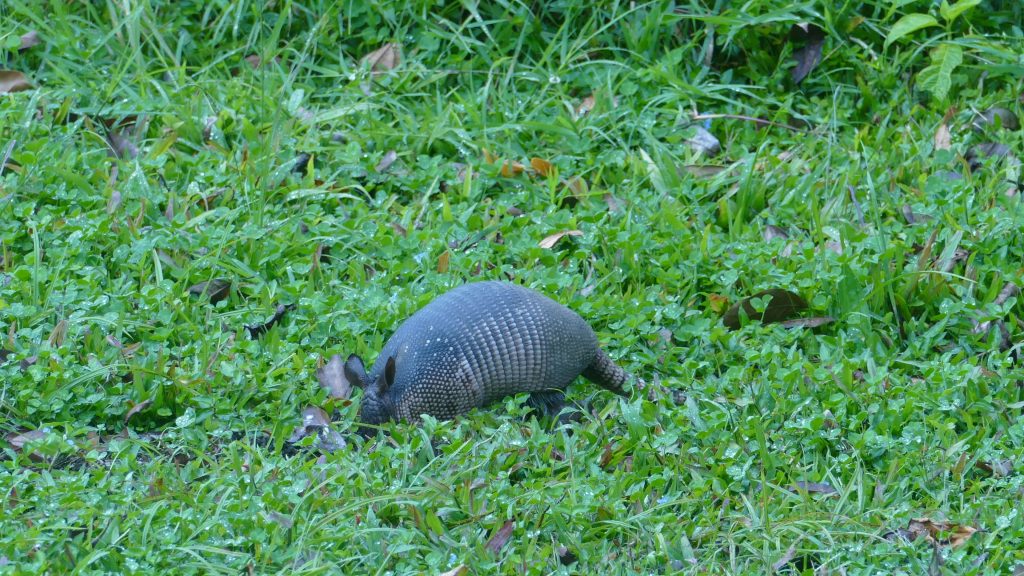
Armadillos in North Carolina are a genuinely new arrival, first confirmed in Macon County in 2007 and now expanding across dozens of counties statewide. That expansion is driven directly by milder winters rather than anyone releasing or relocating the animals. This guide covers where armadillos are actually found in North Carolina today, the specific yard damage they leave behind, and how to tell an armadillo issue from other backyard digging.
Key Takeaways
- Armadillos are a recent arrival to North Carolina, first confirmed in Macon County in 2007, and their expansion into the state is driven by milder winters rather than human introduction.
- Armadillo yard damage shows up as two distinct types of holes: narrow foraging holes 3 to 5 inches wide while hunting for grubs, and wider burrow entrances 7 to 10 inches across where the animal actually shelters.
- Despite popular belief, the nine-banded armadillo, the only species found in North Carolina, can’t curl into a full protective ball; its real defenses are speed through brush and a foul-smelling spray as a last resort.
Armadillos in North Carolina: How They Got Here
This isn’t a species that’s always been part of North Carolina’s wildlife. Understanding how it got here, and why it keeps spreading, explains a lot about where it’s likely to turn up next.
How the Species Reached North Carolina
Armadillos are native to Central and South America and have spread gradually into the southeastern United States over the past century, reaching Texas by 1849 and expanding steadily eastward since. Most of the animals now found in North Carolina arrived by moving in naturally from established populations in Tennessee and Georgia, and wildlife officials consider the state’s expansion a case of natural range growth rather than anything tied to human activity.
Why Winters Limit Armadillo Expansion
An armadillo has little fur or body fat, which leaves it poorly equipped for sustained freezing temperatures, and because it has to dig for most of its food regardless of weather, prolonged cold snaps can cause an individual to starve or freeze. North Carolina’s recent stretch of milder winters, with fewer extended periods below freezing, is what’s allowing armadillos to keep expanding northward instead of staying confined to warmer states further south.
Where Armadillos Are Found in North Carolina
Confirmed armadillo sightings now span dozens of counties across the state, stretching from the mountains in the west to counties near the coast. Western North Carolina has its own distinct expansion story: the first confirmed sighting in Buncombe County came from near Leicester in 2014, and researchers have since found evidence that armadillos are surviving there long enough to breed and establish real populations rather than just passing through. The state’s wildlife agency continues to track new sightings as the range keeps shifting, so an armadillo turning up in a county with no prior reports isn’t unusual.
Where Armadillos Show Up Near Homes Specifically
Within any given county, an armadillo’s actual location tends to follow a predictable pattern around residential properties. Decks, sheds, porches, and foundations offer the same stable, sheltered conditions an armadillo would otherwise dig for in the wild, making the space underneath a common burrowing spot. Garden beds and mulched areas are frequent targets too, since the loose soil is far easier to excavate than compacted lawn. Compost piles draw similar attention for the same reason, and fence lines or property edges bordering woods or brush give an armadillo a low-risk route between shelter and foraging ground without crossing much open space.
How to Identify an Armadillo
The nine-banded armadillo is the only species found in North Carolina, easy to recognize by its thick, leathery, banded shell, a tapered and often bearded-looking face, and poor eyesight paired with an unusually strong sense of smell. About the size of a large possum, it’s frequently mistaken for nothing else once seen up close, since no other North Carolina mammal shares that armored, segmented look.
Armadillo Yard Damage: What to Look For
An armadillo actually leaves behind two different kinds of evidence, and mixing them up makes it harder to gauge how serious the activity actually is.
Armadillo Foraging Holes vs. Burrow Entrances
An armadillo leaves two distinct kinds of holes behind, and telling them apart helps confirm what’s actually causing the damage. Foraging holes, dug while searching for grubs, beetles, and worms just under the surface, run 3 to 5 inches wide and only 1 to 3 inches deep, usually scattered across a lawn or garden bed in a loose pattern. Burrow entrances are considerably larger, 7 to 10 inches wide, and lead to a deeper tunnel used for actual shelter rather than feeding.
Why Armadillos Dig in Clay and Sandy Soil Specifically
Armadillos favor clay or sandy soil because it’s easier to excavate than dense, compacted ground, and a single animal typically maintains 5 to 12 separate burrows within its territory, rotating between them for shelter from predators like coyotes, bobcats, and feral hogs. That many burrows spread across a property is part of why an established armadillo can cause damage that feels more widespread than a single animal’s size would suggest.
Armadillo Behavior and Diet
What an armadillo eats, when it’s active, and how it defends itself are all closely connected, and understanding each one clears up several common misconceptions about the animal.
What Armadillos Eat
An armadillo’s diet is dominated by insects and their larvae, particularly grubs and beetles, though it will also take small reptiles and amphibians, the eggs of ground-nesting birds, and occasional fruits or roots when insects are scarce. That heavy reliance on grubs is exactly why a lawn with a grub problem tends to attract more foraging activity than one without.
Armadillo Nocturnal Habits That Shift With Temperature
Armadillos are generally nocturnal, but extreme temperatures change that pattern in both directions; an armadillo is more likely to forage during the day when nighttime conditions turn unusually cold or when daytime temperatures are otherwise mild enough to make the switch worthwhile. Spotting one during daylight hours isn’t unusual and doesn’t signal anything abnormal about the animal.
Why Nine-Banded Armadillos Can’t Roll Into a Ball
Despite a common assumption borrowed from other armadillo species, the nine-banded armadillo found in North Carolina cannot curl into a full protective ball. Its actual defenses are speed, retreating quickly into dense brush when startled, and as a last resort, a foul-smelling spray released from glands near the tail. When frightened in the open, an armadillo will also jump straight up several feet, a reflex that makes it more likely to be struck by a car than to successfully dodge one.
Are Armadillos Dangerous?
Armadillos can carry the bacteria responsible for leprosy, though wildlife officials report that fewer than 10 percent of armadillos in the southeastern United States actually carry it, and transmission to humans is rare. Direct handling is still worth avoiding regardless, and anyone who does need to handle one should wear gloves and avoid contact with its blood or other fluids.
Can You Trap or Repel an Armadillo Yourself?
Consumer repellents generally don’t work well against armadillos, and trapping isn’t much more reliable; one wildlife study found that baited traps performed about the same as unbaited ones, meaning bait didn’t meaningfully improve success either way. Trapping regulations for armadillos also vary by state and locality, so it’s worth confirming what’s actually permitted before attempting it.
When an Armadillo Problem Needs a Professional
A single foraging hole or two rarely signals anything beyond an armadillo passing through. Multiple active burrows, repeated fresh digging in the same area, or damage spreading across a lawn or garden over several weeks points to an established animal worth addressing directly, since that pattern is unlikely to resolve on its own.
Get Help With Lawn Pests That Attract Armadillos
Sage Pest Control doesn’t handle armadillo trapping directly, but a meaningful part of what draws an armadillo to a yard, a healthy grub population, is exactly what Sage’s general pest control service can address. Reducing the insects an armadillo forages for makes a property meaningfully less attractive to begin with. Sage is backed by comprehensive warranties and offers customized treatment plans across North Carolina. Visit Sage Pest Control or contact the team to schedule an inspection, and contact a licensed wildlife removal specialist directly for the animal itself.
Frequently Asked Questions
Can armadillos really carry leprosy?
Being near one outdoors carries no real risk on its own; the concern is specific to direct contact with blood or tissue, such as during improper handling, not casual proximity in a yard. Washing hands after yard work where one has been active is a reasonable precaution, but a sighting alone doesn’t call for any special response.
Why do armadillos jump when startled, and does that make them dangerous while driving?
The safer response behind the wheel is slowing down rather than swerving. Because the jump is an unpredictable reflex rather than a deliberate dodge, swerving to avoid an armadillo that might jump at the last second creates more risk than simply braking and letting the animal’s own movement play out.
Should I try to trap an armadillo myself?
Removing the food source tends to work better than removing the animal directly. An armadillo with no grubs left to forage for has far less reason to stick around, which is why addressing an underlying lawn insect problem often resolves the digging faster than repeated trapping attempts would.
