
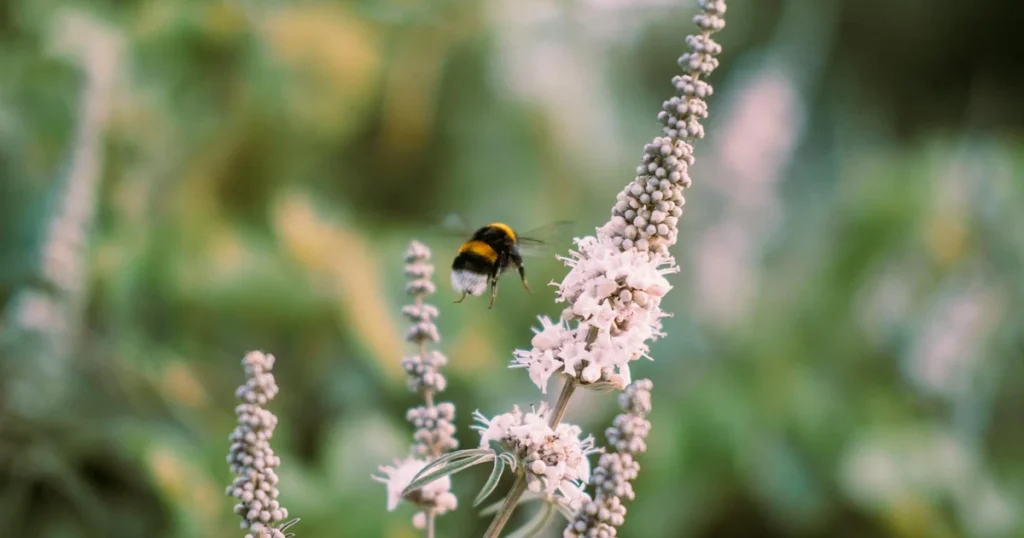
Virginia hosts more than 400 bee species, from tiny sweat bees to large carpenter bees drilling into your porch. Most are native pollinators that pose little threat to your home or family. A few, however, nest in wood, build colonies in wall voids, or sting when disturbed near their nests. Knowing which bee you’re dealing with shapes every decision you make about removal, habitat support, or calling a pro.
Key Takeaways
- Virginia has 400+ bee species, including bumble bees, mason bees, sweat bees, leafcutter bees, and the eastern carpenter bee.
- Most native bees are solitary ground nesters that rarely sting and play a major role in pollination of crops, fruit trees, and native plants.
- Eastern carpenter bees bore into untreated wood and cause structural damage over multiple seasons.
- Honey bee swarms look alarming but are temporary. A licensed beekeeper, not a pest control company, handles swarm removal.
- Sage Pest Control’s general pest plan covers non-honey bees and paper wasps. Honey bees, yellow jackets, and bald-faced hornets require specialized programs.
Native Bee Species You’ll Find in Virginia Yards
Six bee types show up around Virginia yards, and only one of them actually damages your house. We’ve lined them up by how much attention they deserve. Match what you’ve seen on size, color, and where it’s nesting, then check the sting badge before you swing a broom.
/01
Eastern carpenter bee
Stings
/02
Honey bee
Stings
/03
Bumble bee
Stings
/04
Mason and leafcutter bees
No sting
/05
Ground-nesting bees (sweat, mining, cellophane)
Stings
Most native bees here earn their keep pollinating the yard. The carpenter bees boring into your fascia are the ones worth a call.
Virginia’s native bee populations include bumble bees, mason bees, sweat bees, leafcutter bees, and ground-nesting bees that collectively pollinate hundreds of plant species across the state. The Virginia Tech Department of Entomology recognizes the mid-Atlantic region as one of the most bee-diverse in the eastern United States, with species active from early spring through fall. Most of these bees are solitary, meaning a single female builds her own nest, collects pollen and nectar, and lays eggs without any colony support.
Bumble Bees in Virginia: Social and Ground-Nesting
Bumble bees are among Virginia’s most recognizable bee species, with stout, fuzzy bodies banded in yellow and black. They are social insects that live in colonies with a single queen, typically nesting in abandoned rodent burrows, clumps of grass, or beneath wood piles. Bumble bee colonies stay small, usually fewer than 400 workers at peak season, and die back each winter. Only new queens overwinter to start the next generation. Because bumble bees forage across a wide range of flowers and blooming plants, they are critical pollinators for blueberries, tomatoes, and other crops in Virginia’s agricultural communities.
The rusty patched bumble bee was once common across the mid-Atlantic. It is now a federally endangered species, with populations reduced by habitat loss, disease, and shifts in native plant diversity. If you spot an unfamiliar bumble bee in your yard, avoid disturbing it and leave the nest in place if it poses no immediate safety concern.
Ground-Nesting Bees in Virginia: What to Expect in Summer
Ground nesting bees are the most abundant bee group in Virginia, accounting for roughly 70% of all native bee species. These solitary bees nest in bare ground, sandy soil, or small patches of lawn with sparse grass cover. You’ll notice them in early spring as females dig small burrows and gather pollen to provision their nests. Common ground nesters include sweat bees, mining bees, and cellophane bees. Sweat bees, named for their tendency to land on perspiring skin to collect salt, are among the smallest bee species you’ll encounter. They range from metallic green to dull brown and rarely sting unless handled directly.
Mason Bees and Leafcutter Bees in Virginia Gardens
Mason bees and leafcutter bees are cavity-nesting solitary bees that use hollow stems, drilled wood, or bee houses to raise their young. Mason bees are active in early spring and are among the most efficient pollinators for fruit trees and early blooming plants. A single mason bee visits far more flowers per foraging trip than a honey bee. Leafcutter bees emerge later in summer and are recognizable by the clean circular cuts they make from leaves, which they use to line their nest cells. Both species are non-aggressive and beneficial to local ecosystems. Placing bee houses in your garden supports their populations without creating structural risk to your home.
Eastern Carpenter Bees in Virginia: Wood Damage and Control
The eastern carpenter bee is the bee most likely to damage your home in Virginia. These large, robust bees resemble bumble bees but have shiny, hairless black abdomens. Females bore near-perfect circular holes into untreated wood, including deck boards, fascia, wood trim, railings, and wooden porch furniture. Each female excavates a tunnel roughly six inches deep to lay her eggs. Males hover aggressively around the nest entrance but do not sting. Females can sting but rarely do unless handled.
The damage accumulates over multiple seasons. Carpenter bees return to the same wood year after year, and woodpeckers often follow, enlarging the holes to reach larvae inside. Left unaddressed, repeated excavation and woodpecker activity weaken structural wood over time. Painting or staining exposed wood discourages carpenter bees from boring. Hardwoods are less attractive than soft woods like pine and cedar. If activity is already present, treating the tunnel opening targets the larvae and disrupts the reproductive cycle.
Honey Bees and Swarms in Virginia Homes
Honey bee swarms in Virginia typically appear between July when an established colony outgrows its hive and the old queen departs with a portion of the workers to find a new home. A swarm looks like a large, densely packed cluster hanging from a tree branch, fence post, or eave. Swarms are transient. They usually move on within 24 to 72 hours once scout bees locate a permanent nest site.
When honey bees establish a colony inside a wall void, chimney, or soffit, removal becomes significantly more involved. An established colony produces wax comb and honey, which must be physically removed along with the bees. If the comb is left behind, it melts, attracts other insects, and creates moisture damage inside the wall. A licensed beekeeper handles live removals whenever the colony can be relocated intact. Honey bees are not covered under Sage’s standard general pest plan. If you have an established colony inside your home’s structure, contact us and we’ll connect you with the right resource for your situation.
How Native Bee Populations in Virginia Support Local Ecosystems
Native bee populations drive pollination for roughly one-third of the food Americans eat, according to the USDA’s Office of Pest Management Policy. In Virginia, native bees pollinate blueberries, apples, squash, and many native plant species that support birds, insects, and other wildlife across the state. Many plants depend on specific bee species for effective pollination because of the match between flower shape and bee body size or foraging behavior. Losing native bee diversity reduces pollination efficiency across both agricultural and natural areas.
Research published in the Journal of the Kansas Entomological Society examining bee communities in rural eastern Virginia coastal habitats found that habitat quality and plant diversity are the strongest predictors of native bee species richness. Gardens and yards with a variety of blooming plants, native plant species, and undisturbed ground provide the most value. Joe Pye weed, coneflowers, black-eyed Susans, and native shrubs support a broader range of pollinators than non-native plants grown for aesthetics alone.
Virginia Native Bee Habitat: Protecting Your Yard in Virginia
The most effective support for native bees in Virginia costs almost nothing: leave small patches of bare ground undisturbed, reduce lawn area near garden beds, and plant a mix of species that bloom from early spring through fall. Ground nesters need exposed soil to excavate their burrows. A small patch of compacted or sandy soil near a sunny border gives mining bees and sweat bees nesting access without disrupting your lawn. Avoid applying broad-spectrum treatments to blooming plants when bees are actively foraging. Treating at dusk when pollinators are not active reduces exposure risk.
Climate change is shifting bloom times and reducing the overlap between flowering plants and bee emergence windows across the mid-Atlantic. Planting native species that bloom across a longer season provides a more reliable pollen and nectar supply as conditions shift.
When to Call Pest Control for Bees in Virginia
Call a pest control professional when bees are nesting inside your home’s structure or creating repeated damage to wood. Carpenter bees boring into deck boards, fascia, or porch ceilings are the most common structural pest bee problem Virginia homeowners face. Sage’s general pest plan covers treatment for non-honey bees and paper wasps, including carpenter bee activity. Our technicians inspect the affected wood, treat active tunnel openings, and provide recommendations to discourage return nesting.
Honey bees, yellow jackets, and bald-faced hornets fall outside the standard plan and require specialized treatment programs. The EPA’s integrated pest management framework recommends identifying the species before selecting a treatment approach, since the correct method varies by bee type, nest location, and colony size. If you’re unsure which species you have, text us a photo and we’ll respond in under a minute to help you identify it and plan next steps.
Bottom Line on Bees in Virginia Homes and Gardens
Most bees in Virginia are native pollinators that benefit your yard, your garden, and local ecosystems. Ground-nesting bees, bumble bees, mason bees, sweat bees, and leafcutter bees are unlikely to sting and worth protecting wherever they aren’t causing structural problems. Eastern carpenter bees are the exception. They damage wood over time and benefit from targeted treatment before a single season’s holes become a multi-season repair project.
Sage covers non-honey bees and paper wasps under our standard general pest plan, with free re-services between scheduled visits. Text us when you see activity. We’ll identify what you’re dealing with and tell you exactly what to do next.
Frequently Asked Questions
Are all bees in Virginia able to sting?
Most native bees in Virginia can sting but rarely do. Ground-nesting bees, sweat bees, and mason bees are solitary and non-aggressive. Male bees of all species cannot sting. Female carpenter bees can sting but typically only when handled directly. Bumble bees will sting to defend a nest if disturbed. Honey bees sting as a defensive response and lose their stinger in the process.
How do I know if I have a carpenter bee problem?
Look for near-perfect round holes, about the diameter of a finger, in unfinished or unpainted wood on decks, eaves, fascia boards, or porch furniture. You may see coarse sawdust beneath the holes and yellowish staining around the opening. Large, hovering bees near the holes are typically male carpenter bees defending the nest site. Females are doing the boring work inside the wood.
Does Sage Pest Control treat carpenter bees in Virginia?
Yes. Carpenter bee treatment is included under Sage’s general pest control plan, which covers non-honey bees. Technicians treat active tunnel openings and inspect the surrounding wood during each scheduled visit. Free re-services are available between scheduled visits if carpenter bee activity returns. Honey bees require a separate specialized program.
What is the rusty patched bumble bee and is it in Virginia?
The rusty patched bumble bee is a federally endangered species that was once widespread across the eastern United States, including Virginia. Its populations have declined sharply due to habitat loss, disease, and reduced native plant diversity. It is rarely observed in Virginia today. If you believe you’ve spotted one, leave the nest undisturbed and report the sighting to the Virginia Department of Wildlife Resources.
