
Can termites survive concrete homes? Learn the truth about termite activity in concrete and slab-built homes in Charlotte, signs, risks, and when to call Sage Pest Control.
Key Takeaways About Termites and Concrete Homes
- Concrete is not a food source for termites, but they can still reach the wood inside a concrete home by traveling through cracks, expansion joints, and utility openings in the foundation or slab.
- Subterranean termites live in soil and build mud tubes to access wood framing, trim, and other wooden components within concrete structures, so a concrete exterior does not guarantee protection.
- Prevention starts with reducing wood-to-soil contact, keeping the foundation visible for inspection, and addressing moisture around the home.
- Professional termite control, including bait systems and soil treatments around the foundation, can help protect concrete homes from hidden termite activity.
Can Termites Survive Concrete Homes?
Many homeowners assume concrete blocks termites completely. It sounds logical since there is no exposed wood. But, in reality, termites can still reach a home’s structure by finding small entry points around the foundation. In Charlotte, the humid weather helps termite activity stay active for much of the year. Moist soil near foundations creates the right conditions for termites to survive and spread. Once they find a food source, they move quickly and stay hidden.
Knowing how termites enter concrete homes and what signs of termite damage to watch for can help protect your home’s structure. It helps you understand why Charlotte concrete homes and those built on slabs still need termite control.
How to Identify Termite Activity in Concrete Homes
Termites cannot eat concrete, but that does not mean a concrete home is free from risk. Subterranean termites can reach wood framing, trim, and other cellulose materials inside a structure by traveling through small cracks in the foundation, plumbing penetrations, or openings where wood contacts soil. Knowing the signs of termite activity helps you catch a problem before damage accumulates.
How to Tell Different Termite Types in Concrete Homes
The type of wood damage you find can help you determine which termite species is responsible. According to UC IPM, subterranean termite feeding generally follows the grain of the wood, targeting the softer springwood while leaving the harder summerwood behind. This creates a layered, almost honeycomb-like pattern in damaged wood.
That distinctive pattern is a useful identifier. Many times, this wood-damage pattern alone can distinguish subterranean termite activity from that of other species. Recognizing this difference matters because subterranean termites are the most common termites in North Carolina and the Virginia Beach area, and different species may require different treatment approaches.
How to Spot Termite Activity Inside Your Concrete Home
Inside your home, look for mud tubes along foundation walls, baseboards, or near plumbing areas. Damaged wood that appears soft or hollow when tapped is another sign worth investigating. During an inspection, a technician checks the crawlspace, attic, door and window frames, and any exposed wood for evidence of activity.
You may also notice discarded wings near windows or doors. Swarmers are dark brown to black with two pairs of equal-length, brownish-gray translucent wings and measure about 3/8 of an inch long. Finding shed wings indoors is one of the earlier signs homeowners tend to notice.
Where Termite Activity Shows Up Around Concrete Homes
Around the exterior, signs of termite activity often appear near the foundation. Mud tubes running up concrete or stone surfaces are a key indicator. Moisture issues and conducive conditions around the perimeter can also attract termites, so these areas deserve close attention during any inspection.
Tree stumps or dead trees on the property can also harbor termites. If these are present near your home, they may increase the likelihood of termites finding their way to the structure.
Exterior Entry Points Termites Use on Concrete Homes
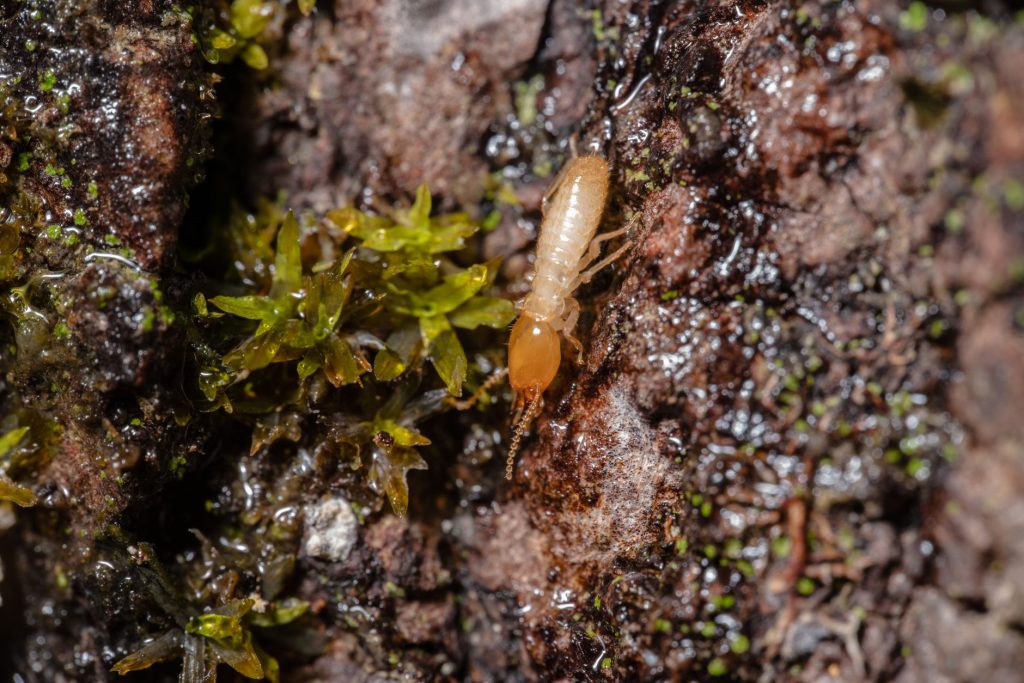
Even in concrete homes, termites can enter through cracks in the slab or foundation, gaps around plumbing penetrations, and any opening where wood contacts soil. Any point where wood contacts soil creates a potential pathway. Workers are pale, six-legged insects that resemble ants but can be told apart by their straight waists, since ants have pinched waists.
Spotting these signs early gives you a clearer picture of whether termites have found a way into your concrete home and where the activity is concentrated.
Why Termite Problems Develop in Concrete Homes
A concrete exterior does not keep termites out on its own. Subterranean termites build working tubes that may travel up concrete or stone foundations to reach wooden structures, according to UC IPM. Any gap, crack, or penetration in a slab or foundation wall can give termites a path inside.
Outdoor Nesting Areas for Termites Near Concrete Homes
Subterranean termites build their nests in the soil and infest wood that is in contact with soil or that they can reach via earthen shelter tubes. Colonies that establish themselves close to a foundation are already within reach of the home. Landscape timbers near the house often provide food for termites as well, according to the University of Tennessee Extension.
Food and Shelter That Attract Termites to Concrete Homes
Even in a concrete home, there is usually wood framing, trim, or structural lumber that termites can feed on. Mulch placed over treated soil next to the foundation can give termites access to the structure without contacting the treated zone. Keeping a 12- to 18-inch bare zone next to the foundation helps reduce this risk.
In North Carolina, native subterranean termite species begin swarming in late winter and continue into September or October, typically swarming during the day, especially on warm days following rain. Swarmers may be attracted to light and are often found near windows. They are not attracted to lights, which can make swarms harder to notice.
How Termites Move Around Concrete Homes
Termites build mud tubes from their nest in the soil to the wood they feed on. These tubes protect them from open air and predators as they travel. The tubes may run up concrete or stone foundations, crossing surfaces that seem solid.
Trails and Entry Points Termites Use in Concrete Homes
Homes built on concrete slabs can still face termite problems because subterranean termites travel from the soil through cracks in the slab, plumbing penetrations, and other openings where wood contacts soil. Subterranean termites nest in the soil and can access the structure by building shelter tubes along foundation walls or through gaps in the slab. Drywood termites, by contrast, can arrive inside furniture and picture frames rather than traveling from the soil.
Wherever there is a seam, a crack, or a utility line passing through the slab, there is a potential entry point. Concrete may slow termites down, but it does not stop them.
Risks Termites Pose to Concrete Homes
Structural Risks From Termites in Concrete Homes
Although concrete resists termite feeding, the wood framing, floor joists, and other lumber inside a concrete structure remain vulnerable. Any wood that contacts the soil is at risk unless it has been chemically treated or is naturally resistant to termites and decay.
According to UC IPM, lumber used in foundations and other wood in contact with the soil should be chemically treated or naturally resistant to termites and decay, especially where building designs must be altered or concrete cannot be used. Even homes built primarily with concrete may still have exposed wood components that termites can target.
Hidden Termite Damage in Homes
One of the biggest challenges with termite damage in concrete homes is that it often stays hidden. Subterranean termites build mud tubes made from saliva mixed with soil and bits of wood or drywall. Because these tubes can run along foundation walls or through gaps behind finished surfaces, you may not notice them until damage is already underway.
Since termites work from the inside out, wood framing behind concrete walls or inside a slab-on-grade home can sustain damage long before any visible signs appear on the surface.
Belongings and Moisture Risks From Termites in Concrete Homes
Termites that reach interior wood components can also encounter other cellulose-based materials. Their mud tubes may incorporate bits of drywall, showing these insects interact with more than just structural lumber. Where wood contacts soil around fences or outbuildings, the risk extends beyond the main structure. Using termite-resistant wood or concrete footers for fences can help reduce exposure.
When a Termite Problem in a Concrete Home Needs Action
If you spot mud tubes along your foundation, notice soft or damaged wood near the base of walls, or find discarded wings near windows, those are signs worth investigating right away. Sage Pest Control begins every termite service with a thorough inspection covering the foundation, crawlspace, attic, baseboards, door and window frames, plumbing areas, and any exposed wood.
Even a well-built concrete home deserves regular monitoring. A professional inspection helps identify activity or risk factors early, before termite damage spreads further into the structure.
Professional Pest Control for Termites in Concrete Homes
Protecting a concrete home requires combining reduced attractants, thorough inspections of vulnerable areas, and targeted treatment around and beneath concrete elements.
How to Reduce Attractants for Termites Near Concrete Homes
Start by making sure no wood contacts the soil around your home. According to Purdue Extension, all wooden foundation forms, stakes, stumps, and scraps of wood should be removed from any area before it is covered with dirt or concrete. The soil surface in unexcavated areas should also be cleared of wood scraps.
Ventilation and drainage beneath your house and porches matter as well. Removing all scrap wood from beneath the house and providing adequate airflow reduces moisture that can draw termites toward the structure.
Why Termite Control in Concrete Homes Starts With Inspection
A 6-inch insulation-free zone at the top of the foundation wall is recommended to allow for termite inspections. Without that visible gap, signs of activity along the foundation can go unnoticed beneath insulation.
Pipes in crawlspaces, wall voids, and the underside of concrete slabs may also need to be inspected for breaks or leaks, as moisture from hidden plumbing issues can create conditions that support termite activity.
At Sage Pest Control, our termite inspection covers all key areas, including the foundation, crawlspace, exposed wood, and common moisture points. Technicians look for mud tubes, damaged wood, and other conducive conditions.
What to Expect During Professional Termite Treatment for Concrete Homes
When concrete for garage floors, patios, or walks was poured against the foundation, the soil under those slabs next to the foundation must also be treated. Treatment inside porch foundations, under patios, and under concrete slabs targets areas where termites may be traveling between soil and wood unseen.
Sage Pest Control offers the Trelona Advanced Termite Bait System, with stations installed in the soil surrounding the structure approximately every 10 to 20 linear feet. We also offer termiticide foundation trenching, where trenches are dug around the foundation to apply a liquid barrier that lasts approximately five years.
What to Expect From a Termite Control Plan for Concrete Homes
After the initial treatment, we will check your property on a recurring schedule, checking stations and inspecting for any signs of termite activity. If activity is detected, the technician takes additional steps to address it and maintain protection for the structure.
For new construction, Sage Pest Control also provides termite pre-treatments applied directly to the soil surface before concrete is poured for structural foundations. These pre-treatments include a blue dye so building inspectors can verify correct application.
Whether your home sits on a slab, has a crawlspace, or features a combination of both, a professional plan tailored to the way your home meets the ground gives you the best chance of staying ahead of termite activity.
Termites and Concrete Homes: Bottom Line
Concrete does not remove termite risk. Subterranean termites live in the soil and can reach interior wood through cracks, plumbing penetrations, and gaps where wood contacts the foundation. A concrete slab or block foundation may slow access, but it does not remove the threat. The best approach combines keeping wood away from soil contact, sealing foundation openings, scheduling professional inspections, and using a treatment system that targets the colony underground. If you have questions about your home’s vulnerability, reach out to Sage Pest Control for a free termite inspection.
Frequently Asked Questions
Can Termites Eat Through Concrete?
Termites do not eat or digest concrete. However, they can travel through existing cracks, expansion joints, and utility openings in a concrete foundation to reach the wood inside your home. Even hairline gaps may be enough for subterranean termites to pass through.
What Signs Should I Watch for in a Concrete Home?
Look for mud tubes along foundation walls, around plumbing penetrations, or where concrete meets wood framing. These tubes are made from soil, saliva, and bits of wood or drywall. Damaged or hollow-sounding wood near the foundation is another indicator worth investigating.
Does a Slab Foundation Reduce Termite Risk?
A slab foundation can limit some entry points, but subterranean termites may still reach interior wood through cracks in the slab, heating ducts, or utility openings. Regular inspections and proper treatment around the foundation perimeter help reduce that risk.
How Does Sage Pest Control Treat Termites Around Concrete?
Sage Pest Control begins with a thorough inspection of the foundation, crawlspace, and any exposed wood. Depending on findings, treatment may include bait stations installed in the soil around the home’s perimeter or termiticide trenching along the foundation. Both approaches target subterranean termites and the areas they travel between the soil and the structure.
