
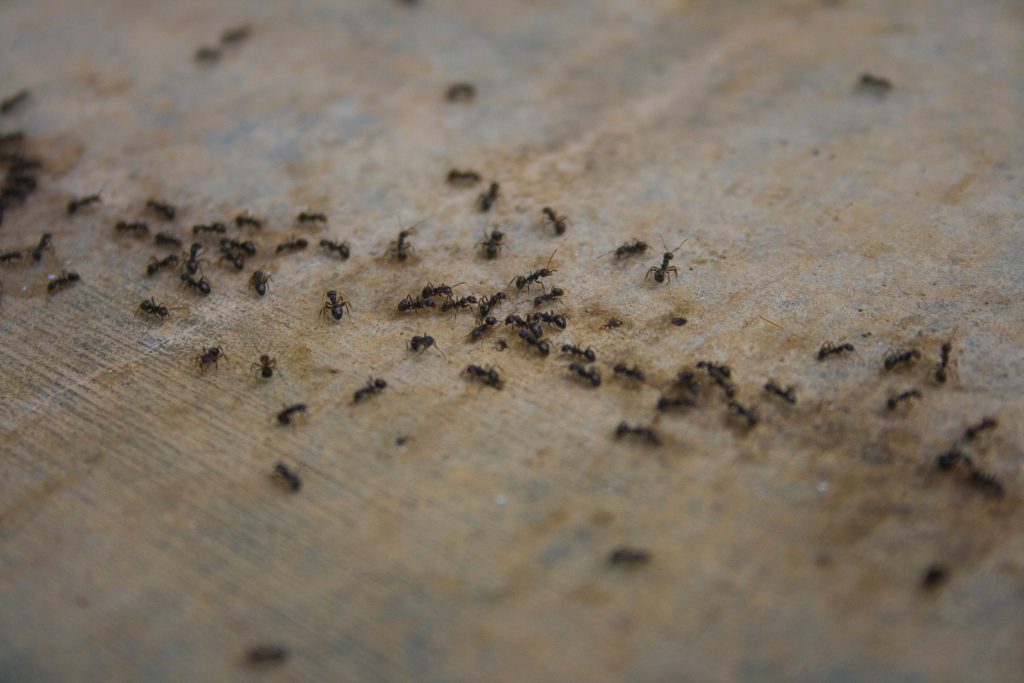
You notice large black ants moving along a windowsill, disappearing behind trim, or trailing across a deck railing. At first glance, they all look the same, but not every black ant poses the same risk to your home. Understanding carpenter ants vs. black ants is important because carpenter ants can damage wood over time, while many other black ant species are mostly a nuisance.
Knowing which type of ant you’re dealing with starts with recognizing a few key differences in size, behavior, nesting habits, and where they’re commonly found. In this article, you’ll learn how to identify carpenter ants, how they compare to other black ants found in North Carolina, and when ant activity may signal a larger problem that needs attention.
Key Takeaways About Carpenter Ants vs. Black Ants
- Carpenter ants and regular black ants look similar at first glance, but telling them apart matters because the risks to your home are different.
- Carpenter ants can damage wooden structures by excavating wood for their nests, while most black ants are primarily nuisance pests looking for food.
- Knowing what to look for, such as wood shavings near damaged wood, helps you figure out which ant you’re dealing with and what to do next.
- Correct identification drives the right response, so appearance alone isn’t always enough to be sure which species is in your home.
How to Identify Carpenter Ants vs. Black Ants
The carpenter ants vs black ants comparison trips up a lot of homeowners because carpenter ants are often black themselves. The real difference is not just color. It comes down to size, nesting behavior, and the kind of damage they can cause. Knowing what to look for helps you figure out whether you are dealing with a wood-damaging pest or a nuisance ant that is simply foraging through your kitchen.
How to Tell Carpenter Ants and Black Ants Apart
According to Purdue Extension, carpenter ants are large, black ants that can be either winged or wingless and measure up to half an inch long. That size stands out. Most common black ant species you might see indoors are noticeably smaller. If you spot a big, dark ant on a countertop or windowsill, size alone is a strong first clue.
Carpenter ants do not eat wood. Instead, they excavate cavities in wood to support their nests. Regular black ants forage for food but do not tunnel into wooden structures. That nesting habit is the most important distinction between the two.
How to Spot Ant Activity Inside Your Home
A tell-tale sign of carpenter ant activity is sawdust piles near wooden surfaces. Piles of coarse sawdust or splintered wood can indicate a carpenter ant nest nearby. Dead insects falling from a wooden porch may also point to a nest above. Black ants that are simply foraging leave none of these traces.
Inside the wood itself, carpenter ants create galleries and tunnels for their nest. According to the University of Minnesota Extension, these areas are clean, do not contain debris, and appear smooth with a well-sanded look. If you can see into damaged wood and the tunnels look polished rather than rough, carpenter ants are the likely cause.
Where Ants Show Up Around Homes
Carpenter ants seek soft, moist wood in which to establish nests, particularly weathered wood that has begun to decay. Indoors, they may nest within water-damaged wood, insulation, crawl spaces, and attic spaces. These are areas where moisture tends to collect, making the wood easier to excavate.
Carpenter ant nests can be challenging to find because they are often hidden and not easily discovered. Careful observations of worker ants between sunset and midnight during the spring and summer months can help you trace their path back to a nest.
Exterior Entry Points Ants Use
Outdoors, carpenter ants build nests in tree stumps, firewood, fence posts, and wooden retaining walls. They also nest in hollow trees, logs, telephone poles, posts, and porch pillars. Any of these can serve as a staging area before workers move indoors.
Standard black ants may trail inside through small gaps looking for food, but they do not set up wood-damaging nests in these structures. When you see large ants traveling between an outdoor wood source and your home, that pattern points toward carpenter ants rather than ordinary black ants.
Why Carpenter Ants and Black Ants Problems Develop
Understanding why carpenter ants vs black ants show up in your home starts with knowing what each species needs. Both follow food sources and shelter opportunities, but they arrive for slightly different reasons and move through your space in different ways.
Outdoor Nesting Areas for Ants
Carpenter ants usually nest in damp wood. They can be black, red, or red-and-black, with wingless workers ranging from 1/4 to 3/8 inch long. Black carpenter ants are nocturnal and can range from 1/4 to 5/8 inch, with workers from the same colony varying in size. When conditions outdoors become less favorable, these ants look for similar damp-wood opportunities closer to your home.
Food and Shelter That Attract Ants
Both carpenter ants and smaller black ants are drawn to food sources around your home. However, carpenter ants have complicated food preferences. They may not be attracted to the same food sources that draw other ant species, which can make them harder to monitor. Carpenter ants are finicky enough that low-impact attractants like sugar milk or diced crickets may be needed just to confirm their presence.
If you can’t locate a nest, according to the University of Minnesota Extension, bait that pairs a food source with a slow-acting treatment may help. But because carpenter ants can be selective, results may vary.
How Ants Move Around Homes
Long trails of thousands of ants may lead from nests to food sources, which can cause considerable concern when you spot them indoors. These trails rely on scent. Without their scent trail, ants lose their way to the food source and are forced to reestablish the path or forage somewhere else. That behavior applies to both carpenter ants and common black ants, though carpenter ants’ nocturnal habits mean you may notice their trails later in the evening.
Trails and Entry Points Ants Use
Both species rely on scent trails to connect nests to food sources. Winged male and female carpenter ant reproductives may swarm from a colony, which can be the first visible sign of an established population nearby. Outdoors, carpenter ants also serve as a food source for birds and mammals, so activity around your property can sometimes attract other wildlife as well.
Risks From Carpenter Ants vs. Black Ants
The biggest practical difference between carpenter ants and common black ants comes down to what they can do to your home. Most small black ant species are nuisance pests that show up where food is accessible. Carpenter ants, on the other hand, can weaken wood in structures over time. Understanding which ant you’re dealing with helps you decide how urgently to respond.
Health Risks Linked to Carpenter Ants and Black Ants
Neither carpenter ants nor most common black ants are major health threats. According to the University of Minnesota Extension, some ant species can infest food, while at least one species, the Pharaoh ant, has been known to transmit diseases like Salmonella, though that is not common. Carpenter ants and typical black household ants do not carry that same risk, so the health concern with both is generally limited to food contamination if they reach stored items.
Property Damage From Carpenter Ants and Black Ants
This is where the comparison matters most. Several species of carpenter ants can damage wood in buildings and other structures. They tunnel through wood to create nesting galleries, and that activity weakens structural components over time. Common black ants do not damage wood or other building materials. Their presence is a nuisance, but they leave your home’s structure intact.
Because carpenter ants damage wooden structures, addressing them early is worth the effort. As Oregon State University Solve Pest Problems notes, homeowners should take steps to repair damage and control carpenter ants in homes and structures, while carpenter ant nests found away from structures can generally be tolerated.
Food Areas and Ant Activity
Both carpenter ants and black ants may forage in kitchens and pantries. Some ant species can infest food, making any indoor ant trail worth addressing. The difference is that black ants are typically drawn indoors by food sources alone. Carpenter ants may also be foraging, but their presence indoors can signal a nest within the structure itself, which raises the stakes beyond a simple food-area problem.
When to Look Closer at Ant Activity
If you spot larger ants, roughly 1/4 to 5/8 inches long, moving along walls or near woodwork, it’s worth investigating further. Addressing carpenter ants in your home requires good building maintenance practices, including fixing water damage and sealing entry points. Ignoring the signs can allow wood damage to continue unchecked.
Small black ants trailing toward a food source are usually a straightforward nuisance issue. But when the ants are larger and you notice fine wood shavings or hollow-sounding wood, the concern shifts to structural damage, and a closer look is warranted.
Professional Pest Control for Carpenter Ants and Black Ants
When comparing carpenter ants vs black ants, the biggest practical difference comes down to what each ant does once it gets inside your home. Black ants are mostly a nuisance. Carpenter ants, on the other hand, can cause structural damage over time, which makes the pest control approach for each one very different.
How to Reduce Attractants
Prevention looks a little different depending on which ant you’re dealing with. Indoor carpenter ant infestations often mean some type of moisture problem resulting from structural or plumbing leaks. Fixing those moisture sources is one of the most important steps you can take to make your home less inviting to carpenter ants.
For small or early carpenter ant infestations, according to Oregon State University Solve Pest Problems, retail store products can help with prevention and control. Liquid sweet baits are useful to control indoor infestations of common ants. But once a carpenter ant infestation grows, over-the-counter options may not be enough on their own.
Why Ant Control Starts With Inspection
A thorough inspection matters for both types of ants, but it’s especially important with carpenter ants. Because they nest inside wood, the source of the infestation isn’t always obvious. Moisture-damaged areas around your home are a good place to start looking.
As Oregon State University Solve Pest Problems notes, carpenter ant infestations in homes and structures will lead to more damage, and the longer you wait to act, the more expensive it will be to repair damage and control carpenter ants. That’s why identifying the problem early through inspection is so valuable.
What to Expect During Professional Ant Treatment
Because carpenter ants can cause structural damage, infestations are best treated by a professional. According to the University of Tennessee Extension, professionals have the knowledge, specialized products, and equipment needed to successfully treat carpenter ant infestations. Controlling carpenter ants in your structure is best left to professional pest controllers.
Black ant infestations are typically more straightforward, but a professional can still help pinpoint entry points and apply targeted treatments. Sage Pest Control’s tri-annual program uses product rotation to help prevent resistance, which matters whether you’re dealing with carpenter ants or common black ants.
What to Expect From an Ant Control Plan
A professional pest control plan for carpenter ants should address the infestation itself and the conditions that attracted them, particularly moisture issues. You should take action when carpenter ants are in your home and structures. Hiring a professional pest control service is recommended for carpenter ants or any wood-destroying insect.
With Sage Pest Control, you get same-day service and a team that knows the difference between a nuisance ant trail and a carpenter ant infestation that needs immediate attention. Our GreenPro-certified, low-impact products work within EPA standards, so your home gets the care it needs without unnecessary disruption.
Carpenter Ants vs. Black Ants: Bottom Line
The carpenter ants vs black ants comparison matters most when it comes to your home’s wood. Many of the large black ants homeowners notice are carpenter ants, which hollow out wood to build nests rather than eat it. Smaller black ant species are mostly nuisance pests drawn to food sources. Because carpenter ants can weaken structures over time, accurate identification drives the right response. Professional pest control is recommended for carpenter ant activity in or around your home.
If you are unsure what you are dealing with, reach out to Sage Pest Control for same-day service and a clear answer.
Frequently Asked Questions
How Can I Tell if the Large Black Ants in My Home Are Carpenter Ants?
Carpenter ants are among the largest ants you may find indoors, with workers measuring up to about half an inch. They can be black, red, or a combination of both. If you spot large ants along with small piles of wood shavings nearby, that pattern points toward carpenter ants rather than a smaller nuisance species.
Do Carpenter Ants Actually Eat Wood?
No. Carpenter ants do not consume wood. They hollow it out to create nesting galleries. The excavated material is pushed out of the nest, which is why homeowners sometimes find fine debris near wooden structures.
Should I Treat Carpenter Ants Myself or Call a Professional?
Controlling carpenter ants in a structure is best left to professional pest control. Locating and destroying the nest is the most important step, and that can be difficult without experience and the right tools. A professional can also help identify moisture issues that may have attracted the colony in the first place.
Are Carpenter Ants as Damaging as Termites?
Carpenter ant damage is usually not as serious as termite damage, but they can still weaken building structures over time. Because they nest in wood rather than feed on it, the damage tends to develop more gradually. Even so, taking action when carpenter ants are found in your home is recommended.
