
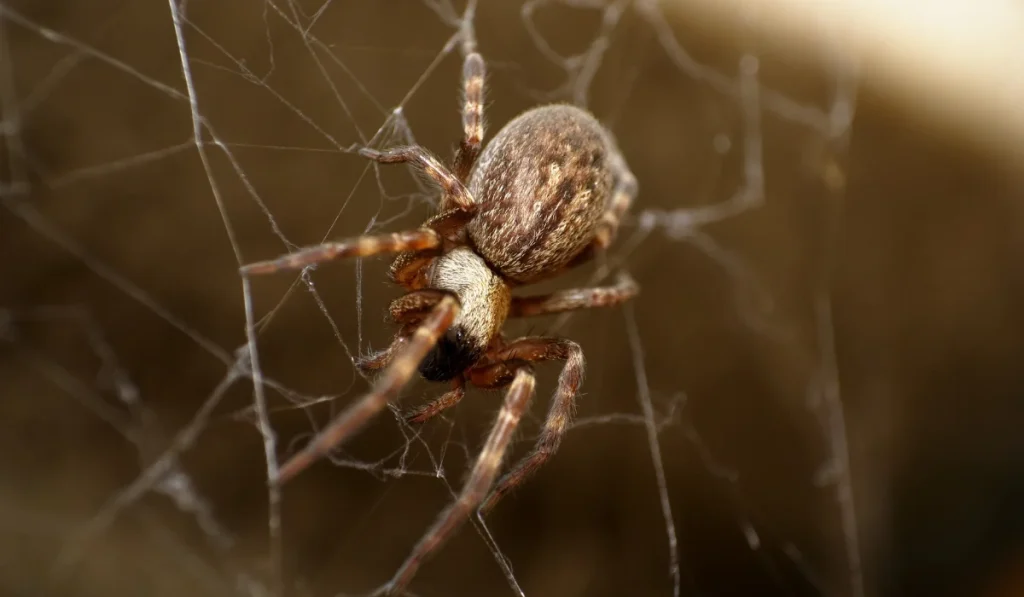
Common house spiders do not choose every corner at random. The most useful spots combine several advantages: secure web attachment points, limited disturbance, and a steady flow of insect prey. A ceiling corner beside a window, a basement wall near a vent, or a garage corner above an exterior door can give a spider repeated chances to catch small flying and crawling insects.
That helps explain why spider webs in corners often return soon after they are removed. Cleaning away the silk changes the appearance of the area, but it does not close a window gap, reduce moisture, or stop insects from passing through. The original spider may rebuild nearby, or another spider may settle in the same productive location.
For homeowners in Charlotte, Greensboro, Raleigh, Virginia Beach, and surrounding communities, recurring webs can serve as useful clues. Their location may point to overlooked entry gaps, damp areas, exterior lighting, or other conditions that support bug traffic inside the home.
Why Common House Spiders Choose Certain Corners
Common house spiders need surfaces that allow them to attach several strands of silk within a compact area. The meeting point between two walls and a ceiling provides a ready-made frame. Window casings, shelves, floor joists, pipes, trim, and stored items can offer similar support.
These spiders build irregular, tangled webs rather than the round, symmetrical webs people often picture. The Penn State Extension guide to the common house spider notes that this species commonly places webs in wall corners, windows, basements, crawl spaces, and around floor joists. Those locations provide structure while keeping the spider close to sheltered spaces where it can retreat.
Quiet Corners Protect the Web
A productive web must remain intact long enough to catch food. Corners behind furniture, above cabinets, near basement ceilings, or around garage storage often receive less contact from people, pets, cleaning tools, and household movement. The reduced disturbance gives the spider time to maintain its web and respond when prey becomes trapped.
This does not mean the home is dirty. Spiders can settle in clean, well-kept houses when insects are available and access points remain open. A spotless room with a torn screen or a gap around a window frame may still provide an effective hunting site.
Bug Traffic Makes One Corner Better Than Another
Two corners in the same room may look equally suitable, yet only one develops a web. The difference may be insect movement. A corner near an exterior door, window, light fixture, plumbing opening, or vent may sit along a route that bugs use to enter or travel through the room.
A spider that regularly catches prey in one location has little reason to move far. When the web becomes damaged or cluttered with debris, the spider may replace it with another web close to the same source of food.
What Spider Webs in Corners Can Reveal
A web can act as a simple record of nearby pest activity. Before vacuuming it away, look at where it sits and what has become trapped in the silk. Small flies, moths, gnats, mosquitoes, ants, or other insects may help identify the conditions supporting the spider.
The University of Minnesota Extension’s spider guidance recommends inspecting captured prey when determining why web-building spiders are present. Finding the spider’s food source can lead to a more lasting solution than focusing on the web alone.
| Web Location | What It May Suggest |
|---|---|
| Near a window or exterior door | Insects entering through gaps, worn seals, or damaged screens |
| Near an exterior light | Flying insects gathering around the light and moving indoors |
| In a kitchen, bathroom, or laundry area | Moisture, plumbing openings, or small-fly activity |
| In a basement or crawl space | Damp conditions, foundation gaps, or insect activity near stored materials |
| In a garage corner | Open doors, worn weather stripping, clutter, or bugs entering from outside |
These are inspection clues, not guaranteed diagnoses. A web near a bathroom window, for example, could be supported by insects entering through the screen rather than moisture. The surrounding conditions and the insects caught in the web provide the clearest picture.
Windows and Doors Create Natural Hunting Areas
Windows and exterior doors connect indoor rooms with outdoor insect activity. Torn screens, worn weather stripping, gaps around frames, and loose door sweeps can allow small insects to enter. When outdoor lights sit close to these openings, moths and other flying insects may gather nearby and increase activity around the adjoining corners.
This pattern is common in garages, sunrooms, enclosed porches, and rooms with frequently used exterior doors. A spider web above the doorway may be positioned there because insects repeatedly pass through the area, not because the spider has a special preference for that room.
Moisture Can Support the Spider’s Food Supply
Spiders are predators, so conditions that support other pests can also support spider activity. Leaks, condensation, clogged drains, damp crawl spaces, and standing water may contribute to small flies and other insects that become prey.
Basements, garages, utility rooms, and crawl spaces deserve close attention in humid parts of North Carolina and coastal Virginia. Correcting moisture problems can reduce the insect populations that allow common house spiders to remain active indoors.
Which Spiders Build Webs in Household Corners?
Not every spider found near a wall or ceiling built a web there. Understanding the difference between web-building spiders and active hunters can help homeowners interpret what they are seeing.
Common house spiders, also called American house spiders, are small cobweb spiders. They create loose, tangled webs that may collect dust over time. Their coloring can vary, but they are often yellowish brown or grayish with darker markings. They usually remain close to their webs, either sitting in the silk or hiding in a nearby crack.
Cellar Spiders Use Similar Sheltered Spaces
Cellar spiders have very long, thin legs and small bodies. They commonly live in basements, crawl spaces, garages, sheds, and other protected areas. Their irregular webs often appear in upper corners, beneath floor joists, or around shelving.
Removing an old cellar spider web may improve the appearance of the area, but new webs can return when insect prey remains plentiful. As with common house spiders, the more useful question is why that particular location continues to supply food and shelter.
Hunting Spiders Do Not Build Capture Webs
Wolf spiders and jumping spiders move across floors, walls, and other surfaces while searching for prey. They do not build webs to capture food. A hunting spider found in a corner may have wandered there while following insects or looking for cover.
This difference affects how the activity should be addressed. Recurring tangled webs point toward a web-building species with an established hunting area. A spider running across the floor may indicate insect activity elsewhere or an opening that allowed the spider to enter.
Why the Same Corner Keeps Getting a New Web
Removing silk does not change the features that made the corner useful. The anchor points remain in place, the area stays quiet, and insects may continue to pass nearby. Unless those conditions change, the web site can remain attractive.
Penn State Extension notes that a common house spider may abandon one web and build another nearby. A homeowner may remove an empty web while the spider rests behind trim, beneath furniture, or inside a crack. Another spider may also occupy the location after the first one leaves.
Egg Sacs Can Contribute to Ongoing Activity
Common house spiders may place rounded, papery egg sacs within or close to their webs. Penn State Extension reports that females can produce multiple egg sacs containing many eggs. Not every spiderling survives or remains indoors, but leaving egg sacs in place can contribute to continued activity.
Vacuuming accessible webs, spiders, and egg sacs provides a more complete cleanup than brushing away visible strands. The vacuum contents should be emptied or discarded promptly so spiders are not left inside the machine.
How to Reduce Common House Spiders by Cutting Bug Traffic
Long-term indoor spider control starts with the insects spiders eat. The NC State Extension guide to spiders in and around homes explains that web-building spiders are most likely to appear where insects are abundant, including areas near windows, lights, water sources, and outdoor materials.
Inspect the insects caught in webs and look for related activity nearby. Address ant trails, small flies, moths, and other pest concerns rather than treating each spider as a separate problem. Store food in sealed containers, clean spills and crumbs, manage trash, and inspect drains or damp areas that may support insects.
Close Gaps That Allow Pests Indoors
Repair damaged screens and replace loose door sweeps. Seal gaps around windows, exterior doors, pipes, utility lines, vents, siding, and foundation openings. Garage doors deserve special attention because worn bottom seals and gaps along the sides can admit both spiders and their prey.
Review lighting near entrances as well. Bright fixtures mounted directly beside doors and windows can concentrate flying insects close to the structure. Moving a light farther from the entrance or choosing a fixture designed to attract fewer insects may reduce activity near common entry points.
Remove Webs and Reduce Protected Shelter
Vacuum reachable webs and egg sacs from ceiling lines, window corners, shelves, baseboards, and spaces behind furniture. Regular cleaning disrupts established web sites and makes it easier to see where new activity appears.
Reduce clutter in garages, basements, attics, and storage rooms. Cardboard boxes, stacked materials, and rarely moved belongings provide protected spaces for spiders and insects. Sealed storage containers and clear space around stored items make inspection and cleaning easier.
Making Your Home Less Attractive to Common House Spiders
Common house spiders settle where stable web supports, shelter, and insect prey overlap. A recurring web near a window, door, vent, or damp area can point to a condition that deserves attention. Removing the web helps with the immediate problem, but changing the environment around it provides better long-term control.
Sealing entry gaps, correcting moisture, reducing insect activity, and removing accessible webs can make indoor corners less productive. When webs continue appearing in several rooms or return soon after cleaning, a professional inspection can identify hidden pest activity and entry points that are easy to overlook.
Sage Pest Control provides spider control for homes across North Carolina and Virginia. Technicians inspect quiet corners, garages, basements, crawl spaces, foundations, and likely entry areas before removing accessible webs and applying targeted products and materials where needed. To schedule an inspection for recurring common house spiders, contact Sage Pest Control and ask about service options for your home.
