
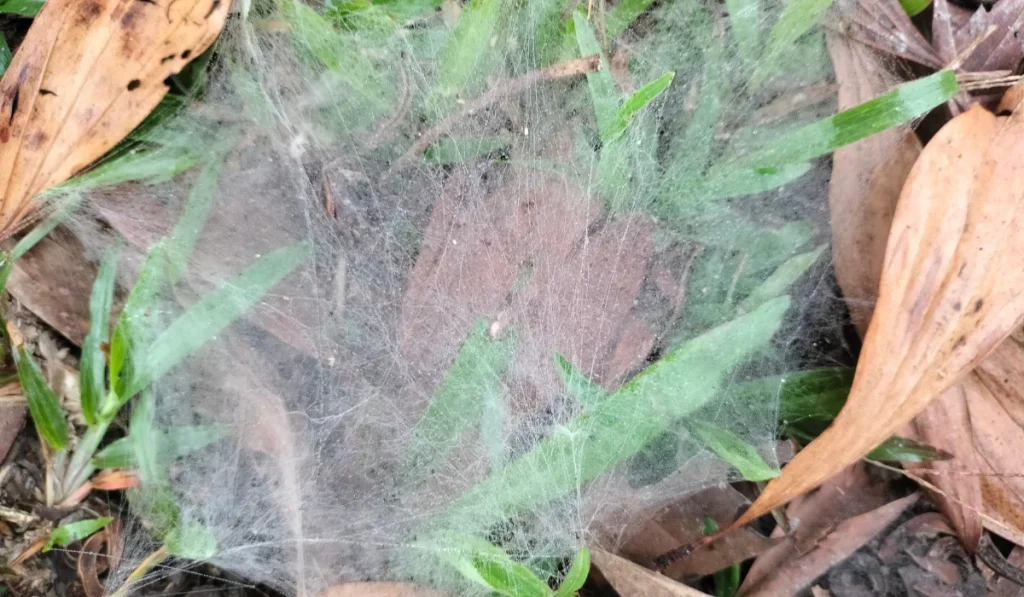
A humid Carolina morning can make an ordinary lawn look covered in silk. Flat, shimmering webs appear between grass blades, across low shrubs, and along landscape borders that looked clear the evening before. In most cases, these are grass spider webs that were already present but became easier to see after moisture collected on the fine strands.
Grass spiders are outdoor hunters that build sheet-like webs with a funnel-shaped retreat along one edge. They usually remain hidden in that retreat until an insect lands on the web and creates vibrations. Although seeing dozens of webs across the lawn can be surprising, grass spiders do not damage turf and pose little risk to people.
Their webs can still offer useful clues about your property. A yard with abundant insect prey, dense ground cover, and plenty of protected web anchors can support more grass spider activity. Learning why these webs become so visible, how to recognize them, and when they deserve closer attention can help you respond without overreacting.
What Grass Spider Webs Look Like
Grass spider webs do not resemble the round, symmetrical webs commonly stretched between tree branches or porch railings. Instead, a grass spider creates a broad, mostly horizontal sheet of silk with a narrow funnel or tunnel positioned along one side. The funnel usually disappears into thick grass, a crack, a shrub, or another protected space.
According to Penn State Extension’s guide to grass spiders, the web itself is not sticky. Fine strands above the sheet interrupt passing insects and cause them to land on the web below. The spider senses the movement, runs from its funnel retreat, captures the prey, and quickly returns to cover.
How Grass Spiders Differ From Other Lawn Spiders
Grass spiders are usually brown or tan, with lengthwise bands on the front portion of the body and darker markings across the abdomen. Their long legs help them move quickly, while two elongated spinnerets extend visibly from the rear of the body.
Homeowners sometimes confuse grass spiders with wolf spiders because both are fast, brown, and active near the ground. Wolf spiders hunt by roaming and do not build prey-catching webs. If the spider runs across a flat sheet and retreats into a funnel, it is more likely to be a grass spider or another funnel weaver.
| Web Type | Typical Shape | Common Location | Likely Spider |
|---|---|---|---|
| Grass spider web | Flat sheet with a funnel on one side | Lawns, shrubs, ground cover, landscape edging | Grass spider or funnel weaver |
| Orb web | Round web with spokes and spirals | Between branches, railings, posts, or lights | Orb weaver |
| Cobweb | Loose, irregular tangle | Corners, garages, sheds, and protected overhangs | Cobweb spider |
| No prey-catching web | No visible trapping structure | Grass, mulch, patios, or open ground | Wolf spider |
This distinction matters because a flat lawn web does not automatically indicate an indoor spider problem. Grass spiders usually prefer outdoor areas where they can hide, hunt, and rebuild without disturbance.
Why Morning Dew Reveals Grass Spider Webs
Morning dew spider webs appear suddenly because dry silk is thin and difficult to see from a distance. When moisture settles along each strand, the web reflects more light. Hundreds of tiny droplets outline the structure, making every sheet and funnel stand out against the lawn.
The National Weather Service’s explanation of dew formation notes that dew develops when a surface cools to the dew point. Clear skies, light winds, moist ground, and humid air can support this process. Grass, leaves, and spider silk cool overnight, allowing water vapor to condense on their surfaces.
The dew does not cause spiders to build every web before sunrise. It simply makes existing silk easier to notice at the same time. Once the moisture evaporates, many of the webs seem to disappear, even though much of the structure remains in place.
Warm-season Carolina weather often creates the right conditions for this effect. A damp night followed by low morning sunlight can reveal lawn spider webs across areas that looked nearly empty the day before.
Are Grass Spiders Dangerous or Helpful?
Grass spiders are shy, fast-moving predators that usually retreat when people approach. Bites are uncommon because these spiders are more likely to hide in their funnel than remain exposed. A bite may occur if a spider becomes trapped against the skin or is handled, but grass spiders are generally not considered medically significant.
It is still wise to avoid picking up an unfamiliar spider with bare hands. Spider identification can be difficult, especially when the specimen is moving quickly or partially hidden. Anyone who develops strong pain, spreading swelling, breathing trouble, or another serious reaction after a suspected bite should seek medical guidance.
Grass spiders also serve a useful role outdoors. They capture flies, crickets, beetles, ants, and other small insects moving through the lawn and landscape. Their presence often reflects a steady food supply rather than a problem with the grass itself.
NC State Extension’s guidance on spiders around homes describes spiders as beneficial predators that consume many insects found near houses and gardens. A few grass spiders in low-traffic areas rarely require control. The concern becomes more practical when webs repeatedly appear across walkways, around play areas, beside doors, or close to places where spiders can move indoors.
Why Grass Spider Webs Spread Across a Lawn
Grass spider webs become common where spiders can find secure attachment points, protected retreats, and reliable prey. Dense grass, low-growing plants, rocks, shrubs, landscape borders, and accumulated thatch all provide places to anchor a horizontal sheet.
A well-maintained lawn can still support grass spiders. Their presence does not mean the yard has been neglected. However, heavy leaf cover, piles of clippings, unused pots, stored materials, and thick vegetation can create more sheltered spaces where spiders and insects remain undisturbed.
Abundant Insects Support More Spider Activity
Grass spiders settle where hunting is productive. If flies, beetles, crickets, ants, or other small insects are active in the yard, spiders have a reason to keep rebuilding webs. Exterior lights can also draw insects toward patios, windows, doors, and garage walls, bringing spiders closer to the house.
Removing a web may improve the appearance of a walkway, but it does not change the conditions that attracted the spider. When food and shelter remain available, another spider may use the same area, or the original spider may rebuild nearby.
A lawn covered in webs can therefore point to broader insect activity. That does not always call for treatment, but it may justify checking for moisture, dense plant growth, debris, or lighting conditions that support insects near the structure.
Seasonal Growth Makes Webs Easier to Notice
Grass spiders hatch and develop through the warmer months. As they grow, their webs become larger and more visible. Adults are often easier to spot later in the warm season, when mature spiders are active and females begin producing egg sacs.
The adults do not survive through winter, but protected egg sacs can remain until young spiders hatch in spring. This seasonal cycle helps explain why a lawn may seem quiet earlier in the year and show much more web activity later.
Visibility also changes with the weather. A humid night can expose nearly every web in the yard, while a dry morning reveals only a few. What looks like a sudden population increase may be partly a change in how clearly the webs can be seen.
How to Reduce Grass Spider Webs Around Your Home
Start by deciding where the webs are actually causing a problem. Grass spider webs in an unused corner of the yard can often remain in place. Webs stretched across porch steps, garden paths, children’s play areas, or landscaping beside an entry door are more reasonable targets for removal.
Use a broom or a firm stream of water to clear accessible webs from high-use areas. Repeat removal may be needed because the spider can rebuild when the location still provides food and shelter. Wear gloves when working around dense plants, stones, landscape timbers, or stored items where spiders may be hiding.
Reduce Shelter and Web-Building Sites
Mow the lawn consistently and remove heavy layers of leaves, grass clippings, and yard debris. Trim shrubs and ground cover so they do not press against siding or block airflow near the foundation. Move firewood, unused planters, and stored materials away from the house when practical.
Keep the edges of patios, walkways, and landscape beds clear enough to inspect. Grass spiders often place their funnels where a solid edge meets vegetation, so reducing dense growth in those areas can make rebuilding less convenient.
These steps will not remove every outdoor spider, nor should that be the goal. They can reduce concentrated activity near entrances and other places where webs interfere with daily use of the property.
Address Insects and Entry Points
Review exterior lighting near doors and windows. Lights that attract many insects can create a feeding area for spiders. Changing the placement or timing of outdoor lights may reduce the number of insects gathering beside entrances.
Repair torn window screens, worn door sweeps, and gaps around utility lines. Seal accessible openings near garages, crawlspaces, basements, and ground-level doors. These repairs help limit both spiders and the insects they follow indoors.
Professional spider control may make sense when webs return quickly around the foundation, spiders repeatedly appear in living areas, or heavy insect activity continues near the home. A useful inspection looks beyond the visible web to find shelter, prey, moisture, and access points that support recurring activity.
Managing Recurring Spider Activity Around Your Carolina Home
Most grass spider webs are signs of normal outdoor hunting, not lawn damage or a dangerous infestation. Dew makes the silk easier to see, while insects and protected vegetation give the spiders a reason to remain. Removing webs from busy areas and reducing nearby shelter may be enough to keep the activity manageable.
When spiders continue gathering around doors, garages, crawlspaces, or indoor rooms, Sage Pest Control can inspect the property and identify the conditions supporting them. Sage’s standard pest control service includes spiders and focuses on targeted treatment, accessible web removal, and the pest activity that may be drawing spiders closer to the house. Contact Sage Pest Control to schedule an inspection for recurring spider activity around your North Carolina home.
