
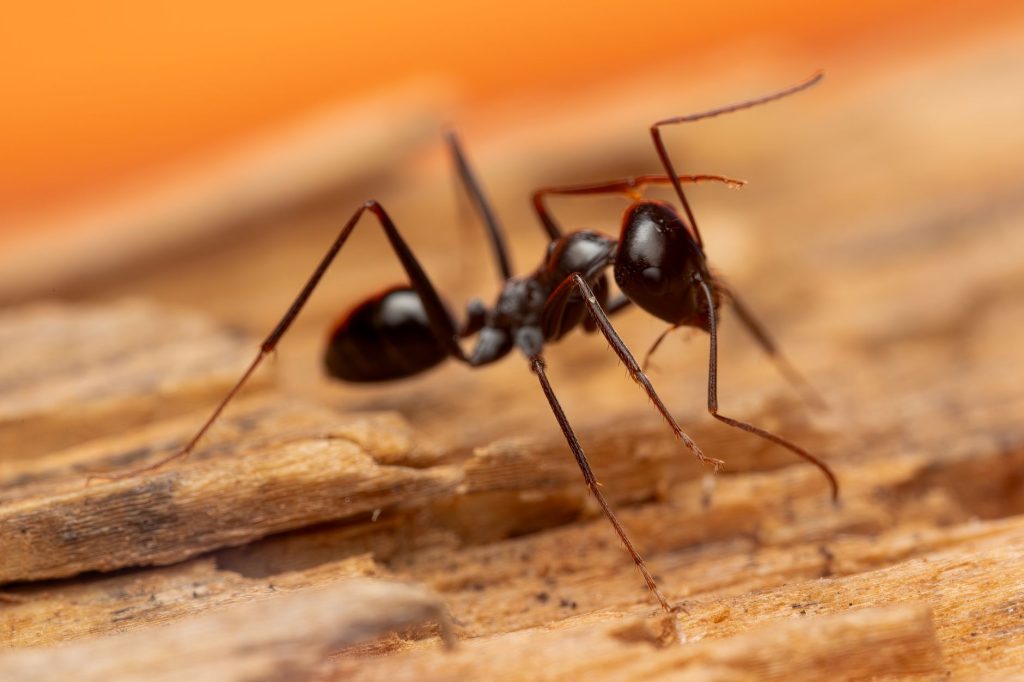
Large black ants in house can cause costly problems when early signs are missed. Learn the signs, risks, and when to call Sage Pest Control.
Key Takeaways About Large Black Ants in Your House
- Large black ants found indoors are often carpenter ants, which can hollow out wood in your home rather than eat it.
- Spotting coarse sawdust-like debris or frass near wooden structures may point to a nearby carpenter ant nest that needs attention.
- Keeping firewood and lumber stored away from your house can help reduce the chances of carpenter ants moving inside.
- Locating and addressing the nest is a key part of managing carpenter ants, since workers may forage throughout your home while the colony stays hidden.
How to Identify Large Black Ants in Your House
When you spot large black ants marching across your kitchen counter or along a baseboard, you’re most likely looking at carpenter ants. Understanding how these ants organize their nests is the first step toward figuring out what you’re dealing with and where the real problem may be hiding.
How to Tell Large Black Ant Species Apart
Carpenter ants are among the most common large black ant species homeowners encounter indoors. Unlike termites, they do not consume wood. According to Texas A&M AgriLife Extension, they prefer existing voids in doors, window frames, and walls rather than excavating large cavities.
Carpenter ant colonies operate with two types of nests: parent nests and satellite nests. The parent nest is where the queen or queens reside, while satellite nests are typically composed of workers, pupae, and mature larvae. A single parent nest can support several satellite nests, so seeing ants in one room does not always mean the main colony is nearby.
How to Spot Large Black Ant Activity Inside Your Home
Often, carpenter ant nests found indoors are satellite nests that can be traced back to a parent colony outdoors. Workers move frequently between their nest and the parent colony, so you may notice ants traveling along consistent paths through your home at different times of day.
Because these ants settle into existing voids in walls, door frames, and window frames, activity sometimes goes unnoticed until workers appear in living spaces. Seeing a steady trail of large black ants indoors usually points to a satellite nest somewhere within the structure.
Where Large Black Ant Activity Shows Up Around Your Home
The parent colony is often in a live or dead tree, a woodpile, or landscaping materials in your yard. Several satellite nests can be associated with a single parent nest, which means the problem may extend well beyond the area where you first noticed ants.
Activity can appear in more than one part of your home or property at the same time, since parent colonies sometimes establish multiple satellite nests in nearby indoor or outdoor sites.
Exterior Entry Points Large Black Ants Use
Because the parent nest is typically outside, carpenter ants need a path between the outdoor colony and any indoor satellite nests. Trees, woodpiles, and landscaping materials close to your home’s exterior can serve as the home base for the parent colony.
Keeping an eye on these outdoor areas can help you trace large black ant activity back to its source. If you spot workers moving between your yard and your home’s structure, there is a good chance a parent nest is nearby.
Why Large Black Ant Problems Develop in House
Finding large black ants indoors usually means something outside your home drew them in first. Understanding where they nest, what they’re after, and how they travel helps you figure out why they keep showing up.
Outdoor Nesting Areas for Large Black Ants
Black carpenter ants are among the largest pest ants you may encounter, with workers ranging from 1/4 to 5/8 inch long. They are nocturnal, so you may not notice activity until a colony is well established nearby. Worker ants forage for food, care for the young, and construct tunnels to extend the colony, according to Kansas State University Extension. Nests located near your home’s exterior give foragers a short path inside.
Food and Shelter That Attract Large Black Ants
Worker ants from outside or inside nests may forage for food and water inside a home. They seek sources such as insects, decaying fruit, and honeydew. Once inside, foraging workers easily find crumbs, grease, and foods in open or partly open containers. Good sanitation decreases the likelihood of a notable infestation, since removing accessible food takes away their main reason to return.
How Large Black Ants Move Through Your Home
Foraging workers of some species secrete pheromone trails to lead other ants to food and water. The ants take food back to the colony and share it with the other ants, including any queens and brood. This sharing cycle means a single forager that finds a food source in your kitchen can recruit many more workers to follow the same route, increasing the number of ants you see indoors.
Ant Trails and Common Entry Points
You can sometimes trace the problem back to its source by watching where foragers travel. As the University of Minnesota Extension notes, you can increase your chances of following workers to their nest by setting out food that they like. Pheromone trails tend to follow edges and gaps between outdoor nesting areas and indoor food sources. Spotting their trail early makes it easier to identify exactly where they’re getting in.
Risks From Large Black Ants in Your House
When you spot large black ants inside your home, the biggest concern is what they may be doing behind your walls. Carpenter ants excavate wood, chewing it into sawdust to create galleries and tunnels for their nests. That damage can go unnoticed for a long time, weakening structural wood while leaving few visible clues on the surface.
Health Risks Linked to Large Black Ants
The selected evidence does not support specific health risks from large black carpenter ants. They are primarily a structural concern rather than a direct health threat. That said, their presence in living spaces is still worth investigating, because it often points to moisture-damaged wood or decay that can create separate issues in your home over time.
Property Damage From Large Black Ants in House
According to UC IPM, carpenter ants excavate nests that in large colonies can consist of an extensive network of galleries and tunnels, often beginning in an area where there is damage from water or wood decay. Although they usually start building in soft wood, they may also excavate into perfectly sound, dry lumber in porch columns and roofs, window sills, hollow core doors, and firewood.
You may notice piles of coarse sawdust or splintered wood near a nest site. According to the University of Tennessee Extension, dead insects falling from a wooden porch may also indicate a carpenter ant nest above. These signs are easy to overlook, but they point to active excavation happening inside the wood.
Food Areas and Large Black Ant Activity in Your Home
Since carpenter ants forage for food rather than eating the wood they nest in, seeing large black ants trailing through your kitchen can signal a nest established nearby. The ants you see are workers moving between the nest and food sources, so activity in food-related spaces often means the colony is close enough to cause concern about structural wood in the same area.
When to Look Closer at Large Black Ant Activity in House
A few ants near a window may not seem urgent, but certain signs suggest a closer look is warranted. Sawdust piles near baseboards or wooden structures, dead insects beneath porches, or consistent ant trails through the same areas can all point to an active nest. The damage is internal and progressive, so catching these signs early gives you a better picture before the gallery network grows more extensive.
Professional Pest Control for Large Black Ants in House
When large black ants show up inside your home, a focused plan that combines prevention, inspection, and professional pest control makes all the difference. Carpenter ants can measure up to half an inch long and may appear winged or wingless. Because they hollow out wood to build nests, they can weaken building structures over time.
How to Reduce Attractants for Large Black Ants in House
Moisture is one of the biggest draws for carpenter ants. Replacing damaged or decayed wood around your home and addressing any moisture problems are key steps in reducing what attracts them. According to the University of Minnesota Extension, the best approach to carpenter ant control starts with locating the nest, replacing damaged wood, and removing moisture issues.
You should also pay attention to how ants may be getting inside. Homes built on concrete slabs often have serious ant problems because the insects can nest under the slab and find their way in through cracks, heating ducts, and utility openings. Sealing those entry points helps reduce the chances of ants moving indoors.
Why Large Black Ant Control in House Starts With Inspection
Carpenter ants build nests in hollow trees, logs, telephone poles, posts, porch pillars, and other timber used in homes. Because nests can be tucked into hard-to-reach spots, a full inspection is essential before any treatment begins. Without locating the nest first, you may only address the ants you can see while the source of the problem remains hidden.
For homes on concrete slabs, inspection is especially important. Ants nesting beneath the slab enter through small gaps that are easy to overlook. A trained eye can identify these pathways and trace activity back to the nest.
What to Expect During Professional Large Black Ant Treatment
Controlling carpenter ants is complex work. As the University of Minnesota Extension notes, it is best to hire a pest management professional to handle nest removal. A service professional will locate the nest, determine how the ants are entering the structure, and develop a treatment approach based on what the inspection reveals.
At Sage Pest Control, our team handles 50-plus pest types and uses GreenPro-certified, EPA-standard treatments. We rotate products through our tri-annual service programs to help prevent resistance. Same-day service is guaranteed, and you can reach us by text with a response time of under one minute.
What to Expect From a Large Black Ant Control Plan
A solid pest control plan for large black ants goes beyond a single visit. Ongoing attention to moisture and wood condition matters. Replacing decayed wood and keeping entry points sealed are part of the long-term picture.
According to Purdue Extension, professional pest control may be needed for homes on concrete slabs and for carpenter ant problems in general. Sage Pest Control serves Charlotte, Raleigh, Greensboro, and Virginia Beach, and our recurring service plans are designed to stay ahead of seasonal pest pressure. With 2,500-plus five-star reviews, we bring the kind of warm, local expertise your home deserves.
Large Black Ants in House: Bottom Line
Large black ants indoors are most often carpenter ants, and they deserve attention because they tunnel through wood and can cause structural damage over time. Identifying them early, keeping your home clean of food scraps and crumbs, and addressing moisture or wood-contact issues around the exterior all help reduce the chance of a serious problem. If you spot signs of nesting activity inside your walls or notice consistent ant trails, professional help is often the smartest next step.
Sage Pest Control offers same-day service with environmentally friendly, low-impact treatments, so reach out to get your home checked and a plan in place.
Frequently Asked Questions About Large Black Ants in House
How Can I Tell If the Large Black Ants Are Carpenter Ants?
Carpenter ant workers range from about 1/4 to 1/2 inch long and are typically dull black. Their large size compared to other household ants is the most straightforward way to distinguish them. They are also nocturnal, so you may notice them trailing at night more than during the day.
Do They Actually Eat the Wood in My Home?
No. Carpenter ants hollow out wood to build nesting galleries, but they do not consume it. They forage for sweets and other food sources instead. The damage comes from the tunneling itself, which weakens wooden structures over time.
What Attracts Them Indoors?
Crumbs, grease, and food left in open or partly sealed containers can draw foraging workers inside. Good sanitation throughout your home is one of the most important steps you can take to make it less appealing to ants looking for a meal.
When Should I Call a Professional?
If ants are entering your home from colonies in nearby trees, or if you suspect nesting inside walls or other structural wood, professional pest control may be needed. Homes built on concrete slabs can be especially vulnerable because ants may nest underneath and enter through cracks or utility openings.
