
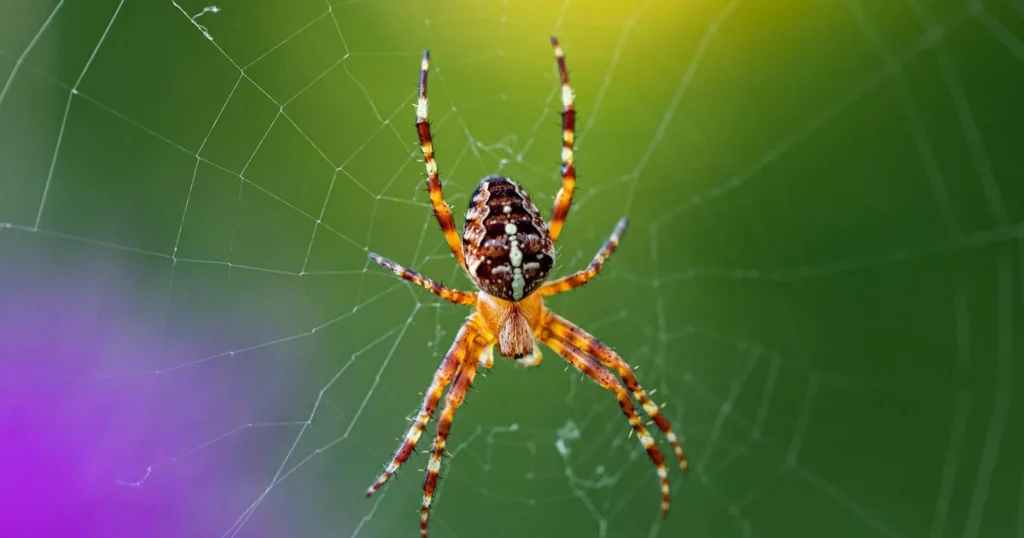
Spiders in Virginia Beach range from garden orb weavers to black widows. Learn which species live near your home and when to call pest control.
Key Takeaways
- Virginia Beach hosts more than a dozen common spider species, most of which pose no medical risk to people.
- Black widows and brown recluse spiders are the two medically significant species found in the Virginia Beach area.
- Wolf spiders, house spiders, yellow sac spiders, and orb weavers make up the majority of spiders you will find indoors and out.
- Most spiders enter homes through gaps in doors, windows, and foundations while following prey like flies and crickets.
- Persistent spider activity signals an underlying prey insect problem that pest control treats alongside the spiders themselves.
Most Common Spiders Found in Virginia Beach Homes
Nine spider species turn up around Virginia Beach homes regularly. We’ve lined them up by how seriously the bite matters for your family. Match what you’ve seen on body shape, web style, and where you found it, then check the sting badge before you decide what to do about it.
/01
Black widow
Stings
/02
Brown recluse
Stings
/03
Brown widow
Stings
/04
Yellow sac spider
No sting
/05
Wolf spider
No sting
/06
Nursery web spider
No sting
/07
Orb weaver
No sting
/08
Jumping spider
No sting
/09
Common house spider
No sting
If your spider doesn’t fit cleanly into one of these, get a real ID before deciding it’s harmless. The two widows and the recluse are worth treating with care.
Virginia Beach sits in a humid coastal climate that supports a wide range of spider species year-round. Most spiders you encounter inside or around your home are hunting or looking for shelter, not targeting you. Identifying the species tells you whether you are dealing with a nuisance or a genuine risk that warrants professional attention.
House Spider Species in Virginia Beach
The common house spider (Parasteatoda tepidariorum) is the small, brown spider behind most of the cobwebs in your corners, basement, and garage. Females are about the size of a pencil eraser, with a rounded abdomen and banded legs. They build messy, irregular webs and stay put as long as prey keeps arriving. Their bites are rare and produce only mild, localized irritation in most people.
Wolf Spider Identification in Virginia Beach
Wolf spiders are ground-dwelling spiders that hunt without a web, which is why they startle homeowners when they sprint across floors. They are hairy predators with darker stripes running down their backs and proportionally longer legs than most house spiders. Females carry their egg sac attached to their abdomen, and carry spiderlings on their backs after hatching. A wolf spider bite is comparable to a bee sting, but bites are uncommon because these spiders retreat rather than stand their ground.
Yellow Sac Spider Activity in Virginia Beach
Yellow sac spiders are nocturnal ambush hunters that build a silken tube retreat in corners, along wall-ceiling junctions, and inside folded fabric. The female yellow sac spider is light yellow to golden brown, about half the size of a quarter, with a darker midline stripe on the abdomen. They are one of the more common spiders to bite indoors because they hide in clothing and bedding. The initial bite can sting sharply and may leave a small bite wound, though severe symptoms are rare in healthy adults.
Jumping Spider Behavior in Virginia Beach
Jumping spiders are compact, eight-eyed hunters with bold coloration and a characteristic jerky movement pattern. They are most active during the day and are commonly found outdoors on fences, siding, and window frames. Most species in the Virginia Beach area display iridescent markings or orange dots on the abdomen. They are specialist predators of flying insects. Their bites are not medically significant, and most people find jumping spiders more curious than threatening.
Orb Weaver Activity in Virginia Beach
Orb weaver spiders build the large, circular webs you find strung between shrubs, porch rails, and garden plants in late summer and fall. The yellow garden spider is the largest and most recognizable orb weaver in Virginia Beach, with a black and yellow abdomen and a distinctive zig zag pattern of white silk running down the center of the web. Writing spiders is another name for this species. Orb weavers are commonly found outdoors and move indoors only by accident. They do not pose a medical risk to people.
Nursery Web Spiders in Virginia Beach
Nursery web spiders resemble wolf spiders but carry their egg sac in their chelicerae rather than attached to the abdomen. They are long-legged, golden brown hunters found near water, vegetation, and the edges of lawns. Females carry their egg sac until the spiderlings are ready to hatch, then build a tent-like nursery web around it. Bites from nursery web spiders are rare and produce generally mild symptoms in most people.
Venomous Spiders in Virginia Beach You Should Know
Two venomous spiders in Virginia Beach carry venom potent enough to require medical attention in some cases: the black widow and the brown recluse. Neither is aggressive, but both warrant caution and, if you find them indoors, professional pest control. Understanding what to look for protects your family without unnecessary alarm.
Black Widow Identification in Virginia Beach
Black widow spiders are the most recognized venomous spiders in the United States. Females have shiny black bodies with a red or orange hourglass marking on the underside of the abdomen, while mature males are smaller with red markings on the top and sides.
According to the StatPearls review on NCBI Bookshelf, black widow venom causes latrodectism, which includes muscle cramping, sweating, and abdominal pain. Females build irregular webs in dark spots: wood piles, crawl spaces, outdoor furniture, utility boxes. If you find black widows indoors, call a pest control professional rather than attempting removal yourself.
Brown Recluse Activity in Virginia Beach
Brown recluse spiders, sometimes called violin spiders, are identified by the dark brown violin-shaped marking on the dorsal tip of their cephalothorax, pointing toward the abdomen. They have six eyes arranged in three pairs, compared to the eight eyes most other spiders have.
Research in PLoS ONE places Virginia at the eastern edge of brown recluse distribution. A clinical review notes the spider is significantly overdiagnosed outside its core range, with confirmed bites extremely rare in Virginia. A genuine bite can produce tissue death and requires a doctor’s evaluation.
Brown Widow Spiders in Virginia Beach
Brown widow spiders are close relatives of black widows with a tan to dark brown body and an orange hourglass marking rather than red. Their egg sacs have distinctive spiky projections that make them easy to identify once you know what to look for. Brown widows are less likely than black widows to deliver a full venom dose when disturbed, and their venom is generally considered less potent. They are most often found outdoors in patio furniture, fence rails, and dense vegetation. Immature coloration in juvenile brown widows can make identification difficult, so contact a professional if you are unsure.
Why Spiders Keep Entering Your Virginia Beach Home
Spiders follow prey, and most spider infestations are really insect infestations in disguise. If your home harbors flies, mosquitoes, crickets, or moths, spiders move in to hunt them. Coastal humidity, dense landscaping, and older construction with small gaps in the foundation all create conditions that support large spider populations. The Virginia Tech Department of Entomology maintains current guidance on spider species that thrive in Virginia’s climate, and their research consistently points to prey availability as the primary driver of indoor spider activity.
Entry points are the second major factor. Spiders enter through gaps around door frames, window screens with small tears, utility penetrations, and foundation cracks. Addressing other pests that attract spiders, sealing entry points, and reducing outdoor lighting that draws flying insects will all cut down on how many spiders you find inside.
Spider Control in Virginia Beach: DIY Versus Professional
For most common spiders, consistent housekeeping and targeted web removal handle the problem. Vacuuming webs and egg sacs, moving firewood away from the foundation, trimming shrubs away from the exterior walls, and keeping outdoor lighting off or using yellow bulbs that attract fewer insects all reduce spider populations over time. These steps address spider harborage and prey without any professional treatment.
Professional spider control makes sense when you find medically significant species like black widows or brown recluse spiders indoors, when activity persists despite DIY efforts, or when dealing with a large infestation across multiple rooms.
Sage Pest Control’s tri-annual general pest control covers spiders along with 50+ other pest types, including de-webbing and nest removal at every visit. Pricing starts at $299 initial and $49 per month for homes up to 5,000 sq ft, with free re-services between visits. Same-day service available in most cases.
The EPA’s integrated pest management framework recommends treating the conditions that support pests before applying targeted treatments. That approach is exactly how Sage’s technicians approach spider control: inspect first, treat the underlying prey problem, and follow up on spider activity at each service visit.
Bottom Line on Spiders in Virginia Beach Homes
Most spiders in Virginia Beach are nuisance pests, not medical threats. The wolf spider, house spider, yellow sac spider, orb weaver, and jumping spider account for the large majority of what homeowners encounter, and none of these requires urgent intervention. The species that demand your attention are black widows and, to a lesser extent, brown recluse spiders. Both can produce symptoms that warrant a doctor’s visit, and both are best handled by a professional when found indoors.
If you are seeing spiders regularly, the real question is what they are eating. Control the prey population, seal the entry points, and reduce outdoor harborage. If the problem persists or you find a medically significant species, text Sage Pest Control for same-day service. We cover Virginia Beach, and we respond in under a minute.
Frequently Asked Questions
Are brown recluse spiders common in Virginia Beach?
Brown recluse spiders are present in Virginia but uncommon in Virginia Beach. Their core range sits further west and south, and Virginia sits at the eastern edge of their documented distribution. Confirmed bites are extremely rare in the region, and many suspected brown recluse bites in Virginia turn out to have other causes. If you find a spider you believe is a brown recluse indoors, a pest control professional can confirm the identification.
What should I do if a black widow bites me?
Seek medical attention promptly. Black widow venom can cause muscle cramping, sweating, abdominal pain, and more severe symptoms in children, the elderly, or people with underlying health conditions. Clean the bite wound, note the time of the bite, and go to an urgent care clinic or emergency room. Do not attempt to treat latrodectism at home. A secondary infection at the bite site is also possible.
How do I keep spiders out of my Virginia Beach home?
Seal gaps around doors, windows, and utility penetrations with weatherstripping or caulk. Move firewood, mulch, and debris away from the foundation. Trim shrubs and overhanging branches back from the exterior walls. Replace bright white outdoor lighting with yellow bulbs to attract fewer flying insects, which reduces the prey supply that draws spiders inside. Vacuum webs and egg sacs regularly, especially in garages, basements, and closets.
Does pest control treat spiders in Virginia Beach?
Yes. Sage Pest Control’s general pest control plan covers spiders as part of the standard service, including de-webbing and nest removal at every visit. The plan also targets the prey insects that attract spiders, addressing the root cause rather than just the visible symptom. If you are seeing spiders between scheduled visits, free re-services are included with every plan.
What is the largest spider I might find in Virginia Beach?
Wolf spiders and nursery web spiders are among the largest spiders commonly found in Virginia Beach, with some wolf spiders reaching a leg span of over three inches. The yellow garden spider is the most visually striking, with a large abdomen and a web that can span two feet across. Despite their size, neither species poses a significant medical risk to healthy adults.
