
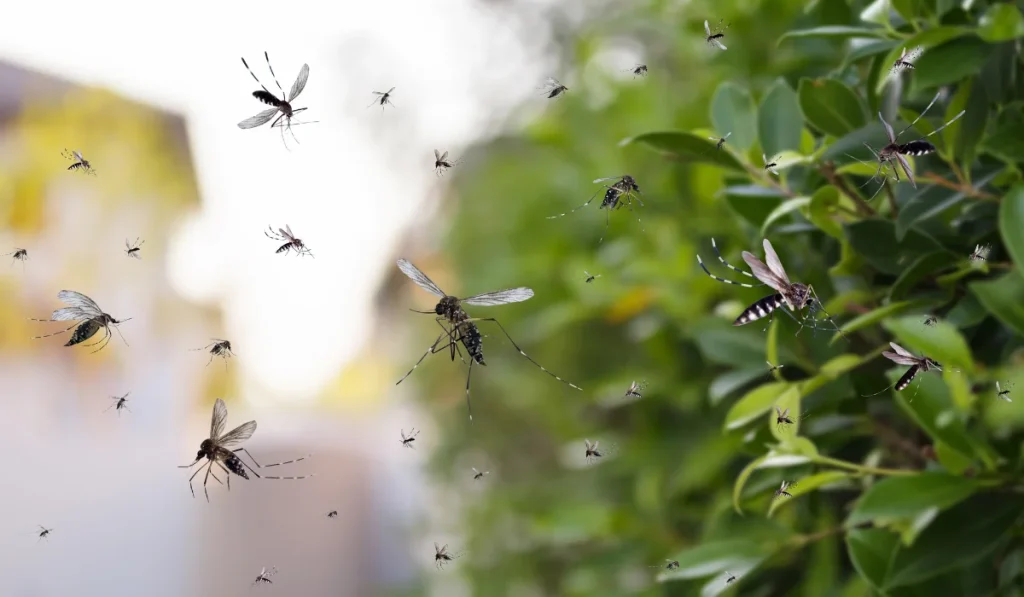
You step outside to water the garden before breakfast and mosquitoes find you within minutes. Later, the sunny lawn seems clear, but bites start again while you eat on the patio near sunset. That pattern is common because when mosquitoes are most active depends on the species, time of day, and conditions in your yard.
Many mosquitoes feed from dusk through dawn. Asian tiger mosquitoes follow a different schedule and bite during daylight, with heavier activity in the early morning and late afternoon. A property can support both patterns, so avoiding the yard after sunset may not prevent daytime bites.
For homeowners across Charlotte, Greensboro, Raleigh, Virginia Beach, and nearby communities, the most useful answer goes beyond the clock. Shade, dense landscaping, and water-holding containers can make one part of the yard active while another remains relatively quiet.
When Mosquitoes Are Most Active by Time of Day
Mosquito activity by time of day varies, but early morning, late afternoon, dusk, and nighttime are the periods when homeowners often notice the most biting. These hours tend to bring activity from either daytime or nighttime species, and the periods near sunrise and sunset can create some overlap.
Midday activity often falls in open, sun-exposed sections of a yard. It may continue beneath decks, around shrubs, and in other shaded areas where daytime mosquitoes find shelter. This is why the best time to work outside can change from one part of your property to another.
| Time of Day | What You May Notice in Your Yard |
| Early morning | Daytime mosquitoes begin feeding while some nighttime species remain active |
| Late morning and midday | Lower activity in exposed areas, but continued biting around shade and vegetation |
| Late afternoon | Daytime mosquito activity often increases again |
| Dusk | Nighttime species begin feeding as daylight fades |
| Night through dawn | Continued activity from mosquitoes that follow a nighttime schedule |
Early Morning
Early morning is one of the more active mosquito biting times. Asian tiger mosquitoes enter a daytime feeding peak, while some mosquitoes that were active overnight may continue moving before stronger daylight arrives.
Activity may be heavier along wooded edges, around garden beds, or beside shaded landscaping. A walk across an open driveway can feel comfortable while a few minutes near shrubs or groundcover leads to several bites.
Midday
The middle of the day may bring fewer mosquitoes in sunny, exposed areas. Many species spend this period resting instead of flying through open sections of the yard.
Daytime mosquitoes can still seek hosts near shaded patios, bushes, fences, and play areas. If you regularly get bitten at noon or in the early afternoon, changing the hour may not be enough. The location of nearby vegetation or breeding sites may be the larger issue.
Late Afternoon and Dusk
Late afternoon can bring another rise in Asian tiger mosquito activity. As the sun drops, more of the property becomes shaded, allowing these daytime mosquitoes to move through areas that were exposed earlier.
Dusk marks the start of heavier activity for many nighttime species. Outdoor meals, gardening, and children’s playtime often happen during this transition, which can make mosquito pressure feel as though it rises all at once.
Night and Before Sunrise
The CDC’s guidance on Culex mosquitoes states that adults are most active from dusk to dawn. When they are not active, they often rest in grass, shrubs, and thick vegetation where conditions are cool, dark, and humid.
This schedule can keep mosquitoes moving around patios, porches, and doorways throughout the night. Activity may continue until sunrise, especially in sheltered sections of the property.
Why Mosquito Biting Times Depend on the Species
The phrase “mosquitoes are most active at dawn and dusk” is useful, but it does not describe every species. Some mosquitoes follow a nighttime schedule, while others feed during daylight. Knowing the difference helps explain why two homes in the same neighborhood can experience different biting patterns.
Species also influence where you should look for activity. Nighttime mosquitoes may rest in thick vegetation before coming out after sunset. Daytime species may stay close to small containers and shaded plants near patios, gardens, and other regularly used spaces.
Culex Mosquitoes From Dusk to Dawn
Culex mosquitoes are associated with dusk-to-dawn activity. During the day, they may remain in grass, shrubs, and other dense landscaping before moving out to feed as light levels fall.
They also develop in standing water, including some containers around homes. The CDC reports that a Culex mosquito can develop from egg to adult in about seven to ten days. Water left in a birdbath, planter, bucket, or toy can remain available long enough for a new generation to develop.
Asian Tiger Mosquitoes During the Day
Asian tiger mosquitoes are small, dark mosquitoes with white markings on their bodies and legs. Their schedule is one reason homeowners may experience persistent bites during yard work, afternoon playtime, or time spent on a shaded deck.
The CDC’s Asian tiger mosquito fact sheet describes this species as an aggressive daytime biter with peak feeding periods in the early morning and late afternoon. It also reports that the aquatic stage can take as little as seven to nine days and that the typical flight range is less than 200 meters, or about 650 feet. Frequent daytime bites may therefore point to a nearby source.
How Yard Conditions Change Peak Mosquito Hours
Two areas of the same yard can have very different levels of mosquito activity. A sunny lawn may feel comfortable while the space beneath a deck or beside a hedge remains active. The difference often comes down to shelter and moisture.
Dense plants give adult mosquitoes places to rest when they are not feeding. Containers and drainage problems supply water for the immature stages. When both conditions exist near a patio or play area, mosquitoes do not need to travel far to reach people.
Shade and Dense Vegetation
Shrubs, undergrowth, tall grass, and the shaded sides of fences can provide sheltered resting areas. The interior of a thick bush may stay darker and more humid than the surrounding lawn, allowing mosquitoes to remain close to outdoor seating areas during the day.
Pay attention to where bites occur. Repeated activity beside one hedge, beneath one tree, or along the edge of a deck can help narrow down where mosquitoes are resting. Selective trimming and the removal of unnecessary plant clutter can make those areas easier to inspect and maintain.
Standing Water and Rain
Rain does not produce adult mosquitoes immediately. It fills containers and low spots where eggs can hatch and larvae can develop. Increased mosquito activity may follow days later if that water remains undisturbed.
Common sources include birdbaths, plant saucers, children’s toys, buckets, tarps, pet bowls, clogged gutters, and rain barrels without secure screening. Even items that look dry from a distance may hold water in a rim, fold, or recessed surface.
How to Plan Outdoor Time Around Mosquito Activity
Planning around peak mosquito hours can reduce bites, but the right schedule depends on the species present. Moving a gathering away from dusk may help with Culex mosquitoes, yet it will not prevent Asian tiger mosquitoes from biting during the day.
Location matters as much as timing. Place chairs, play equipment, and outdoor tables away from dense shrubs when possible. A more open part of the yard may have less activity than a shaded corner beside heavy groundcover.
Clothing can limit exposed skin during early morning, late afternoon, and evening activities. The EPA’s mosquito bite prevention guidance also recommends EPA-registered repellents used according to label directions, along with well-maintained window and door screens.
These steps help reduce contact, but they do not address the sources supporting mosquito activity. Persistent biting in the same location calls for a closer look at nearby water and vegetation.
How to Reduce Mosquito Activity in Your Yard
Check your property for standing water at least once a week. Empty and refresh birdbaths, plant trays, fountains, pet dishes, and outdoor toys. Store unused containers upside down, clear blocked gutters, and make sure rain barrels are properly covered.
Cleaning matters as well as draining. Scrub birdbaths, pet bowls, and plant saucers before refilling them. This removes material attached to the container and gives you a chance to inspect small seams or edges that may continue holding water.
Next, inspect shaded resting areas. Look beneath leaves, inside dense shrubs, under decks, and around groundcover close to patios or doors. You do not need to remove every plant, but thinning crowded growth and removing yard clutter makes the area easier to monitor.
Professional mosquito control can support this routine when activity remains difficult to manage. Sage technicians inspect yards for standing water, dense landscaping, and other conditions that contribute to mosquito problems. Treatments focus on trees, shrubs, undergrowth, and shaded vegetation where adults commonly rest.
Make Peak Mosquito Hours Easier to Manage
When mosquitoes are most active depends on the species living near your home. Culex mosquitoes tend to feed from dusk to dawn, while Asian tiger mosquitoes can bite throughout the day, with heavier activity in the early morning and late afternoon. Shade and standing water can keep either type close to the areas your family uses most.
Changing the time you go outside can reduce some exposure, but a more complete approach includes weekly water checks, yard maintenance, protective clothing, and repellent used as directed. When those steps are not enough, Sage Pest Control can inspect the property and target the places where mosquitoes breed and rest. Contact the Sage team to schedule mosquito service for your yard.
