
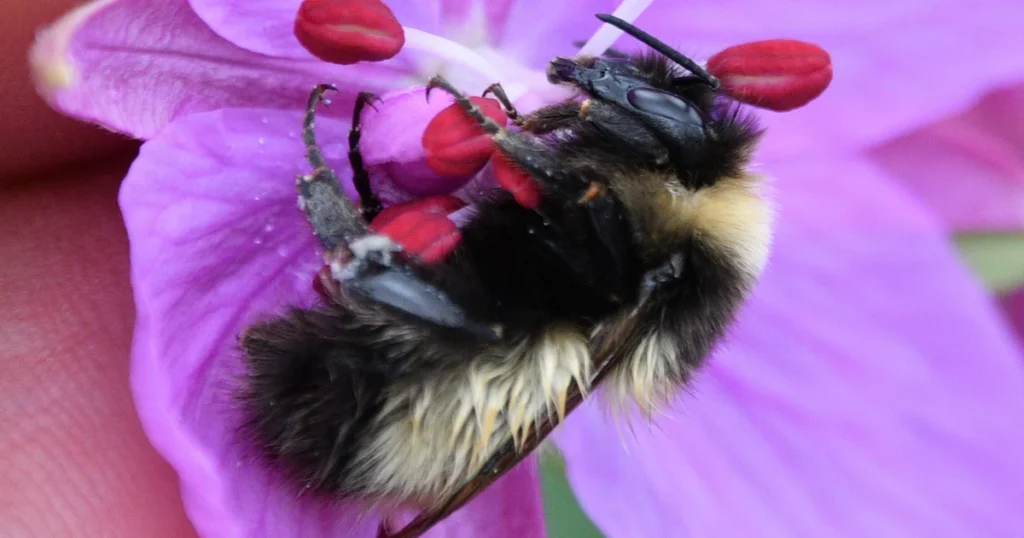
Virginia is home to more than 400 bee species, from fuzzy bumblebees working your garden beds to solitary sweat bees buzzing through summer flowers. Most are valuable pollinators that won’t bother you. A few are a problem for your home. Knowing which is which saves you from unnecessary worry and helps you act fast when action matters.
Key Takeaways
- Virginia hosts 400+ bee species, the majority of which are solitary and non-aggressive.
- Carpenter bees are the most common structural pest bee in Virginia, drilling into wood decks, eaves, and railings.
- Bumblebees, mason bees, sweat bees, and leafcutter bees are important pollinators that rarely sting unless physically threatened.
- Honeybees are social bees that build large hives and are best handled by a beekeeper, not a pest control service.
- Sage Pest Control’s standard plan covers non-honey bees and paper wasps. Honey bees, yellow jackets, and bald-faced hornets require specialized treatment.
Most Common Native Bee Species Found in Virginia
Seven bee groups show up across Virginia yards and gardens. We’ve lined them up by how much they matter to your house versus your pollinator strip. Match what you’ve seen, then check the sting badge before you decide what to do about it.
/01
Carpenter bee
Stings
/02
Honeybee
Stings
/03
Bumblebee
Stings
/04
Mason bee
No sting
/05
Leafcutter bee
No sting
/06
Long-horned and cuckoo bees
Stings
/07
Sweat bee
Stings
Most of these are working your flowers, not your fascia. Carpenter bees are the exception worth calling about.
Virginia’s native bee population supports the state’s agriculture and natural ecosystems. According to Virginia Tech’s Department of Entomology, the mid-Atlantic region supports one of the most diverse bee communities in the eastern United States, spanning hundreds of species across both social and solitary lifestyles. Most of these bees nest in the ground or in plant stems, collect pollen for their eggs, and live and die without ever stinging a human.
Bumblebees Found in Virginia Yards and Gardens
Bumblebees are among the most recognizable bee species in Virginia, identified by their large, fuzzy, yellow-and-black bodies. Several bumble bee species are active across the state, including the common eastern bumblebee and the brown-belted bumblebee. They are social bees that form colonies of a few hundred workers, compared to the tens of thousands you’d find in a honeybee hive. Bumblebees nest in the ground, often in abandoned rodent burrows or dense leaf litter. They emerge in early spring and remain active through fall. These bees are important pollinators for blueberries, tomatoes, and other crops that require buzz pollination, a technique where the bee vibrates its body to shake loose pollen that other insects cannot reach.
The rusty patched bumble bee, once common across Virginia, has seen a sharp population decline in recent decades due to habitat loss and disease. Its absence is a biodiversity concern that entomologists and conservation groups continue to monitor.
Sweat Bees Active in Virginia Through Summer
Sweat bees are small, often metallic-green insects that are among the most abundant solitary bees in Virginia. The name comes from their habit of landing on human skin to collect salt from sweat, which can feel alarming but rarely results in a sting. Most sweat bee species nest in the ground, digging small burrows where the female lays her eggs and provisions each cell with pollen and nectar. They are active from spring through late summer, visiting a wide range of flowers across gardens and open fields. Sweat bees are important pollinators for native plants and food crops alike.
Mason Bees and Leafcutter Bees in Virginia Gardens
Mason bees and leafcutter bees are solitary bees that nest in narrow cavities, not hives. Mason bees use mud to seal their nest sites, which is where the name comes from. They prefer hollow stems, gaps in wood, and pre-drilled holes in bee houses placed in gardens. Leafcutter bees cut clean circular sections from leaves to line their nests, and you may notice the evidence on rose bushes or other garden plants. Both are efficient pollinators and are used commercially to pollinate crops like blueberries and fruits. Neither species is aggressive, and neither builds a communal colony that requires management.
Long-Horned Bees and Cuckoo Bees in Virginia
Long-horned bees are solitary ground-nesters named for the males’ unusually long antennae. They are active in summer and are especially attracted to plants in the sunflower family. You’ll spot them working garden beds from July through September. Cuckoo bees are a different story. These bees do not collect pollen or build their own nests. Instead, they lay their eggs in the nests of other bee species, where their larvae consume the host’s pollen supply. Cuckoo bees resemble wasps more than typical bees because they lack the hairy legs most bees use to carry pollen. They are uncommon enough that most homeowners never see one, but entomologists track them as indicators of overall bee population health.
Carpenter Bees in Virginia: Wood Damage and Nest Sites
The eastern carpenter bee is the one bee species in Virginia that homeowners have real reason to watch. These large, shiny-bodied bees drill circular holes roughly half an inch in diameter into unpainted or weathered wood. Decks, eaves, railings, fascia boards, and wood siding are all common nest sites. The female lays her eggs inside these tunnels, and the larvae feed on pollen and nectar packed into the cell. Carpenter bees return to the same wood year after year, and repeated nesting weakens structural members over time.
How to Identify Carpenter Bee Damage in Virginia
Carpenter bee holes are perfectly round and about the width of a finger. You’ll often see coarse sawdust-like material below the entry hole, and yellow-orange pollen staining around the opening. Male carpenter bees hover aggressively near nest sites and may dive at people who approach, but males cannot sting. Females can sting but rarely do unless directly handled. The bigger concern is structural: a single nest is minor, but a deck that has been used as a nesting site for five or ten seasons can sustain real damage to the wood framing beneath the surface.
Sage Pest Control’s standard plan covers non-honey bees including carpenter bees. If you notice new holes appearing in your wood each spring, scheduling a treatment before the season peaks gives you the best chance to reduce that cycle.
Honeybees and Social Bees Found in Virginia Homes
Honeybees are social bees that build large hives containing tens of thousands of workers, a queen, and extensive wax comb for honey and brood. In Virginia, honeybees are both managed (in commercial and backyard hives) and feral, meaning wild colonies that establish themselves inside wall voids, attics, chimneys, and hollow trees. A feral honeybee colony inside your home is a significant problem. The hive produces honey that can liquefy and seep through walls, attract other insects, and cause lasting structural damage if not properly removed.
Honeybees are not included in Sage Pest Control’s standard plan because they require a specialized approach. In most cases, the right first call is a local beekeeper, who may be able to relocate a manageable colony. Large or inaccessible hives inside a structure require professional removal that includes extracting the comb, not just treating the colony. Leaving dead honeybees and comb inside a wall creates its own set of problems.
Paper Wasps vs. Bees in Virginia: Key Differences
Paper wasps are frequently mistaken for bees, but they are a separate insect with distinct behavior and a painful sting. Paper wasps are slender, with pinched waists and long dangling legs in flight. They build open-celled, papery nests under eaves, inside grills, in doorframes, and under deck furniture. Unlike most bees, paper wasps are not important pollinators and will sting repeatedly when their nest is threatened. Hornets, including bald-faced hornets, are larger, more aggressive relatives that build enclosed gray paper nests, often high in trees or attached to structures. Sage Pest Control’s standard plan covers paper wasps but not yellow jackets, bald-faced hornets, or honey bees, which require specialized treatment programs.
Why Virginia Bee Populations Matter for Your Property
Most of the bees flying through your yard are doing work your garden depends on. A study published in the Journal of the Kansas Entomological Society on Virginia coastal bee communities found that even small habitat patches support meaningful bee diversity when native plants are present. Blueberries, fruits, and garden vegetables all rely on bee pollination, and many of those crops are pollinated by native bees rather than managed honeybees. Removing vegetation or applying broad treatments without identifying the bee species first can disrupt the pollination that makes a productive garden possible.
The EPA’s integrated pest management framework recommends identifying the pest species before selecting any treatment method. That principle applies directly here: a carpenter bee drilling into your deck is a structural concern worth addressing, while a ground-nesting bumblebee colony in your back fence line is best left alone until the season ends naturally in fall.
Bottom Line on Types of Bees in Virginia
Virginia’s bees span hundreds of species, and the vast majority spend their lives pollinating plants, nesting quietly in the ground or in stems, and avoiding humans. The ones worth calling about are carpenter bees boring into your wood structures and any large social colony, like a feral honeybee hive, that has established itself inside your home. For paper wasps and non-honey bees, Sage Pest Control’s standard plan covers treatment and includes free re-services between scheduled visits. If you’re not sure what’s flying around your eaves, a quick text to Sage gets you an answer in under a minute.
Frequently Asked Questions
Do all bees in Virginia sting?
Most bee species in Virginia can sting, but the majority are non-aggressive and only sting if directly handled or if their nest is threatened. Male bees of any species cannot sting. Solitary bees like mason bees, sweat bees, and leafcutter bees rarely sting humans because they have no colony to defend. Bumblebees and carpenter bees will sting if grabbed or provoked. Social bees and wasps defending a large colony pose a greater sting risk than any solitary species.
What bee is drilling holes in my deck in Virginia?
The eastern carpenter bee is almost certainly responsible. These large, shiny-bodied bees drill half-inch circular holes into unpainted or weathered wood to create nest tunnels for their eggs. You’ll see coarse wood debris below the hole and often pollen staining around the entry. Carpenter bees return to the same wood each spring, so treatment before the season peaks reduces ongoing structural damage. Sage Pest Control’s standard plan covers carpenter bees.
Are bumblebees and carpenter bees the same?
No. Bumblebees are fuzzy, yellow-and-black social bees that nest in the ground and form colonies of several hundred workers. Carpenter bees are similar in size and coloring but have a shiny, largely hairless abdomen. Bumblebees visit flowers across your yard and are important pollinators for blueberries and vegetable crops. Carpenter bees are the ones drilling into your wood structures. Both species are docile toward humans, but carpenter bees create structural problems that bumblebees do not.
Should I call pest control for bees in Virginia?
It depends on the species. Carpenter bees causing wood damage, paper wasp nests near entryways, and any large colony inside a structure are situations where professional treatment makes sense. Solitary ground-nesting bees and bumblebee colonies in your yard typically resolve on their own when the season ends in fall. Honey bees inside a wall void require a specialist approach that often involves a beekeeper first. If you’re unsure what you’re dealing with, contact Sage Pest Control and describe what you see.
