
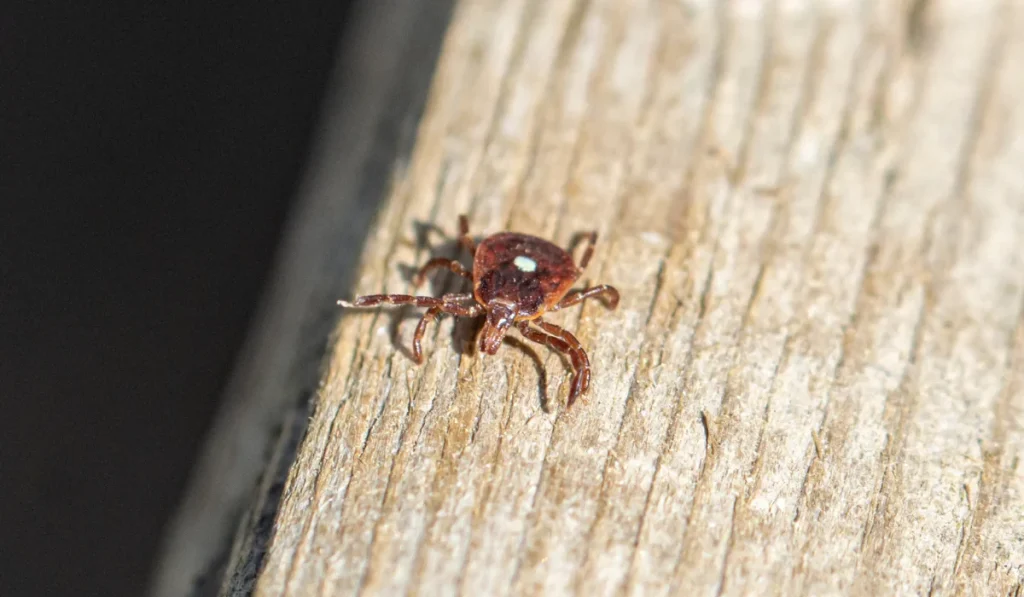
Finding a tick on yourself, your child, or a pet can leave you wondering what species it is, whether tick season in Virginia has started, and what to do next. Virginia ticks can remain active outside the hottest months, and several species that bite people occur across the state. Knowing which ticks homeowners are most likely to encounter, how to remove an attached tick correctly, and where ticks tend to show up around a property can help you respond quickly and reduce future exposure.
Which Virginia Ticks Are Homeowners Most Likely to Encounter?
Virginia has 16 known tick species, although only a smaller number commonly bite people. The Virginia Department of Health’s tick identification guidance identifies the lone star tick, blacklegged tick, American dog tick, and Gulf Coast tick among the species residents may encounter.
These ticks differ in appearance, activity periods, distribution, and the health concerns associated with their bites. For Virginia Beach and other coastal communities, the lone star tick and Gulf Coast tick are especially relevant.
| Tick Species | What Homeowners Should Know | Virginia Relevance |
| Lone star tick | Adult females have a pale spot on the back. Different life stages are active at different times of year. | Found throughout Virginia and common in coastal and Piedmont areas below about 1,600 feet |
| Blacklegged tick | Also called the deer tick. Nymphs can be extremely small and easy to overlook. | Found in Virginia and associated with Lyme disease |
| American dog tick | Adults have a patterned back and are commonly encountered by people and animals. | Occurs throughout Virginia |
| Gulf Coast tick | Can resemble the American dog tick and may be unfamiliar to many homeowners. | More commonly found along Virginia’s coastline |
Lone Star Tick
The lone star tick is one of the most relevant species for homeowners in eastern Virginia. VDH reports that it occurs throughout the state and is especially common in coastal and Piedmont areas below roughly 1,600 feet in elevation.
Adult females are easier to recognize than immature stages because they have a single pale spot near the center of the back. That marking is why homeowners often describe the insect simply as a tick with a white dot. Sage’s guide to identifying a tick with a white dot on its back explains that characteristic in more detail.
Lone star tick activity also varies by life stage. Adults are most active from late winter into early summer, while nymphs are active mainly from late spring through mid-summer. This species is associated with health concerns that include ehrlichiosis and alpha-gal syndrome.
Blacklegged Tick
The blacklegged tick is also commonly known as the deer tick. Its nymphal stage deserves particular attention because of its size. VDH reports that blacklegged tick nymphs can measure less than 1/16 inch long.
Nymphs are most active in late spring and early summer. Blacklegged ticks are associated with Lyme disease and several other pathogens, which makes careful tick checks useful after time outdoors.
Because a nymph can be difficult to spot, do more than check exposed arms and legs. Ticks may attach in less visible areas, so a thorough check after spending time around wooded, brushy, or grassy areas can help you find one sooner.
American Dog Tick
American dog ticks occur throughout Virginia and may be encountered by both people and animals. Their patterned backs can make them easier to notice than some smaller ticks, but homeowners should still avoid identifying a species based on color or size alone.
Different ticks can look similar, especially when partially engorged. If you remove a tick and identification may be useful later, take a clear photograph before disposing of it.
Knowing the species can provide useful context because different Virginia ticks are associated with different activity patterns and health concerns.
Gulf Coast Tick
The Gulf Coast tick is particularly relevant to homeowners near Virginia Beach and other coastal communities. VDH notes that this species is more commonly found along Virginia’s coastline.
Because it can resemble other patterned ticks, homeowners should not automatically assume every larger tick is an American dog tick. Location and physical characteristics both matter when narrowing down an identification.
For residents in Hampton Roads, including the Gulf Coast tick in the list of likely possibilities provides a more accurate picture of local tick activity than relying only on the species commonly discussed nationwide.
When Is Tick Season in Virginia?
Tick season in Virginia does not have one fixed start and end date. Different species and life stages become active at different times, and some ticks can remain active during mild weather outside the spring and summer months.
Tick Activity Changes Throughout the Year
The Virginia Department of Health notes that ticks can be active on warm days at any time of year. That means homeowners may still encounter ticks during a mild winter afternoon spent clearing leaves, walking near a wooded edge, or working around brush.
Spring and early summer remain especially important because several common species and life stages become active during that period. Lone star adults may be active by late winter, while lone star nymphs and blacklegged tick nymphs become more active later in spring and into summer.
When Homeowners Should Be Most Alert
Rather than relying on one calendar date, pay closer attention to outdoor conditions and the activities that increase exposure. Tick checks are especially useful after:
- Yard work near brush, leaf litter, or wooded edges
- Hiking or walking through grassy or wooded areas
- Gardening around dense vegetation
- Outdoor play near shaded property borders
- Spending time in areas where pets regularly roam
Sage’s information on tick activity and winter tick prevention also explains why colder weather does not always eliminate tick activity.
For Virginia homeowners, the practical approach is to keep prevention habits in place whenever conditions are favorable for ticks rather than waiting for a specific tick season to begin.
What Health Concerns Are Associated With Virginia Tick Bites?
Finding an attached tick does not mean that an illness has been transmitted. Still, understanding the health concerns associated with Virginia ticks helps explain why correct removal, identification, and symptom awareness matter.
The Virginia Department of Health’s tick-borne disease information identifies several conditions associated with ticks in the state.
Common Tick-Related Health Concerns in Virginia
| Health Concern | Tick Association |
| Lyme disease | Associated with blacklegged ticks |
| Ehrlichiosis | Associated with lone star ticks |
| Rocky Mountain spotted fever | Associated with American dog ticks |
| Alpha-gal syndrome | Associated with lone star tick bites |
Lyme disease is the most common tick-borne illness reported in Virginia. VDH notes that transmission peaks in May and June, although cases can occur outside that period.
Why Tick Identification Matters
Different tick species are associated with different health concerns, so knowing the species can provide useful context after a bite. A lone star tick and a blacklegged tick, for example, do not carry the same set of health risks.
At the same time, the appearance of a tick or bite mark cannot tell you whether disease transmission occurred. Identification can be helpful, but it is not a substitute for medical evaluation.
When to Contact a Healthcare Professional
If you begin feeling sick after a tick bite, contact a healthcare professional and mention the recent exposure. Useful details can include:
- The date you found or removed the tick
- Where the exposure may have happened
- How long the tick may have been attached, if known
- A clear photo or saved specimen, if available
These details can provide useful context during an evaluation without relying on the appearance of the bite alone.
What Should You Do After Finding an Attached Tick?
If you find an attached tick, focus on removing it promptly and correctly. Trying to make a tick detach with household substances can delay removal without providing a benefit.
The CDC’s tick-removal guidance recommends using clean, fine-tipped tweezers when available.
- Grasp the tick close to the skin. Hold it as close to the skin’s surface as possible.
- Pull upward with steady, even pressure. Avoid twisting or jerking the tick while removing it.
- Dispose of the tick safely. Place it in a sealed container, wrap it securely in tape, place it in alcohol, or use another disposal method recommended by the CDC.
- Clean the bite area and your hands. Soap and water, rubbing alcohol, or hand sanitizer can be used after removal.
Avoid petroleum jelly, nail polish, heat, or similar methods intended to make an attached tick release. The CDC advises against these approaches.
If you want help identifying the species, Virginia residents can submit a photograph or specimen through the Virginia Tick Survey. VDH uses the program for tick identification but does not test submitted ticks for disease-causing pathogens.
How Can You Reduce Ticks Around a Virginia Yard?
Tick prevention around the home works best when you consider both personal exposure and the parts of the property where ticks are most likely to be encountered. Shaded vegetation, leaf litter, ground cover, lawn edges, and areas where maintained yards meet wooded or overgrown spaces deserve particular attention.
Reduce Favorable Tick Habitat
Homeowners can make outdoor living areas less favorable for ticks by keeping vegetation and yard debris under control. Practical steps include:
- Removing accumulated leaf litter and brush from heavily used areas
- Maintaining grass and trimming unnecessary dense vegetation
- Paying attention to shaded lawn edges, fence lines, and wooded borders
- Keeping frequently used play or seating areas separated from thicker vegetation when practical
These steps do not guarantee a tick-free yard. They can reduce some of the sheltered conditions ticks use and make high-traffic parts of the property easier to maintain.
Check People After Outdoor Activity
Personal tick checks remain useful even when landscaping is well maintained. Check yourself and children after time around brush, tall grass, wooded areas, or other vegetation.
Look beyond exposed skin. Small ticks can be difficult to notice, especially during immature life stages.
Checking clothing and outdoor gear before bringing them farther into the home can also help you find ticks that have not yet attached.
Include Pets in Your Tick Prevention Routine
Pets can encounter ticks in parts of the yard where people spend little time. A dog that regularly walks along a wooded border or rests beneath shrubs may have different exposure than someone using a patio or maintained lawn.
Check pets after outdoor activity and follow your veterinarian’s recommendations for tick prevention. Tick-prevention products are not interchangeable across animals, so the appropriate option should be selected for the individual pet.
If ticks repeatedly show up on a pet, look closely at the areas the animal uses most often. A shaded run, overgrown property edge, or resting spot beside dense vegetation may be contributing to repeated encounters.
When Does Professional Tick Control Make Sense?
Finding one tick after hiking or spending time away from home does not necessarily mean your property has a tick problem. Repeatedly finding ticks on family members or pets around the home is a stronger reason to inspect the property for areas that may be supporting activity.
Sage Pest Control’s tick-control process begins with an inspection. A technician looks for tick activity and conditions that may contribute to it, then focuses treatment on the areas most relevant to the property.
Depending on what the inspection finds, outdoor treatment may focus on:
- Shrubs and ground cover
- Shaded vegetation
- Lawn edges
- Areas beneath decks or sheds
- Locations where pets regularly rest
Homeowners do not need to complete special yard preparation before a Sage technician arrives.
If ticks have been carried indoors, the technician may also inspect locations such as carpets, rugs, baseboards, and pet resting spaces. Targeted indoor treatment may be recommended when activity is present inside.
Professional tick control works best as one part of a broader prevention approach. Yard maintenance, regular tick checks, pet protection, and targeted treatments address different ways people and animals can encounter ticks.
Keeping Virginia Tick Activity Under Control Around Your Home
Virginia ticks are present across the state, and coastal homeowners may encounter several species with different activity patterns and health associations. Knowing what common ticks look like, checking people and pets after outdoor activity, removing attached ticks correctly, and maintaining likely tick habitat can reduce unnecessary exposure.
When ticks continue appearing around areas where your family or pets spend time, Sage Pest Control can inspect the property and identify where targeted tick control may be appropriate. If recurring tick activity is affecting how you use your yard, you can contact Sage Pest Control to discuss service for your Virginia Beach-area home.
