
Wasps in attic vent can create costly problems when early signs are missed. Learn what to look for, why it matters, and when to call Sage Pest Control.
Key Takeaways About Attic Vent Wasps
- Wasps can enter your attic through unsealed vents and other openings, and once inside they may find their way into your living spaces.
- Wasps are protective of their nests and can sting, so discovering activity near attic vents calls for caution rather than a hands-on approach.
- Proactive exclusion, such as sealing entry points around vents and rooflines, is the most reliable way to keep wasps from settling into attic spaces.
- If you notice wasps coming and going near a vent, a professional assessment can help you understand the scope before the situation grows more difficult to address.
How to Identify Wasps in Attic Vents
If you have noticed wasps flying in and out of your attic vent, the first step is figuring out what you are dealing with. Different wasp types build nests in different ways, and the signs of activity can show up both inside and outside your home. Knowing what to look for helps you understand the scope of the problem before deciding on next steps.
How to Tell Wasp Types Apart in Attic Vent
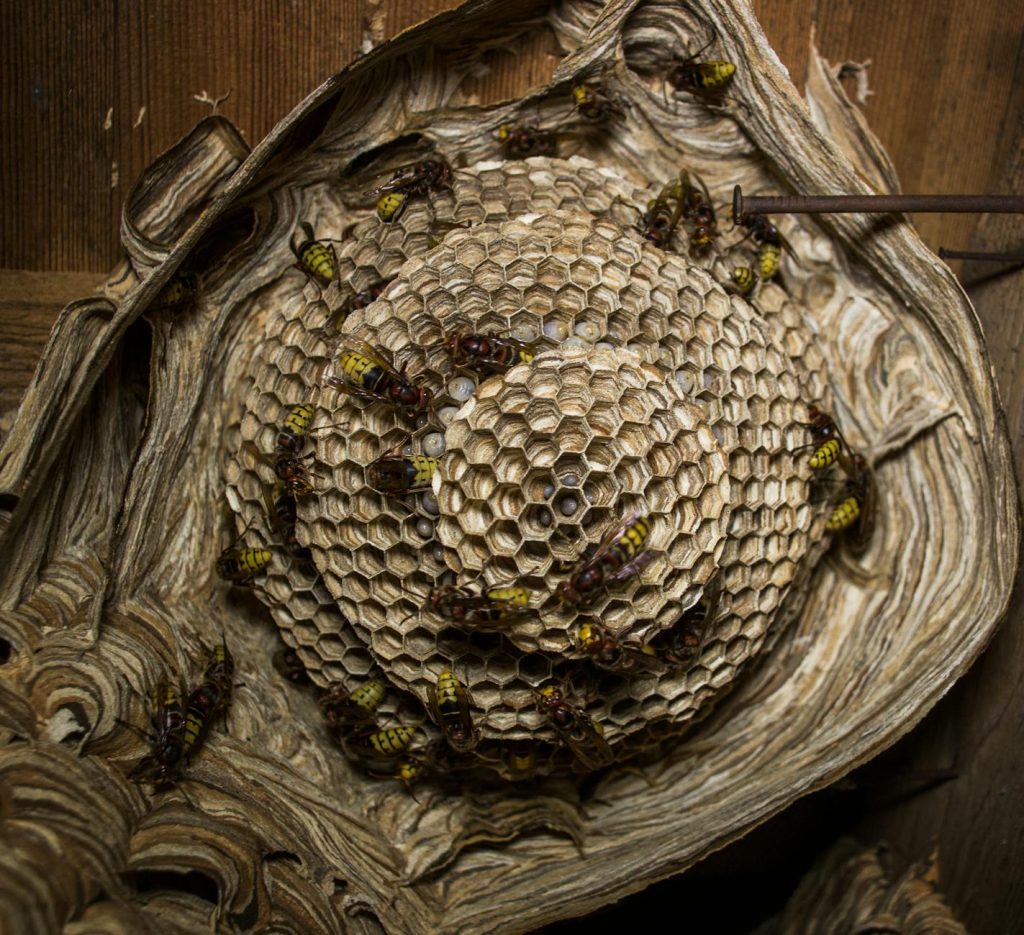
Paper wasps build nests under horizontal surfaces and are commonly found on overhangs, eaves, and beams and supports in attics, according to the University of Minnesota Extension. Their nests are open-celled and papery, making them relatively easy to recognize. Yellowjackets also nest in enclosed spaces such as wall voids and attics, constructing large papery nests from chewed wood fiber.
Some wasp species, such as Eumenes, build nests of mud, while others, like Zethus, may use abandoned burrows or build nests from vegetable matter and resin. The nest material itself can be a useful clue when you are trying to identify which type has moved into your attic vent area.
How to Spot Wasp Activity Inside Your Attic Vent
The most obvious sign is a steady stream of wasps entering or exiting your attic vent, especially during warmer parts of the day. You may also hear a faint buzzing from inside the attic. Wasp nests in attics can attract secondary pests as well. As Kansas State University Extension notes, wasp nests in the attic can become sites for additional infestations.
Paper wasp nests built in the wrong place, where they are likely to cause stings, should be addressed proactively. If you spot nests near living spaces or walkways, that is a clear signal to take action sooner rather than later.
Where Wasp Activity Shows Up Around Homes
Wasps build nests in attics, wall voids, and similar sheltered spaces around the home. Beyond the attic itself, you may notice activity around garages, barns, sheds, and similar structures. Being alert for wasp nests around the home is an important habit, especially during the warmer months when nest-building is underway.
Exterior Entry Points Wasps Use Around Homes
Attic vents are a common access point, but wasps also take advantage of building eaves, overhangs, and any horizontal surface that offers shelter. Gaps near rooflines and openings around beams and supports give wasps a path inside. Checking these areas regularly can help you catch nests before they grow larger.
Why Wasp Problems Develop in Attic Vents
Attic vents offer sheltered, elevated spaces that appeal to social wasps looking for a place to build. Understanding what draws wasps toward your home and how colonies develop can help you stay ahead of the problem before nesting activity ramps up.
Outdoor Nesting Areas for Wasps Around Attic Vents
Social wasps build paper nests and form populous colonies with an egg-laying queen and sterile female workers. According to Purdue Extension, these colonies are annual, meaning a nest is used only during the single season it is built. That one-season cycle means new nests appear each year in and around homes, and attic vents provide a ready-made cavity that mimics the protected spots wasps favor.
Bumble bees, by contrast, are social and typically nest in the ground. Each new bumblebee queen selects a nest site and starts a new colony on her own. Knowing which species nests where helps you focus your attention on the right areas around your home.
Food and Shelter That Attract Wasps Around Attic Vents
Warm, dry voids behind attic vents give wasps the shelter they need to attach a paper nest. The enclosed space shields the colony from wind and rain, making it an appealing alternative to fully exposed eaves or overhangs.
Some species, like cicada killers, are active for only about two to three weeks per year and are not aggressive. Social wasps, however, can remain active throughout the warmer months, building their colony until it dies out each winter, with only a single queen surviving to start the cycle again the following year.
How Wasps Move Around Attic Vent Homes
Because social wasp colonies are annual, a surviving queen emerges in spring and scouts for a suitable nesting location. Paper wasp nests, regardless of species, last only one season. That means a new queen may choose the same attic vent area year after year if conditions remain favorable, even though the old nest is abandoned.
Bumble bees can become aggressive when their ground-level nest is threatened, and yellowjackets present serious risks as well. A mistake during yellowjacket nest treatment can result in hospitalization or death from excessive stings, according to the University of Georgia pest guide. Approaching any active nest near a vent without proper preparation is not worth the risk.
Trails and Entry Points Wasps Use in Attic Vent
Wasps are drawn to gaps and openings that lead to protected voids. Attic vents, by design, allow airflow, and that same airflow can guide a scouting queen toward the space behind the screen or louver. Once a queen establishes a colony inside, workers fly the same path repeatedly throughout the season.
Keeping an eye on consistent wasp traffic near your attic vents during warmer months is one of the simplest ways to catch a developing colony early in the season.
Risks From Wasps in Attic Vents
When wasps set up in your attic vent, the problems go beyond a simple nuisance buzzing overhead. Stings, property concerns, and unwanted encounters inside your living space can all follow. Here is what to keep in mind.
Health Risks Linked to Attic Vent Wasps
Stings are the most immediate concern. Some wasp species are more aggressive than others and may fly several feet to sting someone who simply happens to be near the nest site, according to Mississippi State University Extension. That means walking past your attic vent opening or doing routine yard work nearby can put you at greater exposure.
Even during periods when wasps are not actively nesting and are not aggressive, they sometimes make their way into living areas, and stings can still occur. Precautions to limit the potential for stings matter any time these pests are present near your home.
Property Damage From Wasps in Attic
Stinging pests that nest inside building structures can become a recurring issue. As Purdue Extension notes, colonies built in hollow walls, chimneys, and attics of buildings may annoy or at times sting the residents, and Social wasp colonies are annual, meaning a nest is used for only one season. However, if the entry point remains open, new colonies can rebuild in the same protected attic space year after year. An attic vent gives pests a direct pathway into these protected spaces, making removal more complex the longer they stay.
Food Areas and Wasp Activity in Attic Vent
Once wasps gain access through an attic vent, they can drift into other parts of the house. Once wasps gain access through an attic vent, they can drift into other parts of the house, and stings can occur when these pests wander into living areas. Stings can occur when these pests wander into living areas, even if the nest itself is tucked away in the attic space above.
When to Look Closer at Wasp Activity in Attic Vent
Wasps flying in and out of a building indicate a probable nest, according to UC IPM. If you see a steady stream of pests entering or exiting your attic vent, that pattern is worth investigating sooner rather than later. A visible flight path to and from the vent is one of the clearest signs that a nest may already be established inside.
Choosing the right approach and taking the necessary precautions to limit stings is important when dealing with attic vent nests. These are tight, enclosed spaces where surprising a colony can lead to multiple stings quickly.
Professional Pest Control for Wasps in Attic Vent
When wasps start using your attic vent as a front door, the situation calls for more than a can of spray. Attic vents offer exactly the kind of protected, enclosed space wasps look for, and getting them out safely takes a plan. Here is how prevention, inspection, and professional pest control work together to address wasps in your attic vent.
How to Reduce Attractants for Wasps in Attics
According to Mississippi State University Extension, the only way to prevent large numbers of overwintering wasps in the attic or other building locations is to practice good, proactive exclusion. That means addressing entry points before wasps settle in, rather than reacting after they have already moved in.
Caulking, screening, and screened vents are core exclusion practices that can seal entry points so overwintering wasps cannot get into the building. Checking these barriers regularly, especially where attic vents meet the roofline, helps keep wasps from finding gaps to exploit.
Some wasp species favor protected areas around buildings. Guinea wasps (Polistes exclamans), for example, are small, yellow and brown wasps that build their nests in protected areas around buildings or equipment, as well as in dense shrubbery. Keeping shrubbery trimmed near your roofline may reduce the chance they move closer to your vents.
Why Wasp Control in Attic Vent Starts With Inspection
Knowing what you are dealing with matters. Guinea wasps are often mistaken for yellowjackets, but yellowjackets are yellow and black and build their nests in the ground. Misidentifying the species can lead to the wrong approach, so a thorough inspection helps confirm what is nesting in or around your vent.
An inspection also reveals how wasps are entering. Damaged screening, gaps in caulking, or warped vent covers can all serve as access points. Identifying each one is the first step toward sealing them off with the right exclusion materials.
What to Expect During Professional Wasp Treatment in Attic Vent
Hiring a pest control professional can reduce risks to you and your family when wasps have established themselves in hard-to-reach spots like attic vents. A professional can assess the nest location, identify the species, and choose the right approach without putting you in a difficult position on a ladder near stinging insects.
At Sage Pest Control, same-day service is guaranteed, and our tri-annual programs include product rotation to help prevent resistance. Our service professionals handle wasp situations across Charlotte, Raleigh, Greensboro, and Virginia Beach so you do not have to face the nest yourself.
What to Expect From a Wasp Control Plan
A solid pest control plan for attic vent wasps combines treatment with exclusion. According to Mississippi State University Extension, using caulking, screening, screened vents, and other exclusion practices to seal all entry points helps keep overwintering wasps from returning to the building.
Your plan should also account for the species involved. Guinea wasps nest in protected areas, while yellowjackets nest in the ground. Correctly identifying what is present helps your service professional target the right locations and apply the right methods.
With 3,700+ Google reviews · 4.8★ average and GreenPro-certified, EPA-standard treatments, Sage Pest Control uses environmentally friendly, low-impact products throughout each visit. Our team works to address the current wasp activity and seal up the entry points that invited them in.
Wasps in Attic Vent: Bottom Line
Wasps can turn an unprotected attic vent into a nesting site, and once they settle in, stings become a real concern for anyone nearby. The best approach combines sealing entry points with proper nest treatment when activity is already present. If you spot wasps coming and going from an attic vent, reach out to Sage Pest Control for same-day service so the problem gets handled quickly.
Frequently Asked Questions About Wasps in Attic
Why Do Wasps Choose Attic Vents?
Attic vents offer a sheltered, horizontal surface that appeals to nest-building wasps. Vents that lack proper screening give wasps a direct path into attic spaces, where they can build nests on beams and supports without much disturbance.
Can Wasps in the Attic Get Into Living Spaces?
Yes. Wasps that have moved into an attic may sometimes find their way into the rooms below, and stings can happen even when the wasps are not actively nesting in that area.
How Can I Keep Wasps From Nesting in Vents?
Good exclusion practices are the foundation. Screening, caulking, and maintaining screened vents help block access before wasps move in. Proactive sealing is the most reliable way to keep them out of the attic and building spaces.
Should I Handle a Wasp Nest in the Attic Myself?
Wasps are protective of their nests and will sting to defend them. A mistake during nest treatment, especially with species like yellowjackets, can lead to serious consequences. A trained service professional has the tools and experience to manage the situation with less risk to your household.
