
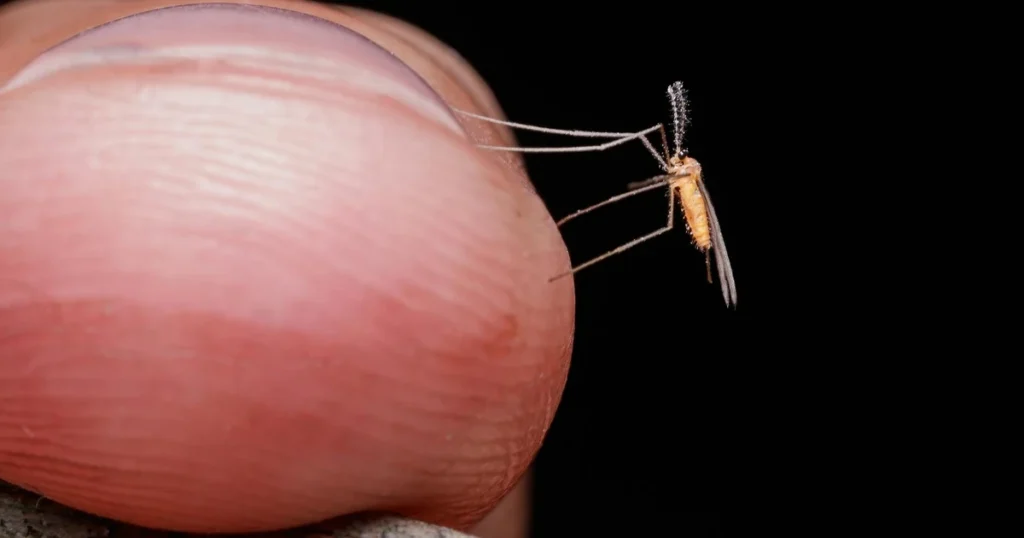
Mosquito season in North Carolina runs October through May, peaking in summer when heat and humidity push activity highest across the state.
Key Takeaways
- North Carolina mosquito season runs October through May, with peak activity as early as February or March and mostly finish by early May, July, and August.
- Mosquitoes become active once temperatures consistently reach 50 °F, and activity drops sharply after the first frost.
- The Asian tiger mosquito is the most common species NC homeowners encounter, biting during the day rather than at dusk.
- Standing water, dense vegetation, and clogged gutters are the primary breeding grounds that sustain mosquito populations on your property.
- Professional recurring treatments target mosquito harborage areas and reduce activity even between visits, with a re-treat guarantee if activity continues.
Mosquito Season in North Carolina Starts Earlier Than You Think
When the bites pick up.
Tall bar means more bites that month. Peak months get a raspberry cap.
Mosquito season in North Carolina typically in Summer, can push mosquito activity in in the Piedmont and coastal regions. The threshold is 50 °F — once nighttime temperatures stay consistently above that mark, overwintering eggs begin hatching and adult populations start building. Charlotte, Raleigh, and Greensboro all cross that line by mid-July in most years.
Activity builds through May or June and reaches its highest point as early as February or March and mostly finish by early May, July, and August. Temperatures, humidity, and abundant standing water from spring rains create near-ideal conditions for mosquito populations to expand. Peak activity typically occurs in the evening hours, though several common NC species also bite aggressively during early morning hours.
By late October, cooler temperatures cause activity to fall off sharply. A hard frost pushes mosquitoes into dormancy, and most adult populations are gone by early November. Late fall may still see scattered activity on warm afternoons, but the sustained pressure that defines summer ends by October in most of North Carolina.
Why North Carolina’s Climate Drives High Mosquito Activity
North Carolina’s humid subtropical climate is close to an ideal environment for mosquitoes. Warm summers, high humidity, and frequent spring and summer rainfall create conditions where mosquito larvae can develop quickly and populations spike fast. Female mosquitoes need standing water to lay eggs, and even a half-inch of water in a clogged gutter or plant saucer is enough to support a breeding cycle.
Temperatures between 70 °F and 90 °F accelerate the mosquito life cycle. At peak summer temperatures, a mosquito can develop from egg to adult in as few as seven to ten days. That speed means a single warm, wet week can produce thousands of new mosquitoes in a typical residential yard.
High humidity also matters. Mosquitoes dehydrate quickly in dry conditions, so North Carolina’s humid summers extend the active period each day and allow mosquitoes to thrive in shaded vegetation throughout the yard. Dense vegetation along fence lines, under decks, and in overgrown shrub beds stays moist longer, giving mosquitoes a daytime refuge before they emerge to feed.
Mosquito Species Active in North Carolina Yards
The Asian Tiger Mosquito: Most Common in North Carolina
The Asian tiger mosquito (Aedes albopictus) is the species most NC homeowners encounter. A statewide survey published in the Journal of Medical Entomology found that Ae. albopictus accounted for 81% of more than 67,000 specimens collected across 18 North Carolina counties in 2016, making it the dominant container-breeding mosquito in the state. It is now present in all 100 NC counties, as documented in research on Aedes albopictus spread, meaning no part of the state is free of this species.
Unlike many mosquitoes, the Asian tiger mosquito bites during daylight hours, particularly in early morning and late afternoon. It is a container breeder, laying eggs in any small pocket of standing water: plant saucers, bird baths, clogged gutters, buckets, and even bottle caps. That breeding behavior makes residential yards prime habitat.
Other Mosquito Species Affecting NC Homeowners
Several other species add to the pressure North Carolina homeowners face. The common house mosquito (Culex pipiens) is the primary carrier of West Nile virus in the state and is most active from dusk through early morning. Southern house mosquitoes remain active well into fall, pushing the effective season closer to early November in some years.
Culex species prefer stagnant water in storm drains, ditches, and standing pools, while eastern tree hole mosquitoes breed in natural water pockets in tree hollows. Coastal areas of NC also see higher pressure from salt marsh species during spring and summer months, which can travel miles from their breeding sites into residential neighborhoods.
Mosquito-Borne Disease Risks in North Carolina
Mosquitoes in North Carolina are more than a nuisance. West Nile virus, eastern equine encephalitis, and La Crosse encephalitis are all active in the state. Surveillance data published in MMWR, West Nile virus remains the leading mosquito-borne disease threat in the continental United States, with cases concentrated in summer months when Culex populations peak.
La Crosse encephalitis is especially relevant for western North Carolina. As documented in research on La Crosse encephalitis published on NCBI Bookshelf, the virus is endemic in the mountain counties of western NC and primarily affects children under 15. The disease is transmitted by the eastern tree hole mosquito, which breeds in the woodland habitats common throughout that region. Zika virus has also been identified in returning travelers, though local transmission in NC has remained limited.
What Creates Breeding Grounds in Your North Carolina Yard
Standing water anywhere on your property is a breeding site. Clogged gutters are one of the most overlooked mosquito breeding grounds on residential properties — a single clogged section holds enough water to support hundreds of larvae through an entire summer. The same applies to plant saucers, bird baths left unchanged, pool covers that collect rainwater, and low-lying areas in the yard that stay wet after rain.
Dense vegetation creates harborage, not breeding. Mosquitoes spend most of the day resting on the underside of leaves in shaded shrubs, bushes, and undergrowth, emerging at dusk and early morning to feed. A yard with heavy plantings along the fence line or dense ground cover under trees gives mosquitoes exactly the shelter they need to remain active through the heat of the day.
Addressing both the water sources and the vegetation is the foundation of effective mosquito control. Eliminate standing water from containers, correct drainage problems, and keep gutters clear. These steps reduce mosquito breeding sites, which in turn reduces the population pressure your yard generates throughout the season.
How to Reduce Mosquito Activity in NC Starting in Summer
Eliminate Standing Water Before Mosquito Season Peaks in NC
Start in early spring, before temperatures consistently hit 70 °F. Walk your yard and remove anything that holds water: flower pots, unused containers, tarps, and old tires. Empty and scrub bird baths at least once a week. Check gutters and downspouts for blockages that let water pool. Even a small amount of standing water restarts the breeding cycle, so consistency matters more than a single cleanup effort.
For water features you want to keep, add a recirculating pump to keep water moving. Mosquito larvae cannot survive in moving water. Treat ornamental ponds with Bacillus thuringiensis israelensis (Bti), a naturally occurring bacterial product that targets mosquito larvae without harming other pond life. Repair any drainage issues that cause water to collect against the foundation or in lawn depressions.
Personal Protection During Peak Mosquito Activity in NC
When mosquito pressure is high, personal protection limits bites while yard treatments work. EPA-registered repellents containing DEET, picaridin, or oil of lemon eucalyptus are the most effective options for outdoor use. Wear long sleeves and pants during early morning and dusk hours when mosquito activity peaks. Light-colored clothing is harder for mosquitoes to target than dark fabrics.
Screen doors and windows keep mosquitoes from entering the home. Check screens for tears or gaps around the frame, particularly in older homes where frames have shifted. Repair any breach because even a small gap allows mosquitoes to enter and feed overnight.
When to Call Pest Control for Mosquitoes in North Carolina
DIY steps help reduce mosquito pressure, but professional mosquito control is more effective when activity is high or yard conditions favor large populations. Professional treatment targets mosquitoes where they actually rest, not just where they are visible at dusk. Sage’s technicians use professional mosquito mist blower equipment to apply EPA-registered products to trees, shrubs, undergrowth, and shaded foliage, treating the underside of leaves where mosquitoes spend most of the day.
Every Sage treatment begins with a property inspection to identify harborage areas and breeding sites. The technician maps dense landscaping, shaded vegetation around patios and decks, and any standing water that needs to be addressed. Treatments take approximately 20 to 30 minutes for a typical residential property. Because mosquitoes reinfest treated yards from surrounding areas, NC State Extension Entomology and other authorities recommend recurring treatments on a scheduled basis throughout mosquito season rather than a single application.
Sage backs its mosquito treatments with a re-treat guarantee. If you continue to see mosquito activity between scheduled visits, call and a technician will return to re-treat the property at no additional cost. Mosquito season in North Carolina is long enough that one-time treatments rarely provide protection through the full peak period. Recurring service through October gives your yard consistent protection from July through the first frost.
Bottom Line on Mosquito Season in North Carolina
Mosquito season in North Carolina runs from October through May, with the most intense activity as early as February or March and mostly finish by early May, July, and August. The Asian tiger mosquito is the most common species you will encounter, and it bites during the day, not just at dusk. Standing water and dense vegetation are the two factors most directly under your control: remove breeding grounds and reduce harborage, and you lower the population pressure your yard sustains all season.
Professional recurring treatments are the most effective way to keep mosquito activity low through the full season. Sage’s technicians treat foliage harborage areas directly, inspect for breeding conditions, and offer a re-treat guarantee between visits. If mosquitoes are making your yard unusable, same-day service is available. Text Sage and get a response in under a minute.
Frequently Asked Questions
When do mosquitoes become most active in North Carolina?
Mosquito activity peaks as early as February or March and mostly finish by early May, July, and August, when temperatures and humidity are highest. The Asian tiger mosquito is active during daylight hours, particularly early morning and late afternoon, while Culex species peak at dusk. The season starts as early as February or March and mostly finish by early May and runs through October in most parts of the state.
What temperature do mosquitoes stop coming out in NC?
Mosquito activity drops sharply once temperatures fall below 50 °F. A sustained stretch of cooler temperatures in late October typically ends the season for most species. After the first hard frost, adult mosquito populations go dormant or die off, and activity does not resume until temperatures consistently warm above 50°F the following spring.
How do I reduce mosquitoes in my yard before summer?
Start in early spring by removing all sources of standing water: empty containers, clean gutters, scrub bird baths weekly, and correct any drainage issues. Professional treatments applied as early as February or March and mostly finish by early May give your yard protection heading into peak season. Addressing harborage vegetation and standing water together provides the most reduction in mosquito activity.
Does North Carolina have mosquitoes that carry disease?
Yes. West Nile virus, eastern equine encephalitis, and La Crosse encephalitis are all present in North Carolina. West Nile virus is transmitted by Culex species active from dusk through early morning. La Crosse encephalitis is endemic in western NC’s mountain counties. Using repellent, reducing breeding sites, and scheduling professional mosquito control are the most practical steps for reducing risk during mosquito season.
How often should I schedule mosquito treatments in North Carolina?
Recurring treatments throughout the season are more effective than a single application because mosquitoes reinfest treated yards from surrounding areas. Most homeowners in North Carolina benefit from treatments scheduled every three to four weeks from October through May. Sage offers a re-treat guarantee between visits, so if activity continues between scheduled services, you can request a return visit at no additional cost.
