
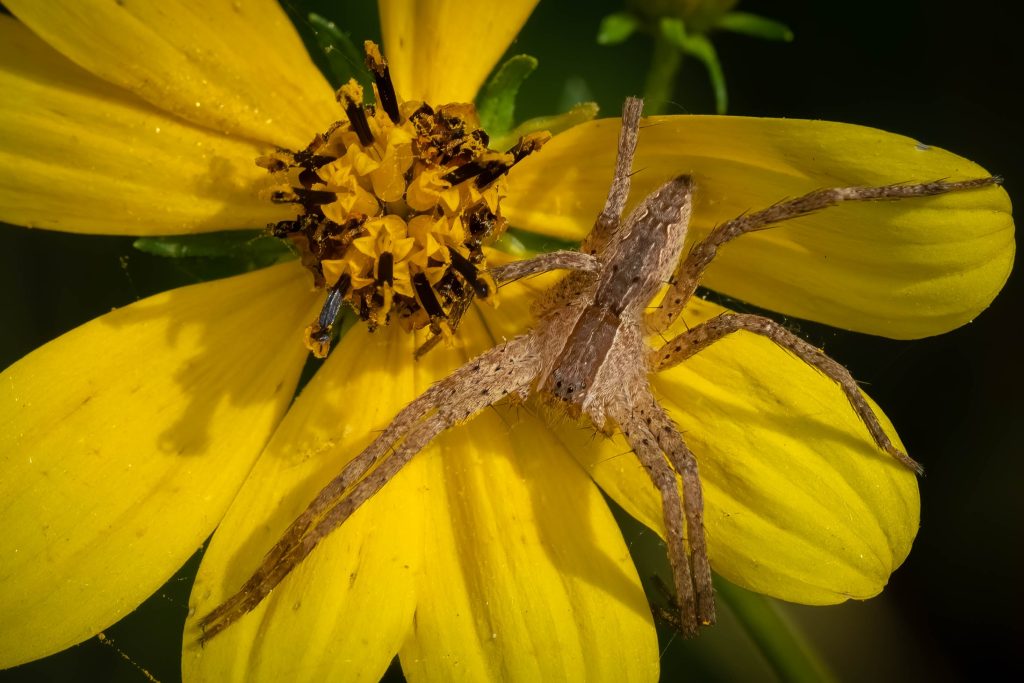
Wolf spiders in North Carolina are large, fast-moving, and easy to mistake for something dangerous, especially the Carolina wolf spider, the largest wolf spider species in North America and common throughout the state. They aren’t dangerous. Wolf spiders hunt on the ground instead of spinning webs, their eyes reflect flashlight beams at night, and a female carrying dozens of spiderlings on her back is simply raising her young, not preparing to attack. This guide covers how to identify a wolf spider in North Carolina, how it behaves, and when its presence actually calls for attention.
Key Takeaways
- The Carolina wolf spider, the largest wolf spider species in North America, is common throughout North Carolina and often mistaken for something more dangerous because of its size.
- Wolf spiders hunt on the ground instead of building webs, relying on strong eyesight and sensitivity to vibration, and their eyes reflect light at night, a fast way to confirm identification with a flashlight.
- Their bite isn’t dangerous to people, and a female covered in spiderlings is exhibiting normal maternal behavior rather than aggression.
How to Identify a Wolf Spider in North Carolina
Size and behavior rule out most look-alikes before any closer inspection is needed. The details below cover the state’s largest species and the two spiders most commonly confused with it.
The Carolina Wolf Spider: NC’s Largest Species
The Carolina wolf spider (Hogna carolinensis) is the species behind most wolf spider sightings that seem unusually large. It’s heavy-bodied, hairy, and can reach up to 1.5 inches in body length, occasionally mistaken for a small tarantula because of its bulk. Despite living throughout North Carolina, it’s officially recognized as the state spider of neighboring South Carolina, one of the rare instances of a spider receiving that kind of official state-level recognition anywhere in the country. Its eyes contain a reflective layer that catches light at night, so sweeping a flashlight across a yard after dark often reveals one by the tiny glow of its eyes before the spider itself comes into view.
Wolf Spider vs. Brown Recluse vs. Huntsman
Wolf spiders get mistaken for two other species regularly enough that a quick comparison saves a lot of unnecessary concern.
| Feature | Wolf Spider | Brown Recluse | Huntsman Spider |
|---|---|---|---|
| Body shape | Robust and hairy | Small and slender | Flat, built for tight gaps |
| Size | Up to 1.5 inches (Carolina wolf spider) | Under 1/2 inch | 1 inch body, 3-5 inch leg span |
| Movement | Runs straight ahead | Slow, stays hidden | Scuttles sideways |
| Key marking | No violin marking; dark patterning | Violin-shaped marking behind the head | Mottled brown, no violin marking |
| Eyeshine | Reflects light clearly at night | No notable eyeshine | No notable eyeshine |
Eyeshine settles any remaining doubt: a wolf spider’s eyes reflect a flashlight clearly at night, while neither the brown recluse nor the huntsman produces the same effect.
Other Wolf Spider Species in North Carolina
The Carolina wolf spider gets the most attention because of its size, but North Carolina is home to several other wolf spider species that turn up regularly. The rabid wolf spider is smaller and more slender, with a distinctive pattern of light and dark stripes running down its body, and it’s actually one of the more commonly encountered wolf spiders in the state despite the alarming common name, which has nothing to do with the disease. Forest wolf spiders and shore, or thin-legged, wolf spiders round out the species most likely to appear in yards and gardens, generally smaller than the Carolina wolf spider and often found in leaf litter or near damp, low-lying ground. All of them share the same core traits: no web, ground-level hunting, and a lack of any real danger to people.
Wolf Spider Behavior: Ground Hunters, Not Web Builders
Unlike the spiders most people picture spinning a web in a doorway, wolf spiders hunt actively and shelter in the ground rather than above it. That difference in strategy shapes everything from how they catch food to where they spend the day.
How Wolf Spiders Hunt
Wolf spiders rely on strong eyesight and sensitivity to ground vibration to track down prey, then chase it down directly instead of waiting in a web. Crickets, beetles, roaches, and grasshoppers make up the bulk of their diet, and an occasional small vertebrate like a frog or lizard isn’t out of the question for a larger individual. That broad appetite is part of why a wolf spider turning up repeatedly in the same spot usually means there’s something else nearby worth eating.
Wolf Spider Burrows and Shelter
Many wolf spiders dig silk-lined burrows in soil, under rocks, logs, or landscape timbers, and the burrow itself often reflects the soil it’s dug into. In North Carolina’s sandier coastal soils, these burrows tend to run deeper to avoid flooding, while in the clay-heavy soil common across the Piedmont, a spider may expand its tunnel further after a heavy rain rather than dig deep from the start. Burrows show up most often near leaf piles, woodpiles, mulch beds, and foundation lines, sometimes clustered near other burrows in the same patch of ground.
Reproduction and Life Cycle
Wolf spiders invest more in raising their young than most spiders bother with, starting well before the eggs even hatch.
How a Female Prepares Her Burrow
Before laying eggs, a female Carolina wolf spider digs a burrow roughly 8 inches deep, lines it with silk, and covers the entrance with plant debris for concealment. She lays her eggs there in spring, wraps them in a silk sac, and attaches the sac to her spinnerets rather than leaving it hidden in the burrow alone. A single brood typically holds somewhere between 100 and 150 eggs.
Why You Might See One Covered in Spiderlings
Once the spiderlings hatch, usually by summer, they climb onto her back and ride there, sometimes dozens at a time, until their next molt, at which point they disperse to hunt on their own. It’s an unusual amount of parental investment for a spider, and it looks unsettling up close, but it’s completely normal behavior. Neither the female nor the spiderlings pose any extra risk during this stage.
The Science Behind Wolf Spider Venom
Wolf spider venom serves two purposes beyond subduing prey. The compounds involved, called lycotoxins, paralyze insects long enough for the spider to feed, but they also carry antimicrobial properties that help protect the spider from pathogens it might otherwise pick up from its prey. That dual function is part of why researchers continue to study wolf spider venom specifically, even though it poses no meaningful threat to people. The same venom that makes a wolf spider an effective hunter has nothing in common with venom built to harm something as large as a human.
Natural Predators: What Keeps Wolf Spiders in Check
Wolf spiders have their own list of predators, including ground-foraging birds, lizards, small mammals, and even other spiders. Parasitic wasps target them too, laying eggs on or near a spider so the wasp larvae can develop at its expense. That natural pressure keeps wolf spider populations in balance outdoors, which is part of why an indoor population rarely establishes itself the way some insects do: a wolf spider that wanders inside has left the food chain that normally keeps its numbers in check, along with the food source it actually needs.
Why Wolf Spiders Come Indoors in North Carolina
Wolf spiders generally prefer to stay outside, but North Carolina’s mix of cold snaps and humid stretches pushes them toward structures more than milder climates might. Cold weather sends them looking for the more stable temperatures a garage, basement, or crawl space offers, while damp crawl spaces and minor foundation gaps give them the same humid cover they’d otherwise dig for outdoors. Indoor activity tends to track insect activity as closely as it tracks the weather, since the spiders are following prey as much as shelter.
Are Wolf Spider Bites Dangerous?
Not to a healthy adult. Wolf spider venom isn’t considered medically significant, and the spiders themselves would much rather flee than bite, since confrontation isn’t worth the risk for an animal that size.
What a Bite Feels Like
Bites are uncommon and typically only happen when a spider gets trapped against skin or handled carelessly. When a bite does occur, the usual result is localized pain, redness, and mild swelling, comparable to a bee sting, and it resolves on its own without further treatment in most cases.
Who Should Be Extra Careful
Children, older adults, and anyone with a compromised immune system are somewhat more likely to notice a stronger reaction. For anyone bitten, cleaning the area with soap and water, applying a cold compress, and watching for worsening swelling or signs of an allergic reaction covers most cases; anything beyond that warrants a visit to a healthcare provider.
When to Call a Professional
A single wolf spider crossing a garage floor doesn’t call for anything beyond leaving it alone or guiding it back outside. Frequent sightings in the same room, especially indoors, are a different story, since that pattern usually means an insect population is established nearby and feeding the problem. A spider that doesn’t match the wolf spider’s size, hairiness, and ground-level habits, particularly anything with a violin-shaped marking, is worth a professional identification rather than a guess.
Get Spider Control for Your North Carolina Home
Sage Pest Control covers wolf spiders and other common species under its general pest control plan, which starts at $299 for the initial visit and $49 a month for homes up to 5,000 square feet. The plan runs on a tri-annual schedule with rotated products to prevent resistance, and a technician treats the insect activity drawing spiders in, not just the spiders themselves, with free re-services if activity returns between visits. Sage is GreenPro certified and provides same-day service 90 to 95 percent of the time, with a text response typically in under a minute. Visit Sage Pest Control or contact the team to schedule an inspection.
Frequently Asked Questions
Is the Carolina wolf spider dangerous to pets?
Not seriously. Its venom isn’t dangerous to cats or dogs any more than it is to people, and it would rather retreat than confront a curious pet. A dog or cat that corners or paws at one could still get a defensive bite, which typically causes only localized swelling similar to a bee sting.
How can I tell a wolf spider from a brown recluse without getting close?
Check for eyeshine with a flashlight at night. A wolf spider’s eyes reflect light clearly, while a brown recluse produces no such glow. Size is a good secondary clue during the day, since a brown recluse rarely exceeds half an inch, well short of a mature Carolina wolf spider.
Why do I see more wolf spiders in my house at certain times of year?
Cold snaps push them toward the stable temperatures a garage or crawl space offers, which is why sightings tend to climb heading into winter. A second, smaller increase can show up in mid-to-late summer, when spiderlings that have finished riding on their mother’s back disperse from a single burrow and start looking for territory of their own.
Should I kill a wolf spider I find in my home?
It isn’t necessary. A single wolf spider is harmless and usually hunting insects already present, so relocating it outside works just as well as anything else. Repeated sightings are worth addressing at the source rather than dealing with each spider individually.
Do wolf spiders in North Carolina ever build webs, like in corners?
No. Every wolf spider hunts on the ground rather than spinning a web, so a web found in a corner or doorway belongs to a different species entirely, most often a common house spider or cellar spider. A wolf spider’s presence is confirmed by seeing the spider itself, not by finding a web nearby.
