
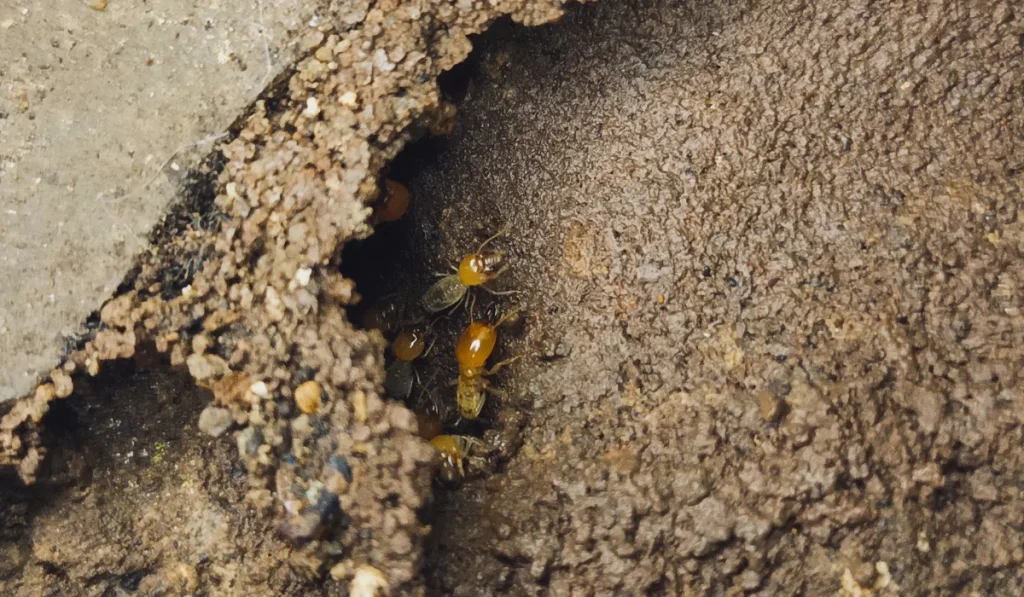
Do termites live in the ground? Yes. In Virginia, Eastern subterranean termites commonly establish colonies in soil and travel through hidden tunnels or mud tubes to reach wood. Because most activity stays concealed, homeowners often notice mud tubes, damaged wood, discarded wings, or indoor swarmers before they see worker termites. Knowing how these termites reach a house and what evidence they leave behind can help you recognize when an inspection is warranted.
Do Termites Live in the Ground in Virginia?
Yes. The Eastern subterranean termite, Reticulitermes flavipes, is the subterranean termite most commonly found in Virginia. Virginia Cooperative Extension’s publication on subterranean termite biology and behavior explains that mature colonies can occupy several nesting sites connected through underground tunnels.
Workers leave those protected areas to search for cellulose in materials such as buried lumber, stumps, landscape wood, and structural wood. A colony does not have to sit directly beneath a house for workers to reach it.
Virginia Cooperative Extension also notes that rare above-ground colonies can survive where unusually persistent moisture is present, but soil-associated colonies are the main concern for Virginia homeowners.
Why Subterranean Termites Depend on the Ground
Subterranean termites need moist, protected conditions, and soil provides both. It also gives workers a concealed route between nesting areas and food sources.
Moisture problems around a home can make some areas more favorable for termite activity. Persistent leaks, drainage issues, and damp areas near foundations or crawl spaces are worth correcting, although moisture alone does not create an infestation or eliminate one once it is established.
Why Subterranean Termites Build Mud Tubes
When workers need to cross an exposed surface such as a foundation wall, they can build mud tubes that help protect them as they move between soil and wood.
These tubes often look like narrow streaks or ridges of dried soil along foundations, crawl space walls, piers, cracks, or other surfaces. Virginia Cooperative Extension identifies mud tubes as one of the main indicators of subterranean termite activity.
Finding a tube does not reveal the location or size of the colony. Removing the visible section also does not eliminate the termites, which may rebuild the passage or continue using another route.
How Ground-Dwelling Termites Get Into Virginia Homes
Subterranean termites generally enter from soil near the foundation. Virginia Cooperative Extension’s guidance on subterranean termite infestations identifies slab cracks, utility conduits, expansion joints, plumbing connections, and gaps around construction features as potential entry routes.
These pathways are not always visible from outside. Termites can travel behind finished surfaces, along slabs, or through crawl spaces even when the exposed foundation appears intact.
Wood-to-soil contact can make access easier. Porch components, posts, siding, supports, and scraps of lumber that touch the ground can give foraging termites a direct path to cellulose. Where practical, keeping structural wood separated from soil removes one of the simpler routes into a home.
Signs Subterranean Termites Have Reached Your Home
Homeowners are more likely to find evidence of subterranean termites than exposed groups of workers. The U.S. Environmental Protection Agency notes that termites usually remain concealed in soil, mud tubes, or the material they are feeding on.
| Sign | What It Looks Like | What It May Mean |
| Mud tubes | Narrow, soil-like passages on foundations, masonry, piers, or other surfaces | Termites have created a protected route to a food source |
| Damaged wood | Internal galleries, softened areas, or wood that sounds hollow when tapped | Termites may have been feeding below the visible surface |
| Indoor swarmers | Winged reproductive termites appearing inside the home | An established termite colony may be in or near the structure |
| Discarded wings | Loose wings near windows, doors, or other areas where swarmers gathered | A termite swarm has occurred nearby |
Mud tubes and wood damage provide different types of evidence. A tube shows a travel route, while damaged wood shows that feeding has occurred. Homeowners can compare unfamiliar damage with other signs of termites in the home.
Swarmers are another reason to investigate. These winged termites are reproductive members of the colony, not the workers that feed on structural wood. Finding flying termites inside a house can point to an established colony nearby, especially when discarded wings or other termite signs appear in the same area.
Does Finding Termites in the Yard Mean Your House Has Termites?
Finding termites beneath mulch, a log, or landscaping does not automatically mean your house is infested. Subterranean termites may feed on dead wood outdoors without reaching the structure.
Location matters. Termites in a stump well away from the house do not provide the same evidence as termites found beside the foundation, beneath wooden steps, or near structural wood that touches the ground.
Look for supporting signs before drawing a conclusion. Mud tubes on the structure, unexplained wood damage, indoor swarmers, or discarded wings provide stronger evidence that termites have moved beyond an outdoor food source.
How Termite Treatment Addresses Activity in the Ground
Professional treatment targets the way subterranean termites travel and feed. The EPA lists liquid soil-applied termiticides and termite bait systems among the established methods for structural termite control.
Sage Pest Control offers termite bait stations and foundation trenching for subterranean termite control. The right approach depends on construction features, access around the foundation, and evidence found during the inspection.
| Treatment Method | How It Works | What It Means for the Property |
| Termite bait stations | Stations placed in soil allow foraging termites to encounter bait and carry it through normal colony feeding behavior | Stations remain accessible for inspection and ongoing monitoring |
| Liquid foundation treatment | Termiticide is applied to appropriate soil along the foundation to treat routes termites may use to reach the structure | Installation can require trenching or other access methods based on construction and surrounding surfaces |
How Termite Bait Stations Work
Termite bait stations sit in the soil around the perimeter of a structure. They do not lure distant termites onto the property. Instead, workers already foraging nearby may encounter the stations while searching for food.
The bait acts slowly so termites can continue normal feeding and food-sharing behavior before the treatment takes effect. Virginia Cooperative Extension describes delayed action as an important part of subterranean termite baiting.
Bait stations also give technicians fixed locations to monitor for activity over time.
How Liquid Foundation Treatments Work
Liquid treatment addresses soil termites may cross on the way to a structure. For an existing home, service can involve trenching along appropriate sections of the foundation and applying a labeled liquid termiticide.
The exact application depends on the property. Concrete, pavers, crawl spaces, foundation depth, and accessible soil can all change how a technician reaches the treatment area.
Neither baiting nor trenching should be selected from a description alone. The treatment plan should follow an inspection that identifies termite evidence and likely access points.
Why a Termite Inspection Comes Before Treatment
Knowing that termites live in soil does not tell you whether they have entered your home. An inspection helps determine whether visible evidence points to structural activity and where access may be occurring.
A technician can examine accessible foundation areas, crawl spaces, exposed structural wood, plumbing penetrations, and other likely routes for mud tubes, damage, swarm evidence, and moisture problems.
Construction also affects treatment planning. Foundation length, paved areas, crawl-space access, and other site features can influence the scope of the work and termite inspection and treatment costs in Virginia Beach.
How Virginia Homeowners Can Reduce Termite-Friendly Conditions
Termite prevention starts by reducing easy access to structural wood. The EPA recommends keeping soil around foundations properly drained, repairing leaks, reducing openings that can provide access, keeping vents clear, and avoiding vegetation against exposed wood.
Pay particular attention to areas where water or wood stays close to the house. Downspouts should direct water away from the foundation, plumbing leaks should be repaired, and unnecessary wood debris should be removed from the perimeter.
Check the foundation during routine exterior maintenance. Appropriate gaps around utility penetrations may be sealed, and exposed wood should not sit directly against soil where that contact can be corrected. These steps can reduce favorable conditions, but they do not replace treatment when an active infestation is present.
Protecting Your Virginia Home From Subterranean Termites
Do termites live in the ground around Virginia homes? Yes. Eastern subterranean termites commonly remain connected to soil while workers search for wood through concealed tunnels and mud tubes. That is why foundation signs, crawl-space activity, wood damage, or indoor swarmers can matter even when you never see a colony outside.
If you find mud tubes, damaged wood, indoor swarmers, or termites near the foundation, Sage Pest Control can inspect the property for signs of subterranean termite activity. Homeowners in the Virginia Beach service area can contact Sage Pest Control to schedule an inspection and get a treatment recommendation based on the conditions found.
