
Flying Termites in House can cause costly problems when early signs are missed. Learn the signs, risks, and when to call Sage Pest Control.
Key Takeaways About Flying Termites in Your House
- Flying termites, also called swarmers, are reproductive termites that leave a colony to start new ones. Spotting them indoors may point to an existing infestation nearby.
- Swarmers can be confused with flying ants. Termite swarmers have straight, equal-length wings and broad waists, while ants have pinched waists and uneven wings.
- Subterranean termites are the most common type in North Carolina and the Virginia Beach area, living in soil and building mud tubes to reach wood inside a structure.
- Because termite treatment involves regulated products, a licensed pest control professional is needed to address an active infestation.
How to Identify Flying Termites in Your House
Finding flying termites inside your house can be unsettling, but knowing what to look for helps you figure out which species you’re dealing with and how serious the situation may be. The signs vary depending on the termite type, and a closer look at damage patterns, droppings, and entry points can tell you a lot before a professional ever steps inside.
How to Tell Flying Termite Types Apart in Your House
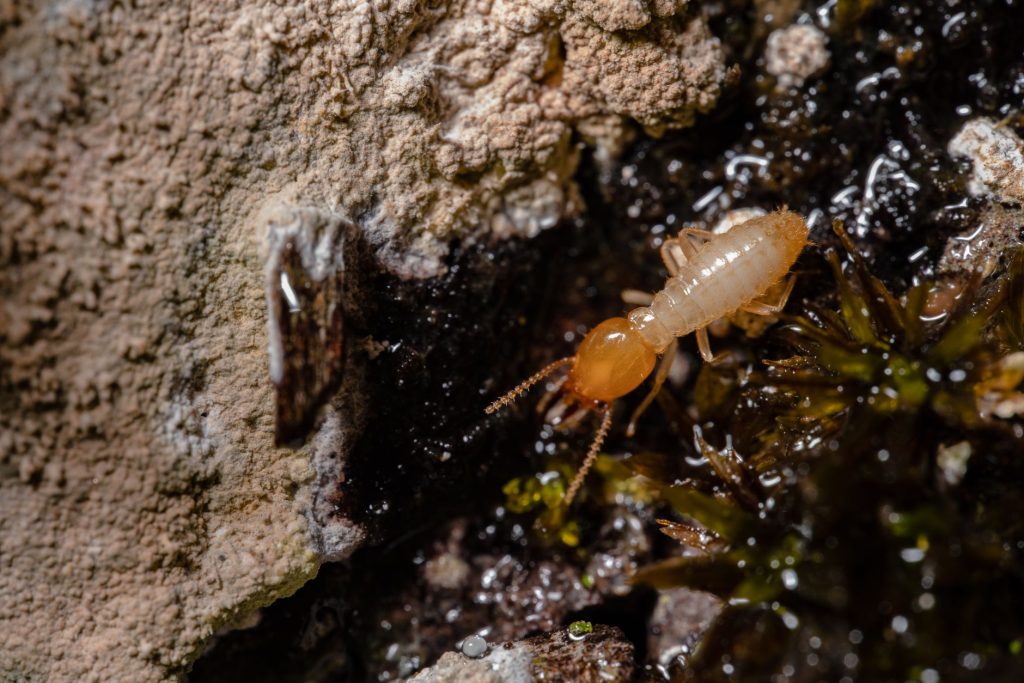
Swarmers are the winged reproductive members of a termite colony. According to Sage Pest Control’s FAQ, they are black or orange with long white wings that stack on top of each other and measure only about 3/8 of an inch long. They can resemble flying ants, but termites lack the pinched waist that ants have.
Subterranean and drywood species behave differently once inside. Subterranean termites live in soil and build mud tubes to reach wood in your home. Drywood termites can infest items like furniture and picture frames. The wood damage each species leaves behind often looks different, which can help confirm which type is present.
How to Spot Flying Termite Activity Inside Your Home
One of the clearest signs of subterranean termite activity is the pattern they leave in wood. According to UC IPM, feeding by subterranean termites generally follows the grain, attacking the softer springwood while leaving the harder summerwood behind. This creates a layered, hollowed-out look.
That distinctive damage pattern can often be used on its own to distinguish subterranean termite activity from that of other species. Some species also deposit light-brown excrement within cavities in the wood, which is another sign worth watching for when you inspect exposed wood around your home.
Where Flying Termites Show Up Around Your Home
Mud tubes are a hallmark sign of subterranean termites. You may find them along your foundation, in crawlspaces, or near baseboards and door and window frames. If you break a mud tube open, you may see live workers and soldiers running through it, which confirms the colony is still active.
During an inspection, a technician typically checks the foundation, crawlspace, attic, baseboards, door and window frames, plumbing areas, and any exposed wood. They also look for moisture issues or other conditions that could attract termites to your home.
Exterior Entry Points Flying Termites Use Around Your Home
Subterranean termites can enter your home through small cracks in the foundation, plumbing penetrations, or other openings where wood contacts soil. These entry points are often hidden, which is why signs like mud tubes and wood damage tend to appear before you spot the termites themselves.
If there are tree stumps or dead trees on your property, those can also draw termite activity closer to your home’s structure. Keeping an eye on these exterior conditions and watching for the signs described above gives you a head start on identifying a potential problem early.
Why Flying Termite Problems Develop in House
Flying termites leave an established colony with one goal: to pair off and start new colonies. When you spot them inside your home, it typically means a mature colony is nearby or conditions around your house are drawing them in. Understanding what creates that pressure helps you recognize the problem early.
Outdoor Nesting Areas for Flying Termites Near Your Home
According to Kansas State University Extension, subterranean termite colonies are typically located 1 to 30 feet below the surface. Because they are soft-bodied and require moisture to survive, colonies follow moisture gradients in the ground to locate food sources. Soil near foundations, landscaping beds, and areas with consistent ground moisture can support active colonies close to a structure.
Drywood termites operate differently. They require no soil contact or liquid moisture, obtaining all the moisture they need from wood itself and metabolic processes. That means they can nest directly inside structural wood without any connection to the ground.
Food and Shelter That Attract Flying Termites to Your Home
Subterranean termites forage from the soil into structures to access wood. As the University of Georgia termite guide notes, they consume wood from the inside, sometimes leaving only a thin wooden exterior. Any wood in contact with soil or accessible through foundation gaps gives foraging workers a path to a reliable food source, which supports colony growth and eventually produces swarmers.
How Flying Termites Move Around Your Home
Native subterranean termite species begin swarming in January and are mostly finished by early July. According to the University of Georgia termite guide, they swarm in the morning or early afternoon and are not attracted to lights. Formosan subterranean termite swarmers are larger, about 1/2 inch with wings included, and have a caramel-colored body. Seeing either type indoors means swarmers may be attempting to establish new colonies in or near the structure.
Trails and Entry Points Flying Termites Use in House
Workers build mud tubes to travel between their underground colony and wood inside a structure. Swarmers may follow those same pathways or squeeze through tiny gaps on their own. Foundation cracks and plumbing penetrations remain the most common routes.
Winged termites can look similar to winged ants. Termite swarmers can be distinguished from winged ants by their waists — ants have pinched waists, while termites do not — and by their wings, which stack evenly on top of each other. Distinguishing between the two matters because the response to each is different.
Risks From Flying Termites in Your House
When flying termites appear inside your home, the real concern is not the swarmers themselves but the worker termites that may already be feeding on wood behind your walls. Understanding what these pests can do helps you decide how quickly to respond.
Structural Risks From Flying Termites in Your Home
According to UC IPM, workers construct earth-hardened shelter tubes using saliva mixed with soil and bits of wood or even drywall. Over time, ongoing feeding by worker termites can compromise wood throughout a home.
Any shelter tubes should be destroyed as part of managing the problem. Leaving these pathways intact allows workers to continue traveling between the colony and your home’s wood.
Hidden Termite Damage in Your Home
Termite damage often develops out of sight, inside walls, under flooring, or in crawlspaces. Because these pests work from the inside of wood outward, damage can progress for months before you notice visible signs. A thorough inspection helps locate colonies so that treatment can be directed where it matters most.
Without professional inspection, colonies may go undetected and damage can spread further through the structure. Hidden activity is easy to miss during a casual walkthrough.
Belongings and Moisture Risks From Flying Termites
Subterranean termites require moisture, and their shelter tubes can introduce soil and dampness into areas where wood meets the structure. These pests do not limit themselves to framing lumber. Any wood connected to the soil or accessible through shelter tubes may be at risk, making a complete inspection important for understanding the full scope of activity.
When a Flying Termite Problem in Your House Needs Action
Seeing even a few flying termites indoors is worth taking seriously. As UC IPM notes, thorough inspection is needed to detect termite damage and colonies in order to make best use of localized treatments. The sooner colonies are found, the sooner damage can be contained.
A professional inspection covers key areas throughout the structure, looking for mud tubes, damaged wood, moisture issues, and conditions that could attract termites. Acting now gives you the clearest picture of what these pests are doing inside your home.
Professional Pest Control for Flying Termites in House
When you spot flying termites inside your house, the next step matters. Swarms can appear in the spring, summer, or fall and signal a subterranean termite infestation. Addressing the situation quickly starts with reducing what draws termites in, followed by a thorough inspection and a professional control plan.
How to Reduce Attractants for Flying Termites in House
Homeowners can correct conditions conducive to a subterranean termite infestation on their own. That means addressing moisture problems, replacing termite-damaged wood, and removing wood-to-soil contact around your home’s foundation. Limiting easy pathways between soil and wood is one of the most practical steps you can take.
Keep an eye on areas where shelter tubes could form. If you find evidence of tunneling in wood or spot mud tubes along your foundation, those are clear indicators of an active infestation that goes beyond what prevention alone can solve.
Why Flying Termite Control in House Starts With Inspection
A professional inspection is the foundation of any termite control plan. According to Oregon State University Solve Pest Problems, professionals have special training to inspect your home for insect signs and damage. At Sage Pest Control, our service begins with a thorough inspection of the structure, covering all vulnerable areas from the foundation to the attic.
During the inspection, the technician looks for mud tubes, damaged wood, moisture issues, and other attracting conditions. Finding live termites foraging within wood is a sure sign of an active infestation. Shelter tubes and evidence of tunneling are also indicators worth investigating further.
What to Expect During Professional Flying Termite Treatment in House
As UC IPM notes, applications of registered pesticides are highly regulated and require a licensed pest control professional. That is why DIY approaches fall short when it comes to a confirmed termite infestation in your house.
Sage Pest Control uses the Trelona Advanced Termite Bait System, manufactured by BASF. Stations are installed in the soil surrounding your home approximately every 10 to 20 linear feet. Each station comes pre-loaded with two Termite Bait Cartridges. Worker termites consume the bait and bring it back to colony members. We also offer termiticide foundation trenching, which creates a long-lasting vertical barrier around the foundation. Each liquid termiticide application lasts approximately five years.
What to Expect From a Flying Termite Control Plan
After treatment is in place, Sage monitors your property on a set schedule, checking stations and inspecting for any signs of termite activity. If activity is detected, your technician takes additional steps to maintain protection for your home. With the Trelona system, bait remains active for two to four years under typical conditions, and we inspect stations annually and replace bait as needed.
Different termite species can require different treatment approaches because they behave and nest differently. For subterranean termites, treatment typically focuses on soil treatments or bait systems installed around the perimeter. If termite activity or risk factors are identified during monitoring, we recommend adjustments to keep the plan working for your home.
Bottom Line on Flying Termites in House
Finding flying termites indoors can be alarming, but it gives you a clear signal to act. These winged swarmers point to a colony nearby, and subterranean termites in particular travel from the soil into structures to access wood. The sooner you get a professional inspection, the sooner you can understand the scope and protect your home. Sage Pest Control inspects foundations, crawlspaces, attics, and exposed wood for termite activity, so reach out to schedule your inspection today.
Frequently Asked Questions About Flying Termites in House
Do Flying Termites Mean My Home Is Infested?
Not necessarily. Swarms of flying termites are not always a sign of an infestation inside a structure. They may be coming from an outdoor colony nearby. However, finding swarmers indoors warrants an inspection to check for activity and conditions that could attract termites to your home.
What Do Flying Termites Look Like?
Subterranean termite swarmers are black to caramel colored with long wings that stack on top of each other. You can tell them apart from flying ants by looking at the waist: termites have a straight, broad waist, while ants have a pinched one.
Can I Handle Flying Termites on My Own?
Homeowners can correct conditions that attract termites, such as removing wood-to-soil contact. However, treating an active colony typically requires a licensed pest control professional. Sage Pest Control offers bait station systems and termiticide foundation trenching tailored to the situation found during your inspection.
How Does Sage Pest Control Treat for Termites?
After a thorough inspection, your technician recommends a treatment plan. Options include the Trelona Advanced Termite Bait System, which uses stations installed in the soil around your home, or termiticide foundation trenching that creates a long-lasting barrier. After treatment, the property is monitored regularly, and stations are inspected annually to maintain protection.
