
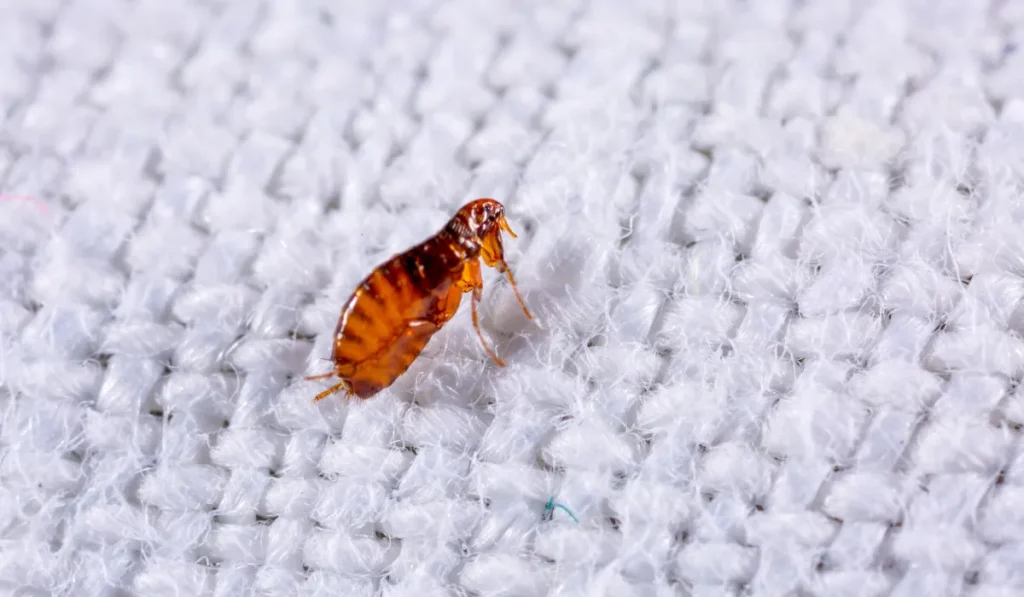
Fleas in Virginia can become especially noticeable by mid-to-late summer, but pets may support smaller indoor populations through winter. The adults you see are only one part of the problem. Eggs, larvae, and pupae develop away from the pet in places such as bedding, carpet, furniture, and protected outdoor areas. Knowing how to recognize flea activity, where each life stage develops, and how pet care fits with home treatment can make an infestation much easier to address.
When Are Fleas Most Active in Virginia?
Virginia homeowners often notice more flea activity as the weather warms. Virginia Tech’s guidance on household fleas notes that cooler, drier fall weather generally reduces household flea numbers. Pets can maintain smaller populations during winter, followed by increasing numbers in spring and much heavier activity in mid-to-late summer.
That seasonal pattern does not mean fleas disappear from a home when outdoor temperatures fall. Adult fleas can remain on pets, while earlier life stages develop in the areas where those animals sleep and rest. An infested dog or cat can shed flea eggs into bedding, rugs, furniture, and other frequently used spaces.
For Virginia homeowners, especially those with pets that spend time both indoors and outside, flea control is worth thinking about before summer activity becomes heavy. Indoor signs during cooler weather also deserve attention rather than being dismissed as a problem that will disappear on its own.
How to Tell if You Have a Flea Infestation
Adult fleas are small, dark, wingless insects with enlarged hind legs built for jumping. Virginia Tech describes them as roughly 1/8 inch long. Their size, color, and quick movement can make them difficult to spot in thick fur, carpeting, or dark fabrics.
Flea dirt offers another clue. These reddish-black or dark specks are flea feces and can collect in an animal’s coat and resting areas. Sage’s guide to what fleas look like at different life stages explains how adults, eggs, larvae, pupae, and flea dirt differ from one another and from other small household pests.
Signs on Dogs and Cats
Pets with fleas may scratch, bite at their skin, groom repeatedly, or show visible flea dirt in their coat. Parting the fur close to the skin may reveal moving adult fleas, although small numbers can be easy to miss.
Despite its name, the cat flea, Ctenocephalides felis, is not limited to cats. The Merck Veterinary Manual’s flea guidance identifies it as the most prevalent flea on dogs and cats in North America. Merck also identifies flea allergy dermatitis as a reaction associated with flea feeding. Persistent itching or inflamed skin should be discussed with a veterinarian.
Signs Around the Home
A household flea infestation tends to follow the places pets use most. Beds, rugs, upholstered furniture, carpet edges, and protected spaces near or beneath furniture can collect eggs after they fall from an infested animal.
Look for a pattern rather than relying on one sign. Adult fleas, flea dirt, increased scratching, and repeated activity around a pet’s favorite resting areas together provide more useful evidence than an unexplained skin mark or a single dark speck.
Why the Flea Life Cycle Makes Control Difficult
Fleas develop through four stages: egg, larva, pupa, and adult. Adult fleas feed on a host, but eggs and immature fleas develop in the surrounding environment. This separation between the host and the home is one reason flea infestations can persist when attention stays focused only on the pet.
According to the CDC’s flea life cycle guidance, flea eggs can hatch in one to ten days depending on temperature, humidity, and other environmental conditions. Larvae feed and develop before forming cocoons and entering the pupal stage.
| Flea Stage | Where It Develops | Why It Matters |
| Egg | Fur and surrounding areas such as bedding, carpet, or soil | Eggs can fall from the host and spread through areas the animal uses |
| Larva | Sheltered environmental areas | Larvae develop away from the pet |
| Pupa | Inside a cocoon | The cocoon protects the developing flea from environmental conditions and some treatment products |
| Adult | Primarily on a host after emergence | Adults feed, mate, and begin producing eggs |
Why Fleas May Appear After Treatment
The pupal stage can delay visible results. CDC guidance explains that the cocoon protects the developing flea for days or weeks, and adults do not emerge until signals such as movement or body heat suggest that a host is nearby.
Because of that delay, seeing a few adult fleas after an initial service does not automatically mean the infestation has returned. Some may be adults emerging from pupae that were present before treatment. Ongoing vacuuming, pet treatment, monitoring, and recommended follow-up help address those remaining life stages as they emerge.
How Quickly Fleas Can Reproduce
Once adult fleas find a suitable host, egg production can add to the environmental population quickly. Merck reports that female cat fleas can produce up to 40 to 50 eggs per day during peak egg production.
Those eggs do not stay attached to the pet. They fall into bedding, carpet, soil, and other places the animal uses. Effective flea control therefore has to address both the animal and the areas where eggs and immature fleas are developing.
Where Fleas Develop Indoors and Outside
Finding the places where fleas are developing is more useful than assuming every room or every part of the yard has the same level of activity. Indoors, flea stages tend to accumulate around the areas pets use regularly. Outside, suitable conditions are more localized.
Merck notes that outdoor flea development occurs where the ground is shaded and moist. That makes sheltered pet areas more relevant than open, exposed sections of a lawn.
Where to Check Indoors
Start with your pet’s routine. A dog that naps beside the same sofa each afternoon or a cat that sleeps on one upholstered chair can concentrate flea eggs around those locations.
Inspect and clean pet bedding, rugs, carpet edges, upholstered furniture, and protected floor areas nearby. In homes with cats, remember that favorite resting spots may be above floor level.
Where to Check Outside
Focus on shaded places your pets actually use. Areas under decks, around shrubs, beside sheltered structures, or in other protected parts of the yard may provide better conditions for flea development than sunny, dry lawn.
Keeping grass and vegetation managed and clearing excess debris around pet-use areas can reduce shelter for developing fleas. Yard maintenance works best when it is paired with pet prevention and attention to indoor resting areas.
How to Get Rid of Fleas in Virginia
Household flea control works best when pet care and environmental cleaning happen together. Virginia Tech identifies frequent vacuuming of pet bedding and resting areas, treatment of the pet, and appropriate treatment of the environment as key parts of flea control.
The goal is to keep new adults from feeding and reproducing while reducing the immature flea stages already present around the home.
Treat Pets With Veterinary Guidance
Each dog or cat in the home should have an appropriate flea-control plan. A veterinarian can recommend an option based on the animal’s species, age, size, health, and other relevant factors.
Pet treatment should continue alongside environmental control rather than starting only after the house has been treated. Fleas depend on hosts for blood meals, so leaving an infested pet untreated can allow the cycle to continue.
Vacuum and Clean High-Use Pet Areas
Vacuum carpets, rugs, upholstered furniture, floor edges, and spaces around furniture where pets sleep or spend long periods. Wash pet bedding and other washable fabrics used by animals.
Consistent cleaning is also part of broader flea and tick prevention for households with pets. The most useful routine is one built around the places your own pets use, rather than giving every room the same amount of attention.
Match Treatment to the Source of Activity
An infestation concentrated around an indoor pet bed may require a different treatment focus from flea activity tied to shaded outdoor pet areas. Inspection helps determine whether the main problem is indoors, outdoors, or in both environments.
That distinction also prevents effort from being wasted on low-risk areas while active flea habitat goes untreated.
How Sage Approaches Flea Control in Virginia
Sage’s flea-control process begins with an inspection of the home and yard. Indoors, technicians check likely activity areas and the places pets rest or lounge. In homes with cats, the inspection can include elevated areas because cats often spend time above floor level.
Outside, technicians look at conditions such as tall grass, shrubbery, shaded areas, spaces beneath decks, and pet-resting locations. When exterior flea treatment is part of the selected service, treatment can focus on shrubs, bushes, lawn areas, sheltered spaces, and other relevant parts of the yard.
Interior flea treatment can include baseboards and floor-line areas along with targeted treatment of carpets, rugs, bedding, and furnishings where flea activity is present. Sage includes interior flea treatment with General Pest Control when needed. Exterior flea treatment is available through upgraded outdoor services such as Sage Select or Pro-Yard.
Preparation matters as well. Sage recommends vacuuming carpets, rugs, and upholstered furniture, washing pet bedding, removing pet items from treatment areas, and having pets treated with a veterinarian-recommended product. Continued vacuuming and monitoring after service can help address remaining flea activity as later stages emerge.
How to Prevent Fleas From Coming Back
Prevention is easier when you keep focusing on the same places fleas use during an infestation. Maintain the flea-prevention routine recommended for your pets, and regularly inspect the bedding, furniture, and other areas where they spend the most time.
Vacuuming and washing pet bedding can reduce the material and sheltered spaces available to developing fleas indoors. Outside, keep pet-use areas maintained, especially shaded locations around shrubs, decks, and other protected parts of the yard.
Season matters, too. Since Virginia household flea numbers can rise through spring and become much heavier in mid-to-late summer, checking your pet-care routine and familiar flea-prone areas before summer can help you find activity before it becomes more widespread.
Getting Fleas Under Control in Your Virginia Home
Flea control becomes more manageable when you account for the entire life cycle. The adults on a pet are only one part of an infestation, and developing stages may still be present in the places that animal uses every day.
If flea activity continues despite pet treatment and regular cleaning, Sage Pest Control can inspect the home and relevant outdoor areas to determine where activity is concentrated. Sage serves communities in North Carolina and Virginia, with current coverage listed on its service areas page. For help with an active infestation, contact Sage Pest Control to discuss flea-control service.
