
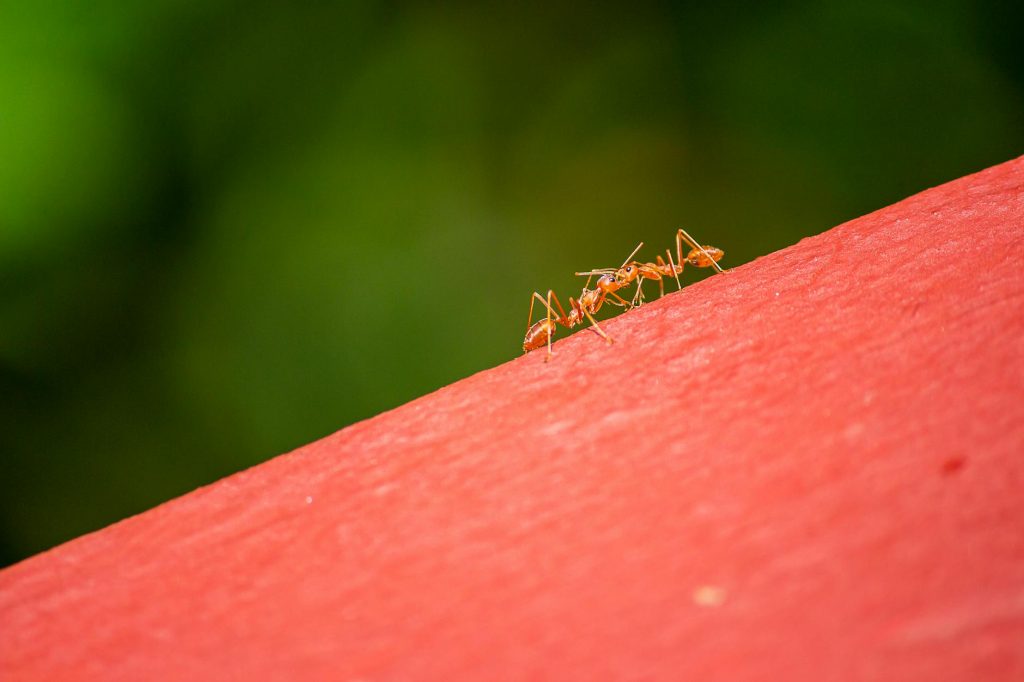
Ants can cause costly problems when early signs are missed. Learn the signs, risks, how to get rid of tiny ants in house, and when to call Sage Pest Control.
Key Takeaways About Tiny Ants in Your House
- Identifying the type of tiny ants in your house helps you understand what they are attracted to and where they may be nesting.
- Prevention steps like sealing cracks, removing food sources, and keeping surfaces clean can reduce ant activity before it becomes a bigger concern.
- DIY approaches have limits, and finding the nest is often the most important part of getting rid of ants for the long term.
- A professional inspection can uncover nest locations and ant trails that are easy to miss on your own.
How to Identify Tiny Ants in Your House
Before you can address a tiny ant problem, you need to know what you are looking at. Several species look similar at first glance, but small differences in color, nest location, and behavior can help you narrow things down and respond the right way.
How to Tell Tiny Ant Species Apart in Your Home
Ghost ants are one of the smallest species you may encounter. According to Texas A&M AgriLife Extension, workers measure about 1/16 of an inch and have a dark head and thorax paired with a lighter abdomen. Ghost ant colonies nest primarily indoors, and foraging workers are attracted to sweets.
Odorous house ants are another common tiny species. They form relatively small, inconspicuous nests, and a single colony usually has many interconnected nest sites, some of which may be located indoors. Argentine ants share a similar nesting style and can outcompete other species because those other species must spend more energy on nest defense.
How to Spot Tiny Ant Activity Inside Your Home
The easiest sign is a line of foraging ants moving along a countertop, wall edge, or floor. Watch for activity in areas where sweet items are stored or used. If you see a few workers scouting, more may follow once those ants return to the nest.
When you notice foraging ants, wipe them up with soapy water and a sponge. Removing them before they return to the nest can help keep additional ants from showing up in the same spot.
Where Tiny Ant Activity Shows Up Around Your Home
Different species nest in different places. Ghost ants tend to nest primarily indoors. Odorous house ants and Argentine ants form nests under leaf litter, mulch, tree bark, and other protected sites outdoors, though some nest sites may also be indoors. Because a single colony can have many interconnected nest sites, activity may appear in more than one area of your home at a time.
Exterior Entry Points Tiny Ants Use to Get Inside
Species that nest outdoors in mulch, leaf litter, or under tree bark often move inside while foraging. These inconspicuous nest sites sit close to the foundation, giving workers a short path indoors. Checking the perimeter of your home for nest activity in protected, sheltered spots is a good first step toward understanding where the ants are coming from.
Why Tiny Ant Problems Develop in Your House
These problems rarely start overnight. They build over days and weeks as ants discover reliable food sources, water, and shelter that keep them coming back.
Outdoor Nesting Areas That Lead Tiny Ants to Your Home
Some ant species commonly nest outdoors and enter your home just to look for food. Argentine ants, for example, nest mainly in mulch and leaf litter, with colonies containing tens of thousands of ants. These outdoor nests can sit close to your foundation, giving foragers a short path inside.
Ant colonies do not nest in permanent locations. According to Texas A&M AgriLife Extension, some colonies can have more than one queen, and new colonies form when queen ants, along with workers and brood, leave the nest and move to a new location. That means nesting pressure around your home can shift over time.
Food and Shelter That Attract Tiny Ants in House
Worker ants from outside or inside nests may forage for food and water inside your home. Even tiny amounts of crumbs or liquids caught between cracks provide a food source. You might not notice what they are finding, but ants will.
Once workers locate food, they take it back to the colony and share it with the other ants, including queens and brood. This food-sharing behavior, called trophallaxis, involves workers exchanging a tiny droplet containing communication nutrients when they meet nestmates heading out to forage.
How Tiny Ants Move Through Your Home in House
Some species commonly nest indoors, while others nest outside and enter a home just to look for food. That distinction matters because the source of your ant problem may not be visible inside. Workers forage for both food and water and can travel back and forth between an outdoor nest and your kitchen or bathroom.
Ant Trails and Entry Points in House
Foraging workers of some species secrete pheromone trails to lead other ants to food and water. These trails act like a highway, pulling more workers toward the same sources. According to Oregon State University Solve Pest Problems, soapy water disrupts the scent trail from the food source to the nest, which is why wiping up visible trails with soap and water is a practical first step.
Killing only the ants you see on a trail does not address the colony itself. You need to address the colonies or nests behind the foraging lines.
Risks From Tiny Ants in Your House
Tiny ants trailing through your kitchen may seem like a minor annoyance, but certain species carry real risks worth understanding.
Health Risks Linked to Tiny House Ants
Red imported fire ants build mounds in sunny, disturbed areas like yards and playgrounds and inflict a painful sting. According to the University of Georgia pest guide, these ants are not native to the United States. If a mound sits near your home’s foundation, foraging workers can find their way indoors.
Mound ants (Formica spp.) do not sting, but they bite while releasing formic acid, which can cause a sharp, unpleasant sensation. DIY treatments like food-grade diatomaceous earth are sometimes used around the home, but as Mississippi State University Extension notes, inhaling the dust can cause respiratory problems, so protective equipment is necessary.
Property Damage From Tiny Ants in House
Black carpenter ants are among the largest pest ants, with workers ranging from 1/4 to 5/8 inch. They are nocturnal, which means you may not notice activity until it’s well underway. Because of their size and nesting habits, carpenter ants are a species worth identifying early.
Food Areas and Tiny Ant Activity in House
Thief ants, at just 1/16 inch long, are drawn to grease, cheeses, meats, and sweets. They nest in soil, cracks in walls, and even inside the nests of other ant species. Their peak activity runs from late July through September, which is when you’re most likely to spot them near food storage and preparation areas.
Argentine ant colonies, with their tens of thousands of workers and well-established trails, can lead straight into your kitchen or pantry from outdoor nesting sites.
When to Look Closer at Tiny Ant Activity in House
If you’re seeing steady trails, ants near food, or activity that returns after cleaning, it’s worth taking a closer look at what species you’re dealing with. Tiny ants like thief ants or Argentine ants can sustain large colonies that keep sending foragers inside. Identifying the species is the first step toward choosing the right approach.
Professional Pest Control for Tiny Ants in Your House
When tiny ants show up in your home, a few quick fixes can help, but lasting results usually depend on understanding where they’re coming from and what’s drawing them in. Below is a practical breakdown of prevention, inspection, and what a professional approach looks like.
How to Reduce Attractants in Your House
According to Mississippi State University Extension, treatment should focus on nonchemical tactics that exclude ants from the home, limit access to food items, and make the area immediately around the home less favorable for foraging and nesting. That means starting with your kitchen counters, floors, and anywhere crumbs or spills tend to collect.
Store food in sealed containers and keep surfaces clean. Outside, trim vegetation away from exterior walls and clear debris near the foundation to make the perimeter less hospitable to foraging ants.
Why Ant Control Starts With Inspection
Before you can address the problem, you need to know how ants are getting inside. Walk around the outside of your home and look for potential entry points, including cracks, crevices, and spaces around windows and doors. Inside, pay particular attention to plumbing and utility penetrations.
As Mississippi State University Extension notes, hardware and home-improvement stores sell screens, weather stripping, caulking, sealants, and other supplies you can use to seal even the smallest openings. Sealing these gaps is one of the most straightforward steps you can take on your own.
Some species, like Argentine ants, move indoors in winter to escape cold temperatures. That seasonal pressure makes a thorough inspection especially important during cooler months so you can address entry points before trails become established.
What to Expect During Professional Ant Treatment
A professional visit starts with the same inspection principles, but with a trained eye. Service professionals look for entry points and nesting activity that may not be obvious to homeowners. Argentine ant colonies, for example, usually have dozens of smaller, interconnected nests rather than one large mound, making the source tricky to locate without experience.
At Sage Pest Control, our team builds a plan around what they find during the inspection. With tri-annual service programs and product rotation to help prevent resistance, the approach adapts over time rather than relying on a single visit.
What to Expect From a Tiny Ant Control Plan
A solid control plan pairs your own prevention efforts with professional support. You keep attractants low and entry points sealed. Your Sage technician handles the inspection, identifies nesting patterns, and tailors the treatment schedule accordingly.
Sage Pest Control offers same-day service and responds to texts in under one minute, so when you spot a new trail, help is fast. With GreenPro certification and EPA-standard treatments, the products used are environmentally friendly and low-impact. Over 2,500 five-star reviews back up the approach across Charlotte, Raleigh, Greensboro, and Virginia Beach.
Bottom Line on Eliminating Tiny Ants in Your House
Getting rid of tiny ants starts with understanding that killing the visible foragers rarely solves the problem. Consistent prevention, cleaning up scent trails with soap and water, and reducing food and moisture sources go a long way. When trails keep reappearing or you suspect multiple nest sites, a professional assessment can help you target the actual colonies rather than just the ants you see. If you are ready for hands-on help, reach out to Sage Pest Control for same-day service in Charlotte, Raleigh, Greensboro, or Virginia Beach.
Frequently Asked Questions About Tiny Ants in Your House
Why Do Tiny Ants Keep Coming Back After I Clean?
Ants leave scent trails that guide other workers from the nest to food and water sources. Even after you wipe up the visible ants, traces of those trails can remain. Cleaning with soapy water helps disrupt the trail, but if the nest itself is not addressed, foragers may re-establish new paths to your kitchen or bathroom.
Should I Spray the Ants I See on My Counter?
Spraying foragers on surfaces may remove the ants you can see, but it typically does not reach the colony. Some ant species maintain many interconnected nest sites, so removing a handful of workers does not affect the larger population. Focusing on the nest or colony is a more practical approach.
Where Are Tiny Ants Nesting in My House?
Some species nest outdoors in mulch, leaf litter, or soil and enter your home only to forage. Others may set up nest sites indoors in protected spots. Following the trail of foraging ants can sometimes help you locate where they are entering and where they may be nesting.
When Should I Call a Professional for Tiny Ants?
If basic cleaning and prevention steps have not reduced ant activity, or if you are seeing trails in multiple rooms, a professional inspection can help identify the species and locate colony sites. This is especially helpful when colonies have many interconnected nests that are difficult to find on your own.
