
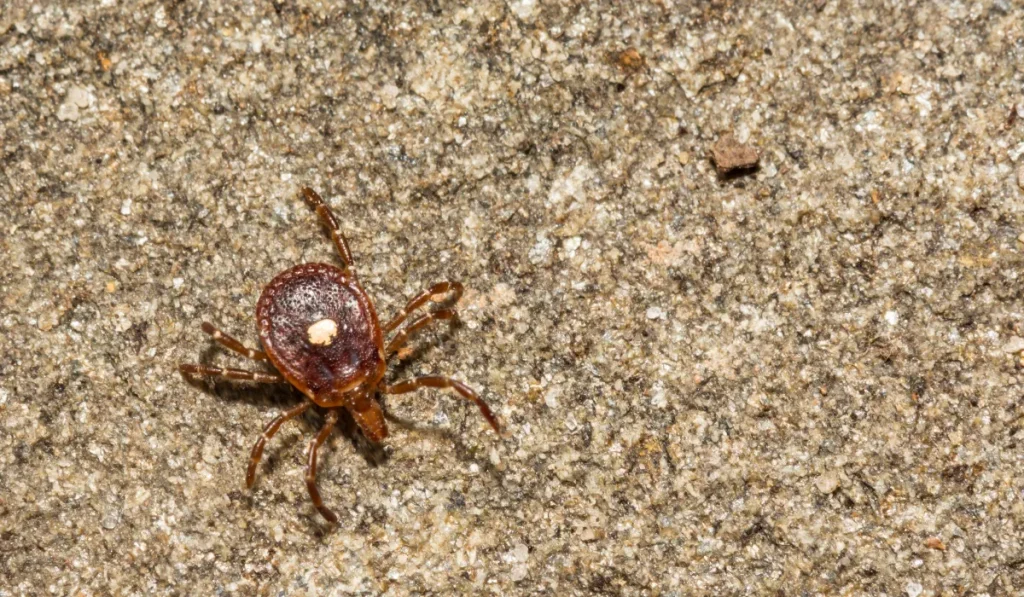
The lone star tick in Virginia is one of the ticks homeowners are especially likely to encounter, particularly in Coastal and Piedmont areas. Adult females are known for the single white spot on their backs, but younger ticks and adult males are less obvious. Because lone star tick bites are associated with ehrlichiosis, alpha-gal syndrome, and STARI, knowing what you found can help you decide what to do next. Here is how to identify this tick, where you may encounter it around a Virginia property, what to watch for after a bite, and how to reduce exposure.
What Is the Lone Star Tick in Virginia?
The lone star tick, Amblyomma americanum, occurs throughout Virginia and is generally found below about 1,600 feet in elevation. According to the Virginia Department of Health’s tick identification guidance, it is common in the state’s Coastal and Piedmont regions and often occurs in forest-floor leaf litter and partly shaded grass.
Adult females are the easiest to recognize. They are light reddish-brown with a single pale or white spot near the center of the back. Adult males have several pale markings instead of one central spot. Larvae and nymphs do not have the adult female’s distinctive white marking.
Virginia Tech reports that unfed lone star ticks measure about 5 millimeters or less, so immature stages can be easy to miss. An adult female is the tick most commonly associated with a white dot on its back, but a missing dot does not rule out a lone star tick.
How Lone Star Tick Life Stages Differ
The white spot is useful for identifying an adult female, but sex and life stage change what a lone star tick looks like.
| Life Stage | Useful Identification Clue |
| Adult female | Light reddish-brown with one pale or white spot near the center of the back |
| Adult male | Light reddish-brown with several pale markings across the back |
| Nymph | Smaller than an adult and without the female’s central white spot |
| Larva | Very small and without the adult female’s distinctive markings |
Size and markings can help narrow down the species, but they cannot tell you whether an individual tick carries a disease-causing organism.
Where the Lone Star Tick in Virginia Is Common
Lone star ticks do not require a remote forest. VDH identifies leaf litter and partly shaded grass as common habitat, so conditions around residential properties can overlap with the places these ticks use.
Wooded lawn edges, accumulated leaves, shaded landscaping, brush, ground cover, and overgrown sections near fences or outbuildings deserve attention. People and pets moving through these areas can pick up a tick without noticing it immediately.
This is especially relevant around Virginia Beach and other Coastal Virginia communities, where VDH reports that lone star ticks are common. Gardening, trimming shrubs, walking a dog near a wooded edge, or playing in a shady section of the yard can all put someone in likely tick habitat.
When Are Lone Star Ticks Active in Virginia?
Lone star ticks can be encountered across a long stretch of the warmer season, but their life stages do not all follow the same schedule. VDH describes adults as most active from late winter into early summer, while nymphs are especially active from late spring through midsummer.
Younger ticks can be more difficult to notice because of their size, so prevention should not depend on seeing a large adult female first. If you are spending time in leaf litter, shaded grass, brush, or wooded edges during active parts of the year, a tick check afterward is worthwhile.
Local weather and property conditions can affect when ticks are encountered. Instead of relying on a single start or end date for tick season, pay attention to habitat and outdoor exposure.
What Can Happen After a Lone Star Tick Bite?
Most tick encounters do not automatically result in illness. Still, lone star ticks are associated with several health concerns, and some symptoms deserve medical attention after a known bite.
Ehrlichiosis
Ehrlichiosis is a bacterial disease transmitted through infected tick bites. The Virginia Department of Health’s ehrlichiosis guidance identifies it as the second most common tick-borne disease affecting people in Virginia after Lyme disease.
VDH also reports that lone star ticks are the most common ticks to bite people in Virginia and that as many as 1 in 20, or about 5 percent, may carry an Ehrlichia agent. That percentage describes ticks that may be infected, not the percentage of bites that cause illness.
Possible symptoms include fever, headache, chills, muscle pain, nausea, vomiting, diarrhea, confusion, rash, and red eyes. Illness generally begins about one to two weeks after an infectious bite. If you become sick after a known tick exposure, tell your healthcare provider when and where the bite occurred.
Alpha-Gal Syndrome
Alpha-gal syndrome, or AGS, is an allergy associated with tick bites rather than a bacterial or viral infection. In the United States, the lone star tick is the tick most often associated with AGS.
The CDC’s alpha-gal syndrome information reports that more than 110,000 suspected U.S. cases were identified from 2010 through 2022. CDC estimates that as many as 450,000 people may have been affected, although the actual number is unknown.
People with AGS may react to foods or other products containing alpha-gal, a sugar found in most mammals. A lone star tick bite does not mean you will develop the condition. Anyone who develops symptoms that suggest an allergic reaction should seek medical guidance rather than trying to diagnose AGS from the bite alone.
STARI
Southern Tick-Associated Rash Illness, or STARI, is associated with lone star tick bites. It can cause a red, expanding rash around the bite site, sometimes along with fatigue, headache, fever, or muscle and joint pain.
The cause of STARI remains unknown. Research has also shown that STARI is not caused by Borrelia burgdorferi, the bacterium responsible for Lyme disease.
A small area of redness directly around a recent tick bite can be a local skin reaction rather than STARI. An expanding rash or a rash accompanied by other symptoms should be evaluated by a healthcare provider.
Do Lone Star Ticks Carry Lyme Disease?
Lone star ticks have not been shown to transmit Borrelia burgdorferi. In the eastern United States, blacklegged ticks are the primary vectors of Lyme disease.
The similarity between a STARI rash and the rash associated with Lyme disease can create confusion after a bite. If a rash expands or you develop other symptoms, do not try to identify the cause from the rash alone. The tick species, location of the exposure, timing, and symptoms can all matter during a medical evaluation.
What Should You Do After a Lone Star Tick Bite?
Remove an attached tick as soon as you find it. Do not wait for it to detach on its own, and do not try to force it off with petroleum jelly, nail polish, heat, or similar methods.
Use these steps:
- Grasp the tick close to the skin. Use clean, fine-tipped tweezers and hold the tick as close to the skin’s surface as possible.
- Pull with steady, even pressure. Pull the tick away from the skin without twisting or jerking it.
- Clean the bite area and your hands. Soap and water, rubbing alcohol, or hand sanitizer can be used after removal.
- Look for additional ticks. Check the rest of your body, clothing, gear, children, and pets if they were in the same area.
- Monitor your health. Contact a healthcare provider if you develop a rash, fever, or other concerning symptoms in the following days or weeks. Mention the recent tick bite and where you were likely exposed.
If you are unsure which tick species you found, take a clear photo before disposing of it when you can do so without delaying removal.
How Can You Reduce Lone Star Tick Exposure Around Your Home?
Tick prevention works best when you address the places where your household actually encounters ticks. For many Virginia homes, those areas are not the middle of an open lawn. They are the shaded edges where grass, landscaping, brush, leaves, and wooded areas meet.
Reduce Shelter Near High-Use Areas
Remove accumulated leaf litter and keep tall or dense vegetation from crowding patios, walkways, play areas, and places where pets spend time. Keep an eye on wooded borders, fence lines, thick shrubs, ground cover, and shaded spaces beneath decks or near sheds.
These steps overlap with broader flea and tick prevention around the home. The goal is not to strip a yard of landscaping. It is to reduce sheltered areas where ticks can remain close to the parts of the property your family uses most.
Check People and Pets
After spending time in grassy, brushy, or wooded areas, check your body and clothing for ticks. Small nymphs can be difficult to spot, so take a closer look rather than relying on a quick glance at exposed skin.
Check pets after outdoor time as well. Dogs and other animals can pick up ticks outside and carry them toward patios, pet beds, or indoor living spaces. Ask your veterinarian which tick-prevention option is appropriate for your pet’s species, age, weight, and health needs.
When Professional Tick Control Can Help
Repeated tick encounters around the same parts of a property can point to areas that deserve a closer inspection. Sage’s tick-control process begins by looking for places where ticks are most likely to be found, including tall grass, dense shrubs, shaded landscaping, fence lines, areas beneath decks, and places where pets spend time.
The technician also looks for conditions that may contribute to the problem, such as overgrown vegetation or moisture-prone areas. Outdoor treatment can then focus on shrubs, ground cover, lawn edges, shaded sections, areas beneath decks or sheds, and pet lounging areas rather than treating the property without regard to where ticks are likely to occur.
If ticks are suspected indoors, Sage may recommend an interior treatment focused on areas such as baseboards, carpets, rugs, and pet resting spaces. Regular tick checks, veterinarian-recommended pet prevention, yard maintenance, and targeted service each address a different part of the problem.
Reduce Lone Star Tick Activity Around Your Virginia Property
A lone star tick is easiest to identify when the tick is an adult female with its characteristic white spot. Males and immature ticks are less obvious, so habitat awareness and regular tick checks remain useful even when you do not see that familiar marking.
If ticks keep showing up around your home, Sage Pest Control can inspect the property and identify areas where focused treatment may help. Sage serves homeowners across its Virginia and North Carolina service areas, including Virginia Beach and surrounding Hampton Roads communities. To have recurring tick concerns evaluated, contact Sage Pest Control to request service.
