
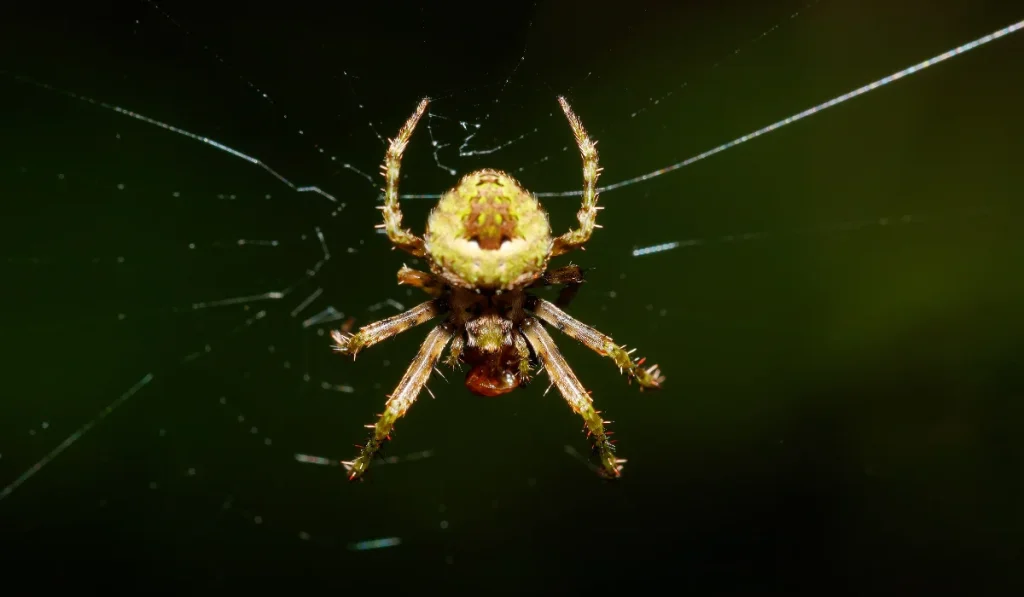
A large, circular web stretched between porch columns or across a walkway can seem to appear overnight. In many cases, it belongs to an orb weaver spider that has spent spring and summer growing. By fall, mature orb weaver spiders and their webs become much easier to notice around homes in North Carolina and Virginia.
These spiders are not suddenly arriving in large numbers. Many have been nearby for months, building smaller webs among leaves, shrubs, and other sheltered areas. As females mature, they create larger webs across open spaces where flying insects are likely to pass.
Most outdoor orb weavers pose little risk to people or pets. Their webs may still become a nuisance when they block a doorway, patio, play area, or frequently used path. Understanding why orb weaver spiders build their biggest webs in fall can help you decide when to leave a web alone, remove it, or address the conditions drawing spiders closer to your home.
Why Orb Weaver Spiders Build Bigger Webs in Fall
Many orb weaver spiders begin life much earlier in the year, but homeowners often overlook them until late summer or fall. Young spiders are small, and their early webs may sit deep inside vegetation or in quiet corners of the yard. As the spiders grow, their webs become wider, stronger, and more visible.
The University of Illinois’s explanation of fall orb weavers notes that many orb weavers appear in spring but attract more attention as the spiders and their webs increase in size. Mature females are the spiders most often seen sitting near the center of a web. Males may leave their own webs to search for mates.
Fall conditions also make orb weaver spider webs easier to spot. Morning dew collects on the silk, while lower sunlight highlights strands that were harder to see during summer. A web stretched between porch posts, tree branches, or shrubs will also stand out more than one hidden inside dense foliage.
This seasonal pattern varies by species and local weather. Still, many familiar orb-weaving species found around Charlotte, Greensboro, Raleigh, and Virginia Beach reach their most noticeable size during late summer and fall.
How an Orb Weaver Spider Web Works
An orb weaver spider web has a circular shape that resembles a wheel. Strong framing lines attach it to nearby plants, railings, siding, or other supports. Threads extend from the center like spokes, while a spiral of silk circles the web.
Different Threads Perform Different Jobs
The radial spokes and structural lines are generally nonsticky, which allows the spider to move across its web. The spiral capture threads contain sticky material that holds flying insects long enough for the spider to reach them.
When an insect strikes the web, its movement sends vibrations through the silk. The spider senses those vibrations and moves toward the trapped prey. This hunting method lets orb weavers capture insects without chasing them across the yard.
Wind, rain, and struggling prey can damage the web. Orb weavers often repair torn sections or replace much of the structure. A web that returns to the same porch opening each evening may be newly built rather than the same web left untouched.
The White Zigzag Helps With Identification
Yellow garden spiders often create a thick white zigzag through the center of their webs. This structure is called a stabilimentum. Researchers have proposed several possible functions for it, including attracting prey or making the web easier for birds to see, but its exact purpose remains unsettled.
The zigzag does not indicate that the spider is aggressive or dangerous. It is simply one of the most recognizable features of the yellow garden spider, a common orb weaver in the Southeast.
Common Orb Weaver Spiders in North Carolina and Virginia
North Carolina and Virginia support several native orb-weaving spiders. Their colors and markings vary, so the shape and placement of the web often provide the first useful identification clue.
Yellow Garden Spiders
The yellow garden spider is also known as the black and yellow garden spider, writing spider, or zipper spider. Mature females have black abdomens marked with bright yellow patches and often rest head-down near the middle of the web.
According to the NC State profile of the black and yellow garden spider, its web contains sticky spiral threads supported by nonsticky spokes. The spider detects struggling prey through vibrations and may rebuild sections of the web as needed.
Yellow garden spiders often place their webs among tall plants, shrubs, sunny garden edges, and vegetation near wooded areas. They may also build beside decks or porches when those structures offer secure attachment points and steady insect activity.
Marbled Orbweavers
Marbled orbweavers have rounded abdomens with patterns that may include orange, white, yellow, brown, or black. They often live in wooded yards, shaded landscapes, and moist vegetation.
These spiders may hide in a curled leaf or sheltered retreat near the edge of the web during the day. A signal line connects the retreat to the web, allowing the spider to detect movement when an insect becomes trapped. Adults become especially noticeable from midsummer into fall.
Native Orb Weavers and Joro Spiders
Large webs sometimes lead homeowners to assume they have found a Joro spider. Joro spiders have spread into parts of the Southeast, including confirmed areas of western North Carolina, but not every large yellow or patterned spider is a Joro.
Native yellow garden spiders have long been common throughout North Carolina and Virginia. Accurate identification should consider the spider’s markings, body shape, web structure, and location rather than web size alone.
Are Orb Weaver Spiders Dangerous?
Orb weaver spiders are generally not aggressive toward people. They depend on their webs to capture insects and usually remain still, retreat, or drop away when disturbed.
Orb weavers have venom that helps them subdue small prey, but common garden species are not considered medically important. Bites are uncommon and usually occur when someone handles a spider, presses it against the skin, or reaches into vegetation without seeing it.
Leaving the spider undisturbed is the easiest way to avoid contact. Wearing gloves while trimming shrubs, moving planters, or clearing dense vegetation can also reduce the chance of accidentally touching one.
A circular orb web should not be confused with the irregular, tangled web associated with black widow spiders. Identification matters when a spider appears in a garage, crawl space, storage area, or another protected location where several species may live.
Why Orb Weaver Webs Appear Near Porches and Doors
Orb weavers need firm anchor points and access to flying insects. Homes often provide both. Porch posts, window frames, eaves, railings, fences, and nearby shrubs create convenient supports for large webs.
Exterior lights may draw moths and other nighttime insects toward the structure. An orb weaver that builds near a light can intercept prey as it moves through the area. The spider may continue rebuilding in the same location as long as it remains a productive hunting spot.
One outdoor orb weaver does not mean your home has an infestation. The spider may simply have selected a useful location. Repeated webs around several doors and windows, however, may indicate that insect activity near the home is supporting more spiders.
Indoor activity deserves closer attention. Spiders may enter through gaps around doors, windows, vents, foundations, and utility lines. They are also more likely to remain in areas with insect prey, moisture, and sheltered hiding places.
When to Leave, Remove, or Address an Orb Weaver Web
The right response depends on where the web is located, how often the area is used, and whether spider activity keeps returning.
| Situation | Recommended Response | Reason |
|---|---|---|
| Web in a garden bed or distant shrub | Leave it in place | The spider is away from foot traffic and helps capture insects |
| Web across a doorway, walkway, or seating area | Remove the web carefully | The location creates repeated contact with people |
| Web returns near the same light or porch opening | Adjust lighting and remove anchor points | Insects and reliable supports may be attracting the spider |
| Several spiders appear indoors | Request an inspection | Indoor activity may point to entry gaps, moisture, or insect prey |
| The species cannot be identified | Avoid handling it | A professional can confirm the species and recommend the proper response |
Leave Low-Traffic Garden Webs Alone
A web in a flower bed, distant shrub, or quiet corner of the yard can usually remain. Orb weavers capture moths, flies, and other insects, making them useful predators in outdoor spaces.
They do not chew wood or damage siding. In many cases, the web will disappear as colder weather reduces spider activity and the seasonal life cycle reaches its end.
Remove Webs From High-Use Areas
A web stretched across a doorway, walkway, children’s play area, or frequently used patio may need to be removed. Use a long-handled broom or similar tool so you do not have to touch the spider directly.
Clearing the same attachment points may encourage the spider to build elsewhere. Reducing nearby exterior lighting or changing when lights are used may also lower the number of insects gathering near doors and windows.
Web removal alone may not prevent new activity. When insects remain concentrated around the structure, another spider may use the same opening.
Address Activity That Keeps Returning
Professional spider control may be appropriate when webs repeatedly cover high-use areas, spiders appear throughout the home, or you cannot identify the species with confidence. An inspection can help determine whether lighting, insect prey, moisture, dense vegetation, or entry gaps are contributing to the problem.
Effective spider management focuses on more than removing visible webs. Trimming plants away from siding, sealing openings, correcting moisture problems, and reducing insects near doors and windows can provide better long-term results.
Managing Fall Orb Weaver Spiders Around Your Home
Large orb weaver spider webs are a normal fall sight across North Carolina and coastal Virginia. In many cases, the spiders have lived nearby throughout the warmer months and became noticeable only after reaching maturity.
A garden web away from foot traffic can usually stay in place. Webs across entrances, patios, and indoor spaces may require removal and a closer look at the conditions attracting spiders and insects.
Sage Pest Control includes spiders in its standard pest control coverage and uses targeted service methods based on the activity found around your property. When recurring webs or indoor spiders become difficult to manage, contact Sage Pest Control to schedule an inspection and discuss the right approach for your home.
