
North Carolina is home to more than 50 spider species, and most of them will never cause you a problem. Two, however, are medically significant: the black widow and the brown recluse. Knowing which spiders you’re dealing with determines whether you need to act fast or simply show the spider back outside.
- Most NC spiders pose no medical risk to humans and actively reduce insect populations around your home.
- Two species require immediate medical attention if they bite: the black widow and the brown recluse.
- Spider activity indoors usually signals a larger pest problem. Where spiders hunt, insects are present.
- Professional treatment targets both spiders and the prey insects that attract them.
- Sage Pest Control covers spiders under its standard general pest control plan, with free re-services between scheduled visits.
Common Spiders in North Carolina Homes and Yards
Two North Carolina spiders are worth taking seriously and the rest are mostly working in your favor. We’ve lined them up by medical risk first, then by how often you’ll actually run into them. Check the sting badge before you panic.
/01
Black widow
Stings
/02
Brown recluse
Stings
/03
Yellow sac spider
No sting
/04
Wolf spider
No sting
/05
Orb weaver
No sting
/06
Green lynx spider
No sting
/07
Goldenrod crab spider
No sting
/08
Trapdoor spider
No sting
If a spider does not have a red hourglass or a violin marking, it almost certainly belongs in the catch-and-release bucket. Both medically significant species deserve a professional inspection.
Most spiders you find in North Carolina are nuisance pests, not medical threats. They build webs in corners, hide in cluttered areas, and hunt insects around your foundation, garden, and yard. Here are the species you’re most likely to encounter.
Wolf Spiders in North Carolina
Wolf spiders are among the most frequently spotted indoor species in NC homes. They are large, dark brown to gray, and move fast across floors. Unlike most spiders, wolf spiders don’t spin webs to catch prey. They hunt on the ground, pursuing insects directly. Females carry their egg sacs attached to their abdomen, which makes them easy to identify. Wolf spiders prefer dark, undisturbed areas such as basements, garages, and the spaces under furniture. Their bite can cause pain and redness, but is not medically dangerous to healthy adults.
Orb Weavers in North Carolina
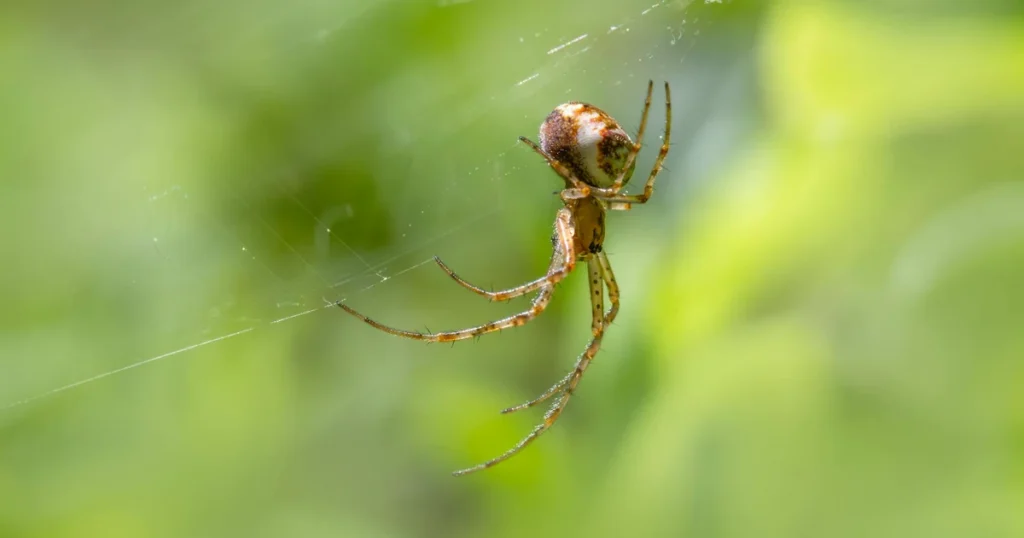
Orb weavers are the large, dramatic web-spinners you find stretched between shrubs, fence posts, and porch overhangs. Their webs are circular and precise, often spanning two feet or more. These spiders have large, rounded abdomens with yellow, orange, or brown coloration and distinctive markings that vary by species. Orb weavers spin webs at dusk and typically rest at the center by morning. They are almost entirely harmless to humans and do significant work controlling insect populations around your property.
Yellow Sac Spider in North Carolina
Yellow sac spiders are small, pale yellow to tan spiders that build silken retreats in corners, along wall-ceiling joints, and behind picture frames. They are active hunters and do not rely on webs to capture prey. Yellow sac spiders are more likely to bite humans than most other species, usually when trapped against skin inside clothing or bedding. Their bite produces a sharp, burning pain and can leave a red spot or minor skin irritation, but serious complications are rare for most people.
Trapdoor Spiders in North Carolina
Trapdoor spiders live underground and are rarely seen inside homes. They construct silk-lined burrows capped with a hinged door made from soil and debris. When an insect passes overhead, the spider bursts out to capture prey and retreats. These spiders prefer wooded areas and sandy soil and tend to stay outdoors. Finding one inside is unusual and almost always accidental.
Green Lynx Spider in North Carolina
The green lynx spider is a bright green, large-bodied hunter found on flowering plants and shrubs throughout North Carolina. It does not spin webs. Instead, it ambushes insects on plant surfaces, relying on its green coloration to blend into foliage. Females guard their egg sacs aggressively and will strike if cornered. Their venom affects insects, not humans, and a bite produces only mild, localized pain.
Goldenrod Crab Spider in North Carolina
Goldenrod crab spiders are small, crab-shaped hunters that can change color between white and yellow to match the flowers they occupy. They wait motionless on flowers for visiting insects, including bees and beetles, then strike. Their legs extend sideways in a crab-like posture, which separates them from other small spiders. They pose no meaningful risk to humans.
Other Spiders Commonly Found Indoors in North Carolina
Several other spiders move between outdoor and indoor environments depending on the season. Cellar spiders, often called “daddy long-legs,” build loose, tangled webs in corners and prefer dark, humid spaces. American house spiders spin cobwebs in undisturbed corners and window frames. Both are true synanthropes, meaning they thrive inside human structures. Neither poses any risk to humans.
Venomous Spiders in North Carolina to Know
Two venomous species in NC require medical attention if they bite: the black widow and the brown recluse. Both are present in the state, though their distribution and behavior differ. Knowing how to identify them reduces the risk of accidental contact.
Black Widow Spiders in North Carolina
The black widow is the most recognizable venomous spider in North Carolina. Females are shiny black with a red hourglass marking on the underside of their abdomen. Males are smaller, lighter in color, and not medically significant. Black widows prefer dark, undisturbed spaces: woodpiles, crawlspaces, utility boxes, and the undersides of outdoor furniture. Research published in a clinical review of black widow toxicology confirms that females are the medically important sex, producing venom that triggers a syndrome called latrodectism, which includes severe muscle pain, cramping, sweating, and nausea. According to a case series on black widow envenomation published in The Permanente Journal, approximately 2,500 black widow bites are reported to U.S. poison control centers annually. Seek immediate medical attention for any suspected black widow bite.
Brown Recluse Spiders in North Carolina
The brown recluse is the other medically significant spider found in North Carolina, though its presence here is less widespread than in states further west. It is a medium-sized, dark brown spider with a distinctive violin-shaped marking on its back, behind the eyes. Brown recluses prefer undisturbed areas, dark places, and cluttered storage spaces such as closets, boxes, and attics. A study tracking brown recluse distribution published in PLoS ONE found that North Carolina sits at the eastern edge of the brown recluse’s established range, with continued geographic expansion possible. Brown recluse bites cause cutaneous loxoscelism, a skin reaction that can progress from a red spot to tissue damage if left untreated. In severe cases, systemic effects including haemolysis and renal involvement have been documented. If you suspect a brown recluse bite, seek medical attention promptly.
How to Tell Venomous North Carolina Spiders from Others
Most venomous spider bites happen because someone reaches into a dark space without checking first. Woodpiles, storage boxes, and rarely disturbed corners are the highest-risk locations. Two identification points cut through confusion: black widows have a red hourglass on a shiny black abdomen, and brown recluses have a violin-shaped marking on the body behind their eyes. If you cannot confirm the species, treat the bite as potentially significant and contact a medical provider.
What Attracts Spiders in North Carolina to Your Home
Spiders follow their food source, and their food source is insects. A home with a significant spider population almost always has an underlying insect problem. Gaps in the foundation, poorly sealed windows, outdoor lighting that draws moths and beetles at night, and cluttered areas that create undisturbed harborage all contribute to spider activity indoors.
Moisture and dark, undisturbed spaces are the two conditions spiders prefer most. Basements, crawlspaces, and garages provide both. Seasonal changes also drive spiders indoors. As temperatures drop in fall, spiders that spend summer outdoors move toward warmth, entering through gaps around doors, utility penetrations, and vents. Reducing entry points and eliminating the insects that attract spiders are the two most effective long-term controls.
Spider Control for North Carolina Homes: DIY vs. Professional
Vacuuming webs, sealing entry points, and reducing outdoor lighting near doors remove the conditions spiders need to establish themselves inside your home. These steps work for nuisance species in low numbers. They do not resolve an established infestation or address the underlying insect activity driving spider presence.
What Professional Spider Treatment Covers in North Carolina
Professional pest control targets spiders at the source: the insects they feed on. Sage Pest Control’s general pest control plan includes a full interior and exterior inspection, exterior perimeter treatment, spot treatment in accessible interior areas, and de-webbing and nest removal. Because the plan covers spiders alongside other common household pests including beetles, crickets, and ants, it addresses both the spiders and the prey insects that attract them. Pricing starts at $299 for the initial visit, then $49 per month for homes up to 5,000 square feet.
When to Call Pest Control for Spiders in North Carolina Homes
Call a professional if you find black widows or brown recluses anywhere on your property. Both species can be present in numbers higher than the single spider you spotted. An inspection confirms whether the population is isolated or established. You should also call if spider activity is increasing despite consistent cleaning and sealing, or if webs reappear quickly after removal. That pattern indicates the prey insect population driving spider activity is larger than surface cleaning can address. Sage offers same-day service, with a sub-one-minute response by text, and free re-services between scheduled visits if activity returns.
Protecting Your North Carolina Home from Spiders Year-Round
Consistent prevention outperforms reactive treatment. A tri-annual treatment schedule addresses the seasonal peaks when spider activity rises, rotating products to prevent resistance. Between visits, the steps below reduce the conditions that attract spiders to your home.
- Seal gaps around doors, windows, and utility penetrations with caulk or weatherstripping.
- Move woodpiles, leaf piles, and mulch at least 12 inches away from the foundation.
- Replace white outdoor bulbs with yellow bulbs, which attract fewer insects and reduce spider prey near entry points.
- Declutter basements, garages, and closets. Spiders hide and lay egg sacs in undisturbed areas.
- Inspect boxes and stored items before reaching in, particularly in areas that sit undisturbed for long periods.
- Fix leaky pipes and ensure crawlspace ventilation is working. Moisture creates habitat for the insects spiders hunt.
Frequently Asked Questions
Which NC spiders are venomous?
Two species in North Carolina are medically significant: the black widow and the brown recluse. Black widows are identified by the red hourglass on the underside of the female’s abdomen. Brown recluses have a violin-shaped marking on their back. Both require medical attention if a bite occurs. All other common house spiders in NC pose little to no risk to healthy adults.
Why do I suddenly have so many spiders in my home?
A spike in spider activity almost always reflects an increase in the insects they feed on. Spiders follow their prey indoors through gaps in the foundation, windows, and doors. Seasonal changes in fall push spiders inside as temperatures drop. If spider numbers are increasing, the underlying insect population is the first thing to address. A professional inspection identifies both the spiders and the prey activity driving them indoors.
Does Sage Pest Control treat spiders in North Carolina?
Yes. Spiders are covered under Sage’s standard general pest control plan, which includes exterior perimeter treatment, interior spot treatment as needed, and de-webbing and nest removal. The plan also covers the insects that attract spiders, addressing the root cause of most infestations. Free re-services are included between scheduled visits if activity returns.
How do I keep brown recluse spiders out of my home?
Brown recluses prefer undisturbed, dark areas. Reduce their harborage by decluttering closets, storage rooms, and garages. Seal gaps along baseboards, around pipes, and in the foundation. Use caution when reaching into stored boxes or woodpiles. If you find a brown recluse, contact a pest control professional to inspect for an established population rather than assuming the sighting is isolated.
