
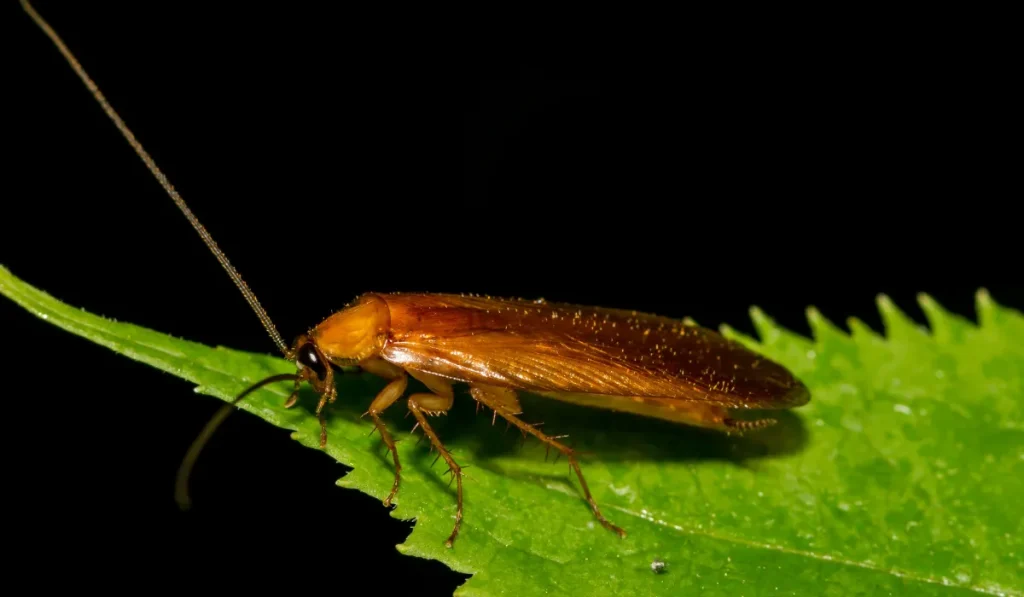
Finding a Virginia wood cockroach indoors usually means an outdoor insect found its way into the house, not that a colony is developing inside. These wood roaches normally live in moist outdoor areas with leaf litter, bark, rotting wood, and other decaying plant material. Knowing what they look like, why they approach homes, and how they differ from German and American cockroaches can help you respond to the sighting without treating every roach as the same problem.
What Is a Virginia Wood Cockroach?
The Virginia wood cockroach is Parcoblatta virginica. The Integrated Taxonomic Information System entry for Parcoblatta virginica recognizes it as a valid species, lists “Virginia wood cockroach” as its common name, and identifies it as native to the continental United States.
“Wood cockroach” has a broader meaning. Several species in the genus Parcoblatta are collectively called wood cockroaches or wood roaches, and they resemble one another closely. Virginia Cooperative Extension notes that distinguishing individual Parcoblatta species can be difficult, so a homeowner should not rely on color alone to identify P. virginica.
What these wood roaches have in common is their outdoor lifestyle. They occupy moist places where decaying plant material provides both food and humidity, including leaf litter, rotting logs, loose bark, wet mulch, and firewood piles.
How to Identify a Virginia Wood Cockroach
Wood cockroaches have flattened, oval bodies, long antennae, and spiny legs. Virginia Cooperative Extension describes their color as ranging from light reddish brown to dark brown. Those features are useful, but they overlap with other cockroach species.
Where the insect was found can be just as informative as its appearance. A brown roach beneath bark or beside a firewood pile fits wood-roach behavior much better than a small roach repeatedly appearing around kitchen cabinets.
Adult Males
Adult male wood cockroaches have wings that cover the abdomen and can fly. Virginia Cooperative Extension also reports that males may be attracted to bright porch lights at night.
That behavior can put them close to doors, windows, and garages even though their normal habitat is outdoors. Winged cockroaches do not all behave the same way, so how cockroach wings and flight vary by species provides useful context when a roach takes flight near the house.
Adult Females
Female wood cockroaches look noticeably different from males. Virginia Cooperative Extension describes adult females as having short wings or small wing pads and being flightless. Their bodies are also generally darker and shinier than those of males.
Those differences are one reason visual identification can become difficult. Two wood roaches from the same genus may look quite different depending on sex and species.
Nymphs
Wood cockroach nymphs are wingless and resemble smaller versions of adult females. They develop outdoors in protected areas such as loose bark and other moist shelter.
A small cockroach found indoors should not automatically be labeled a wood-roach nymph. German and other household cockroaches also have nymphal stages, so repeated sightings of small roaches in kitchens, bathrooms, or other interior harborages call for closer identification.
Virginia Wood Cockroach vs. Common Household Roaches
The most useful difference between a wood roach and a household pest is where each species can live and reproduce. Virginia wood cockroaches and related Parcoblatta species are outdoor insects. German cockroaches, by contrast, are well adapted to living inside buildings.
German cockroaches are small, tan to light brown insects with two dark parallel bands on the pronotum behind the head. They commonly occupy warm areas near food and moisture, including kitchens and bathrooms. Because German cockroaches can establish populations indoors, repeated activity from this species warrants a different response from an occasional wood roach.
American cockroaches are much larger than German cockroaches and typically reddish brown. Virginia Cooperative Extension describes them as having a light-colored pronotum behind the head with two darker reddish areas. They can occupy buildings, especially damp structural areas.
| Feature | Wood Cockroaches | German Cockroach | American Cockroach |
| Typical habitat | Leaf litter, rotting wood, bark, firewood, wet mulch, and other outdoor sites | Warm indoor areas near food and moisture | Structures and other moist, sheltered areas |
| Useful identification clue | Males can fly and may approach lights | Two dark parallel bands behind the head | Large body and a pale pronotum with darker reddish markings |
| Establishes in normal living spaces | No | Yes | Can occupy suitable structures |
| What an indoor sighting suggests | Often an accidental outdoor visitor | Possible indoor population | Check damp harborages and access points |
Location and frequency help put the sighting into context. One wood roach beside a porch door is a different situation from cockroaches of several sizes appearing repeatedly around cabinets, appliances, or plumbing.
Where Virginia Wood Cockroaches Live
According to Virginia Cooperative Extension’s wood cockroach guidance, wood roaches are common throughout Virginia and the United States. Their usual habitat includes leaf litter and rotting wood, where they find both decaying organic matter and the moisture they need.
They may also shelter in wet mulch, leaf-clogged gutters, beneath loose bark, in firewood, under loose wood siding, and in similar damp locations. Garages, basements, woodsheds, and decks beneath tree canopies can occasionally provide suitable conditions as well.
Wooded Properties Can See More Activity
Virginia Cooperative Extension reports that homes in heavily wooded settings may have more wood cockroaches than houses located away from wooded areas. That does not mean the insects are infesting those homes. It means suitable habitat exists close enough for wandering or flying adults to reach the structure.
For prevention, focus on the area immediately around the house. Damp debris, firewood, leaves, and rotting wood beside entry points give wood roaches shelter close to doors, windows, and foundation openings.
Why Virginia Wood Cockroaches Come Inside
Wood cockroaches sometimes wander indoors, but normal living spaces do not provide the humidity they need. Entry is usually accidental.
Outdoor Lights Attract Flying Males
Adult males may fly toward porch lights at night. A light positioned beside a frequently used door or window can therefore bring males directly to the edge of the house.
If most sightings involve flying roaches around one lit entrance, turning off unnecessary exterior lights can reduce that attraction. Virginia Cooperative Extension also recommends yellow outdoor lights because they are less attractive to nocturnal insects than white lights.
Firewood Can Carry Them Indoors
Wood roaches naturally shelter in and around decaying wood. They can therefore be carried indoors with firewood.
Virginia Cooperative Extension recommends keeping firewood away from the house or porch and knocking or shaking logs before bringing them inside. Penn State Extension similarly recommends bringing in only the amount of firewood that will be used within a short period.
Gaps Provide Entry Routes
Wood roaches can also enter around doors, windows, foundation cracks, and utility penetrations. Damaged screens and worn door sweeps make those routes easier to use.
If sightings keep occurring in the same area, inspect the nearby exterior rather than assuming the insects are coming from somewhere inside the walls.
Do Virginia Wood Cockroaches Infest Homes?
Wood cockroaches do not establish breeding populations in normal living spaces. Virginia Cooperative Extension states that Parcoblatta wood roaches are unable to survive or reproduce indoors because houses have lower humidity than their outdoor habitat requires.
Penn State Extension’s wood cockroach guidance reaches the same practical conclusion. Wood roaches that enter homes dehydrate and die quickly, often within a few days, and do not reproduce indoors.
That makes an isolated wood-roach sighting primarily an exclusion issue. Repeated cockroach activity still deserves attention, especially when insects are concentrated around food, plumbing, appliances, or other indoor harborages. In those situations, the first question is whether the insects have been identified correctly.
Understanding the Wood Cockroach Life Cycle
Wood cockroaches have an incomplete life cycle with egg, nymph, and adult stages. Females produce eggs inside a protective capsule and may carry the capsule for a period before depositing it.
The wingless nymphs develop in protected outdoor areas. Virginia Cooperative Extension reports that they can overwinter under loose bark and molt into adults the following summer. Wood cockroaches generally require about a year to complete the life cycle, although development can take longer.
This outdoor development cycle helps explain why finding a wood roach inside is so different from finding an indoor-breeding cockroach species. A house is not the normal site where a wood-roach population progresses from eggs to nymphs to adults.
How to Keep Virginia Wood Cockroaches Out
Prevention starts outside because that is where wood roaches live. The most useful steps limit access to the house and reduce damp shelter immediately around the structure.
Seal Common Entry Points
Check the parts of the house where insects can move from outdoors to indoors. Virginia Cooperative Extension recommends:
- Keeping window and door screens tight and in good condition
- Maintaining door sweeps and window seals
- Sealing cracks around doors and windows
- Closing gaps in the foundation
- Sealing openings where wiring and pipes enter the house
These repairs can also reduce entry by other outdoor pests, so they are useful even when wood-roach sightings are occasional.
Reduce Shelter Near the Foundation
Remove unnecessary leaf litter, dead stumps, rotten wood, and accumulated debris close to the house. Keep gutters and roofs clear of leaves, and avoid allowing mulch or leaf litter to build up beside basement doors, windows, or the foundation.
Firewood should not be stacked against the house or stored on the front porch. Moving it away from the structure creates more distance between a common wood-roach harborage and the doors or windows they can enter through.
Review Exterior Lighting
When adult males repeatedly gather around one porch or garage light, reducing unnecessary nighttime lighting can address the attraction directly.
Virginia Cooperative Extension recommends turning outdoor lights off when they are not needed or using yellow lights that are less attractive to nocturnal insects than white lights.
When Cockroach Activity Needs Professional Identification
A single wood roach near an exterior doorway can often be handled by removing the insect and correcting the nearby entry point or harborage. Ongoing activity deserves a closer look when the species is uncertain or the pattern does not match an occasional outdoor visitor.
Cockroaches repeatedly appearing around cabinets, appliances, kitchens, bathrooms, or plumbing may be a different species with very different indoor habits. Finding cockroaches of several sizes indoors also gives an inspector more reason to determine exactly which species is present rather than assuming they are wood roaches.
Sage Pest Control starts cockroach service by identifying the species and locating the source of activity. That species-first approach allows the technician to focus on relevant harborages, moisture conditions, entry points, or interior areas instead of treating every cockroach sighting the same way.
Keeping Virginia Wood Cockroaches Outside
Virginia wood cockroaches belong in damp outdoor habitat, where wood, leaves, bark, and other decaying plant material provide food and moisture. When one appears indoors, look first at the circumstances around the sighting: nearby firewood, exterior lights, damaged screens, worn door sweeps, or organic debris close to the structure.
When cockroaches continue appearing or the species is unclear, Sage Pest Control can identify the cockroach and trace where the activity is coming from. Sage serves communities across its North Carolina and Virginia service areas, and homeowners who need an inspection can contact Sage Pest Control to schedule service.
