
Wasps on decks and patios can create costly problems when early signs are missed. Learn what to look for, why it matters, and when to call Sage Pest Control.
Key Takeaways About Wasps On Deck
- Wasps can build nests in sheltered areas around your deck and home, and early awareness helps you decide whether a nest needs attention.
- Not every wasp nest near your deck requires treatment, but nests in high-traffic spots where stings are likely may need to be addressed proactively.
- Different wasp types nest in different ways, so knowing what you’re looking at guides the right response.
- Routine checks of your deck, eaves, and nearby ground-level areas can help you spot nest activity before it becomes a concern.
How to Identify Wasps On Deck
If you have noticed wasps flying around your deck, the first step is figuring out what you are dealing with. Two of the most common types you may encounter near outdoor living spaces are yellowjackets and paper wasps. Telling them apart comes down to watching how they move and, more importantly, looking at their nests.
How to Tell Wasp Types Apart
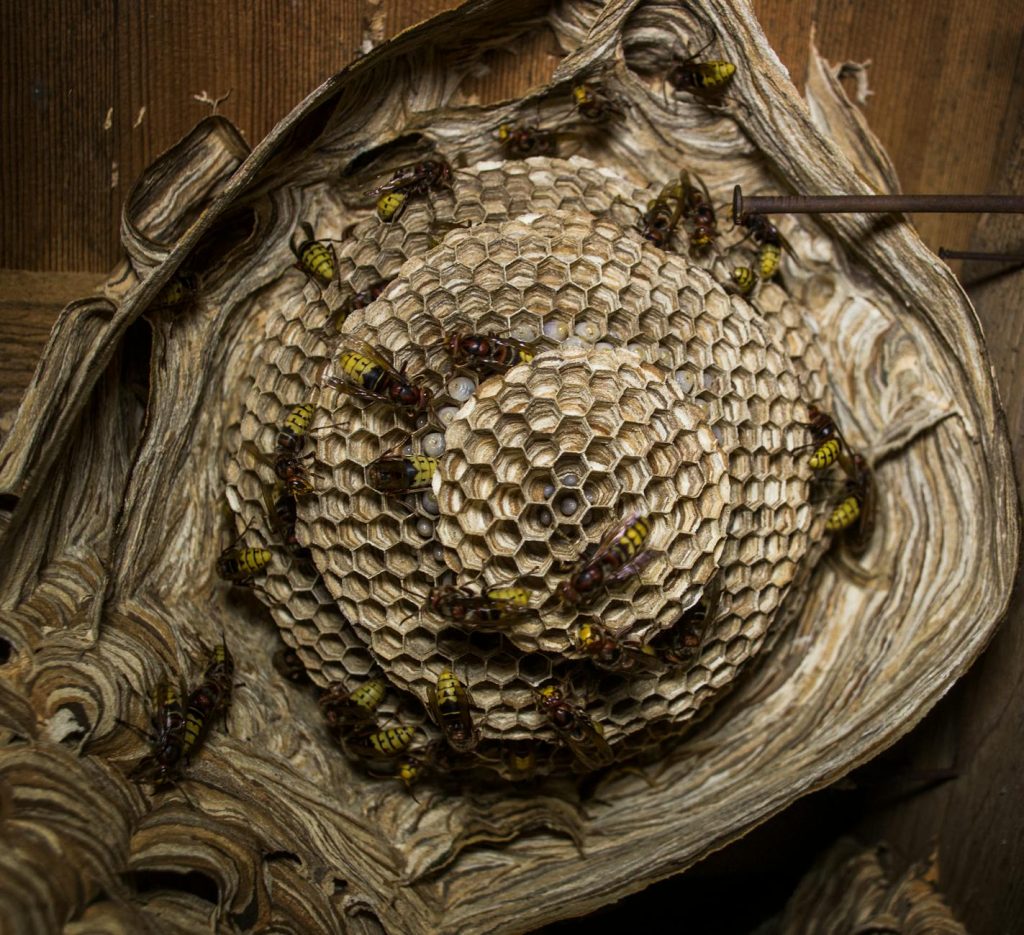
The quickest way to distinguish between yellowjackets and paper wasps is by examining the wasp nest itself. According to Oregon State University Solve Pest Problems, paper wasp nests are papery and look like honeycombs, with open cells visible from below. Yellowjackets, on the other hand, enter and leave their nest through a single small hole, keeping the interior hidden from view.
Because the nest structure differs so much between these two types, a close look at the nest can tell you which wasp has moved onto your deck before you decide on the next steps.
How to Spot Wasp Activity Inside Your Home
Wasps that build nests near your deck can sometimes find their way indoors. You may notice a single wasp buzzing around windows or doors that open onto the deck. Repeated sightings of wasps inside, especially near the same entry point, can suggest a nest is located close by on the exterior.
Where Wasp Activity Shows Up Around Homes
Paper wasps tend to build nests in sheltered spots, so the underside of a deck railing, a ceiling joist, or an overhang can attract them. Look for the papery, honeycomb-shaped nest hanging in a protected area.
Yellowjackets build nests below ground in old rodent burrows or similar cavities, as the University of Minnesota Extension notes. If your deck sits close to the ground or borders a garden bed, you may spot yellowjackets disappearing into a small hole in the soil nearby.
Exterior Entry Points Wasps Use
Watch for wasps repeatedly flying to and from a specific gap or opening. Yellowjackets use a single small hole to access their nest, so a steady stream of wasps funneling into one spot is a strong indicator. Paper wasps may fly toward crevices under deck boards, eaves, or other sheltered structures where their honeycomb-style nests can hang undisturbed.
Tracking these flight paths during daylight hours can help you locate the wasp nest and understand exactly where the activity is centered around your deck.
Why Wasp Problems Develop on Decks
Decks offer wasps a combination of overhead shelter and proximity to everyday activity, which is exactly why nests in these spots tend to cause trouble. Paper wasp nests rarely exceed the size of an outstretched hand, and populations can vary between 15 and 200 individuals. That modest footprint makes it easy to overlook a nest until you’re already sharing the space with it.
Outdoor Nesting Areas for Wasps
Wasps look for protected spots around the home where a nest can hang undisturbed. Deck railings, joist undersides, and eave overhangs near a deck all fit the bill. According to Mississippi State University Extension, paper wasp nests last only one season regardless of species, so new colonies start fresh each year and may pick the same convenient structure your deck provides.
Red wasp nests are similar to Guinea wasp nests but larger, so they can be more noticeable when attached to deck framing or pergola beams. Yellowjacket nests may also appear in the area around a deck, adding another species to watch for.
Food and Shelter That Attract Wasps
A deck creates a sheltered microenvironment that appeals to nest-building wasps. The underside of railings and roof structures gives wasps a dry anchor point for comb construction. Because nests only last a single season, wasps actively scout for fresh building sites each spring, and a well-shaded deck can draw them back year after year.
How Wasps Move Around Homes
Wasps that start on a deck often fly to other parts of the home as well. Staying alert for wasp nests around the home is important because secondary nests can appear under soffits, inside grill covers, or along fence lines near the original deck nest. Paper wasp nests that end up in the wrong place, where they are likely to cause stings, should be addressed proactively.
Trails and Entry Points Wasps Use
Wasps follow consistent flight paths between their nest and surrounding areas. On a deck, that usually means repeated low-level flights across seating zones and doorways. Paper wasp nests should not require treatment unless they are near people, but a deck is, by definition, a high-traffic area. When the nest sits within arm’s reach of where you sit or walk, the risk of an accidental sting goes up quickly.
Risks From Wasps On Deck
A deck is one of the places where you and wasps are most likely to cross paths. Understanding the risks helps you decide how seriously to take the activity you’re seeing and what your next step should be.
Health Risks Linked to Wasps
Social wasps and bees sting to defend their colony, and some yellow jacket species can become aggressive during late summer and fall and may sting unprovoked. That seasonal shift means a deck you enjoyed all spring can feel more hazardous by August or September.
Yellow jackets, paper wasps, and bumble bees can sting more than once because they pull out their stinger without injuring themselves. Unlike a honeybee sting, no stinger is left in your skin. Multiple stings from a single insect raise the stakes quickly, especially near a high-traffic outdoor area like a deck.
According to the University of Georgia pest guide, a mistake during yellowjacket nest treatment can result in hospitalization or death from excessive stings. That risk alone is a reason to take wasp activity on or near your deck seriously rather than attempting a DIY fix.
Property Damage From Wasp Activity
Certain wasps build nests in crawl spaces, attics, and walls. According to Oregon State University Solve Pest Problems, they use dry wood, water-damaged wood, and insulation as nest-building materials. A deck with aging boards or moisture-worn framing can supply exactly those resources, giving wasps a reason to settle in nearby structures.
Bumble bees nest in the ground, and when their nest is threatened they can become aggressive and may sting. Ground-level nests under or beside a deck create a conflict zone every time you step outside or mow nearby.
Food Areas and Wasp Activity
Decks often serve as dining and grilling spaces, which puts you in close quarters with foraging wasps. Social wasps defend their colony, and the proximity of a nest to your food area raises the chance of a defensive sting when you unknowingly get too close.
When to Look Closer at Wasp Activity
Wasps flying from a hole in the ground or a building indicate a probable nest. If you notice a steady flight path to or from a gap in your deck boards, a nearby wall void, or a ground opening under the deck, a colony is likely established close by.
Late summer and fall deserve extra attention. Some yellow jacket species may sting unprovoked during that period, so even casual deck use carries more risk. Watching for these patterns early gives you a clearer picture of what you’re dealing with before activity intensifies.
Professional Pest Control for Wasps On Deck
When wasps set up shop on your deck, the space you rely on for relaxing and entertaining becomes one you want to avoid. Understanding what draws them there, how a thorough inspection works, and what professional treatment looks like can help you take the right next step.
How to Reduce Attractants for wasps on
Wasps look for sheltered spots to build nests. Around buildings, they often choose protected areas such as under eaves, according to the Mississippi State University Extension. Decks offer plenty of these tucked-away zones: the underside of railings, ceiling corners, and support beams all fit the bill.
Keeping your deck tidy and minimizing sheltered crevices makes it less inviting. If your deck has exposed wood posts or structural lumber, using treated wood can help protect those areas from wood-nesting pests as well, as Oregon State University Solve Pest Problems recommends for outdoor wood. Reducing the number of cozy, undisturbed nooks on and around your deck is one of the simplest steps you can take.
Why Wasp Control Starts With Inspection
A good inspection identifies where wasps are nesting and why they chose that spot. Nests around buildings tend to appear in the same types of protected areas, so a trained service professional knows exactly where to look: under eaves, beneath ledges, and in other covered sections of your deck structure.
Inspection also helps distinguish between a single nest and multiple nesting sites. Because wasps may build in thick shrubbery or over water in natural settings, nearby landscaping and water features close to the deck can play a role too. Identifying every active nest location helps shape the right plan.
What to Expect During Professional Wasp Treatment
When a Sage Pest Control service professional arrives, the first step is a walkthrough of your deck and surrounding area. They will confirm nest locations and note the protected spots where wasps have settled in.
Treatment is targeted directly at active nest sites. Sage uses GreenPro-certified, EPA-standard products that are low-impact and environmentally friendly. Your service professional will address each nest while keeping disruption to your outdoor space to a minimum. Same-day service is guaranteed, so you do not have to wait around once you notice a problem.
What to Expect From a Wasp Control Plan
A one-time visit can handle the immediate concern, but wasps may return to the same types of sheltered spots season after season. Sage’s tri-annual program includes product rotation to help prevent resistance, and regular visits mean a professional set of eyes on your deck and the rest of your home throughout the year.
With 2,500+ five-star reviews across Charlotte, Raleigh, Greensboro, and Virginia Beach, Sage pairs local, family-owned service with the kind of follow-through that keeps your deck yours. If you text the team, you can expect a response in under one minute.
Wasps On Deck: Bottom Line
Wasps on your deck can turn a relaxing outdoor space into an area you’d rather avoid. Staying alert for nests in sheltered spots, understanding which types you’re dealing with, and addressing nests that are close to where people gather are the main steps to keeping your deck comfortable. If you’re noticing wasp activity around your deck, Sage Pest Control offers same-day service and can help you figure out the best next step.
Frequently Asked Questions
Why Do Wasps Keep Showing Up on My Deck?
Decks offer sheltered areas that can attract nest-building wasps. Overhangs, railings, and other protected spots make appealing locations. Keeping an eye out for early nest activity helps you catch the issue before a colony gets established in a high-traffic area.
Should I Remove Every Wasp Nest I Find?
Not necessarily. Nests that are close to where people spend time may need to be addressed to reduce the chance of stings. Nests in less-trafficked areas may not pose the same concern. The location of the nest relative to your daily activity is the key factor.
How Long Does a Wasp Nest Last?
Wasp nests are seasonal. A single nest typically lasts one season, so colonies do not carry over from year to year. However, new nests can appear in the same spots the following season if conditions remain favorable.
Can I Handle a Wasp Nest on My Deck Myself?
Some homeowners use aerosol sprays designed for wasps and hornets to treat visible nests. That said, approaching an active nest carries a sting risk. If you’re unsure about the nest type or uncomfortable getting close, a professional assessment can help you handle it safely.
