
Wasp Nest Small can create costly problems when early signs are missed. Learn what to look for, why it matters, and when to call Sage Pest Control.
Key Takeaways About Small Wasp Nests
- A small wasp nest can belong to paper wasps, yellowjackets, hornets, or other social wasps, and identifying which type you have helps determine the right approach.
- Even a small nest may pose a stinging risk, especially if it is near a doorway, walkway, or other high-traffic spot around your home.
- Social wasp colonies are annual, meaning a nest is active for only one season, but early awareness gives you more options before the colony grows.
- Not every small nest needs removal. Some wasps, like paper wasps, can be beneficial, so the decision depends on the nest’s location and the level of risk it presents.
How to Identify a Small Wasp Nest
A small wasp nest can be easy to overlook, especially early in the season when it is only the size of a golf ball or walnut. Knowing what to look for and where to look helps you catch activity before a nest grows larger. Different species build nests that vary in shape, texture, and location, so identification starts with understanding which type you may be dealing with.
How to Tell Wasp Nest Types Apart
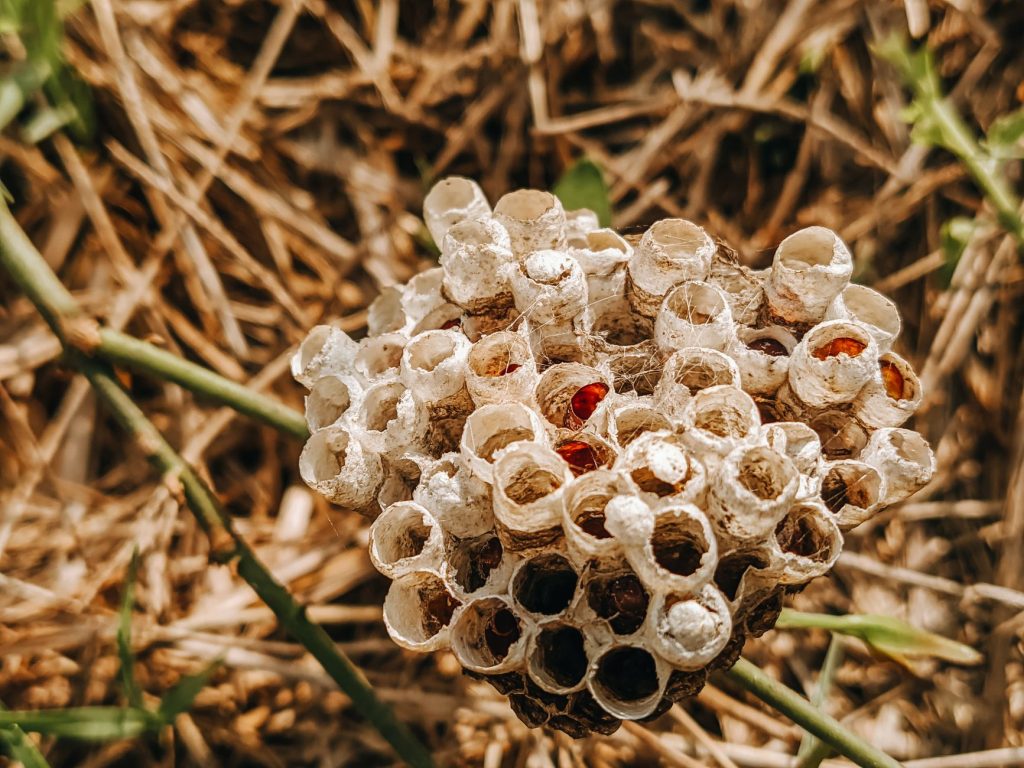
Paper wasp nests are open-comb structures without an outer covering, often described as an upside-down umbrella. Regardless of species, paper wasp nests last only one season, according to Mississippi State University Extension. When a nest is still small, you may see just a few exposed cells attached to a thin stalk.
Baldfaced hornets build a grayish, pear-shaped nest wrapped in a thick paper envelope. According to Purdue Extension, this species typically suspends its nest in trees or on the sides of buildings, and the envelope encloses two to four horizontally arranged combs. Even at an early stage, the enclosed shape and grayish color can help you tell it apart from an open paper wasp nest.
Several yellowjacket species build subterranean nests with architecture similar to baldfaced hornet nests. These ground-level nests can appear in creek banks, lawns, and garden or flower beds, as Purdue Extension notes. A small hole in the ground with wasps flying in and out is a key sign of this species.
How to Spot Wasp Nest Activity Inside Your Home
Seeing a single wasp indoors once may not indicate a nest nearby, but repeated sightings in the same room or hallway suggest a nest is close. Social wasps sting to defend their colony, and some yellowjacket species can become aggressive during late summer and fall. If you notice increased wasp traffic around a window, light fixture, or ceiling corner, a small nest may be attached just out of sight in an attic void or wall cavity.
Where Wasp Nest Activity Shows Up Around Homes
Paper wasps tend to attach small nests under horizontal surfaces like porch ceilings, deck railings, and the undersides of outdoor furniture. Baldfaced hornets typically suspend their nests in trees or on the sides of buildings. Yellowjacket species often nest in the ground in areas such as lawns, garden beds, and flower beds. Checking these spots regularly helps you catch a nest while it is still small.
Exterior Entry Points Wasps Use
Wasps can enter wall voids and attic spaces through gaps where siding meets trim, openings around soffit vents, and spaces where utility connections pass through exterior walls. A small nest tucked behind a soffit or inside an eave is easy to miss until traffic increases. Watching for wasps entering and exiting the same gap on multiple occasions is often the clearest sign that a nest is forming inside a structure.
Why Small Wasp Nest Problems Develop
A small wasp nest can appear quickly and catch you off guard. Social wasp colonies are annual, meaning each nest is built and used during a single season. According to Purdue Extension, a colony consists of an egg-laying queen and many sterile female workers that construct a paper nest together. Understanding where these nests show up and what draws wasps closer to your home helps you spot a small nest before the colony grows throughout the season.
Outdoor Nesting Areas for Wasps
Different species choose different spots. Baldface hornets start a new nest each spring, and the gray, papery structures are usually located in trees and shrubs. Bumble bees nest in the ground, which means a small colony can develop in your yard without being immediately visible. Yellowjackets also nest in the ground, so low-traffic areas of a lawn or garden bed can harbor a growing colony you might not notice right away.
Food and Shelter That Attract Wasps
Paper wasps are beneficial caterpillar predators, so yards with active garden caterpillar populations can draw them in. Female wasps produce the papery nest material from their own salivary secretions, so they do not need an outside building-material source. Sheltered spots that stay dry and undisturbed give a queen the conditions she needs to establish a small nest that grows throughout the season.
How Wasps Move Around Homes
A colony in one location this year does not guarantee a colony at the same site next year. As Purdue Extension notes, the presence of a colony one season does not mean a colony will exist in the same site the following season. Queens select new nesting sites each spring, so small nests can appear in places that were previously clear.
Trails and Entry Points Wasps Use
Paper wasp queens overwinter in groups. If you see them indoors during cooler months, they are not coming from an active nest but from a sheltered spot where they gathered for winter. Yellowjacket queens, by contrast, overwinter by themselves. Either way, gaps and openings around your home can serve as access points to indoor sheltering sites, which is why a few wasps inside during winter does not necessarily signal a live nest nearby.
Risks From Small Wasp Nests
Even a small wasp nest deserves your attention. What looks like a minor cluster of cells on your eave or porch overhang can still put your household at risk for stings, create nuisance around outdoor living spaces, and attract more pests over time. Below are the key concerns to keep in mind.
Health Risks Linked to Wasp Nests
Social wasps, including yellowjackets and paper wasps, have dedicated nest defenders ready to sting when they sense a threat. According to UC IPM, colonies include individuals whose specific task is to defend the nest. That means even a small nest with a handful of wasps can deliver multiple stings if you disturb it while mowing, trimming, or stepping outside.
Wasp stings carry venom that differs from bee venom. According to the University of Minnesota Extension, having a severe reaction to a bee sting does not mean a person will have the same reaction to a yellowjacket or paper wasp sting. The reverse is also true. Because venom composition varies between species, any sting from a small wasp nest can produce an unpredictable response.
Property Damage From Wasp Nests
A small wasp nest near your home’s structure is worth addressing before it grows through the active season. Bumble bee colonies, for example, can thrive from spring to fall before cold weather ends the cycle. While a single small nest may not cause visible structural harm, its location on or around your home raises the odds of repeated sting encounters throughout warmer months.
Food Areas and Wasp Nest Activity
Outdoor kitchens, grills, and dining areas become riskier when a small wasp nest sits nearby. Social wasps capture insects such as flies, caterpillars, and beetle larvae, so they forage in areas where these pests gather. That foraging path often overlaps with spots where your family eats or prepares food outdoors, increasing the chance of a sting.
When to Look Closer at Wasp Nest Activity
Social wasps are beneficial because they prey on common pests. However, as Purdue Extension notes, removal of colonies is warranted when they are located in or around structures and areas of human activity where a probability of stings can occur. A small nest tucked under a soffit or behind a shutter may seem no real threat, but proximity to doorways, walkways, or play areas changes the risk.
Bumble bee colonies typically do not return to the same location year after year. Still, monitoring a small nest through the season helps you decide whether it poses a sting risk worth addressing or whether it will resolve on its own once cold weather arrives.
Professional Pest Control for Small Wasp Nests
A small wasp nest on your home does not always need treatment, but it does deserve attention. Understanding when to act, what attracts wasps in the first place, and how a professional approach differs from a DIY attempt can help you make a confident decision about your next step.
How to Reduce Attractants for Wasps
Small wasps such as guinea wasps (Polistes exclamans) tend to build nests in protected areas around buildings, equipment, and dense shrubbery. Keeping shrubs trimmed back from your home’s exterior reduces sheltered spots where a small nest can take hold unnoticed.
Sealing gaps around eaves, soffits, and utility entry points removes additional protected areas that wasps favor. Regular walks around your property, especially in spring and early summer, help you spot a new nest while it is still small and easier to address.
Why Wasp Nest Control Starts With Inspection
Not every small wasp nest requires treatment. According to UC IPM, paper wasp nests should not require treatment unless they are near people. An inspection of the nest’s position relative to foot traffic, doorways, play areas, and outdoor living spaces determines whether treatment is needed relative to foot traffic, doorways, play areas, and outdoor living spaces.
Inspection also helps identify the wasp species involved. Guinea wasps, for example, are small, yellow and brown wasps that often nest in protected spots around structures or dense landscaping. Knowing the species and nest placement guides whether professional control is warranted or the nest can simply be left alone.
What to Expect During Professional Wasp Nest Treatment
Small, early-season colonies and most underground colonies are easier to control. However, above-ground and nearly all structural colonies are best handled by professional pest control operators unless you are knowledgeable about social wasps. As Purdue Extension notes, protective gear and quick, efficient application are imperative when treatment is warranted.
Late-summer colonies may grow large, sometimes consisting of nearly a thousand workers. Addressing a nest while it is still small gives a service professional the advantage of working with a smaller, less-developed colony before it reaches that scale.
What to Expect From a Wasp Nest Control Plan
Sage Pest Control offers same-day service and responds to texts in under one minute, so you do not have to wait when a small nest appears in a high-traffic area of your yard or home. Our GreenPro-certified, environmentally friendly approach uses low-impact products that meet EPA standards.
With a tri-annual program and product rotation designed to prevent resistance, Sage keeps your property covered across seasons. That ongoing attention matters because new queens can start fresh nests each spring, and catching a nest while it is small is always preferable to waiting until the colony matures.
Bottom Line on Small Wasp Nests
A small wasp nest is easiest to address when it is still young, but “easy” depends on where the nest is and what species built it. Small, early-season colonies in accessible spots may be manageable, while nests tucked inside wall voids, attics, or concrete blocks are best left to a professional. Attempting control without proper knowledge of social wasp behavior can put you at real risk, and a mistake during treatment of certain species can lead to serious medical consequences. Wasp nests last only one season, so not every nest requires intervention.
If a nest is close to high-traffic areas of your home and you want it handled with care, reach out to Sage Pest Control for same-day service.
Frequently Asked Questions
Should I Remove a Small Wasp Nest Myself?
It depends on the nest’s location and the species involved. Small, early-season colonies in open, easy-to-reach areas may be approachable if you understand social wasp behavior. However, nests built inside structures or in hard-to-access spots are much more challenging and are generally better handled by a pest control professional with the right protective gear.
Will a Small Nest Get Bigger Over the Summer?
Wasp colonies grow as the season progresses. By late summer, some colonies can include nearly a thousand workers. Wasp colonies grow through the season, and by late summer some can include nearly a thousand workers. Because nests last only one season, a nest that looks small in spring or early summer may become considerably larger before the colony dies off in fall.
Are Small Wasp Nests Dangerous?
Even a small nest houses social wasps that may defend it. Some species are more defensive than others, and certain ground-nesting types can become aggressive when their nest is disturbed. A misstep during treatment of aggressive species like yellowjackets can result in enough stings to require hospitalization. When in doubt, keep your distance and call a professional.
Do Wasp Nests Come Back Every Year?
Individual nests do not carry over from one year to the next. Wasp nests last only one season. However, queens that survived the winter may start a new colony the following spring in any sheltered spot they find suitable. Sealing entry points and monitoring eaves, overhangs, and other sheltered areas in early spring can help you spot new nest-building activity while colonies are still small.
