
Wondering why do wasps come inside windows? Learn what attracts wasps to window areas in Virginia Beach homes, the signs, risks, and when to call Sage Pest Control.
Key Takeaways About Wasps Coming Inside Through Windows
- Wasps often end up inside your house near windows because they are looking for sheltered spots to nest or overwinter, not because they are drawn to the glass itself.
- Paper wasps and other species may appear indoors during cooler months after seeking winter shelter in walls or attics, then become active and move toward windows as temperatures warm.
- Sealing openings and maintaining exclusion around your home is the most effective way to keep wasps from getting inside in the first place, because it removes the entry points they depend on.
- When wasps show up near windows repeatedly, a professional assessment can help identify where they are entering and whether a nest or overwintering colony is nearby.
How to Identify Wasps Entering Through Windows
When you notice a wasp buzzing against your window glass, it is usually trying to reach light or warmth on the other side. The real question is where the nest is and whether it sits close enough to your living space to matter. Understanding what to look for around your windows and exterior walls helps you figure out the source before the situation grows more complicated.
How to Tell Different Window-Entering Wasp Species Apart
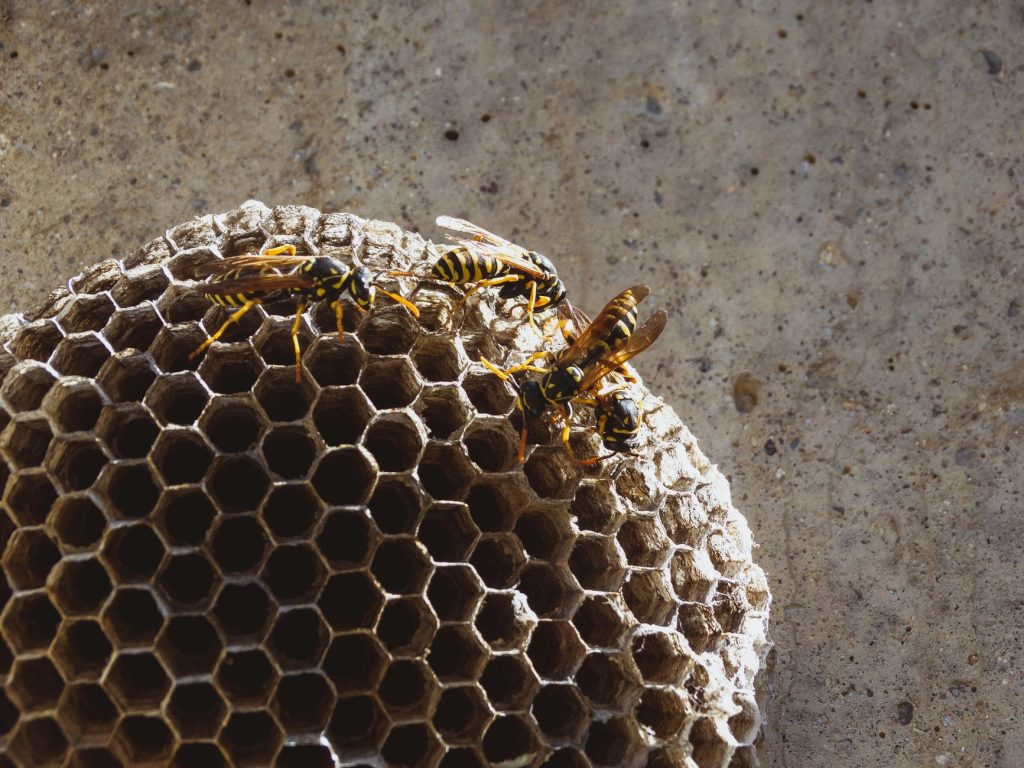
Paper wasps are the variety homeowners most often spot near windows. Their open, umbrella-shaped nests are easy to recognize once you know what to look for. Red wasp nests share a similar shape but tend to be larger than Guinea wasp nests, according to Mississippi State University Extension. Noting nest size and structure helps you determine which type you are dealing with.
Each nest is built from scratch each year, and previous nests are not reused, with the exception of European paper wasp nests. If you see a papery nest near a window that looks weathered and empty, it may be last season’s construction rather than an active concern.
How to Spot Wasp Activity Inside Your Home
A single wasp indoors now and then may have slipped through a gap. Repeated sightings near the same window suggest a nest is close by. Stay alert for wasp nests around your home, especially along window frames and the trim surrounding them.
Paper wasp nests do not usually require treatment unless they are positioned near people. A nest tucked under an eave directly above a window you open daily, however, puts you in close contact and may warrant attention.
Where Wasp Activity Shows Up Around Homes
Wasps tend to build nests in sheltered spots close to your home’s exterior. Paper wasp nests built in the wrong place, where they are likely to lead to stings, should be addressed before someone is stung. Check under eaves, along porch ceilings, and behind shutters near windows where you have noticed activity.
Because nests are rebuilt fresh each season, a spot that hosted a nest last year can attract a new one this year. Keeping an eye on those familiar locations gives you an early heads-up.
Exterior Entry Points Wasps Use to Get Inside
Gaps around window frames, torn screens, and loose weatherstripping create openings wasps can exploit. Once a nest is established nearby, workers passing back and forth may wander inside through these small entry points.
Look along the exterior trim of any window where you have seen repeated wasp activity. If you find a nest in one of these high-traffic areas, the proximity to your window explains why wasps keep appearing indoors.
Why Wasp Problems Develop Near Windows
Wasps showing up at your windows can feel random, but there is usually a straightforward explanation. A nearby nest, a sheltered spot for overwintering queens, or the warmth of your home can all draw them toward glass panes. Understanding why they end up there helps you figure out what to do next.
Outdoor Nesting Areas That Drive Wasps Indoors
Social wasps live in populous colonies built around a paper nest. Each colony includes an egg-laying queen and many sterile female workers. According to Mississippi State University Extension, wasps prefer to build nests in enclosed, protected areas such as inside eaves of buildings. When a nest sits close to a window, workers flying in and out end up near the glass.
These colonies are annual, meaning a nest is used only during the season it is built. Once freezing temperatures arrive, the nest dies off and is not reused the following year.
Food and Shelter That Attract Wasps Inside
Paper wasps are beneficial caterpillar predators, so yards with garden activity can keep colonies nearby. During colder months, paper wasp queens seek shelter in groups. As the University of Minnesota Extension notes, if you see them indoors, they are not coming from an active nest but from a sheltered spot where queens are overwintering. Your window frame or wall void can provide exactly that kind of protected space.
How Wasps Move Around Homes
A colony stays active until freezing temperatures, usually in the mid-to-upper 20s °F, kill the old queen and workers. Before that happens, wasps may fly back and forth near the nest throughout the day. If the nest is tucked under an eave directly above a window, that steady traffic brings them right up against the glass.
Early in the season, a single founding female starts a new nest. If that small nest is knocked down early, the founding female will go elsewhere to start again or join a neighboring nest as a worker.
Trails and Entry Points Wasps Use to Enter
Wasps follow the same flight path between their nest and foraging areas. Nests built near eaves put that flight path right along your exterior walls and windows. Guards stationed around the nest entrance add to the visible activity in those areas.
If you notice yellowjackets or paper wasps still flying back and forth after a treatment attempt, activity may continue until the nest is fully addressed. Watching the flight path for a day can help you pinpoint where the nest is located relative to your windows.
Risks From Wasps Getting Inside Through Windows
When wasps find their way through windows and into your living space, the situation moves from a nuisance to a real concern. Even wasps that are not actively nesting can still sting once they are inside, and understanding the specific risks helps you respond the right way.
Health Risks Linked to Indoor Wasps
The most immediate risk is getting stung. Wasp stings hurt, and some people are highly sensitive to stings, according to Mississippi State University Extension. A single sting indoors can catch you off guard, especially if a wasp has been resting near a curtain or windowsill before becoming active.
Not all wasp stings feel the same, either. Most people who have experienced both agree that red wasp stings are more painful than Guinea wasp stings. Some species are also more aggressive and may pursue someone who gets too close to the nest site.
Property Damage From Wasps Inside Your Home
Choosing the wrong approach to deal with indoor wasps can create its own problems. Using the wrong spray indoors may leave residue on window frames, fabrics, or surfaces. As Mississippi State University Extension notes, it is important to choose the right spray for the job and take necessary precautions. Sprays formulated for quick-contact results help reduce how long a wasp stays active indoors.
Wasp Activity Near Food Preparation Areas
Wasps that drift into kitchens or dining areas through open windows bring the sting risk closer to where your family gathers. Although wasps entering your home may not be nesting at that time and are not necessarily aggressive, they sometimes make their way into living areas, and stings can occur. Food prep zones and eating spaces leave less room to keep distance from a wandering wasp.
When to Take a Closer Look at Indoor Wasp Activity
A single wasp near a window may be an isolated event. But if you notice wasps appearing inside repeatedly, it could mean pests are finding a consistent entry path. Repeated indoor sightings deserve a closer look at what is drawing them in and where they are getting through.
Professional Pest Control for Wasps Entering Your Home
When wasps keep appearing near your windows, the root cause often traces back to entry points elsewhere in your home. Good, proactive exclusion is the only way to prevent large numbers of overwintering wasps from gathering in your attic or other building locations. Understanding what draws them in and how professionals handle colonies can help you decide on the right next step.
How to Reduce Attractants for Indoor Wasps
The most practical thing you can do is tighten up your home’s exterior. Use caulking, screening, screened vents, and other exclusion practices to seal all entry points so overwintering wasps cannot get into the building. Pay special attention to gaps around window frames, soffits, and roof lines where wasps may slip through without you seeing them.
For windows that need to stay open, insect-proof window screening blocks wasps while still allowing airflow. Pairing a layer of heavy hardware cloth with insect-proof screening adds durability and keeps the mesh intact over time. These steps work best when completed before wasps begin looking for sheltered spots.
Why Wasp Control Starts With a Full-Home Inspection
Colonies can be large and are often located far from the entrance hole, deep into the structure. That means the wasps appearing at your window may be traveling from a nest you cannot see. An inspection looks beyond the window itself to trace colony access points throughout the home.
According to Purdue Extension, above-ground and nearly all structural colonies are best handled by professional pest control operators unless the person attempting control is knowledgeable about social wasps. An inspection identifies colony size, location, and the safest approach before any treatment begins.
What to Expect During Professional Wasp Treatment
Late summer colonies of some social wasp species, such as baldfaced hornets, may consist of nearly a thousand workers, so protective gear and quick, efficient application are both critical. Most nests should be left alone, but when control is warranted, it is best left to a professional pest control operator. Sage Pest Control’s service professionals carry the right equipment and training for these situations.
Small, early-season colonies and most underground colonies are simpler to control. However, above-ground and structural colonies present greater difficulty and risk. A professional approach accounts for colony placement and the structure of your home so the job is done right.
What to Expect From a Wasp Control Plan
A complete plan pairs treatment with long-term exclusion. After addressing the active colony, your service professional will recommend sealing the entry points that allowed wasps inside in the first place. Caulking gaps, repairing screens, and adding screened vents are all part of keeping wasps from returning to the same spaces.
Sage Pest Control uses a tri-annual program with product rotation to help prevent resistance, and same-day service is guaranteed when you need a fast response. With 3,700+ Google reviews · 4.8★ average across Charlotte, Raleigh, Greensboro, and Virginia Beach, homeowners trust Sage to handle wasp concerns with genuine care and follow-through.
Why Do Wasps Come Inside Windows: Bottom Line
Wasps end up near your windows because they are drawn to light, warmth, and the sheltered gaps that window frames and nearby eaves can provide. Whether they are overwintering queens looking for a place to ride out cold weather or workers from a nearby nest following light sources indoors, the pattern usually traces back to small openings and nest proximity. Sealing entry points, staying alert for nests around the home, and keeping screens in good repair go a long way toward reducing indoor encounters.
When a nest is large or hard to reach, professional help is the safest route. Sage Pest Control offers same-day service across Charlotte, Raleigh, Greensboro, and Virginia Beach, so reach out if wasps keep showing up inside your home.
Frequently Asked Questions
Why Are Wasps Attracted to My Windows?
Windows let in natural light and radiate warmth, both of which can draw wasps. If there is a nest tucked under an eave or within a wall void nearby, workers may follow light through small gaps around the frame and end up inside.
Are Indoor Wasps Dangerous?
A wasp indoors can sting if it feels threatened or cornered. Some species may be more aggressive near their nest site. Avoid swatting and instead guide the wasp out through an open window or door when possible.
Should I Handle a Nest Myself?
Small, early-season nests in accessible spots may be manageable for a homeowner. However, large colonies or nests located deep within a structure are best handled by a professional pest control operator who has the right gear and training.
When Should I Call a Professional?
If you are finding wasps indoors repeatedly, there may be a colony nearby that is difficult to locate or access. A professional can identify the nest location, determine the species, and address the colony so the problem does not continue through the season.
