
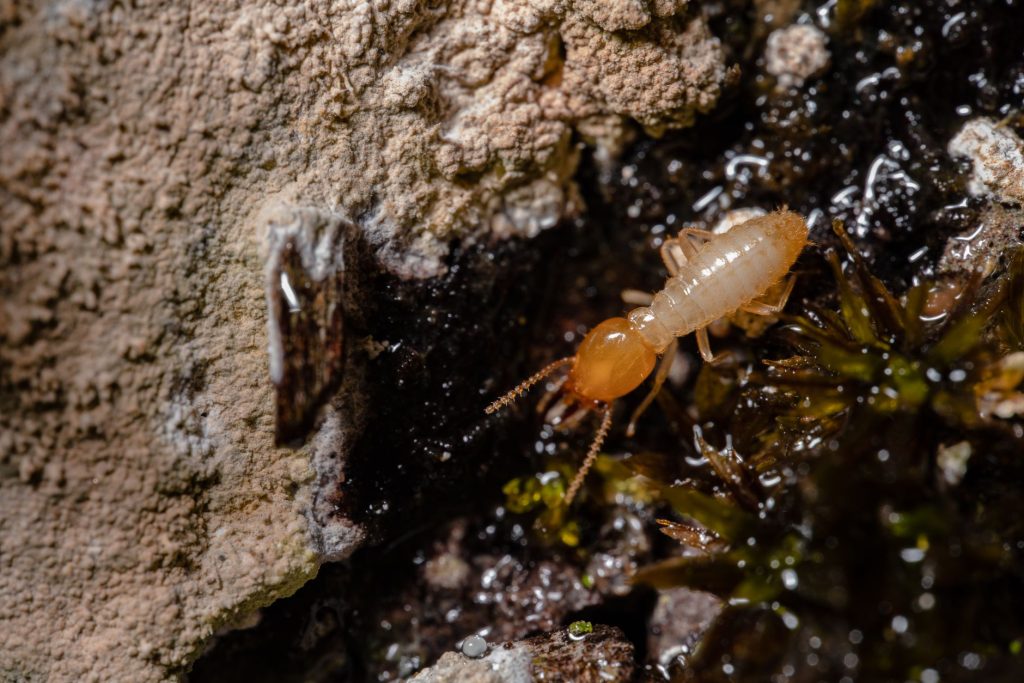
Termites Flying can create costly problems when early signs are missed. Learn what to look for, why it matters, and when to call Sage Pest Control.
Key Takeaways About Flying Termites
- Flying termites, also called swarmers, are winged reproductives that may appear around your home during warmer months. Spotting them near a structure can point to a colony nearby.
- Swarmers look similar to flying ants, but you can tell them apart by checking the antennae, wings, and waist. Termites have straight antennae, two pairs of similar-sized wings, and thick waists, while ants have bent antennae, uneven wings, and narrow waists.
- Subterranean termites are the type most likely to affect homes in North Carolina and the Virginia Beach area. They live in the soil and build mud tubes to reach wood inside a structure.
- Professional treatment is typically needed to address a termite colony. Sage Pest Control offers bait station systems and foundation trenching to target subterranean termites where they travel between the soil and your home.
How to Identify Flying Termites
When you see winged insects swarming inside or around your home, the first step is figuring out exactly what you’re looking at. Flying termites, also called swarmers, are reproductives leaving an established colony to start new ones. Knowing how to tell swarmer types apart, where to look, and what the activity means can help you decide what to do next.
How to Tell Flying Termite Types Apart
Subterranean termite swarmers are black to caramel colored and measure about 1/8 to 3/16 inch in body length (or roughly 3/8 inch including wings for native species). According to the University of Georgia‘s Formosan termite identification guide (Bulletin C868), Formosan subterranean termite swarmers are larger, about 1/2 inch from tip of head to tip of wings, and have a caramel- to brownish-yellow body with dense wing hairs. The Formosan subterranean termite is invasive in the United States and is native to China.
Drywood termite swarmers look different from subterranean species and behave differently too. Unlike subterranean termites, drywood termites require no soil contact or liquid moisture, getting all the moisture they need from wood and metabolic processes. That distinction matters because the species you’re dealing with can shape how your home is inspected and treated.
How to Spot Flying Termite Activity Inside Your Home
Native subterranean termite species in the Carolinas begin swarming as early as February or March and mostly finish by early May. They swarm in the morning or early afternoon and are not attracted to lights. If you find discarded wings on windowsills, countertops, or near baseboards during those hours, that can point to a nearby colony.
Subterranean termites live in the soil and forage into structures to access wood. As noted by University of Georgia termite guide, they can excavate galleries in the wood they consume, sometimes leaving only a thin wooden exterior. Hollow-sounding wood or surfaces that look intact but give way under light pressure may indicate hidden damage behind the walls.
Where Flying Termite Activity Shows Up Around Homes
Swarms often appear near the foundation, around porches, and close to exterior walls where soil meets the structure. Subterranean termite feeding generally follows the grain of wood, with these species attacking the softer springwood and leaving the harder summerwood behind. You may notice mud tubes running along foundation walls or support piers, which subterranean termites build to travel between soil and wood.
Exterior Entry Points Flying Termites Use
Subterranean termites can enter homes through small cracks in the foundation, plumbing penetrations, or other openings where wood contacts soil. After a swarm event, newly paired reproductives look for sheltered spots with access to moisture and wood. Any gap where the structure meets the ground is a potential pathway, so keeping an eye on these transition points is worth your time.
Why Flying Termite Problems Develop
Flying termites, or swarmers, appear when a mature colony produces winged reproductives that leave the nest to mate and start new colonies. Understanding what draws these colonies close to your home helps you recognize the conditions that lead to swarming activity around your property.
Outdoor Nesting Areas for Flying Termites
Subterranean termites are soft-bodied and require moisture to survive, so their colonies are typically located in soil where moisture levels stay consistent. According to Kansas State University Extension, colonies generally follow a moisture gradient and can be found 1 to 30 feet below the soil surface. Any area around your home with damp, undisturbed soil can support a colony. Tree stumps and dead trees on your property can also serve as food sources that keep termite colonies thriving nearby.
Food and Shelter That Attract Flying Termites
Termite colonies need steady access to wood-based food sources. Subterranean termites travel between their underground colony and the wood inside a structure by building mud tubes. Where wood contacts soil, termites can reach new food sources without losing the moisture they depend on. At maturity, termite colonies can range from several hundred to several million individuals, and that population needs a constant supply of cellulose to sustain itself.
How Flying Termites Move Around Homes
The sudden appearance of winged swarmers crawling or fluttering near a structure is one of the clearest signs of an established colony close by. When you see winged insects swarming indoors, it is important to distinguish them from winged ants, since both can appear at similar times. Termites have straight waists, while ants have pinched waists. Workers are pale and six-legged; swarmers are darker with long wings that stack on top of each other. Correctly identifying what you see helps determine the right response.
Trails and Entry Points Flying Termites Use
The same foundation gaps and soil-to-wood contact points described earlier let foraging workers reach interior wood. Once a colony matures, it produces swarmers that may appear inside your home. If swarmers appear indoors, the colony is likely already established somewhere within or directly beneath the structure. Swarmers spotted outside near porch lights are less concerning, but they still suggest a colony is nearby and actively producing reproductives looking to form new colonies.
Risks From Flying Termites
When you spot termites flying around your home, it means a mature colony has sent out winged reproductives looking to start new colonies nearby. The swarmers you see are just one of at least three castes in a subterranean termite colony, which also includes workers and soldiers. While the swarmers themselves are not the ones consuming wood, their appearance signals that a wood-feeding colony is already established close to your home.
Structural Risks From Flying Termites
Subterranean termites enter structures through mud tubes that workers build between soil and wood. According to UC IPM, these earth-hardened tubes are made by workers using saliva mixed with soil and bits of wood or even drywall. Once workers reach wood inside your home, they feed on it from the inside out. Because access can occur through small foundation cracks or where wood meets soil, the structural risk from an active colony can grow over time without any obvious exterior signs.
Hidden Termite Damage in Homes
One reason these pests are so concerning is that the damage they cause often stays hidden. Workers consume wood internally, leaving the outer surface intact. You may not realize anything is wrong until floors feel soft, walls sound hollow, or a renovation exposes compromised framing. Shelter tubes can run along foundation walls, inside wall cavities, or through crawlspaces where you rarely look.
Belongings and Moisture Risks From Flying Termites
Because subterranean termites feed on wood, any wood-based item in your home can be at risk. The mud tubes workers construct can incorporate bits of drywall as well, meaning these pests may reach areas beyond exposed lumber. Homes with existing moisture issues around the foundation or crawlspace can create conditions that attract and sustain a colony.
When a Flying Termite Problem Needs Action
Any sighting of flying termites near your home warrants a professional inspection. According to Oregon State University Solve Pest Problems, pest control companies have training to avoid property damage during treatment and access to the tools needed to address termite colonies. Shelter tubes should be destroyed as part of addressing the problem. A trained technician can check areas like the foundation, crawlspace, and any exposed wood to determine whether an active colony is present and recommend a treatment plan.
Professional Pest Control for Flying Termites
When you see flying termites around your home, it can be tempting to handle things yourself. You can correct conditions that invite a subterranean termite infestation and replace damaged wood on your own. But treatment products used by pest control professionals are highly regulated and require a licensed professional to carry out both the inspection and the control program. According to UC IPM, a licensed pest control professional is needed to apply registered treatment products and manage the overall process.
How to Reduce Attractants for Flying Termites
Flying termites are often the first sign that a termite infestation exists nearby. Homeowners can take steps to correct conditions conducive to an infestation. Reducing foundation entry points and addressing moisture issues around your home can help limit what attracts swarmers in the first place.
Why Flying Termite Control Starts With Inspection
One challenge with swarmer termites is telling them apart from winged ants, which are relatively no real threat. As Purdue Extension notes, distinguishing swarmer termites from winged ants is the main difficulty when identifying a termite infestation. A trained service professional can make this distinction in seconds. Finding live termites foraging within wood is a sure sign of an active infestation, so a full inspection of the foundation, crawlspace, and framing matters.
At Sage Pest Control, our termite service begins with a detailed inspection of the structure. The technician checks areas such as the foundation, crawlspace, attic, baseboards, door and window frames, plumbing areas, and any exposed wood. We also look for mud tubes, damaged wood, moisture issues, and other conditions that could contribute to a termite infestation.
What to Expect During Professional Flying Termite Treatment
Pest control companies treat your foundation and nearby soil or use bait to address termite colonies. At Sage, one common approach involves the Trelona Advanced Termite Bait System, manufactured by BASF with the active ingredient Novaluron. Stations are installed in the soil surrounding your home approximately every 10 to 20 linear feet, each pre-loaded with two Termite Bait Cartridges. The bait remains active for 2 to 4 years under typical conditions, and we inspect stations annually.
Another option is termiticide foundation trenching. Trenches are dug around the foundation so a barrier of liquid termiticide can be applied, creating a long-lasting vertical barrier. Each application lasts approximately five years. For new construction, pre-treatments are applied directly to the soil before concrete is poured, and include a blue dye so building inspectors can verify proper application.
What to Expect From a Flying Termite Control Plan
If termite activity or risk factors are identified during inspection, we recommend an appropriate treatment plan tailored to your home. After installation or treatment, we monitor the property on a set schedule, checking stations and inspecting for any signs of termite activity. If activity is detected, the technician will take additional steps to address the situation and maintain protection for the structure.
Different termite species can require different treatment approaches because they nest and behave differently. For subterranean termites, treatment typically focuses on protecting the structure through soil treatments or bait systems installed around the perimeter. This is why working with a licensed pest control professional matters for long-term management of a termite infestation.
Bottom Line on Flying Termites
When you spot winged termites around your home, it means a mature colony is nearby and sending out swarmers to start new colonies. The key first step is confirming what you are seeing, since flying termites and winged ants look similar but require very different responses. Subterranean termites are the primary concern for homeowners in the areas Sage Pest Control serves, and because workers can feed on wood hidden inside walls, early attention matters. A professional inspection can reveal activity and conditions you may not notice on your own.
If you think you have seen flying termites, reach out to Sage Pest Control for a termite inspection and a treatment plan matched to your home.
Frequently Asked Questions
Why Are Termites Flying Around My House?
Flying termites, called swarmers, leave an established colony to mate and start new colonies. Their presence near your home suggests a colony may already be active in the surrounding soil or in the structure itself. Swarmers do not eat wood, but the workers in the colony they came from do.
How Can I Tell Flying Termites Apart from Flying Ants?
Look closely at the body shape, antennae, and wings. Termite swarmers have straight antennae, thick waists, and wings of equal length. Winged ants have bent antennae, narrow waists, and front wings that are noticeably larger than the hind wings. Getting this distinction right helps determine the appropriate next step.
Do Flying Termites Mean My Home Has Damage?
Not necessarily, but swarmers are a sign that a mature colony is close by. Subterranean termites live in the soil and travel into structures to access wood, sometimes leaving only a thin exterior shell. A professional inspection of your foundation, crawlspace, and framing areas can clarify whether damage has occurred.
What Should I Do After Seeing a Swarm?
Collect a few of the insects if you can so they can be identified. Avoid disturbing any mud tubes you find, since those help a technician confirm the species and activity level. A licensed pest control professional can assess the situation, recommend the right treatment approach, and set up ongoing monitoring to protect your home.
